
Kitano
The hillside where Japan looked at the West and kept looking
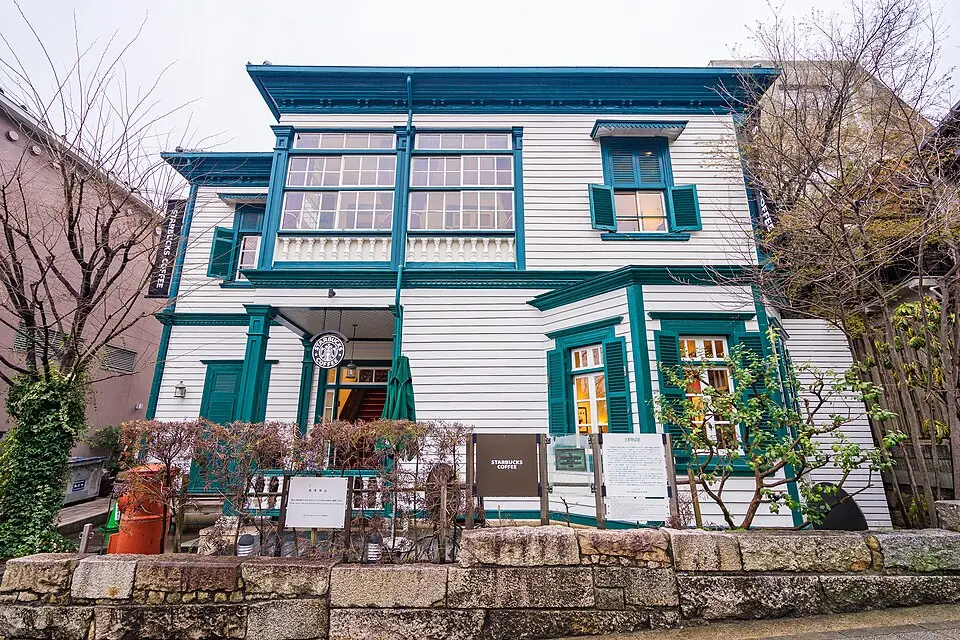
When Kobe opened in 1868, foreign merchants built above the town where the sea breeze made summer survivable. Around twenty of their houses survive — the ijinkan — and walking between them is the closest thing Japan has to a preserved treaty-port neighbourhood.
The Weathercock House of 1909, built for a German trader, is the emblem: brick, half-timbered, a copper cockerel on the spire. What makes the district genuinely interesting is the reverse gaze — Japanese visitors come here to look at European domestic architecture as exotica, exactly as Europeans visit temples.
Five things the plaques won't tell you
- Take a taxi up and walk down. The hill is real and the descent passes the good cafés.
- The Weathercock and Moegi houses share a plaza and one combination ticket — the efficient pair.
- Starbucks occupies a 1907 house here; it is a legitimate way to see an interior for the price of a coffee.
- The views open between buildings rather than at the top — look sideways as you climb.
- Nishimura Coffee near the foot of the hill is a Kobe institution and the right way to finish.
What makes the district genuinely interesting is the reverse gaze — Japanese visitors come here to look at European domestic architecture as exotica, exactly as Europeans visit temples.

Guided days from Kobe
Booked before you sail — there is no tour desk at the pier. Booking through these links supports the site.
 4.9★ · 185 reviews
Kobe Sake Tour with Expert Guide: 3+ Breweries, Tastings Included
From US$110.
Why we list it → 4.8★ · 90 reviews
Kobe Customized Half-Day Tour with Licensed Local Guide
From US$97.
Why we list it → 4.9★ · 87 reviews
Kobe : Customizable Private Tour w/ Local Student Guide
From US$194.
Why we list it →More in Kobe
Questions people ask here
What are the Kitano ijinkan?
Around twenty surviving Western merchant houses on the hillside above Kobe, built after the port opened in 1868 by foreign traders who wanted the sea breeze. The Weathercock House of 1909 is the emblem, and the district is the closest thing Japan has to a preserved treaty-port neighbourhood.
How hard is the Kitano climb?
It is a genuine hill — around fifteen minutes of steady uphill from Sannomiya. Take a taxi to the top and walk down; the descent passes the cafés and the views open sideways between buildings as you go.