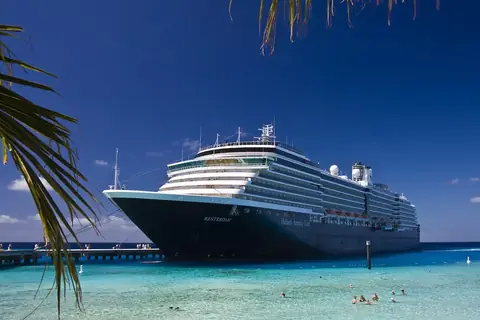
Three of the most-asked questions on cruise forums about Japan have no good answer on the open web — we know, because passengers say so: “I had no idea there would be four entries and exits.” “I googled the passport rule and couldn’t find an answer.” This page is the answer, assembled from Japan’s immigration frameworks and what actually happens on the ground. It is long on your first Japanese port day and irrelevant after it — which is exactly why it is worth reading before you sail.
What happens at the first Japanese port
Japan inspects every arriving foreign passenger once, in person, at the first Japanese port of your cruise — the same face-to-face inspection you would get at an airport, with fingerprints and a photograph. Immigration officers set up in the terminal (on some calls, onboard), and several thousand passengers go through one by one.
That is the arithmetic behind the queue. On a large ship, plan for one to two hours between the start of disembarkation and your group walking free — passengers report both extremes, and the variables are ship size, officer numbers and your place in the calling order.
Two practical consequences:
1. Ship-excursion guests are usually called first. Lines prioritize their own tours to protect the schedule. If your first Japanese port is the one day you booked a ship excursion, you have accidentally optimized your cruise. If you are going independently, assume your real hours ashore start later than the ship’s arrival time — and plan the first port gently. Our timed plans all keep a 60-minute reserve; on a first-entry port, give the day one more hour of slack.
2. It only happens once. After that first port, Japanese calls are a walk down the gangway — no inspection, no queue. The clock-eating day is the first one.
The Korea-loop surprise: entering Japan twice
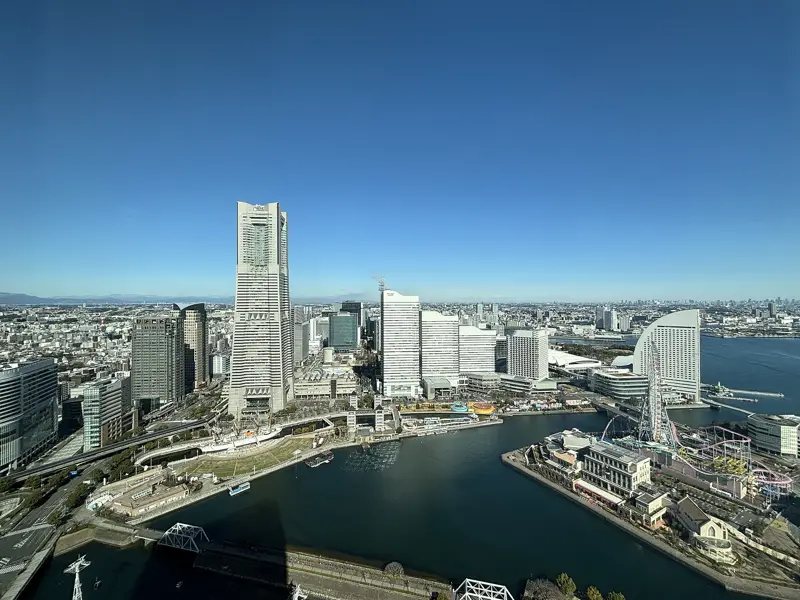
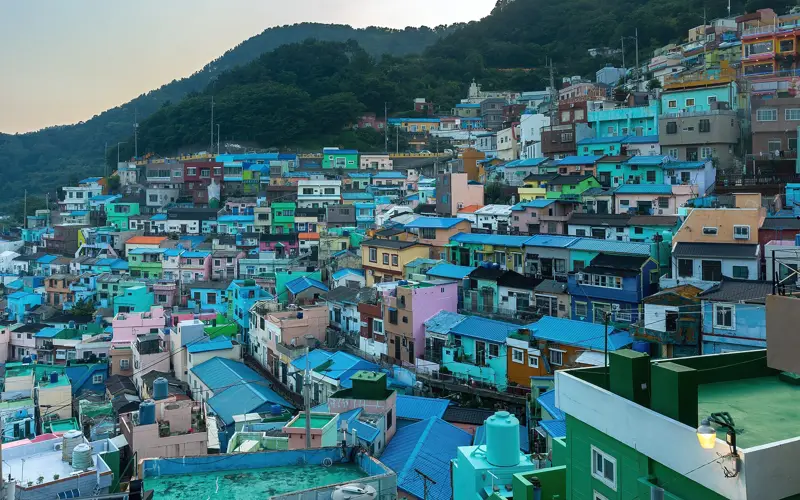
Most Yokohama and Tokyo roundtrips slip into Busan for a day — it is how foreign-flagged ships satisfy the rule that international itineraries must touch a foreign port. What surprises passengers is the paperwork consequence: calling at Korea means you exit Japan at the last Japanese port before Busan, clear Korean immigration in Busan, and then re-enter Japan — second face-to-face inspection, second queue — at the first Japanese port after it.
So a standard loop produces four Japanese stamps’ worth of processing: in, out, in, out. It is normal, it is fine, and now it will not surprise you. The same logic applies to Taiwan calls (Keelung) on southern itineraries.
The passport question, answered honestly
Here is the collision that Google could not resolve for the passenger who asked:
- Japanese law expects foreign visitors to carry their passport (or their landing permit) at all times, and police may ask to see it.
- Many cruise lines collect foreign passports on Japan itineraries — it lets the ship handle immigration manifests for two thousand people at once.
Both are real, and the practical resolution is this: when the ship holds your passport, it hands you what officialdom actually wants to see ashore — typically your landing-permission slip from the first-port inspection, plus your cruise card; carry those together with a paper copy of your passport photo page. That combination is what the system is designed around for cruise passengers, and shore days pass without incident on it every day of the season.
Two refinements worth knowing:
- Going far inland on your own — a long solo train day, an overnight, a domestic flight? Ask reception for the original. Hotels and airlines can require the physical passport, and the law’s comfort with the slip-and-copy arrangement is built around the port-day pattern, not cross-country travel.
- Practice varies by line and itinerary. Some lines return passports right after first-port clearance. Whatever your line does, the rule of thumb does not change: carry ashore every document the ship gave you, plus a copy of the photo page.
One app warning: Visit Japan Web is not for you
Diligent planners find Japan’s official Visit Japan Web app and try to pre-register — and hit a wall: the form requires a flight number, and there is no cruise option. This is not your mistake. The system was built for air arrivals, and cruise passengers are processed on paper and in person at the first port instead. Skip the app for the cruise itself (you may still want it if you fly in for a pre-cruise stay), bring a pen, and let the ship’s paperwork do its job.
The rest of the paperwork, quickly
- Customs: one declaration form per family at the first port, the same yellow-form ritual as the airport. Nothing to declare means the short line.
- Biometrics: fingerprints and photo are mandatory for foreign visitors at first entry — the second entry after Busan repeats them. It is fast; the queue is the slow part.
- Visas: visa-exempt nationalities (US, UK, Canada, Australia, NZ, most of Europe) need nothing in advance for cruise calls. Japan also runs a special ship-tourism landing permit so that visa-required nationalities aboard designated cruise ships can come ashore — if that is you, your cruise line will have told you at booking.
- Later Japanese ports: gangway, gone. Enjoy them.
The one-line version
Give your first Japanese port extra slack and consider making it your ship-excursion day; expect a second inspection after any Korea or Taiwan call; and walk ashore with the landing slip, a passport copy and your cruise card — or the original, if you are going far.
Sources: Japan’s Immigration Services Agency frameworks for cruise passengers (ship-tourism landing permission, Art. 14-2), MLIT port-reception guidelines (2026), and first-hand passenger reports from Cruise Critic forums. Verified August 2026; procedures evolve — your ship’s daily program is always the final word.
Guided days at the ports in this article
Shared cars with a guide first; each page says who should skip it. Booked through Viator; there is no tour desk at the pier.
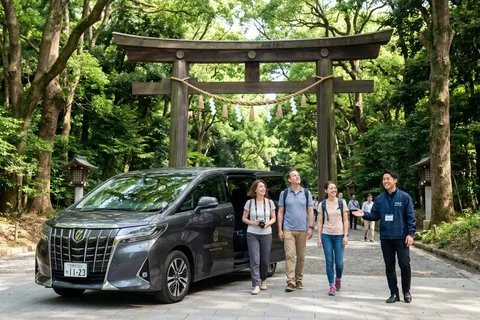 YokohamaPrivate car · per person5.0★ · 38
Tokyo in 1 Day from Yokohama by Car with Licensed Guide
A private car day in Tokyo with a licensed guide, choosing three or four sights from a long list, starting fro…
from US$482 per person · max 7Why it is here →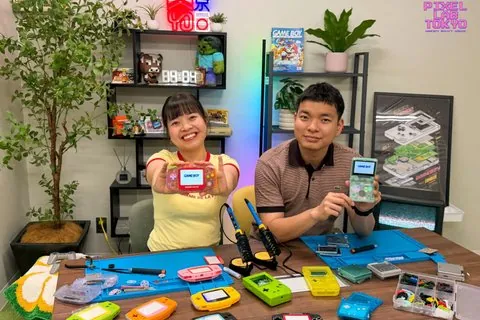 TokyoSmall group5.0★ · 202
Pixel Lab Tokyo: Gameboy Mod Workshop (Classic/Advance/SP)
A three-hour workshop building and customising your own Game Boy, Classic, Advance or SP, to take home.
from US$350 per person · max 8Why it is here →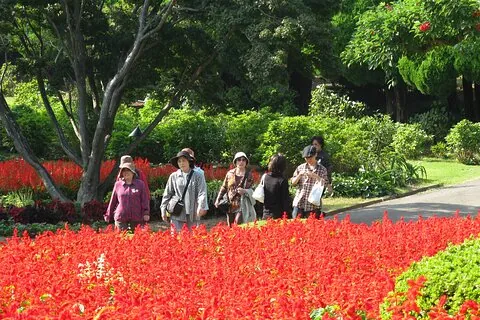 FukuokaShared car · per person5.0★ · 17
Colors of Japan, Fukuoka Nokonoshima Island Park & Wagyu BBQ
A relaxed half day on Nokonoshima, a flower-park island ten minutes across Hakata Bay by ferry, with a wagyu b…
from US$149 per person · max 15Why it is here →If you book, we may earn a small commission at no extra cost to you. It never decides what we recommend.