Cruise lines publish two categories of shore information: “easy” and “moderate.” Neither tells you whether there are forty steps to the shrine, how far the coach parks from the gate, or where you can sit down when your knees have opinions.
We have walked every port in this guide, so here is the data instead — distances, gradients, stairs and rest points. Nothing here is a warning to stay aboard. It is the information that lets you choose well.
The quick assessment
| Port | From the berth | Terrain | Verdict |
|---|---|---|---|
| Aomori | Museum 400m, market 1.2km | Flat, paved, wide | Easiest port in Japan. Everything on one waterfront level |
| Yokohama | Everything 0–1.5km | Flat, with lifts | Osanbashi is fully step-free; Chinatown is level |
| Kagoshima | Shuttle ~30 min (Kita-futo: walk) | Flat once in town | Arcades are covered and level; the ferry is step-free |
| Kanazawa | Shuttle 30 min | Mostly flat, garden paths gravel | Kenroku-en has gentle slopes and gravel; benches throughout |
| Sakaiminato | Shuttle/taxi to the station | Flat, 800m linear | Ride in first — the statues start at the station door, then walk as much or as little as you like |
| Osaka | Aquarium beside the berth; subway ~10 min flat walk | Flat, lifts in stations | Dotonbori’s obstacle is crowds, not stairs — go before 11am |
| Otaru | Canal 300m from Wharf No.3 | Flat, short distances | Canal-to-Sakaimachi is one level kilometre; benches are sparse, cafés are not |
| Takamatsu | Garden 5 min from the berth | Flat; garden paths are fine gravel | Ritsurin has gentle, well-kept paths and rest houses |
| Sasebo | Miura: arcade 5 min. Uragashira: shuttle ~45 min | Flat, covered arcade | The Kujukushima boat is boarded by ramp with crew assistance |
| Fukuoka | Short ride from Chuo Wharf | Flat city, covered arcades | Yatai stalls mean low stools and tight spaces — restaurants are the easier version |
| Ishigaki | Shuttle to the ferry terminal, then 3–5 min flat | Flat town centre | Taketomi’s sand lanes are soft going for wheels — the buffalo cart helps |
| Miyakojima | Town 10–20 min flat from the quay | Flat coral island | Beach access is over sand; the bridge lookouts are drive-up viewpoints |
| Naha | Taxi ~10 min to Kokusai-dori | Kokusai-dori flat; Shuri is a hill | The monorail has lifts throughout; Shuri’s approach has slopes and steps |
| Hiroshima | Tram/taxi 30–40 min | Flat in the Peace Park | The park is level and benched; Miyajima has some slopes |
| Kobe | Walk or Port Liner | Flat waterfront, steep Kitano | Harborland flat; the Ijinkan hillside is a genuine climb |
| Akita | Tower at the berth | Flat downtown, park has slopes | Selion has lifts; Senshu Park climbs gently |
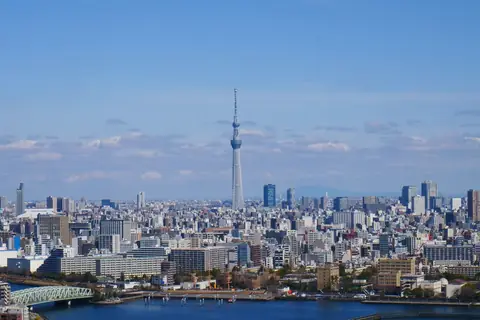
| Tokyo | Rail | Flat, but long station walks | Lifts everywhere; the distances inside stations are the challenge |
| Beppu | Taxi 15–20 min | Hell circuit mostly flat | Umi Jigoku is level; Chinoike has some steps |
| Kochi | Shuttle 25 min | Flat city, castle keep is brutal | Market and grounds fine; the original keep stairs are near-ladders |
| Nagasaki | Walk from wharf | Hills, but escalators | Glover Garden has moving walkways; Dutch Slope does not |
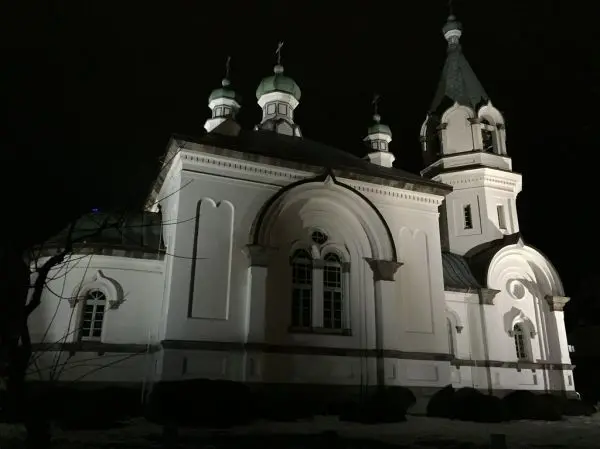
| Hakodate | Tram/walk | Steep slopes throughout | Market flat; Motomachi is a staircase disguised as a district |
| Busan | Taxi 20–35 min | Gamcheon is 100% hillside | Jagalchi flat; the village is stairs, lanes and gradients |
| Keelung | Walk 10 min | Market flat, Jiufen is stairs | Night market level; Jiufen’s lanes are a stone staircase |
| Shimizu | Walk 8–10 min | Flat waterfront | Market and promenade level; Kunozan is 1,159 steps (take the ropeway) |
The four that reward the most walking
If your energy budget is limited, spend it here.
Nagasaki. The city knows it is built on hills and has installed escalators and moving walkways up to Glover Garden — you ascend the most beautiful hillside in Japan sitting still. Trams are ¥150 flat, frequent, and level-boarding at most stops.
Aomori. Genuinely the flattest port day in the country. Wa Rasse, A-Factory and the bay promenade sit within 400 metres of each other on smooth pavement, with seating and toilets in every building.
Kagoshima’s Sakurajima ferry. A car ferry with lifts, seating and step-free boarding, then a paved lava trail and a 100-metre foot bath with benches. You can stand on an active volcano without climbing anything.
Yokohama. Osanbashi Pier is a wooden deck with ramps and no steps, the promenade to Yamashita Park is level, and Chinatown is flat. The most accessible major port on any Japan itinerary.
The three that will surprise you
Hakodate’s Motomachi. Photographs flatten it; Hachiman-zaka is a 12% grade and the church block sits above it. The trams and taxis go to the top — ride up, walk down, and the district becomes a pleasure rather than a test.
Kochi Castle’s keep. The grounds are gentle; the original 1747 interior stairs are close to vertical ladders with rope handrails, unchanged since samurai used them. See the exterior and the plaza view and consider your visit complete — it is one of only twelve original keeps precisely because nobody modernised it.
Gamcheon in Busan. The pastel village is built into a slope and connected by staircases. Taxi to the top viewpoint and let gravity do the work downhill; do not enter from below unless stairs are a hobby.
If you use a wheelchair
Book a WAV (wheelchair-accessible vehicle) taxi in advance — they are limited in port towns and they sell out on cruise days. Shuttle buses to city centres are often standard coaches with steps, and crews are not permitted to lift beyond certain weights.
Ask your line, in writing, two questions before you sail: whether your ports are alongside berths or tender, and whether the gangway at each is ramped or stepped. Some Japanese berths still present stairs, and the answer determines your whole day. Yokohama’s Osanbashi is the reliable exception — fully accessible, end to end.
The small practical mercies
- Toilets are everywhere, free, spotless. Every station, convenience store, park and department store. Nobody will question you walking in to use one.
- Convenience stores are rest stops. Most have a counter or seating, air conditioning, and cold drinks for pocket change.
- Coin lockers at stations free your hands and shoulders for the day — ¥300–700, and they take IC cards.
- Taxis are cheaper than you fear and drivers open the door for you automatically. In every port on this list, a taxi to the one thing you really want to see costs less than a ship excursion for two.
- Say “yukkuri onegaishimasu” (slowly, please) and watch how the pace of everyone around you adjusts. Japanese service culture takes this seriously.
The point of all this
Our timed plans assume an average walking pace. If yours is slower, the arithmetic still works — you simply drop one stop from each plan and keep the margin. That is the whole trick: not doing less, but choosing earlier what to leave out.
The port day is yours. These are just the numbers that let you spend it on the parts you actually want.