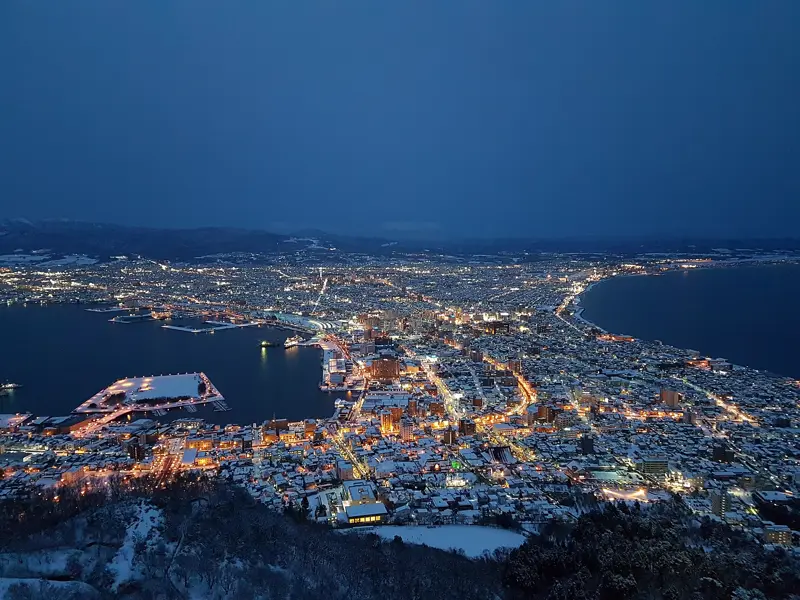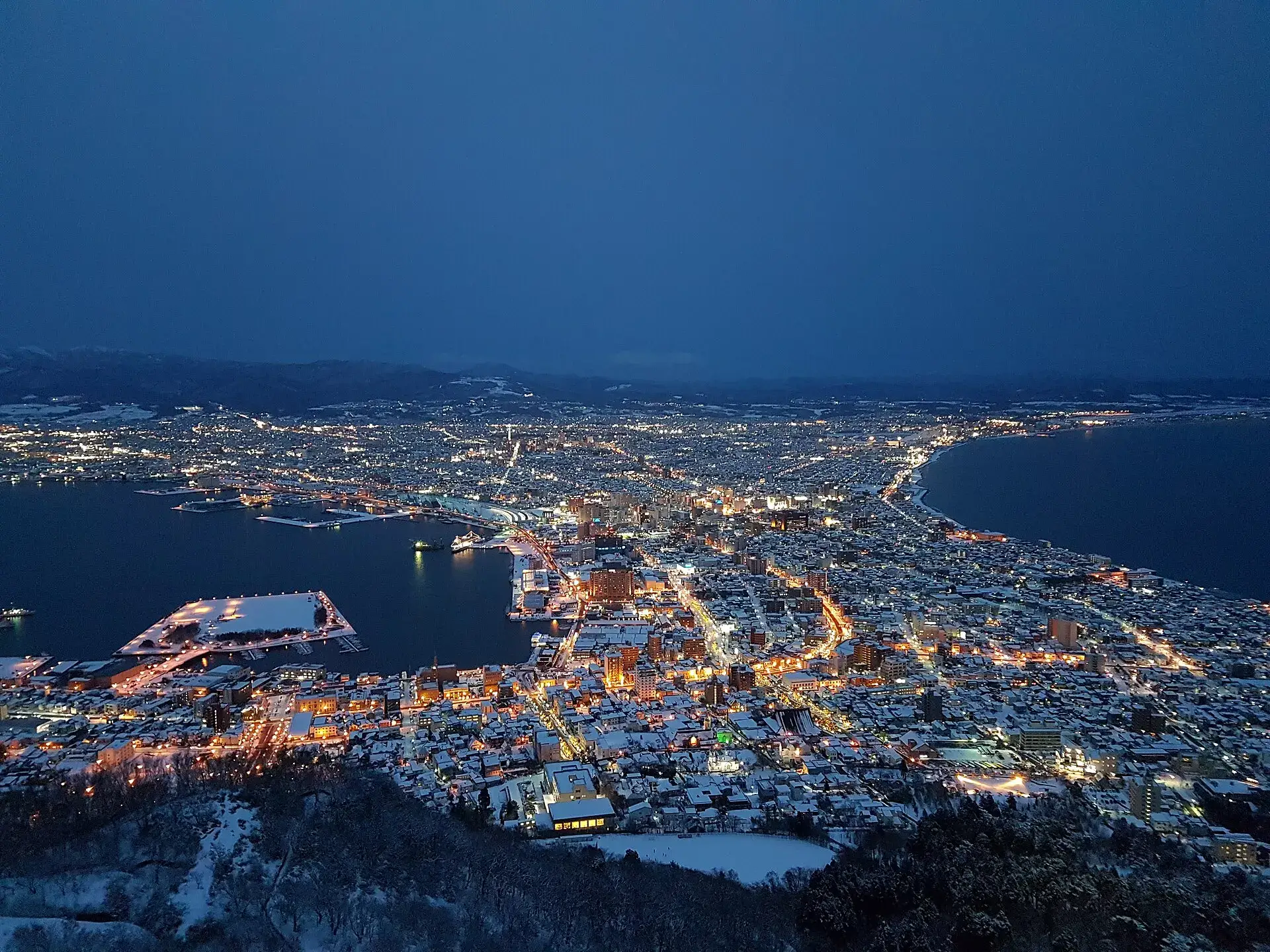
Hakodate’s night view has official credentials — one of Japan’s three great nightscapes, the city pinched between two seas, lit like spilled jewelry. And here is the cruise truth nobody prints: most port days end before it gets dark.
The gamble, quantified
The view requires darkness. Work backward from your all-aboard:
| Month (approx.) | Sunset | Earliest workable all-aboard |
|---|---|---|
| May–July | ~19:00–19:15 | 21:30+ |
| Aug–Sept | ~18:00–18:45 | 21:00+ |
| Oct–Nov | ~16:30–17:15 | 19:30+ |
Sailing at 18:00? The mountain at night is not your day — no matter what the excursion desk suggests. Sailing at 22:00 on an autumn call? Now it’s real: dusk falls early, and our full-day plan slots the ropeway at +5:30 with the queue caveat built in.
The queue rule matters more than the sunset rule. On multi-ship evenings the base station backs up 30–45 minutes. Our line in the plan is firm: if the posted wait exceeds 30 minutes, walk away — a missed view costs nothing, a missed ship costs everything.
The daytime consolation that isn’t one
Daylight from the summit shows you what the night hides: the impossible isthmus shape, ships threading both bays, the green wall of Hokkaido behind. It fits any 4–6 hour stop ashore (the slopes plan + 90 minutes), with no darkness mathematics at all.
Night view if the clock allows. Day view if it doesn’t. Never the gamble. That’s the whole doctrine — and it’s why the plan carries an escape line instead of an apology.
Guided days at the ports in this article
Shared cars with a guide first; each page says who should skip it. Booked through Viator; there is no tour desk at the pier.
If you book, we may earn a small commission at no extra cost to you. It never decides what we recommend.