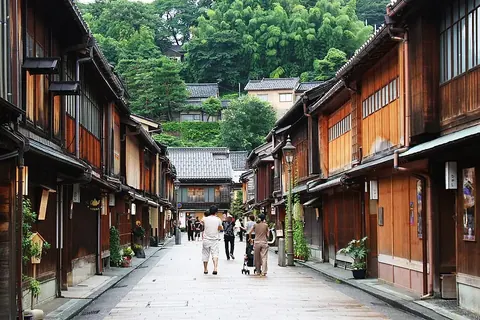
Every cruise line sells a “cherry blossom cruise.” Almost none of them will put a date on the thing they are selling, because the truth is inconvenient: full bloom lasts about a week, the date moves by a week or more each year, and no line refunds a bloom that came early.
So we did what we did for fall foliage: pulled the Japan Meteorological Agency’s official first-bloom records — the agency has watched a designated specimen tree in each city since 1953 — computed the 1991–2020 normals ourselves from the raw files, and mapped them to the cruise ports. Then we checked what the last decade actually did. Both answers are below.
The sakura front, port by port
Dates are our computed JMA 30-year normals for first bloom at each city’s official tree, with full bloom alongside. Ports in the order the front reaches them:
Notice the shape of that table: the entire southern half of Japan blooms inside one six-day window, Mar 21–27. Then the front slows down and takes seven weeks to climb to Kushiro. That shape is the whole booking strategy.
How to read this as a 2027 booking calendar
A late-March Pacific circuit is one bet, placed once. Tokyo, Shimizu, Kobe and Hiroshima all bloom within days of each other — so a single sailing either catches all of them or none of them. If bloom comes early (see below), you cruise past bare branches; if late, past buds.
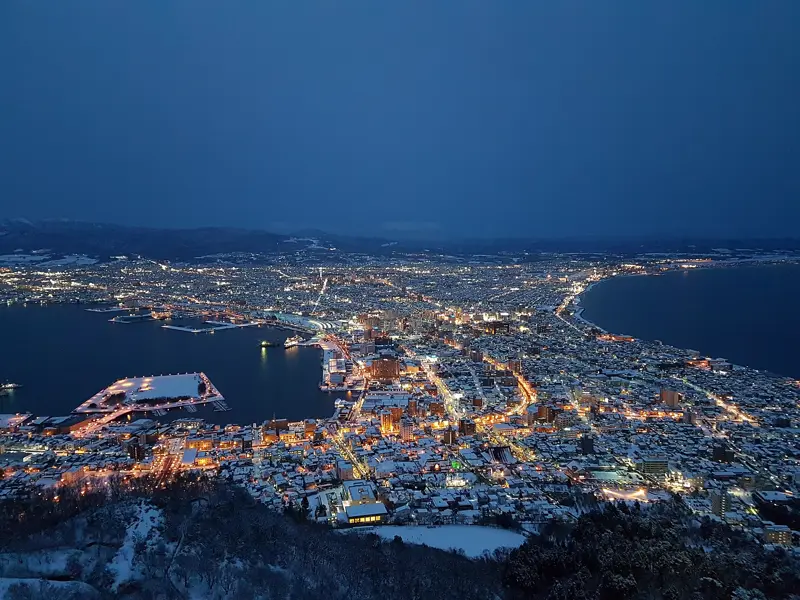
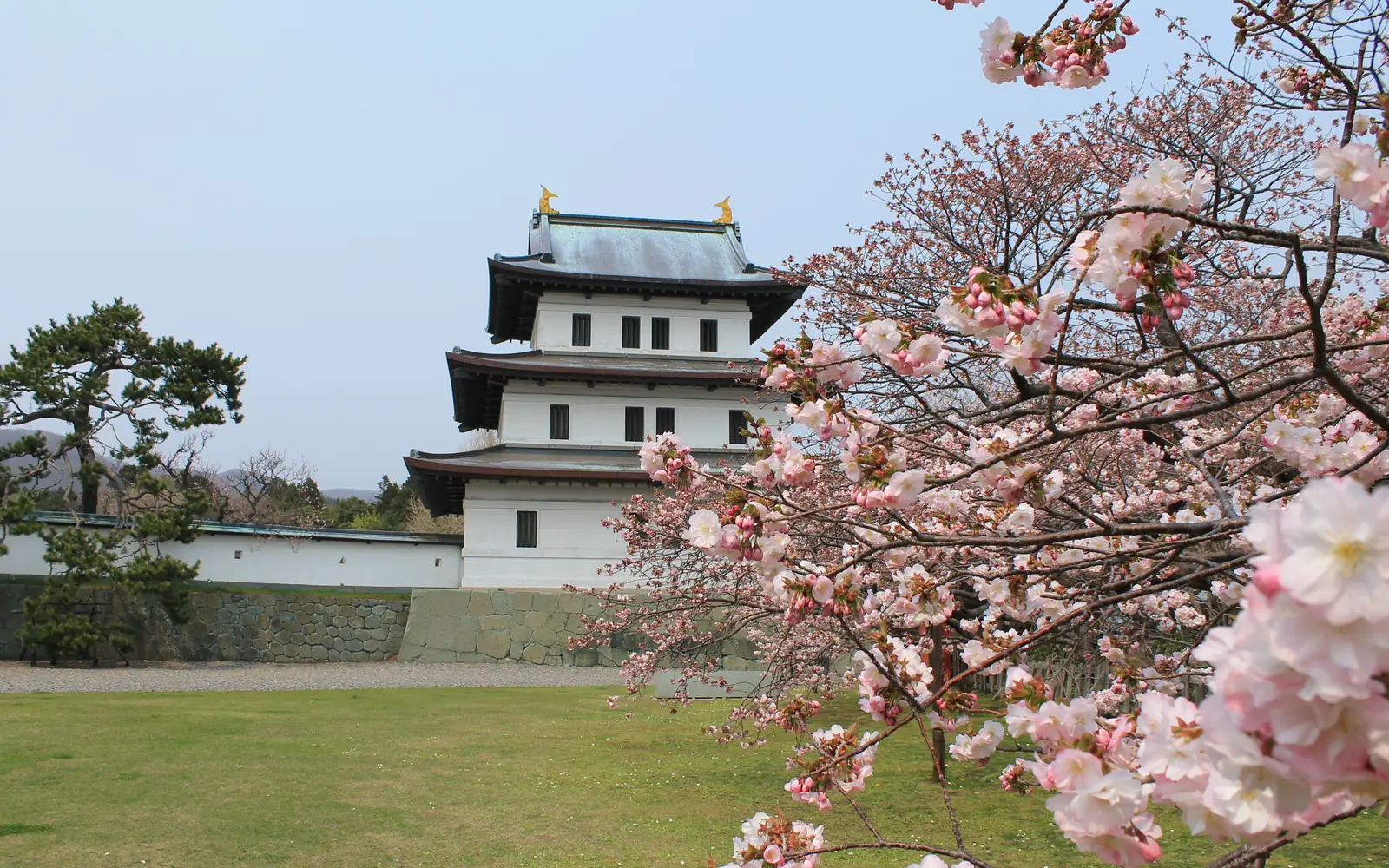
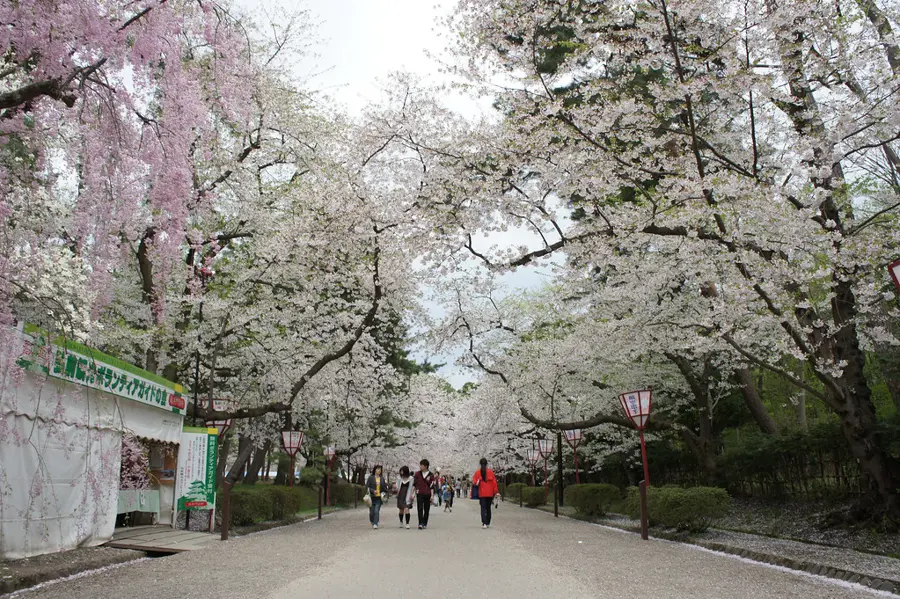
A mid-to-late April northern run rides the front for weeks. Kanazawa (Apr 3), Niigata (Apr 8), Akita (Apr 17), Aomori (Apr 22), Hakodate (Apr 28) bloom in sequence — a northbound ship can meet full bloom three or four separate times. Add the two heavyweight side-trips: Aomori’s call is an hour from Hirosaki Park (2,600 trees, petal-filled moats), and Hakodate is around two hours from Matsumae, Hokkaido’s only castle town — about 10,000 cherry trees of 250 varieties, blooming in relay for a full month. This is the itinerary the data likes, and the 2027 season has more of these sailings on sale than ever.
January works too, differently. The Okinawa loops meet hikan-zakura in Naha and Ishigaki from mid-January — real cherry blossom, wrong postcard.
The honest caveats
- The last decade ran early. Computed from the same official records: Tokyo’s last ten first-blooms average Mar 19 against a Mar 24 normal; Aomori Apr 16 against Apr 22; Hakodate Apr 22 against Apr 28. Tokyo opened on Mar 14 in 2020, 2021 and 2023 — then Mar 29 in 2024. The trend is early; the variance is brutal. Both argue for the multi-latitude itinerary over the single famous week.
- First bloom is not the photo. Full bloom follows first bloom by about a week in the south, only 4–5 days in the north, and petals hold roughly a week after that. The viewing window at any one port is short.
- The specimen tree is in the city. JMA observes one official somei-yoshino per station. Hirosaki, Kakunodate and Matsumae — the actual destinations — run a few days behind their reference cities’ downtown trees.
- No line guarantees a bloom. Read the brochure again: it promises spring, not sakura. The refund policy for an early bloom is that there isn’t one.
Whichever sailing you pick, the port-day arithmetic stays ours: what fits your hours, which loop suits you, and back aboard sixty minutes early — ideally with petals in your hair.