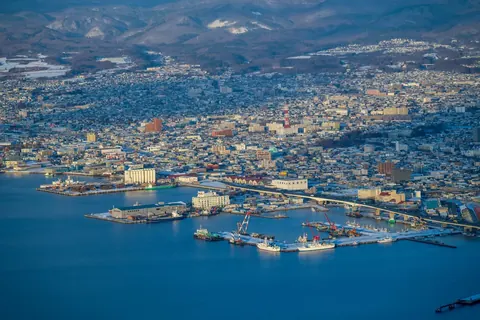
Most people book a cruise and then find out what is happening. It works the other way round about twice a year, and when it does the payoff is enormous.
Here is what is genuinely fixed on this coast, what moves, and what is worth reorganising a holiday for.
The two that justify building an itinerary around them
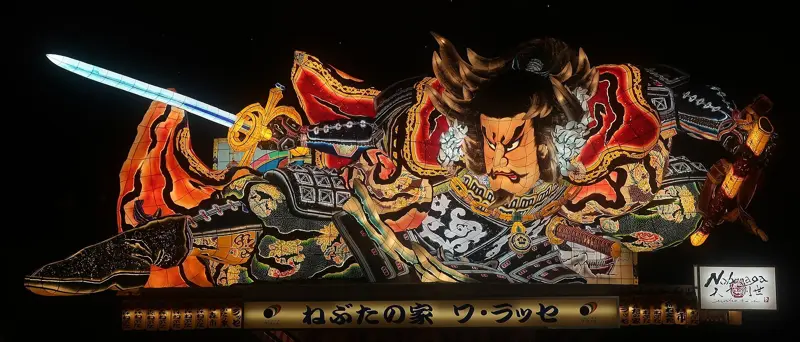
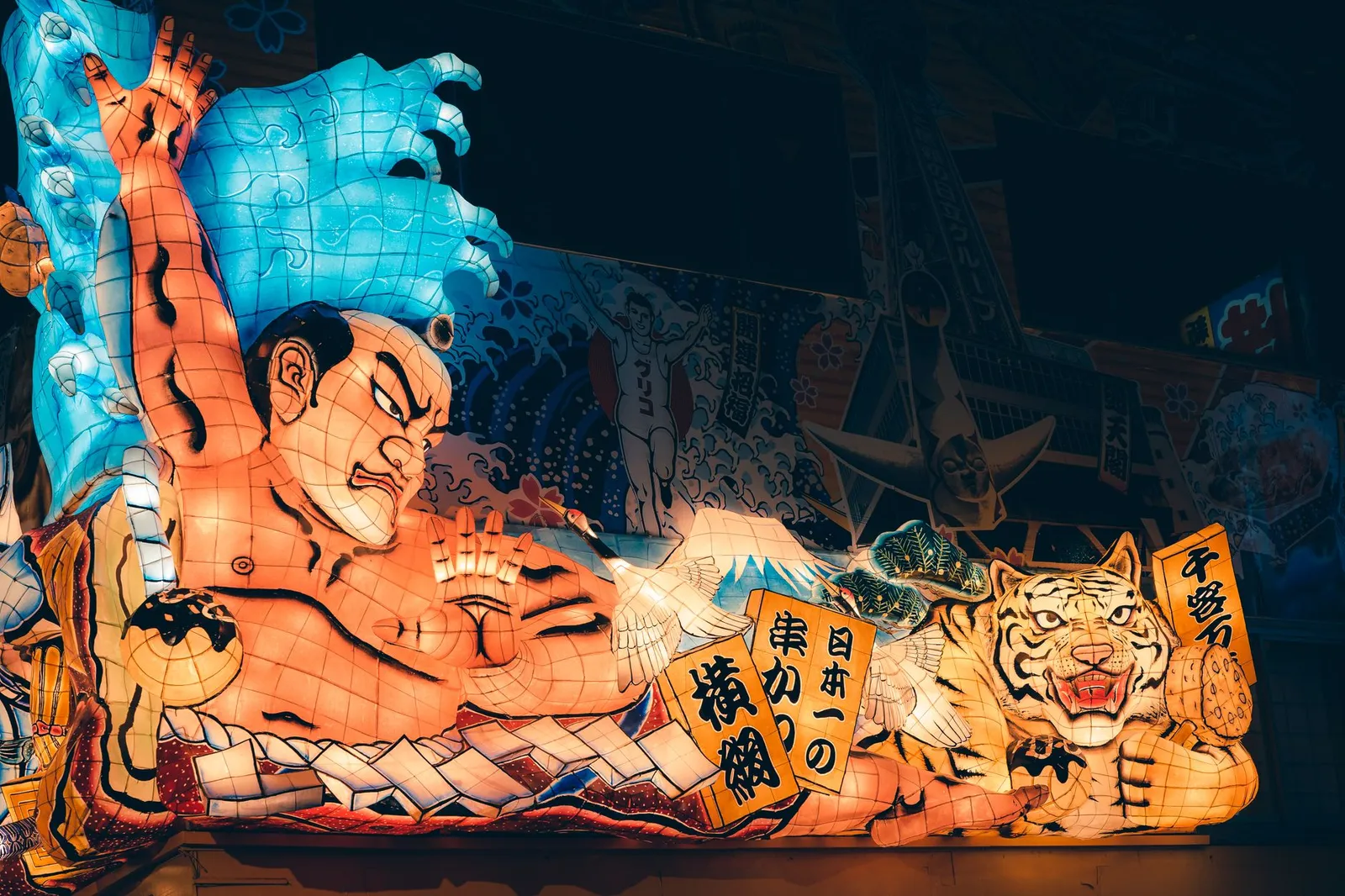
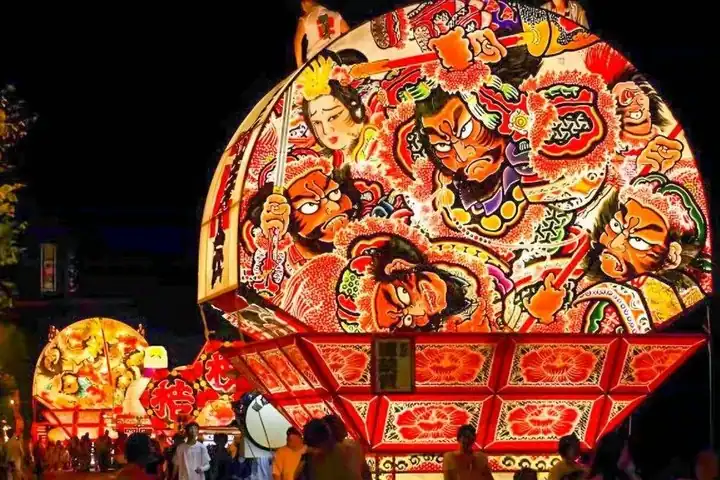
Aomori Nebuta Matsuri — 2 to 7 August, every year, without exception.
Around twenty three-dimensional warrior figures, the largest roughly nine metres wide and four tonnes, built from wire and washi paper and lit from within by about a thousand bulbs each, hauled through the streets by neighbourhood teams while thousands of costumed dancers throw themselves into the air alongside. It takes eleven months to build and six nights to release.
The dates never move — not the first weekend, not a floating holiday. You can book a cruise around them a year in advance, and that is exactly what people do. Lines schedule late port stays for it.
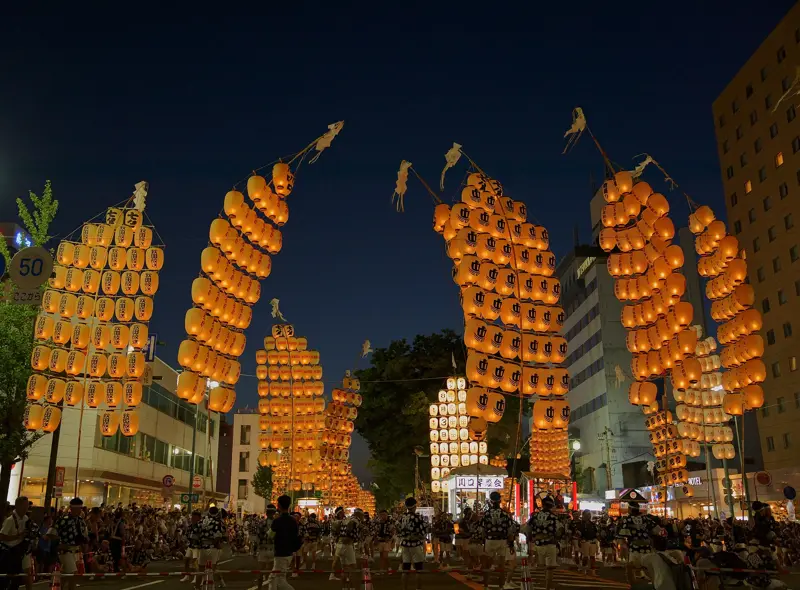
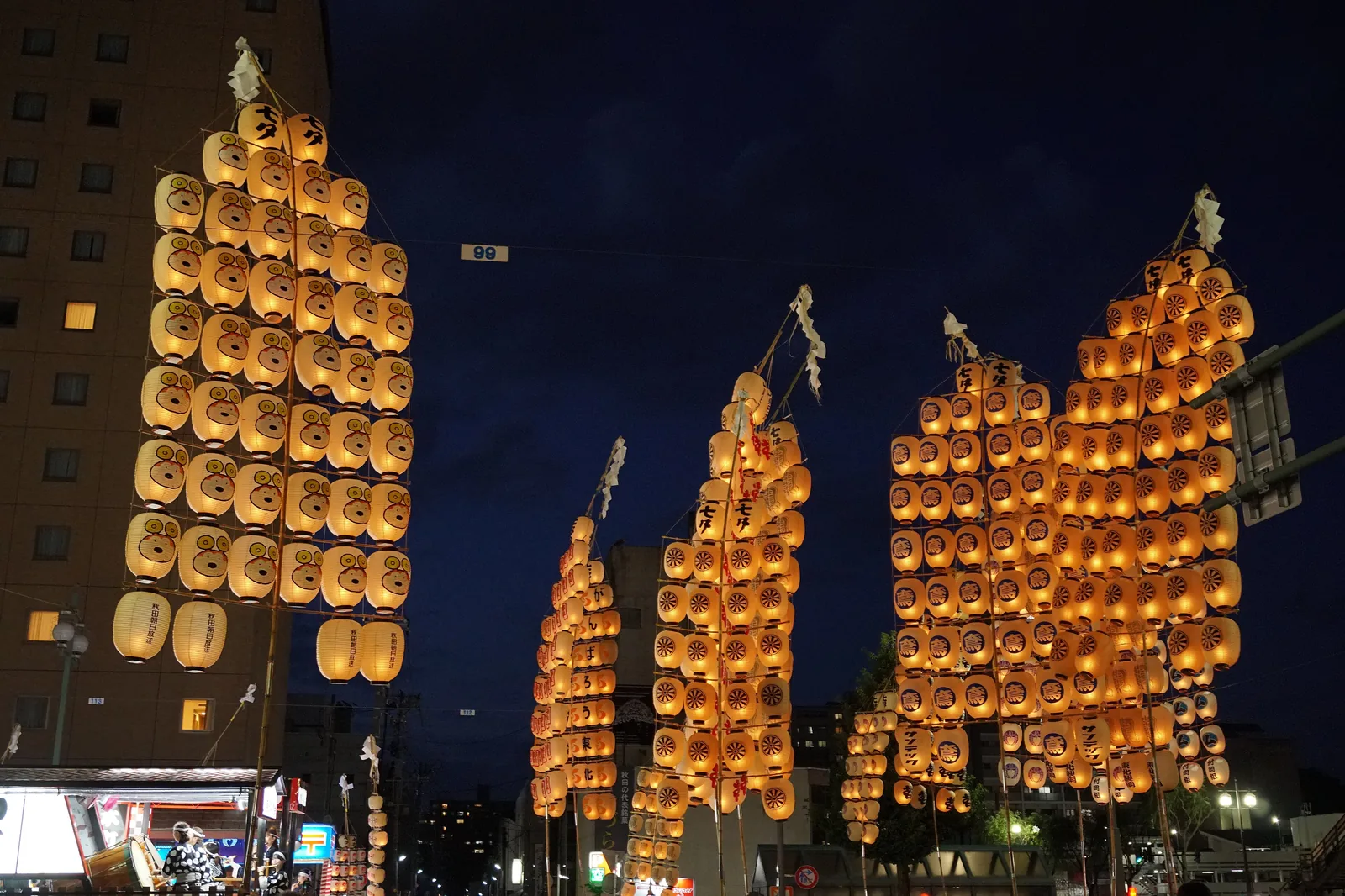
Akita Kanto Matsuri — 3 to 6 August, every year.
Two hundred and fifty bamboo poles, up to twelve metres tall and fifty kilograms with forty-six lit paper lanterns each, raised simultaneously down a closed city street and then balanced on a palm, a forehead, a shoulder, a hip. The lanterns hold real flame. When a pole goes over — and they do — it comes down burning, and the team relights and starts again.
Afterwards the barriers come down and anyone may try to lift one. You will not balance it. Lifting it at all is the achievement.
These two are four days apart in the same region, which is not a coincidence: several northern itineraries run both.
Things that are fixed but need no planning
Sumo, in Tokyo: January, May and September. Six grand tournaments a year, fifteen days each, three of them at the Ryogoku Kokugikan and the rest in Osaka, Nagoya and Fukuoka. If your call falls inside one, book an arena chair about a month out and arrive by two in the afternoon — and outside those forty-five days there is no professional sumo in Tokyo at all.
Kabuki, in Tokyo: most days. The Kabuki-za in Ginza runs two programmes daily and sells single-act tickets on the day from a separate window on the left of the building. Sixty to ninety minutes, top gallery, roughly a tenth of the full price. For a port day this is not a compromise; it is the correct choice.
Crab, on the Sea of Japan coast: early November to about March. This is a season rather than an event and it dominates Kanazawa and Sakaiminato completely. Outside it, order something else and let the port show you what it is actually good at.
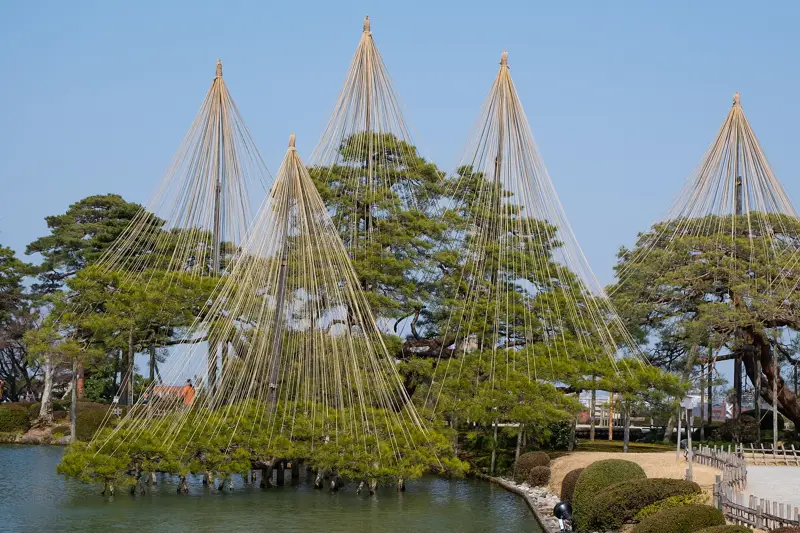
Yukitsuri, in Kanazawa: 1 November to mid-March. The rope cones rigged over Kenroku-en’s pines to carry wet snow. Not a festival, entirely deliberate, and one of the most photographed things in Japan.
Things that move, and how much
Cherry blossom is the great trap. The date shifts by a week or more each year and nothing will refund you for a bloom that came early. What you can rely on is sequence: Okinawa opens in late January, Tokyo and Yokohama around late March to early April, and the far north — Hirosaki near Aomori, Kakunodate near Akita — in late April. Booking a late-April northern call gives you better odds than a late-March Tokyo one, and a tenth of the crowd.
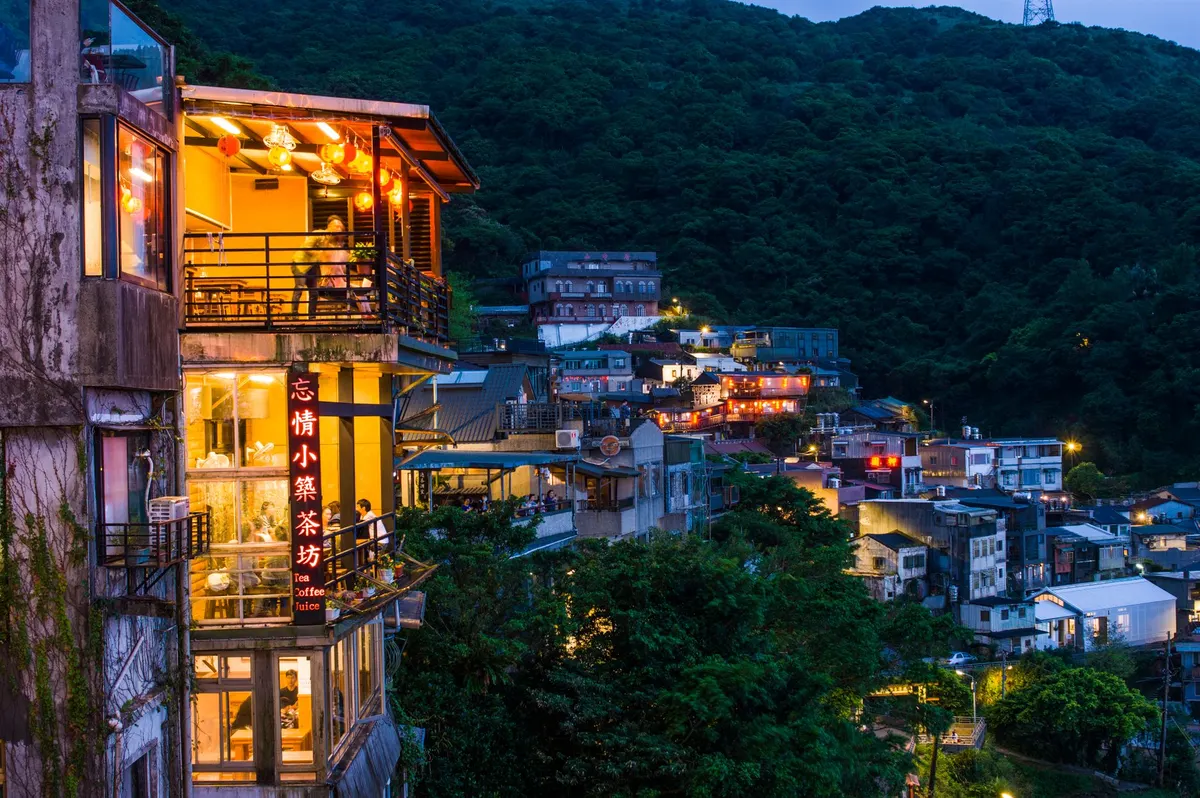
Keelung’s ghost month falls in the seventh lunar month, usually August or September. Keelung’s Zhongyuan festival is the oldest and largest of its kind in Taiwan and has run since 1855 — when two feuding immigrant communities agreed to stop killing each other and compete over ceremonies for the dead instead. Eleven surname clans still host in rotation. On the fourteenth day, illuminated floats parade through the city and paper lantern houses are carried into the sea and set alight to light the way for those who drowned.
Chinese New Year, late January or February, takes over Yokohama’s Chinatown with firecrackers and a lion dance, and fills Keelung’s temples.
Busan International Film Festival, about ten days in early October, is the best time to be in that port.
Dates worth knowing even if you are not planning around them
- 6 August, Hiroshima — the anniversary. The city is quiet and full, and the lantern floating on the Motoyasu river in the evening is not a spectacle for visitors.
- 23 June, Okinawa — Memorial Day, a prefectural holiday. Schools close and families come to the Cornerstone of Peace to find a name.
- Third weekend of May, Asakusa — Sanja Matsuri: around a hundred portable shrines and well over a million people over three days. Not a spectator event so much as a crowd you join.
- 12–15 August, Tokushima — Awa Odori, if your itinerary happens to include Komatsushima.
- Second Friday to Sunday of February, Oga — the Namahage Sedo Matsuri, masked figures carrying torches down a snow-covered mountainside. There are no cruise ships in Akita in February, and that is a shame.
The honest advice
Do not chase a festival you cannot reach. An hour each way to arrive at a crowd for forty minutes is a worse day than the port you were already going to have.
But if a sailing lands on 2–7 August in Aomori or 3–6 August in Akita, take it over anything else on the calendar. Those two are worth rearranging a year for, and everyone who has been will tell you the same.
Guided days at the ports in this article
Shared cars with a guide first; each page says who should skip it. Booked through Viator; there is no tour desk at the pier.
 AomoriPrivate car · per person5.0★ · 13
Aomori: Private Custom Tour with Local Guide
A private day with an English-speaking local guide: the Nebuta floats at Wa Rasse, Yoshitomo Nara's dog at the…
from US$194 per person · max 15Why it is here →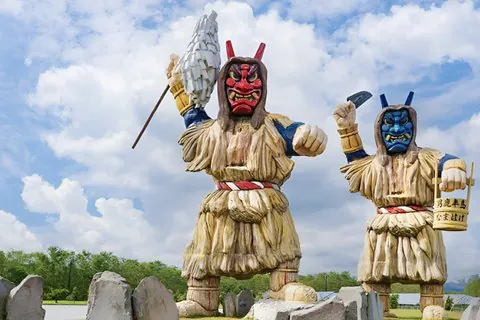 AkitaPrivate car · per person5.0★ · 11
Akita Private Custom Tour with Local Guide
A six-hour private guided day that lists Kakunodate, Lake Tazawa, Gozanoishi Shrine and Akita city's castle pa…
from US$194 per person · max 15Why it is here →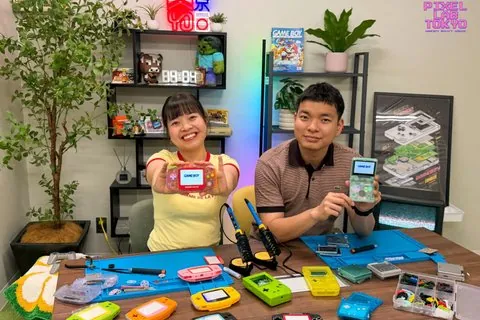 TokyoSmall group5.0★ · 202
Pixel Lab Tokyo: Gameboy Mod Workshop (Classic/Advance/SP)
A three-hour workshop building and customising your own Game Boy, Classic, Advance or SP, to take home.
from US$350 per person · max 8Why it is here →If you book, we may earn a small commission at no extra cost to you. It never decides what we recommend.