
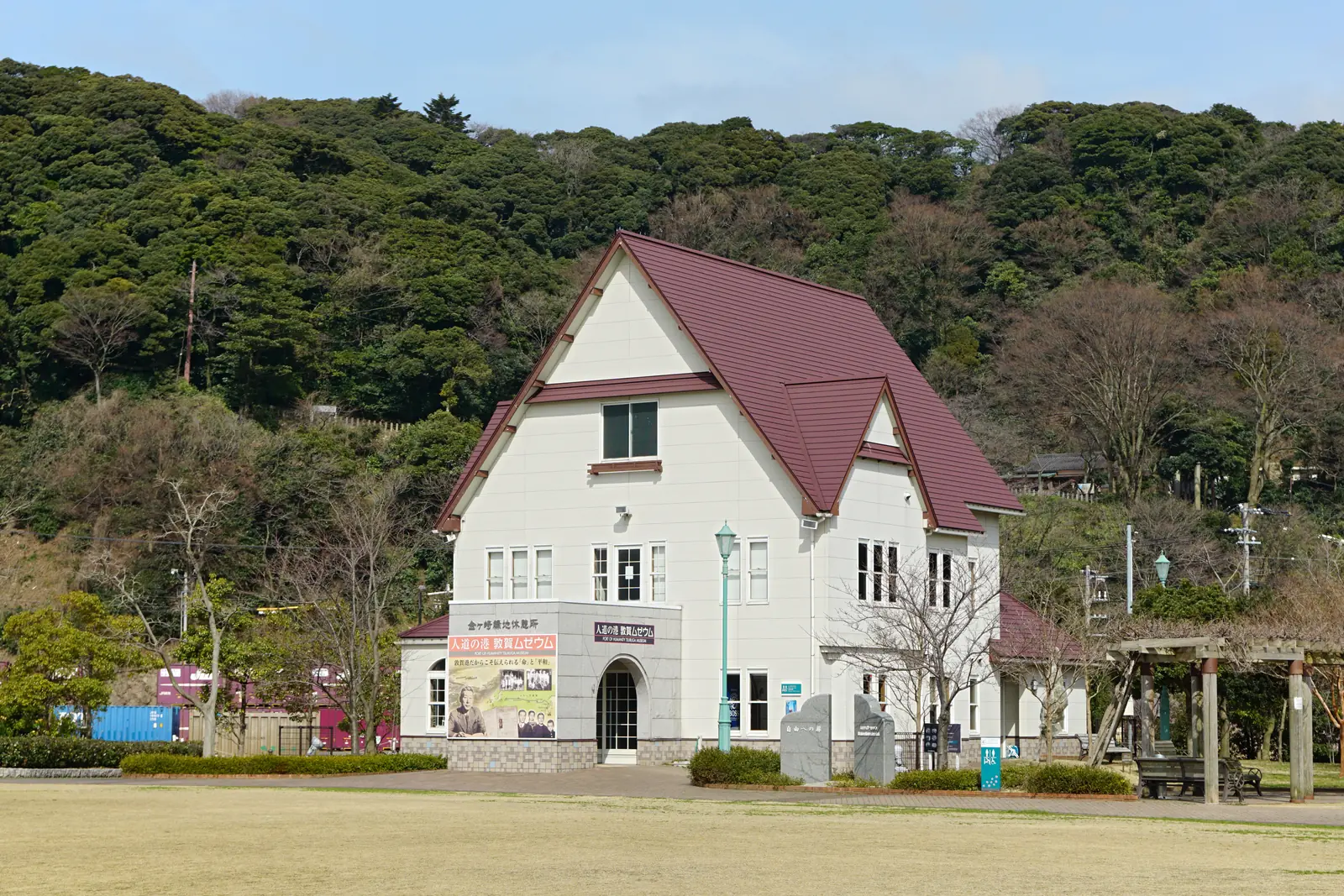
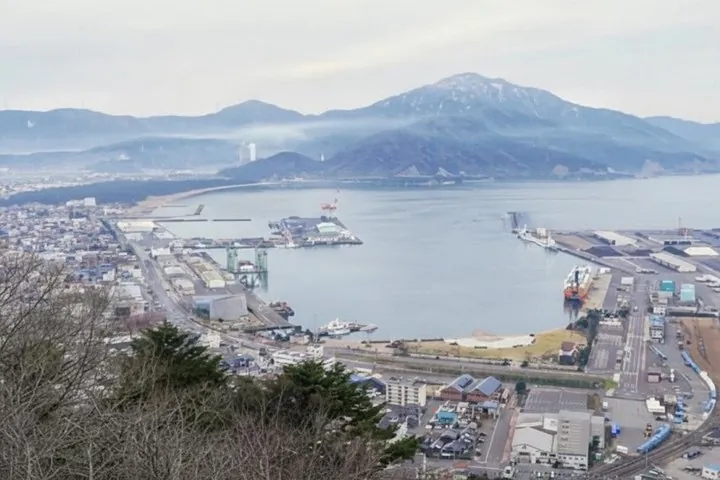
 Photo: 663highland / CC BY 2.5
Tsuruga is the one Japanese port that Polish orphans and Jewish refugees passed through. The museum's own English text says it was "the only port where Polish orphans in the 1920s" disembarked, and that Jewish refugees with "visas for life" landed in the 1940s. It stands on the Kanegasaki waterfront, so the place you are standing is the place the story took place.
Inside, a theatre film explains why the refugees and orphans came to Tsuruga, a gallery covers the port's history from ancient to modern times, and two rooms tell the main stories. The orphans' room has a diary left by a child and a large ceramic tile relief made for the 100th anniversary of their arrival. The refugees' room has a replica of a Sugihara visa and a digitised list of his transit visas, and a pocket watch that survives from the valuables refugees sold for food at a clock shop near the station. The museum says most of those items were lost in the 1945 air raid. Residents' recorded testimony closes the visit.
The catch is that it is a quiet, reading-heavy museum, and photography is banned in most areas. Skip it if you want a scenic hour; take it if you want to understand why this small port is on the cruise map. It is also closed on Wednesdays, so check your call date against the museum's closure calendar.
Five things the plaques won't tell you
- Check the day of the week: it closes on Wednesdays, and the museum's news page posts that month's opening days. Its September 28 notice is headed "October opening days".
- Keep your ticket stub: the museum lists the Red Brick Warehouse and the municipal museum among the stubs that earn the ¥400 group rate here.
- Last entry is 16:30, and the cruise-passenger shuttle on the 14 Oct plan runs only until 16:30, so do not leave the museum for last.
- No eating inside, and drinks only in the introductory exhibition area. The Red Brick Warehouse next door has cafés and restaurants, and its building stays open to 22:00.
- Lifts, two wheelchairs, an accessible toilet and a baby-changing bed are on site, and the museum is happy to have you arrive at opening time.
Residents' recorded testimony closes the visit.
The picks
Guided days from Tsuruga
Booked before you sail — there is no tour desk at the pier. Booking through these links supports the site.
Questions people ask here
Is the Port of Humanity Museum worth it from the cruise ship?
Yes if you care about the story: it is the museum on the site where Polish orphans and Sugihara-visa refugees landed. It takes about an hour and costs ¥500.
How do you get from the Tsuruga cruise port to the museum?
Big ships dock at Mariyama North, which has no terminal. The city runs a free shuttle loop on ship days that stops first at Kirameki Minato Hall; from there it is about a 9-minute walk. A taxi from the berth is about 3 km.
When is the museum closed?
Wednesdays (the next day if Wednesday is a public holiday) and 29 Dec–3 Jan, plus any temporary closures on its news page. The 14 Oct 2026 call falls on a Wednesday, so check the notice first.