On 1 November 2026, Japan retires the tax-free system every guidebook describes and replaces it with something new. For most tourists the change is a mild inconvenience. For cruise passengers it is a genuine information gap: every official explainer talks about airports, and almost nobody has written down what happens when you leave Japan on a ship.
We read the National Tax Agency’s 45-page Q&A and the Japan Tourism Agency’s traveller FAQ so you don’t have to. Here is the whole picture — including, honestly, the parts the government has not announced yet.
Until 31 October 2026: the old system, still running
If your cruise sails before this November, nothing changes. The familiar routine applies:
- Show your passport at a tax-free counter; spend ¥5,000+ in one store, one day; the 10% tax comes off at the till.
- Consumables (food, cosmetics, sake) are sealed in a bag — don’t open it in Japan.
- At departure there is nothing to do. Buy, board, sail.
From 1 November 2026: pay first, refund later
The new “refund model” flips the order. Stores charge full price including tax. You get the tax back only after customs confirms — electronically, at departure — that the goods are actually leaving Japan with you.
What survives, what dies:
- Survives: the ¥5,000 minimum per store per day (now judged on the pre-tax amount); the passport requirement at purchase.
- Dies: the sealed bags, the general/consumable distinction, and the ¥500,000 consumables cap. You can use the suitcase you bought and wear the coat.
- New: a 90-day deadline — customs confirmation must happen within 90 days of purchase, which every normal cruise itinerary clears easily.
The cruise-specific part nobody else has published
The Japan Tourism Agency’s official FAQ addresses ships directly, and the rules split by itinerary type:
1. Your cruise leaves Japan for good (to Korea, Taiwan, onward). You complete the refund procedure at your final Japanese port, at an electronic terminal, before you check any luggage — the goods must be with you when the terminal (or a red-screen customs check) wants to see them. Green screen: done. Red screen: show the goods at the customs counter.
2. Your cruise returns to Japan and you fly home. Do nothing at the ship — even at the Busan or Keelung call. Your “departure” for tax purposes is your flight out, and the procedure happens at the airport (Narita, Haneda, Kansai, Chubu, Fukuoka, New Chitose and Naha have self-service kiosks, plus a Visit Japan Web online option in dedicated areas).
Three practical rules fall out of this:
- Keep tax-free purchases in your day bag on the final Japanese port day, not in a suitcase that gets collected the night before. Checked = unclaimable.
- Don’t consume it before you leave. Eaten, opened, used-up items lose the refund for that entire receipt.
- Ask the store how they refund when you buy. The customs terminal only confirms export — the money comes later from the store or its refund agent (card reversal, app, bank transfer, or cash counters at big airports). There is no single national method.
What is honestly still unknown
Two things the primary sources do not yet say, and we will not pretend otherwise:
- Which cruise terminals will have the electronic terminals. The rules say “at the seaport of departure” — but no port-by-port equipment list has been published. Major cruise ports are the obvious candidates; small ports are an open question.
- Whether any cruise port gets a cash-refund counter. Those are run by refund businesses, not the government, and no seaport plans have been announced.
This page will be updated as the November rollout details are published — it is on our permanent verification calendar. In the meantime, the conservative play for a ship departure: favour stores that refund to your card or app (no counter needed), keep everything on you at the final port, and treat any port-side refund counter you find as a bonus, not a plan.
The one-line versions
- Sailing before November 2026: shop tax-free at the counter as always; nothing to do at the port.
- Sailing after: pay full price, keep the goods with you at your last Japanese port, find the terminal before bag-drop, and expect the money back later by the store’s chosen method — within weeks, not at the till.
Sources: National Tax Agency refund-system Q&A, Japan Tourism Agency traveller FAQ — both verified August 2026. Cash planning for the rest of your port day: our port-by-port cash table. First Japanese port paperwork: the immigration guide.
Guided days at the ports in this article
Shared cars with a guide first; each page says who should skip it. Booked through Viator; there is no tour desk at the pier.
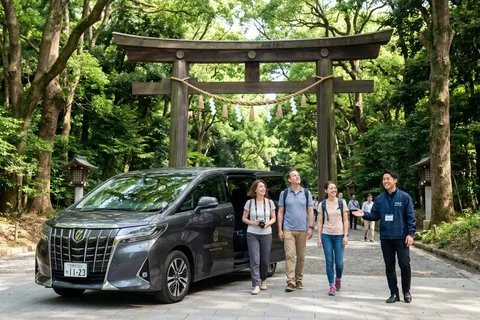 YokohamaPrivate car · per person5.0★ · 38
Tokyo in 1 Day from Yokohama by Car with Licensed Guide
A private car day in Tokyo with a licensed guide, choosing three or four sights from a long list, starting fro…
from US$482 per person · max 7Why it is here →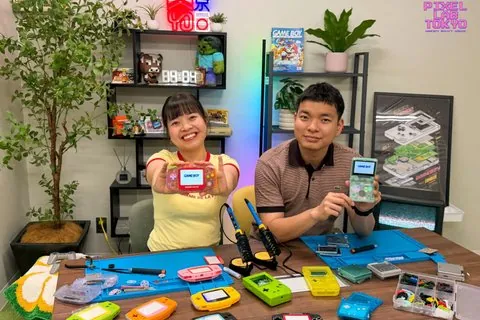 TokyoSmall group5.0★ · 202
Pixel Lab Tokyo: Gameboy Mod Workshop (Classic/Advance/SP)
A three-hour workshop building and customising your own Game Boy, Classic, Advance or SP, to take home.
from US$350 per person · max 8Why it is here →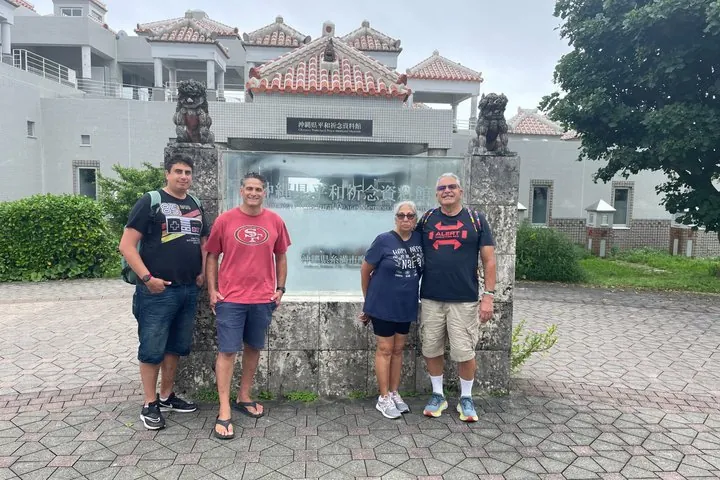 NahaPrivate car · per person4.8★ · 75
Okinawa Battlefields & Peace Memorial Tour, Licensed Guide
A six-hour private day in southern Okinawa with a licensed English-speaking guide and vehicle from Japan Guide…
from US$267 per person · max 7Why it is here →If you book, we may earn a small commission at no extra cost to you. It never decides what we recommend.