Japan’s cruise season is built around summer. Ships reposition into Asia in spring, run the loops through the warm months, and leave in autumn. Ask most agents about a January Japan cruise and you will be steered toward Southeast Asia.
That is broadly correct and it is also incomplete. There is a winter Japan, it is real, and it is not the same country you would have seen in August.
The rule is simple: winter itineraries go south
Look at where the ships actually are between December and March and the pattern is obvious. Naha, Ishigaki, Keelung, Kaohsiung, Hong Kong, and the Kyushu ports. The northern half of Honshu and all of Hokkaido essentially stop.
That is a weather decision made at sea rather than ashore. The Sea of Japan in winter is genuinely difficult, and Aomori becomes one of the snowiest cities on earth.
Naha is the one that properly works
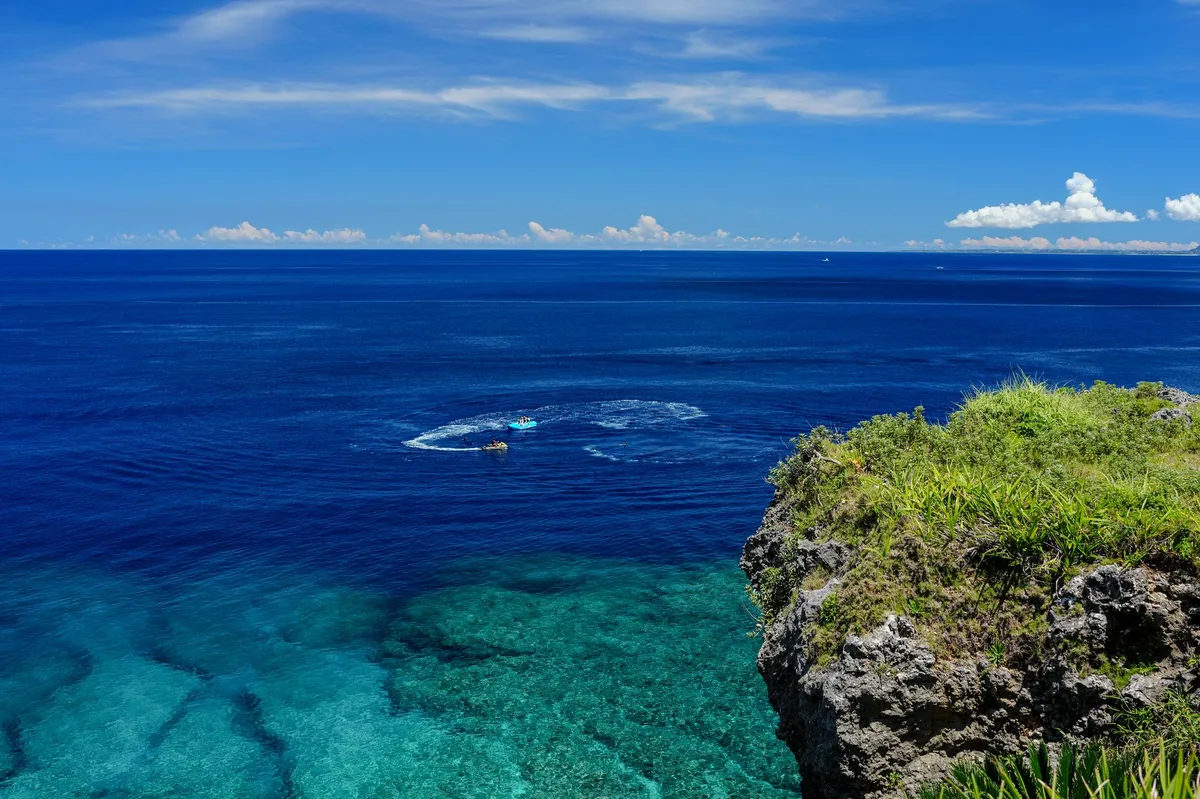
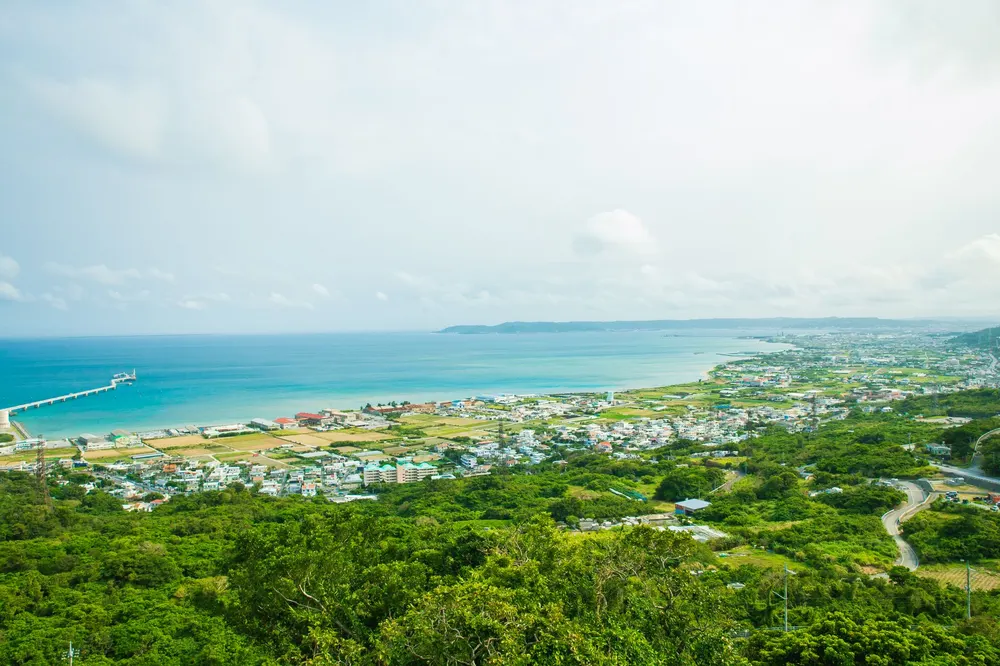
Okinawa is the only part of Japan with a full winter cruise season, and the reason is the thermometer. January and February run at around 17–19°C, dry and often clear. Okinawan people put coats on. Anyone arriving from a northern winter does not.
What that buys you is a port where every plan still functions: Shuri Castle and its ongoing reconstruction, the southern memorial sites, Makishi market, Tsuboya’s pottery street, awamori in the evening. None of it depends on weather.
And there is a seasonal bonus almost nobody knows about: Japan’s first cherry blossom opens on Okinawa in late January, months before the mainland, and it is a different species — deeper pink, opening from the tip of the branch rather than the base.
Kyushu and Taiwan: mild, and better in cold air
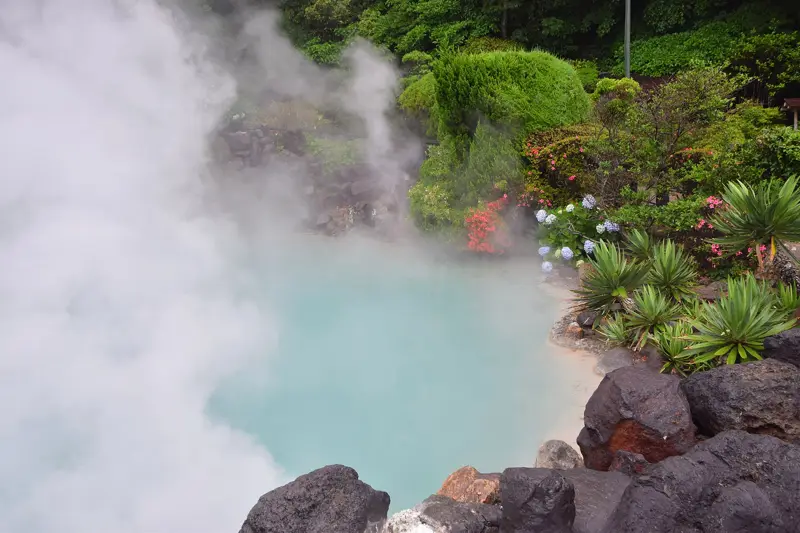
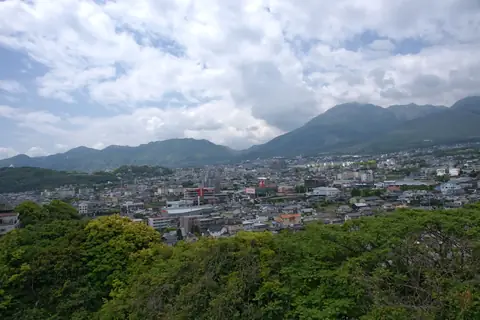
Beppu makes more sense in winter than in August. A hot spring town in humid heat is a hard sell; a hot spring town at 12°C is the point. Cold air also makes the yukemuri — the steam plumes rising over the whole town — dramatically visible, which is the signature view and which summer flattens.
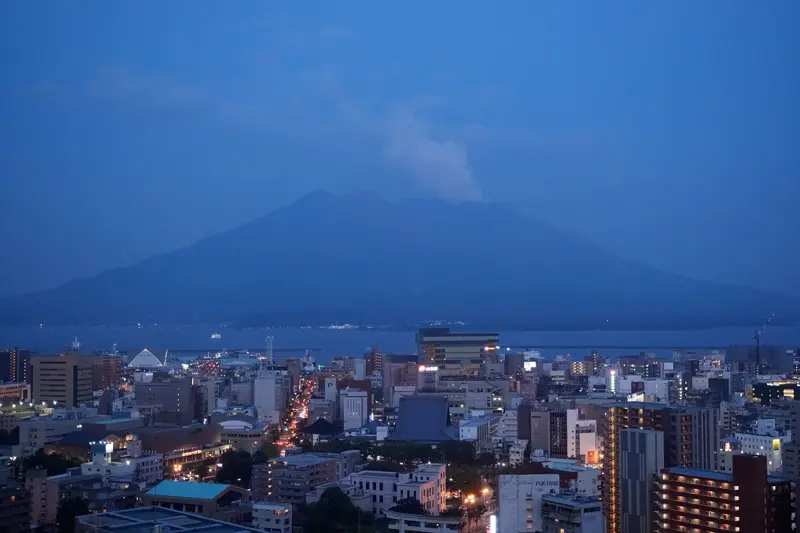
Kagoshima rarely freezes. Kyushu’s south is mild, Sakurajima views are at their clearest in dry winter air, and the giant Sakurajima daikon are harvested in this season.
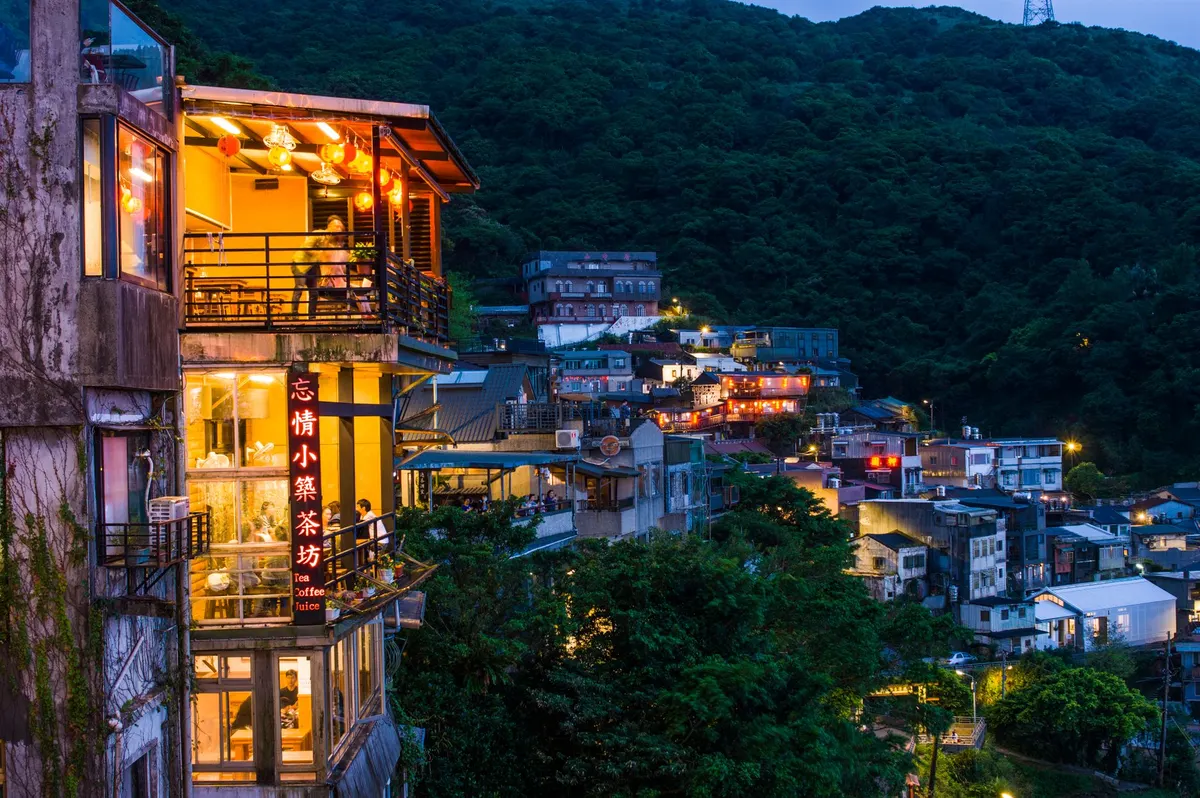
Keelung and Taiwan sit around 15–19°C in January, damp rather than cold, with Chinese New Year filling the temples in late January or February. Miaokou night market is covered and functions in any weather.
What you are missing further north — and it is a lot
Here is the frustrating part. The northern ports are at their absolute best in the months nobody sails to them.
Snow crab season opens in early November and runs to around March. For Kanazawa and Sakaiminato, that single fact reorganises the entire local economy for five months. Every legally landed crab carries a coloured tag identifying its port, and locals read the tag before the price.
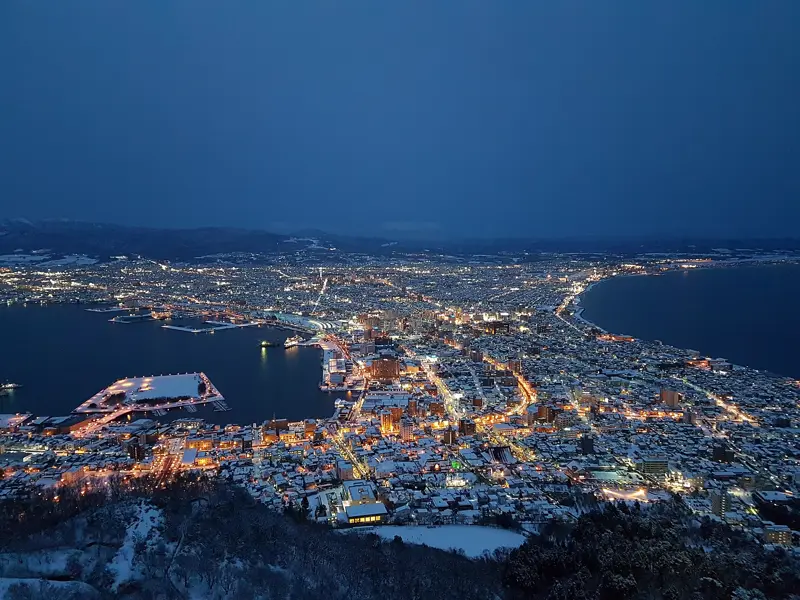
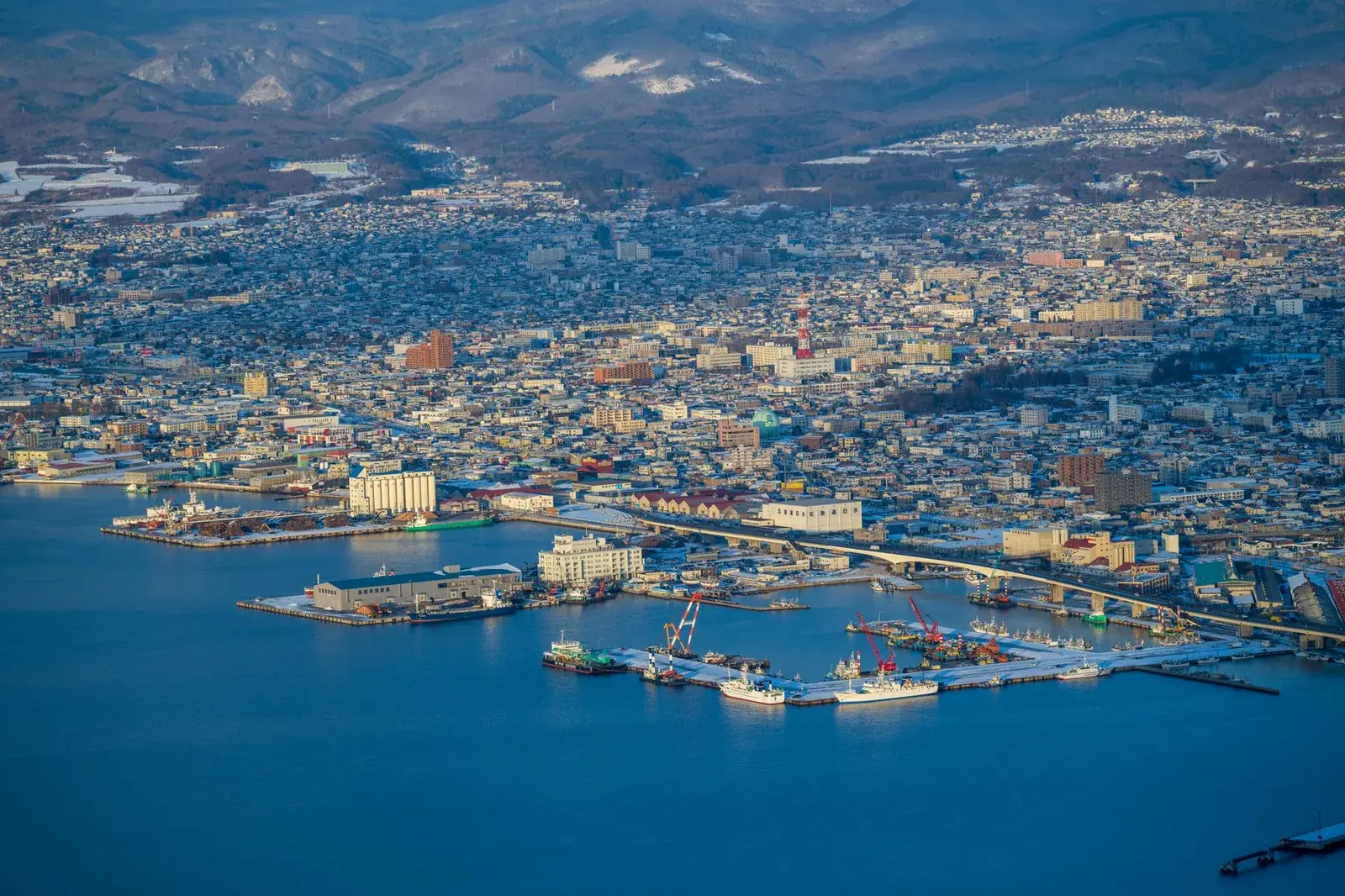
Hakodate’s squid and uni peak in the cold. Aomori’s scallops likewise. The Sea of Japan in winter is cold, rough and shallow over a wide shelf — a bad combination for fishermen and an excellent one for fish.
And the air is the clearest of the year. Japan’s winter is dry. If you ever draw a January call at Shimizu, you have the best odds anyone gets of seeing Mount Fuji, and from the deck at dawn it rises out of the sea with nothing near its height.
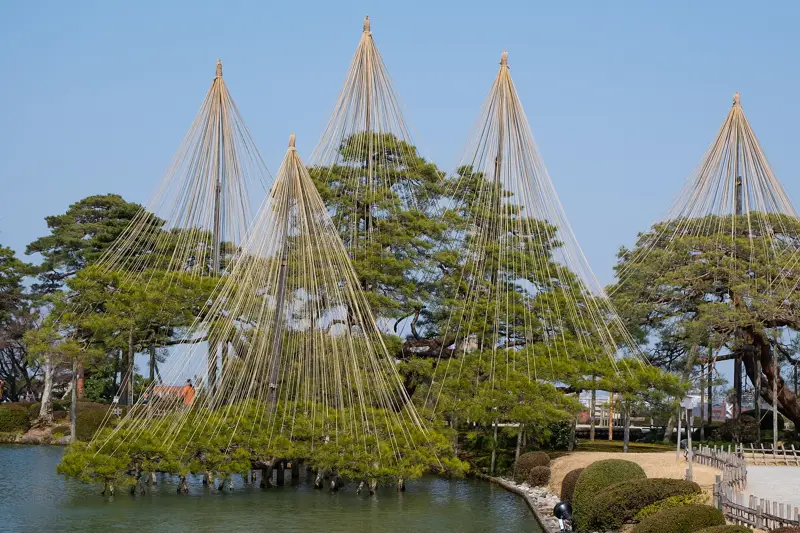
Kanazawa in November and December is the specific case worth knowing: from 1 November the gardeners at Kenroku-en rig yukitsuri, conical arrays of rope hung from central poles and tied to the pine branches to carry the weight of wet snow. A hundred trees under rope cones against a grey sky is one of the most striking things in Japan, it stays up until mid-March, and it is invisible for the entire cruise season.
The honest verdict
Book a winter Japan cruise for Okinawa, Kyushu and Taiwan. They are genuinely good in those months, not merely tolerable, and you get warm ports without the humidity that makes August hard work.
Do not book one expecting the north. If Kanazawa’s crab or Hakodate’s uni is what you want, you are looking at a land trip, not a cruise — and that is worth knowing before you spend the money rather than after.
And if a repositioning itinerary does put you at a northern port in November or early December, take it. That is the best month of the year in those towns, and almost nobody on a ship ever sees it.
Guided days at the ports in this article
Shared cars with a guide first; each page says who should skip it. Booked through Viator; there is no tour desk at the pier.
 NahaPrivate car · per person4.8★ · 75
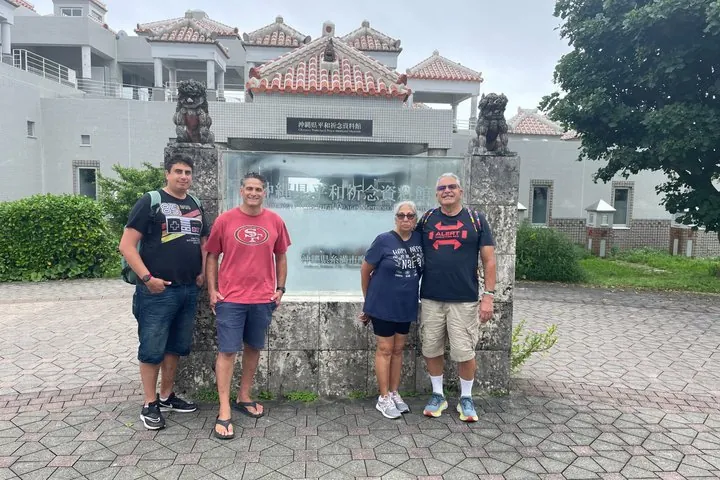
Okinawa Battlefields & Peace Memorial Tour, Licensed Guide
A six-hour private day in southern Okinawa with a licensed English-speaking guide and vehicle from Japan Guide…
from US$267 per person · max 7Why it is here →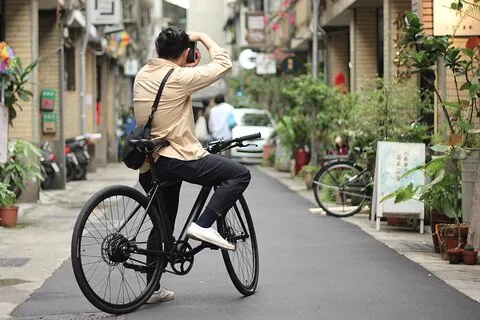 Keelung (Taipei)Small group5.0★ · 34
Best E-bike Cycling Tour in Taipei - Includes Local Food & Drinks
A five-hour small-group e-bike ride from east Taipei to the Chiang Kai-shek Memorial Hall, with breakfast, a c…
from US$110 per person · max 4Why it is here →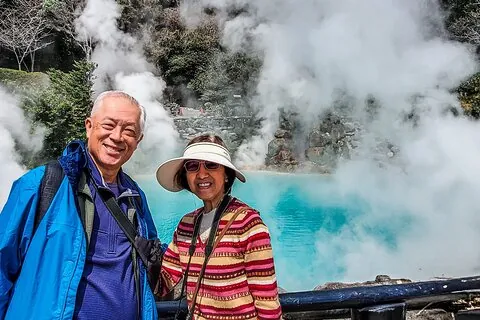 BeppuPrivate car · per group5.0★ · 16
Beppu Guided Private City Tour with Transport
A private five-hour car tour of Beppu, where you choose three or four stops from the hells, the Takasakiyama m…
US$260 per person for 2 · US$519 per carWhy it is here →If you book, we may earn a small commission at no extra cost to you. It never decides what we recommend.