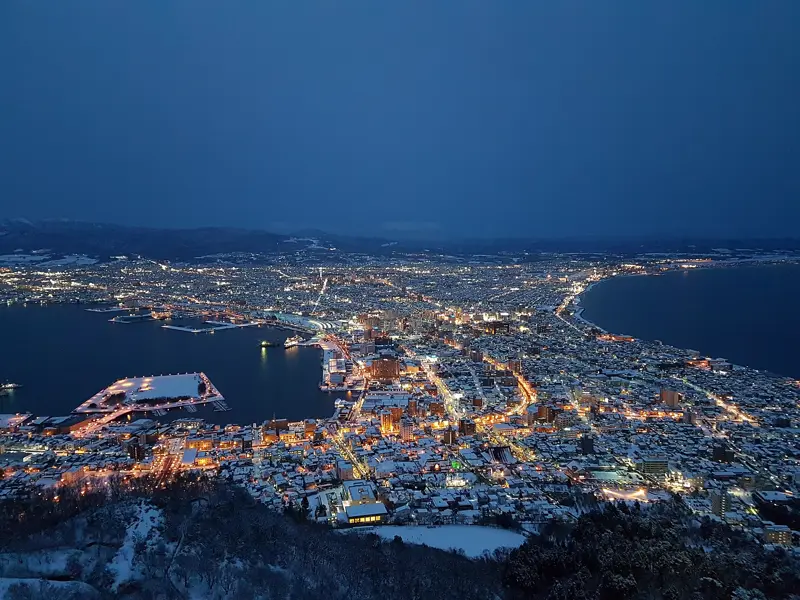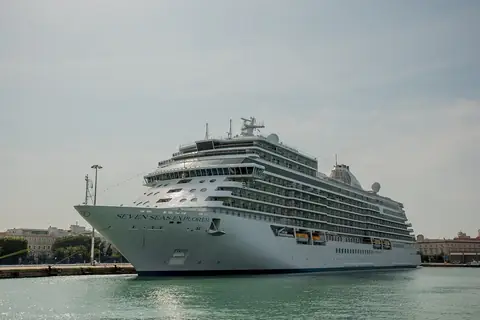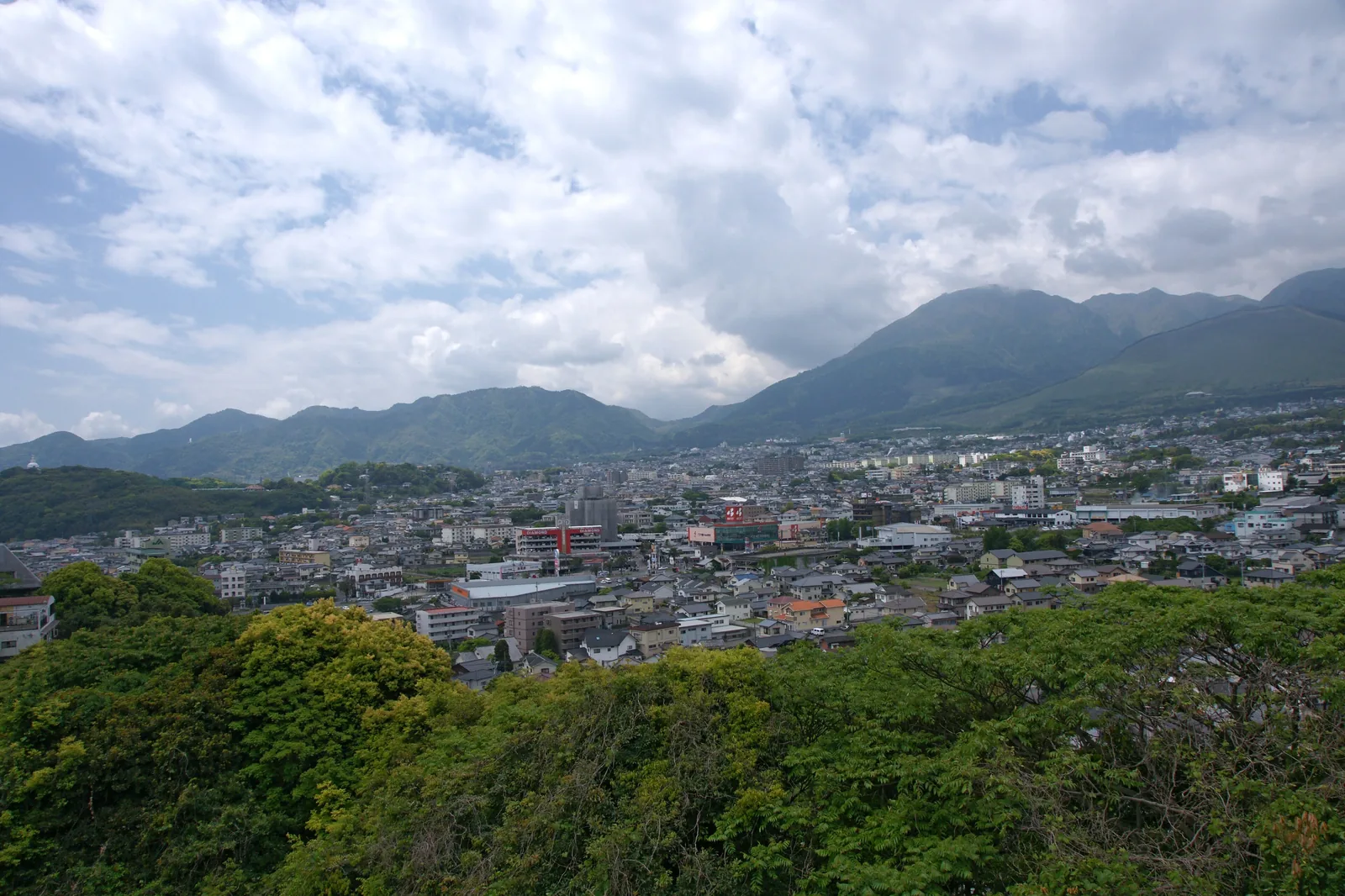
There is a specific kind of misery available to a cruise passenger. You have one day in a port you will never come back to, you booked or planned it around a view, and you wake up to a grey wall of water.
Japan makes this more likely than most destinations. June is the rainy season across most of the country. September brings typhoons to Kyushu, Okinawa and Taiwan. Kochi has the heaviest annual rainfall of any prefecture. Keelung’s own nickname for itself translates as “the rainy port.” Kanazawa’s local advice is that you should not forget your umbrella even if you forget your lunch — and the humidity that comes with all that grey is the reason the city makes ninety-nine percent of Japan’s gold leaf.
So the useful question is not whether it will rain. It is what your particular port does when it does.
The three ports that are genuinely fine
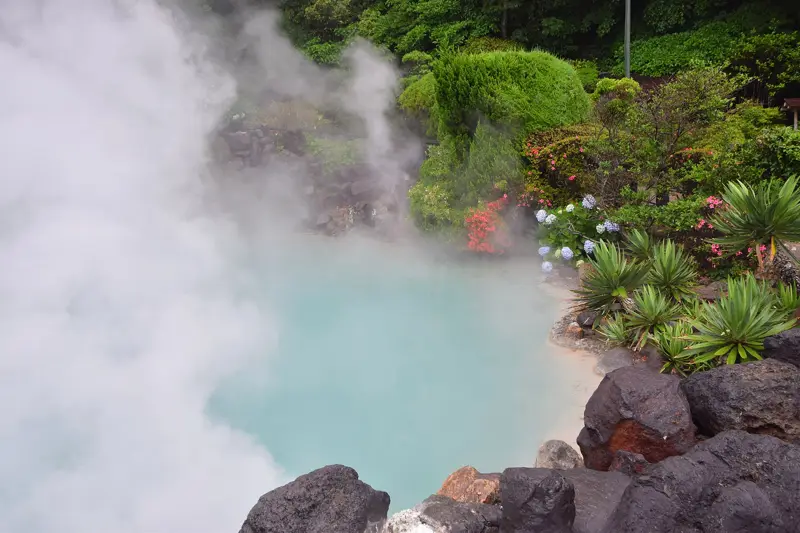
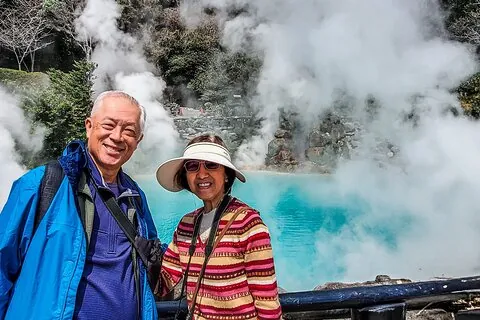
Beppu is essentially rain-proof, and this is not a consolation. The best thing to do there is buy raw ingredients at Kannawa, lower them into a stone vent in a woven basket, and eat what comes out ten minutes later. Then be buried in geothermally heated sand at a wooden bathhouse from 1879. Neither is affected by weather, and the steam plumes over the town are more visible in cool damp air, not less. Beppu in rain is Beppu.
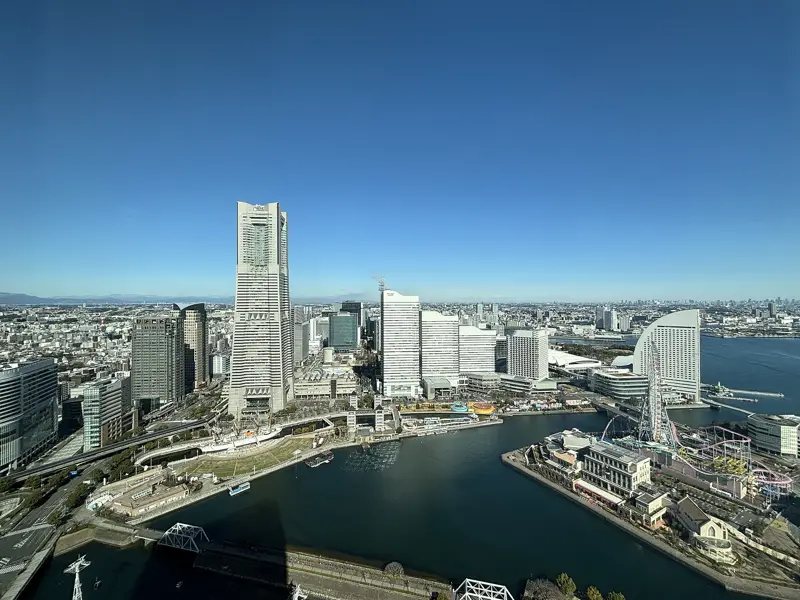
Yokohama does an entire good day under cover. From Osanbashi it is twenty flat minutes to Chinatown, where you eat standing under the awnings; ten more to the Red Brick Warehouse, which is two customs buildings from 1911 full of shops; and a few minutes back to the Hotel New Grand for the ketchup spaghetti that was invented in that building after the war. No transfers, no views required.
Keelung docks you ten minutes from a covered night market. Miaokou’s main lane is roofed, enough stalls open from late morning that a daytime call works, and the food is the reason to be there anyway.
The ports that have a good indoor half
Most Japanese cities are quietly built for this. Covered shopping arcades run for hundreds of metres. Department store basements — depachika — are food halls the size of supermarkets. Markets are under roof.
Kobe: Nankinmachi under the awnings, the covered galleries of the old foreign settlement, and a booked teppan counter for Kobe beef at lunch prices. Kitano in heavy rain is a wet hill with a view of cloud — skip it without regret.
Kochi: Hirome Market is a roofed hall of sixty stalls and it is where the whole city goes to wait out weather. The castle keep is indoors once you are up the stairs, and Obiyamachi arcade runs 600 covered metres back toward the pickup.
Busan: Gukje Market is kilometres of covered alleys that grew out of the Korean War. Jagalchi is indoors. Ssiat hotteok at BIFF Square is under awnings. That is a complete day.
Nagasaki, Hiroshima, Hakodate, Kagoshima, Aomori, Akita, Sakaiminato, Naha: each has a market, an arcade or a museum cluster within reach. Sakaiminato asks for one wet shuttle ride to the station first; after that the road’s covered stretch and the museum sit back to back.
Tokyo: go underground and stay there. Tokyo National Museum at Ueno is the largest collection of Japanese art anywhere and is entirely indoors; a depachika lunch and a single-act kabuki ticket at the Kabuki-za fill the rest.
What to give up, without arguing about it
The hard part is not finding an indoor plan. It is abandoning the one you had.
In rain, delete anything that is a view, a garden far from the ship, or a hillside of stairs:
- Mount Fuji from Shimizu, Nihondaira, or Miho no Matsubara
- Sankeien in Yokohama — thirty-five minutes each way to a wet garden
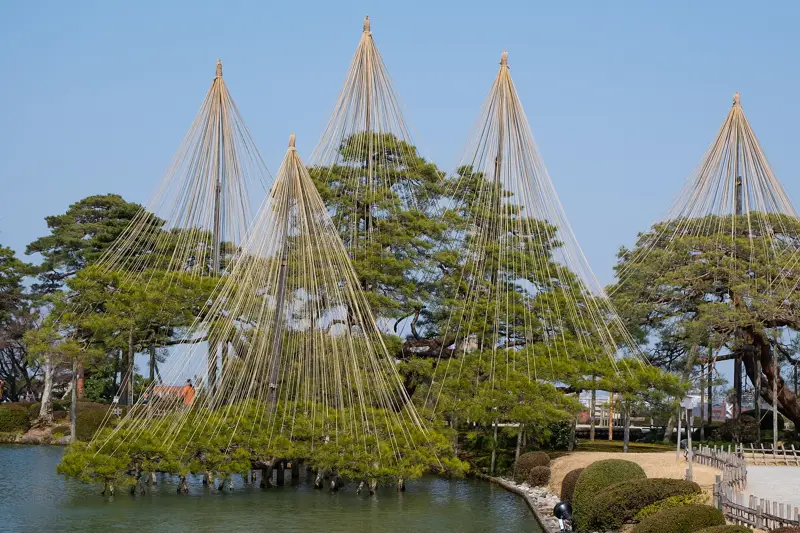
- Kenroku-en in Kanazawa, which is beautiful and miserable in equal measure
- Gamcheon and Taejongdae in Busan — both cliff-and-stair walks, both slippery
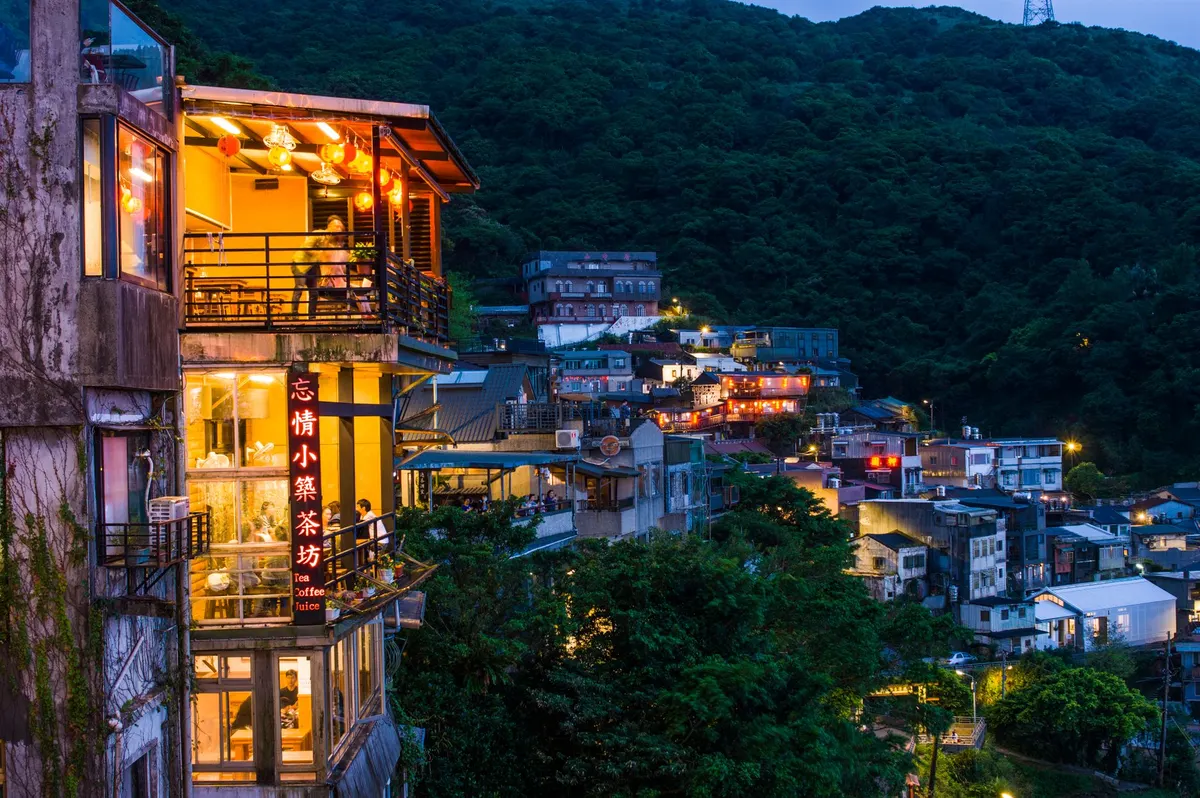
- Jiufen from Keelung — forty minutes each way to a wet stone staircase
- Katsurahama in Kochi, and Sakurajima’s lava trails in Kagoshima
- Yufuin from Beppu — an hour each way to walk an outdoor village in the wet
None of these stop being beautiful. They stop being worth the transfer, and on a port day the transfer is the only currency you have.
The one that needs saying about Shimizu
If Fuji is hidden — and from June to September it usually is by mid-morning — do not spend fifteen thousand yen on a taxi to a viewpoint to look at cloud. People do this. They have come a long way and they cannot quite accept it.
Walk 25 minutes along the waterfront (or take a 5-minute taxi) to Kashi-no-Ichi instead, eat a tuna bowl at fishmonger prices in Japan’s leading tuna port, buy a fresh wasabi rhizome and a small grater to take home, and give the port museum an hour. That is a good day. The other one is a photograph of grey.
And the actual advice
Every port guide on this site now carries a dedicated rainy-day plan alongside the 2–3 hour, 4–6 hour and 8-hour-plus plans — same format, timed from the gangway, with the same 60-minute reserve.
They exist because the sunny plan executed in rain is worse than the wet plan executed well, and because the decision has to be made at seven in the morning while you are still on the ship, not at eleven when you are already standing somewhere with your shoes full of water.
Guided days at the ports in this article
Shared cars with a guide first; each page says who should skip it. Booked through Viator; there is no tour desk at the pier.
 BeppuPrivate car · per group5.0★ · 16
Beppu Guided Private City Tour with Transport
A private five-hour car tour of Beppu, where you choose three or four stops from the hells, the Takasakiyama m…
US$260 per person for 2 · US$519 per carWhy it is here →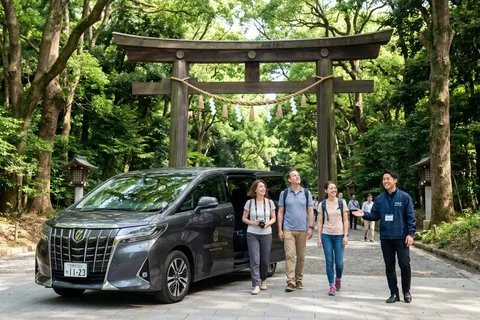 YokohamaPrivate car · per person5.0★ · 38
Tokyo in 1 Day from Yokohama by Car with Licensed Guide
A private car day in Tokyo with a licensed guide, choosing three or four sights from a long list, starting fro…
from US$482 per person · max 7Why it is here →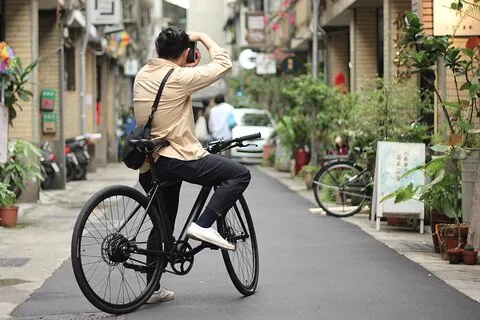 Keelung (Taipei)Small group5.0★ · 34
Best E-bike Cycling Tour in Taipei - Includes Local Food & Drinks
A five-hour small-group e-bike ride from east Taipei to the Chiang Kai-shek Memorial Hall, with breakfast, a c…
from US$110 per person · max 4Why it is here →If you book, we may earn a small commission at no extra cost to you. It never decides what we recommend.