
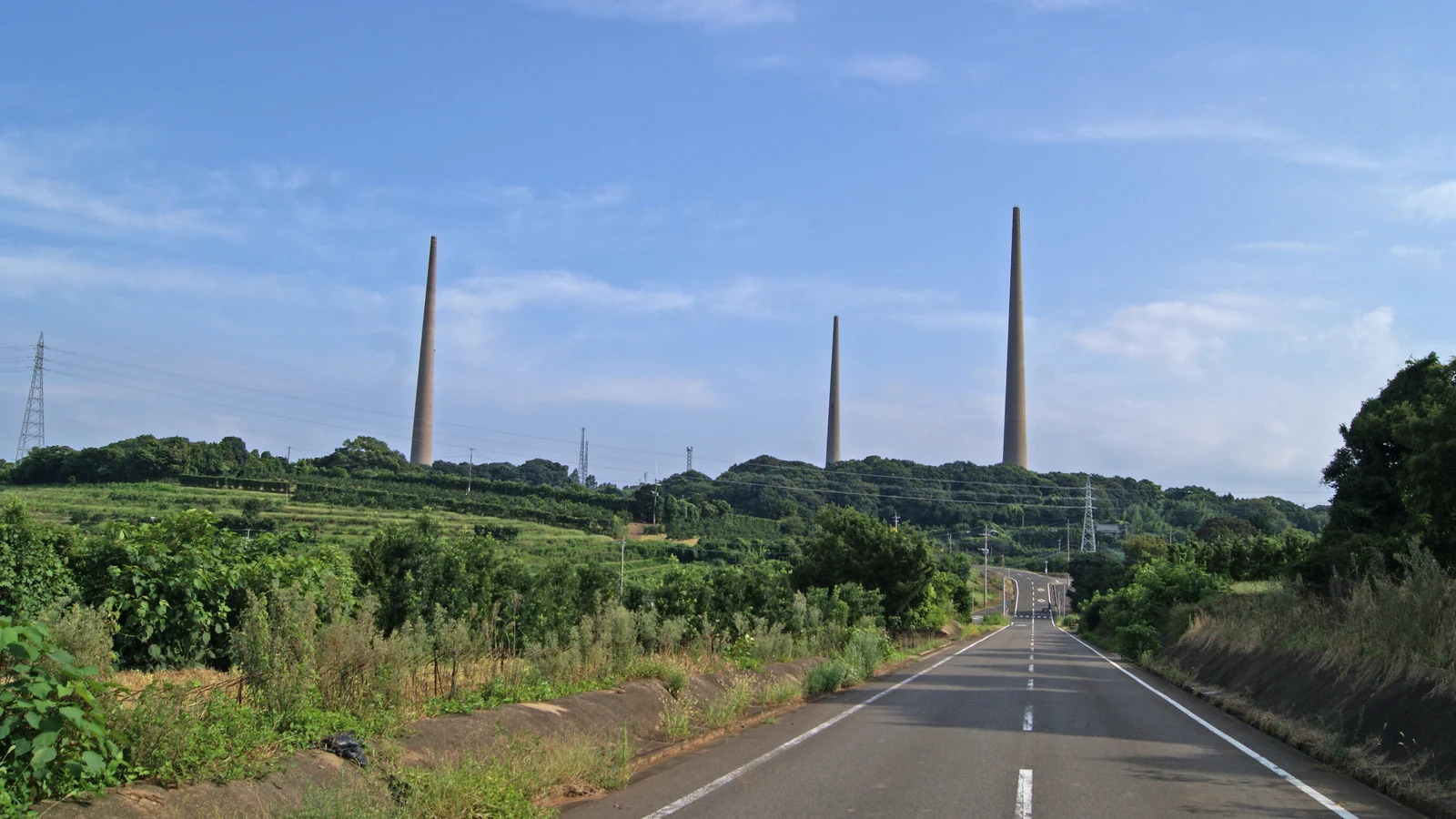
 Photo: Dyamasan / CC BY-SA 4.0
The three Hario towers are reinforced concrete masts, each about 136 m tall with a 38 m circumference, standing in an equilateral triangle about 300 m apart. The Imperial Navy built them in 1922 as a long-wave radio transmitting station, and the buildings were designated National Important Cultural Properties in March 2013. They are also part of the Japan Heritage story of the naval district at Sasebo. A secondary article says the station stayed in use until 1997.
There is a well-known story that the Pearl Harbor signal 'Niitakayama nobore 1208' was sent from here. The Japanese Wikipedia article says that is not certain and that it was most likely sent from other stations. What is certain is the scale: three towers, each about 136 m tall, with volunteer guides from the Hario Radio Tower Preservation Society and part of the site open since 2013.
The catch is that it only works from Uragashira. From Miura it is 24 minutes each way and roughly ¥15,600 in taxi fares, and the site closes for an hour at midday. There is little here beyond the towers, so it suits people who like industrial history more than scenery. Skip it if your ship is at Miura and you are short of time.
Five things the plaques won't tell you
- Plan around the midday gap: the site is closed from 12:00 to 13:00.
- At Uragashira, book a taxi in advance or use a ride-hailing app: the city's map warns that taxis may be limited at busy times.
- Ask the taxi to wait or agree a pick-up time; there is no rank at the site.
- Guides from the preservation society manage the visit, so follow their instructions about which buildings are open.
- Dress for the weather; the towers are outdoors.
What is certain is the scale: three towers, each about 136 m tall, with volunteer guides from the Hario Radio Tower Preservation Society and part of the site open since 2013.

Guided days from Sasebo
Booked before you sail — there is no tour desk at the pier. Booking through these links supports the site.

More in Sasebo
Questions people ask here
When are the Hario radio towers open?
From 9:00 to 12:00 and 13:00 to 16:00, closed over the New Year holiday, with free admission. Volunteer guides from the Hario Radio Tower Preservation Society manage the site.
How do I get from Sasebo cruise port to the Hario radio towers?
From Uragashira a taxi takes about 12 minutes and should cost roughly ¥2,800 on the 2026 upper-limit tariff. From Miura it is about 24 minutes and roughly ¥7,800 each way. A public bus from Sasebo Station takes about 50 minutes plus a 30-minute walk.
Did the Pearl Harbor attack signal come from the Hario towers?
It is often said so, but the Japanese Wikipedia article calls it uncertain and says it was most likely sent from other stations. The towers were built in 1922 as a navy long-wave transmitting station.