
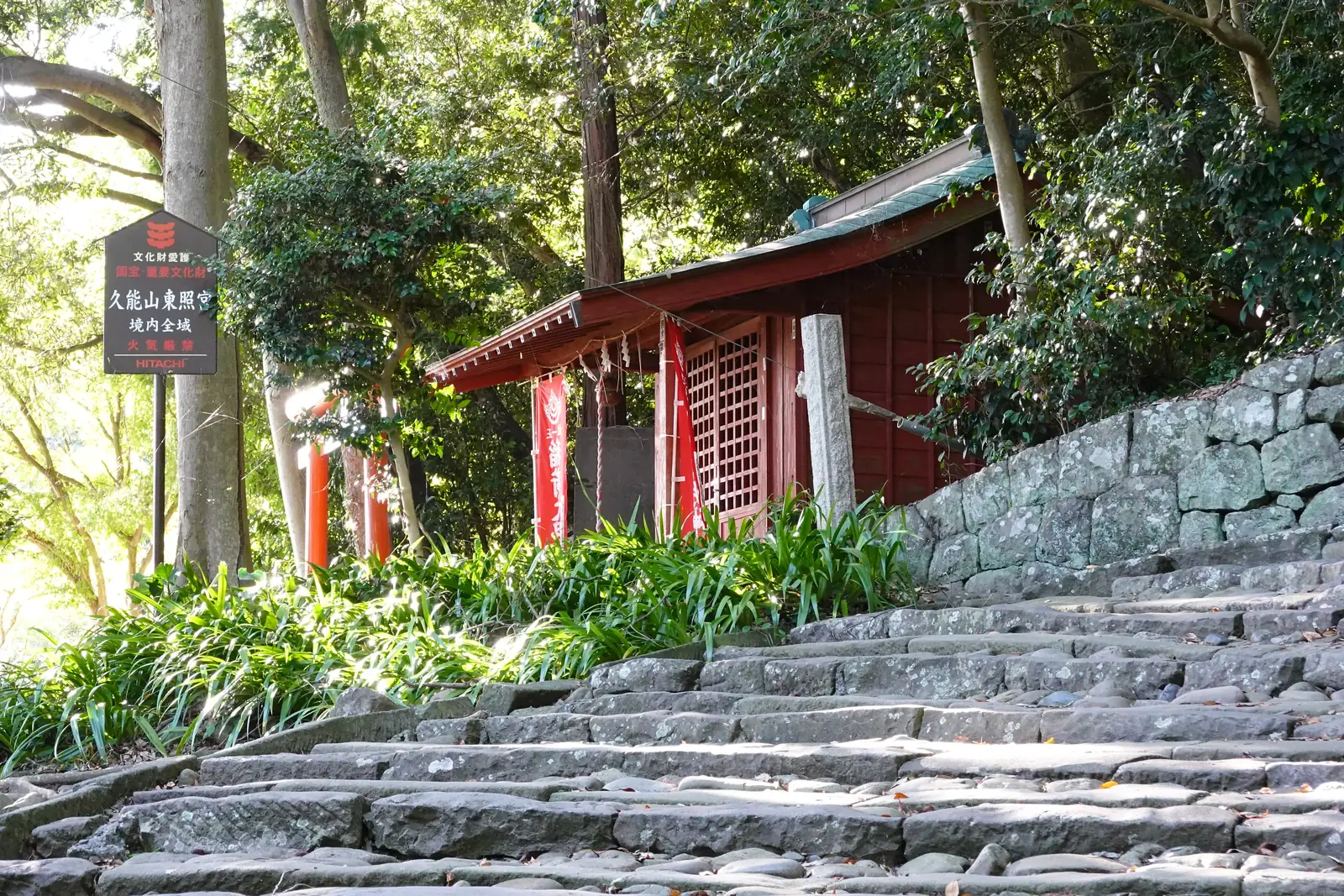
 Photo: 663highland / CC BY-SA 4.0
Tokugawa Ieyasu died in 1616 and was first buried here, on a mountain above the sea. The far more famous shrine at Nikko was built afterwards. Kunozan is the original, is smaller, is more densely decorated per square metre, and receives a small fraction of the visitors.
The main hall is a National Treasure in the gongen-zukuri style — lacquered, gilded and carved to a degree that is hard to photograph and easy to underestimate from pictures. The ropeway from Nihondaira crosses a valley of strawberry greenhouses with the bay behind.
Five things the plaques won't tell you
- Take the ropeway from Nihondaira. The 1,159-step stone stairway from the coast is real and it is not a port-day activity.
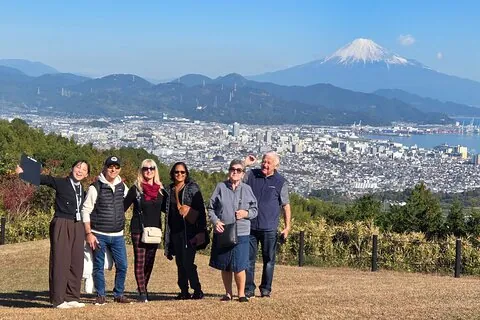
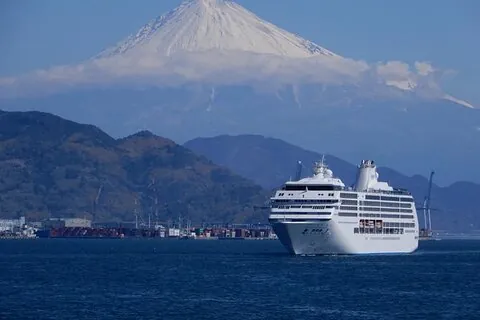
- Nihondaira itself gives the classic view — tea fields, the port, Fuji behind, and often your own ship in frame.
- The carvings repay standing still. Most visitors walk the circuit in six minutes and see almost none of it.
- The museum beside the shrine holds Ieyasu's possessions, including European clocks given to him.
- Check the last ropeway down before you go up. It closes earlier than the shrine.
The ropeway from Nihondaira crosses a valley of strawberry greenhouses with the bay behind.
Guided days from Shimizu
Booked before you sail — there is no tour desk at the pier. Booking through these links supports the site.
More in Shimizu
 Spot guide
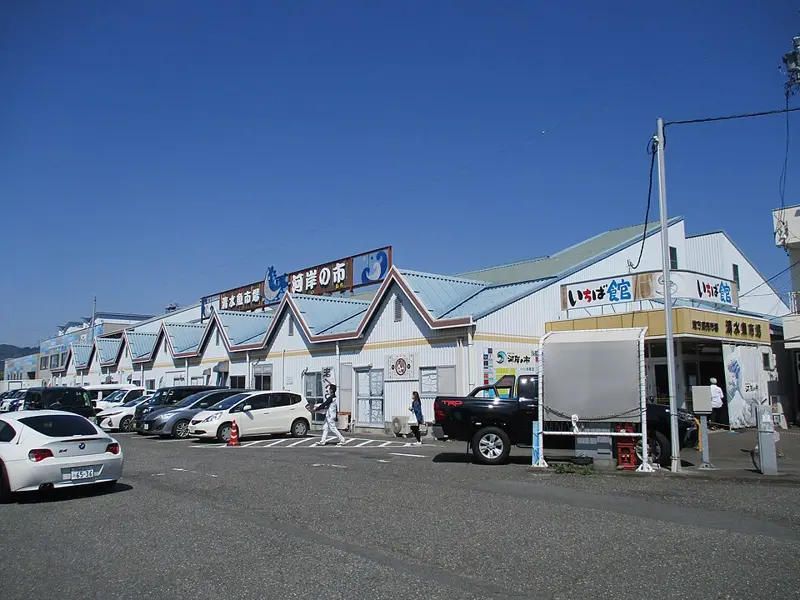
Kashi-no-Ichi
Japan's tuna capital, a waterfront walk from the pier
Open the guide →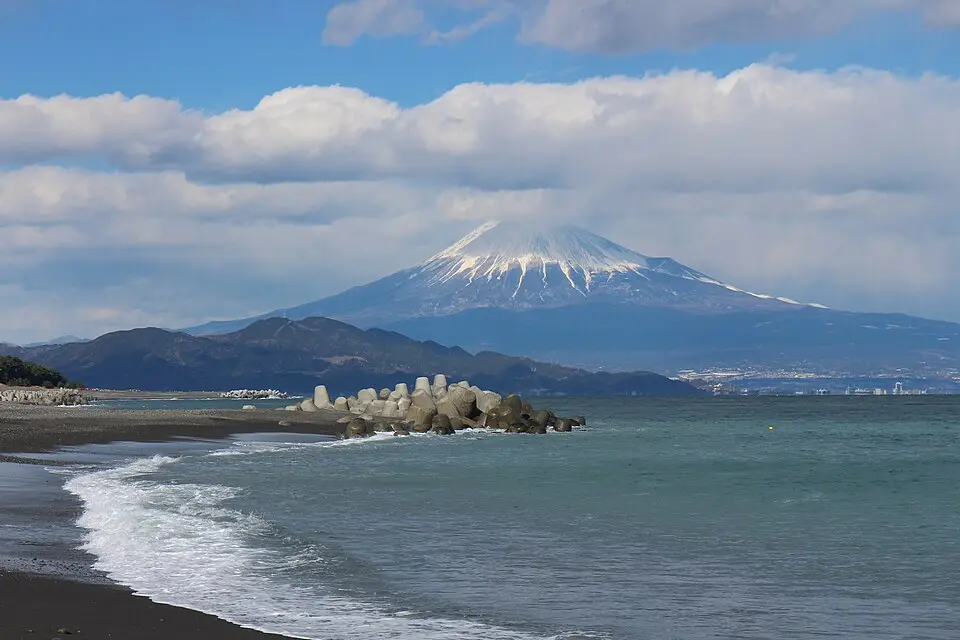 Spot guide
Miho no Matsubara
Thirty thousand pines, a black-sand beach, and the view that made Fuji sacred
Open the guide →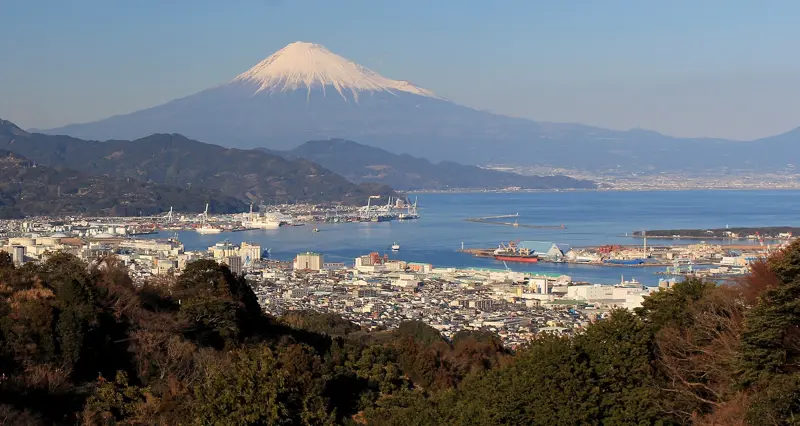 Spot guide
Nihondaira Yume Terrace
The Fuji-over-the-bay panorama from a timber deck, with Shimizu port laid out below
Open the guide →Questions people ask here
Is Kunozan Toshogu better than Nikko?
It is the original. Ieyasu was first buried here in 1616 and the Nikko shrine was built afterwards. Kunozan is smaller and more densely decorated, its main hall is a National Treasure, and it receives a small fraction of Nikko's visitors — which on a port day is decisive.
How do I get to Kunozan Toshogu from Shimizu port?
Taxi to Nihondaira, about twenty-five minutes, then the ropeway across the valley. The alternative is a 1,159-step stone stairway from the coast, which is real and is not a port-day activity. Check the last ropeway down — it closes earlier than the shrine.