
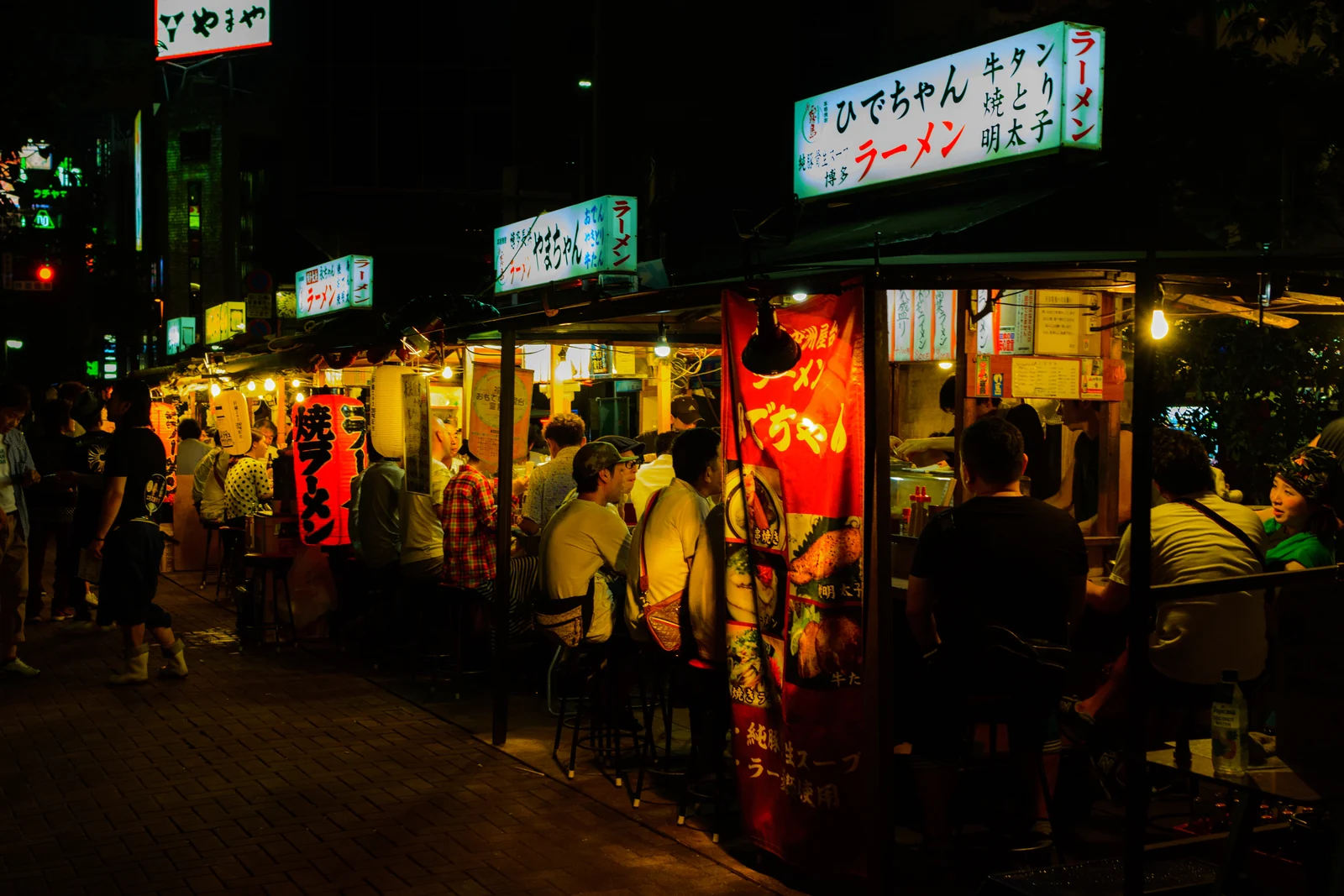
 Photo: Yoshikazu TAKADA from Tokyo, Japan / CC BY 2.0
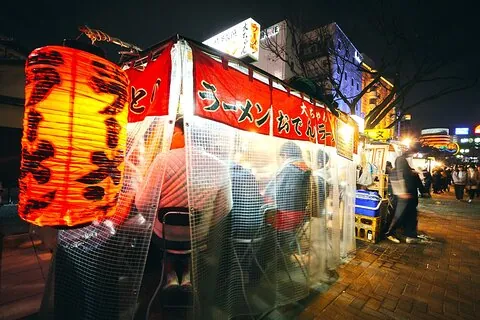
Yatai were everywhere in post-war Japan and were regulated almost out of existence. Fukuoka kept them: roughly a hundred licensed stalls, the large majority of all that survive nationally, set up at dusk along the Nakasu riverfront and in Tenjin and dismantled before morning.
Each one is about eight seats under a plastic sheet, run by one or two people who need your seat to turn over. That constraint is what makes it work — you eat, you drink, you talk to whoever is beside you, and you leave. It is the most sociable hour available in any Japanese port.
Five things the plaques won't tell you
- Cash, and small notes. Many stalls add a seat charge, which is normal and not a scam.
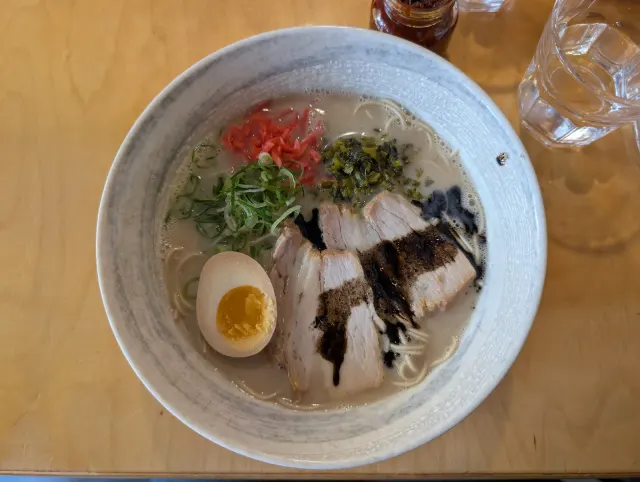
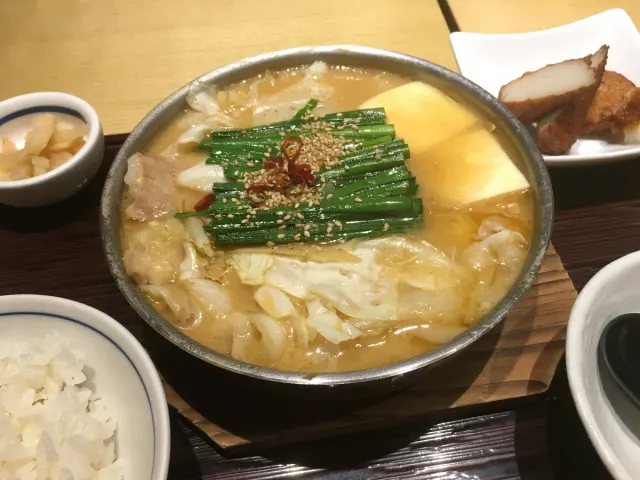
- Order ramen, gyoza and yakitori — that is the yatai canon. Ask for oden in winter.
- An hour is the polite maximum when people are waiting. Nobody will say so.
- Rain closes some of them. Check before you commit a whole evening.
- The riverfront row on Nakasu is the photogenic one; the Tenjin stalls are quieter and often better.
It is the most sociable hour available in any Japanese port.
Guided ways to do The yatai
Booked before you sail — there is no tour desk at the pier. Booking through these links supports the site.
More in Fukuoka
Questions people ask here
What are Fukuoka yatai?
Licensed open-air food stalls of about eight seats, set up at dusk along the Nakasu river and in Tenjin and dismantled before dawn. Fukuoka has roughly a hundred of them — the large majority of every yatai left in Japan, after regulation removed them almost everywhere else.
Can I visit the yatai on a daytime cruise call?
No. They open from about six in the evening. If your ship sails before then, eat tonkotsu ramen at a Hakata counter instead — it is excellent, and it is not the same experience, which is worth being honest about.