Updated 1 October 2026 · 38 official and operator sources · Researched from official timetables, operators and the port authority · Takumi Yamada
Fukuoka gives you three reasons to go ashore: Dazaifu Tenmangu, the shrine to the god of learning; the old merchant town of Hakata with its tonkotsu ramen; and the yatai, the street stalls the city is famous for. The catch is the clock. The stalls open from about 18:00, and on 17 of October's 20 calls you should be back at the ship before then. Almost every ship, the biggest included, ties up at Chuo Wharf Berth 5. From there it is a 500 m walk to a bus stop with a BRT to Tenjin every 15 minutes (15 minutes, ¥210). On a call of 9 hours or more, Dazaifu and the old town both fit, with about 20 minutes to spare, if you take the train from Tenjin rather than Hakata Station. The one decision is which day you want: Dazaifu and ramen in daylight, or, only on a 21:00 sailing, a shorter day that ends on a stool at a yatai.
Your call, your day
What fits the time your ship gives you?
Pick your ship from the official Fukuoka schedule — or just the hours you have — and this page picks the plan and the tours that fit, with the hour before all-aboard already set aside.
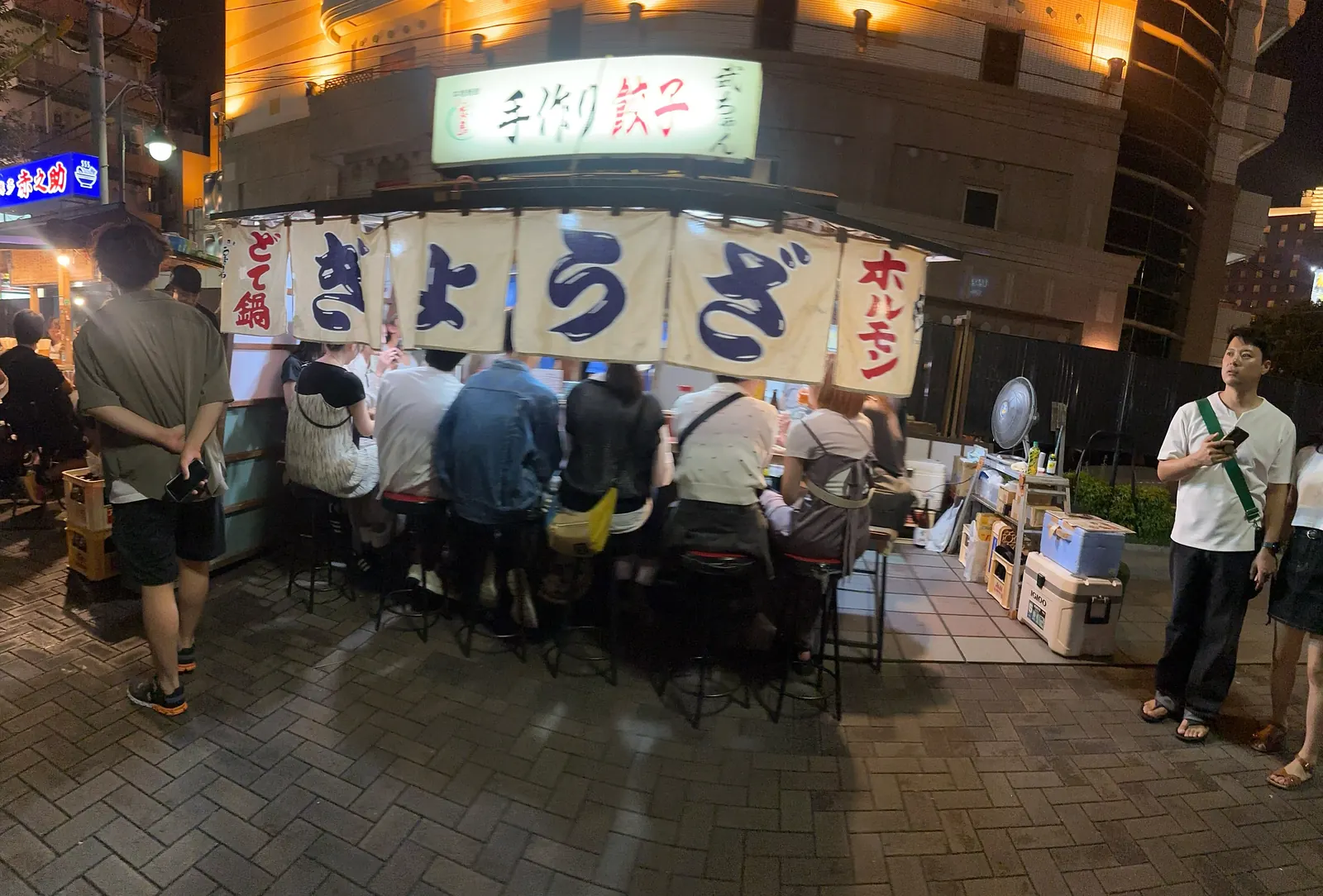
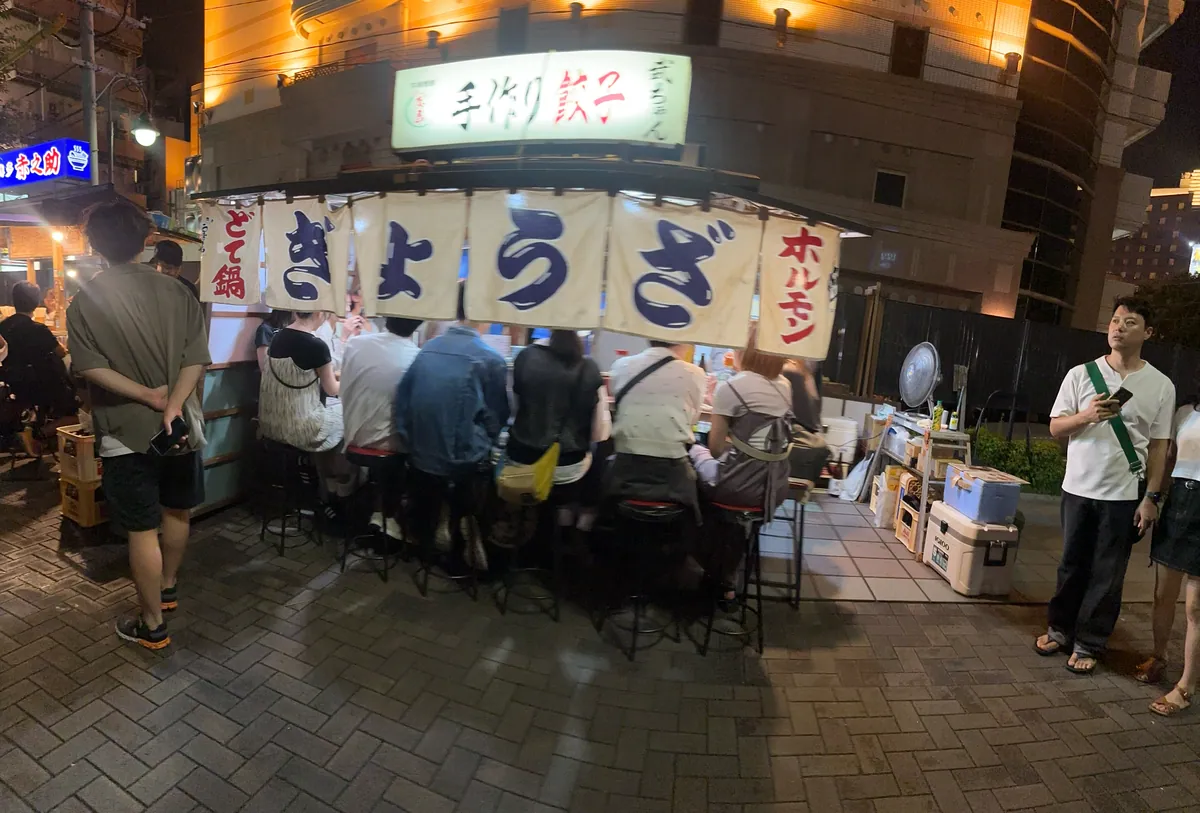
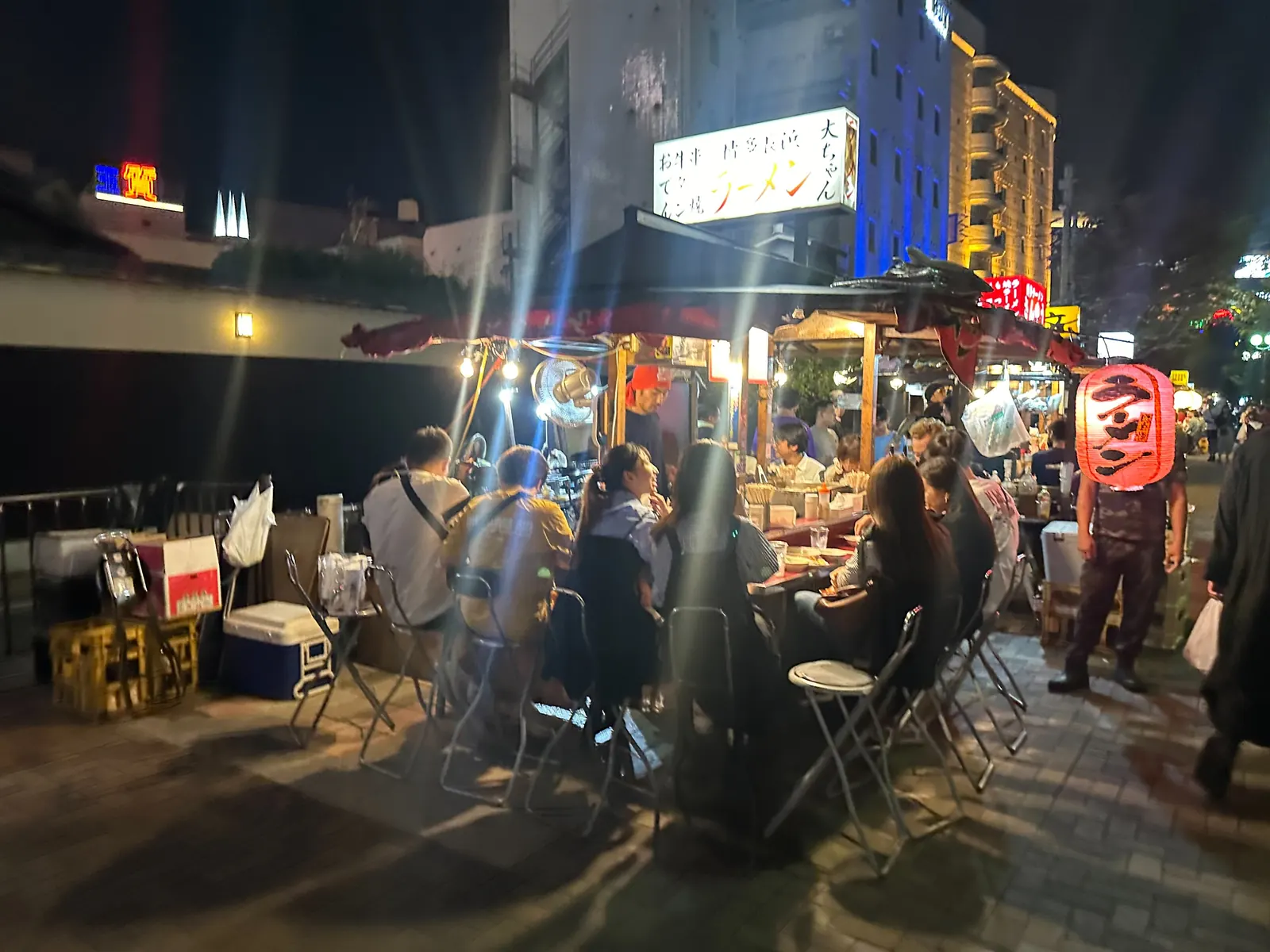
About a hundred licensed stalls set up at dusk along the river at Nakasu and in Tenjin, each with about ten seats around a counter. The city says no other place in Japan has this many. They are the picture everyone has of Fukuoka, and they are the thing most cruise passengers miss, because they open after most ships have gone.
From the shipTaxi from Chuo Wharf to the Nakasu stalls, about 4 km, 6–10 minutes and about ¥1,700 (our estimate). Stalls open from about 18:00, most at 18:30–19:00.
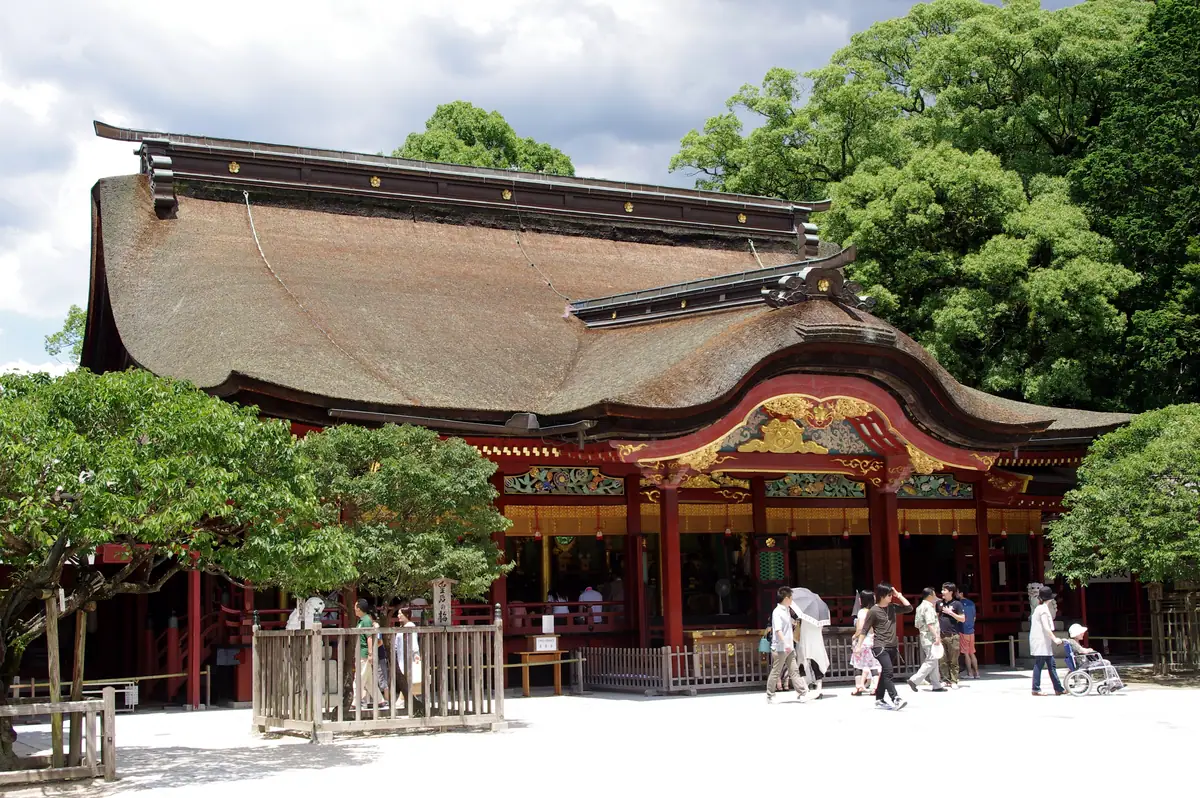
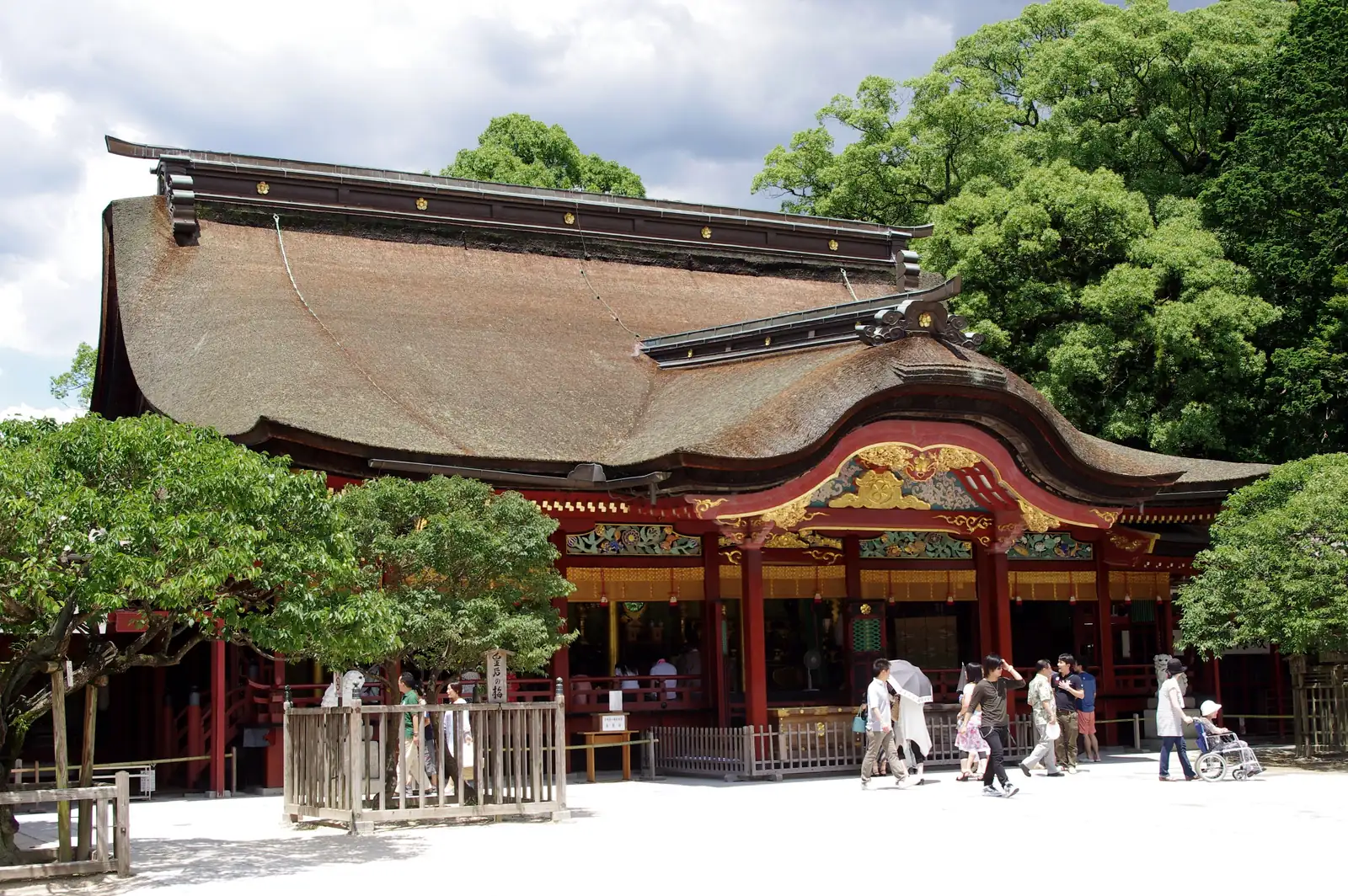
The shrine built over the grave of Sugawara no Michizane, the scholar who became the god of learning, with a busy approach street of umegae-mochi rice cakes and the Kyushu National Museum behind it. Worship in front of the main hall resumed on 19 September 2026 after about three and a half years of restoration.
From the shipBRT to Tenjin (15 minutes, ¥210), then the Nishitetsu train to Dazaifu (about 29 minutes, ¥480). About 70 minutes door to door. By taxi, about 21 km, 28 minutes without traffic and from about ¥7,600 (our estimate).
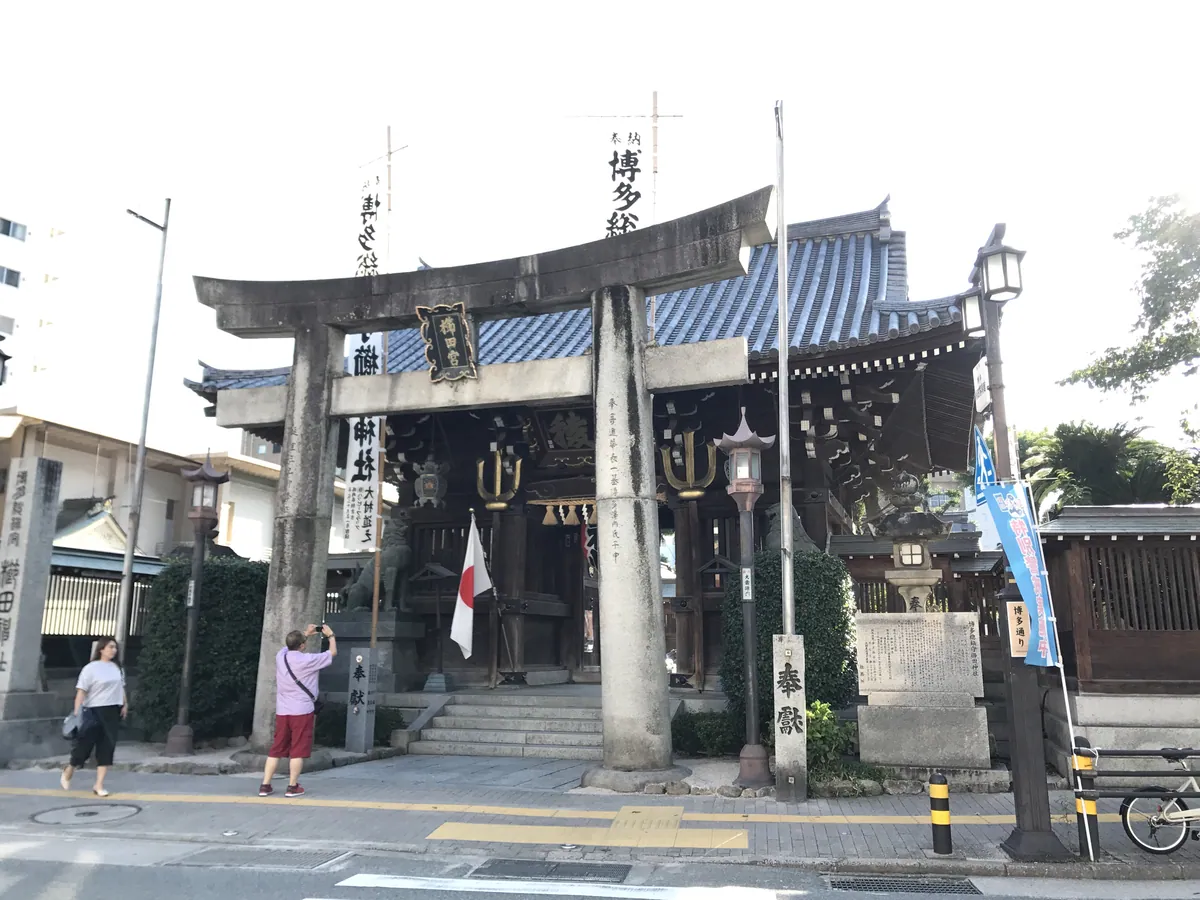
The old merchant town between the port and the river: Kushida Shrine with a towering Yamakasa festival float on show, the Hakata Machiya Folk Museum next door, the temples of Tochoji and Shofukuji, and ramen counters. All of it is within 3 km of the berth.
From the shipBRT (Hakata-Station direction) to Gofukumachi, 10–11 minutes, ¥210, then a walk of about 800 m to Kushida. Taxi about 5 minutes and about ¥1,400 (our estimate).
Fukuoka is a big working city that happens to have a cruise port in the middle of it, and that is its appeal. You are 15 minutes by bus from the department stores of Tenjin, 20 from Hakata Station, and about 70 from Dazaifu Tenmangu, the shrine where students from all over Japan pray before exams. In between lies Hakata, the old merchant town: Kushida Shrine with its towering festival float, Japan's first Zen temple, and the counters where tonkotsu ramen, the pork-bone broth that made the city famous, is served with thin noodles and a second helping on request.
It is also Japan's busiest cruise port by the national count: first in 2024 with 204 calls and joint first with Yokohama in 2025 with 209. That makes it all the more surprising how little of the English advice about it is right. The berth story most pages repeat is wrong, the train to Dazaifu does not leave from the station most pages send you to, and the city's most famous sight, the yatai street stalls, opens after most ships have sailed. This guide is built from the city's own call records, the bus and train operator's timetables for October 2026, and the shrine's and museums' published hours, all checked on 30 September 2026.
What Fukuoka is not: a port where you step off into the old town. Chuo Wharf is a working harbour; the Cruise Center is closed to the public, and the nearest bus stop is a 500 m walk. Everything starts with a bus, and from there the city is compact and easy.
First: which berth are you at?
Almost certainly the first one. The city's call records tell a simpler story than the folklore:
Chuo Wharf Berth 5 (almost every ship)
Chuo Berth 6 / Hakozaki Wharf Berth 5 (second ship)
Where
Chuo Wharf, Hakata-ku, the city's main passenger wharf
Berth 6 is alongside Berth 5; Hakozaki is about 3 km further east, in Higashi-ku
Terminal
Chuo Wharf Cruise Center (2015): up to 20 immigration booths, information desk in four languages, free Wi-Fi, currency-exchange machine
Berth 6 uses the Cruise Center; at Hakozaki no official source describes a terminal building
On foot
International Terminal bus stop about 500 m (7 minutes); a Cruise Center bus stop for routes 80, 151 and 152
Berth 6 the same; Hakozaki has no bus stop
Calls in 2025
176 of 208
Berth 6: 25; Hakozaki: 7
Every ship of 100,000 tons or more in 2025, MSC Bellissima and Spectrum of the Seas included, used Chuo Berth 5 or 6. Kashii, which many cruise pages name as the berth for large ships, is a container and car terminal with no cruise call in 2025 or 2026. The overflow berths come into play only when two ships are in port. In 2025 the second ship on Chuo Berth 6 was almost always Adora Magic City, and Hakozaki took mid-size ships such as Mitsui Ocean Fuji. In October 2026, Hakozaki has two calls: Asuka II on Sunday 4 October, while Spectrum of the Seas has Chuo 5, and Mitsui Ocean Sakura on Wednesday 14 October, while Luminara has it.
The rule is our reading of the records, not a published policy, so check your berth in the ship's daily programme the night before. Upcoming dates are on our Fukuoka cruise calendar. If you arrive from Busan or Jeju, as most ships here do, the immigration morning is covered in your first Japanese port of entry.
Getting from Chuo Wharf into Fukuoka
Walk about 500 m (7 minutes) to the Hakata Port International Terminal (Chuo Wharf) bus stop, the one the city tells visitors to use. The bus company's BRT (rapid bus) runs from there every 15 minutes in two directions. Buses take cash and IC cards (nimoca, SUGOCA, Hayakaken and the national cards) and give change only for ¥1,000 notes and coins.
To
How
Time
Cost
Tenjin (downtown; trains to Dazaifu; subway)
BRT, Tenjin direction, to Tenjin One Bldg-mae; departs :01, :16, :31, :46
15 min
¥210
Hakata Station
BRT, Hakata-Station direction, or routes 11, 19, 50; BRT at :11, :26, :41, :56
18–20 min
¥260
Gofukumachi (Kushida, Tochoji, Shofukuji)
BRT, Hakata-Station direction, or routes 11, 19
10–11 min
¥210
Dazaifu
BRT to Tenjin, then the Nishitetsu train
about 65–75 min door to door
¥690
Tenjin by taxi
Taxi
about 5 min without traffic
about ¥1,400
Hakata Station by taxi
Taxi
about 7 min without traffic
about ¥1,700
Going back, the BRT is marked Chuo Futo (Central Wharf). Catch it at Tenjin Solaria Stage-mae stop (2) (19–20 minutes, ¥210), at Hakata-eki Nishi-Nippon City Bank-mae stop F (19 minutes, ¥260), or at Gofukumachi stop K (14 minutes, ¥210). All three run every 15 minutes. The last BRT from Tenjin is about 19:58; route 80 runs later, with the last at 21:49. From Hakata Station the last bus is route 88 at 20:30. Route 88 runs only towards the port, so do not wait for it to take you to the station.
A few buses also stop at the Cruise Center itself. Routes 151 and 152 leave it for Tenjin about hourly (18 minutes, ¥210), which saves the walk if the times suit.
Taxi times and fares here are our estimates from map routing and the Kyushu Transport Bureau's official Fukuoka-area fares: ¥570–600 for the first 1.1 km, then ¥100 about every 300 m. They are floors, because traffic adds time charges. The Cruise Center car park is for tour buses only, and there is no pick-up space for private cars.
From Hakozaki Wharf
No bus serves Hakozaki Wharf, so plan on a taxi, and ask at the ship's shore desk the day before whether a shuttle will run. Estimated fares: Tenjin about 6 minutes and ¥2,200; Kushida Shrine about 6 minutes and ¥1,900; Hakata Station about 8 minutes and ¥2,400; Dazaifu about 28 minutes and ¥8,300. From Tenjin or Hakata Station, everything in this guide works as it does from Chuo Wharf.
Fukuoka port to Dazaifu: what is actually possible
Dazaifu is 16 km south-east of the city, and it fits every scheduled call; the shortest in October is 8 hours. The options, honestly:
Bus and train via Tenjin (the one to use). BRT to Tenjin (15 minutes, ¥210), a short walk to Nishitetsu Fukuoka (Tenjin) station, then the Nishitetsu train. The direct express at :18 and :48 takes 29 minutes; the limited express at :00 and :30 takes 28 minutes with a change at Nishitetsu-Futsukaichi. The fare is ¥480, and trains run every 15 minutes each way. About 65–75 minutes and ¥690 from gangway to shrine.
The Tabito bus from Hakata Station. The Dazaifu Liner leaves Hakata Bus Terminal, first floor, stop 11: 40 minutes, ¥800 in cash or ¥780 by IC or credit card, every 15–20 minutes. Buses cannot be reserved and may be full. With the bus to the station first, allow about 85 minutes. It is the better choice only if you are already at Hakata Station.
Taxi. About 21 km and 28 minutes without traffic, from about ¥7,600 each way. Hourly hire costs ¥2,650–2,780 per 30 minutes.
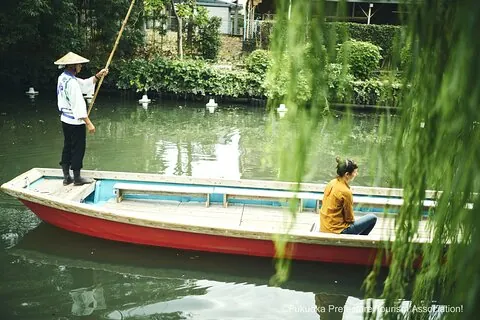
Dazaifu with Yanagawa. Yanagawa's canal punts are 49 minutes from Tenjin by limited express (¥960). Combining the two needs a 10-hour call at least.
Many pages send you to Hakata Station for the train. That is the JR station, and no Nishitetsu train to Dazaifu leaves from there. Go to Tenjin.
Dazaifu Tenmangu and the Kyushu National Museum
The shrine stands over the grave of Sugawara no Michizane, the exiled scholar worshipped as the god of learning. Its gates are usually open 6:30–19:00, and the grounds are free. After about three and a half years of the "Reiwa great restoration", worship in front of the main hall resumed on 19 September 2026, so autumn 2026 is the first cruise season in about three and a half years with the hall back in use. Work is still going on, and the shrine posts dated changes to its hours. Asuka II's call on 1 October falls on a day when the gates close at 17:00, which does not affect a morning visit.
Allow 90 minutes to 2 hours on site: the approach street and its umegae-mochi rice cakes, then the shrine itself. The shrine's treasure hall costs ¥500.
The Kyushu National Museum sits behind the shrine. Its collection galleries cost ¥700, and visitors over 70 and under 18 enter free. It is open 9:30–17:00 (last entry 16:30), later on Saturdays during special exhibitions, and closed on Mondays. It takes cards, IC cards and QR payments. A joint ticket with the shrine's treasure hall and the Kanko History Museum costs ¥1,000. Give it an hour at least, which on an 8- or 9-hour call means giving up the old town in the afternoon.
No official visitor figures for Dazaifu are published, so we cannot tell you when it is quietest. The shrine opens at 6:30, long before any cruise passenger can reach it, so no single time of day works as a trick.
The yatai: when they open, and which calls can reach one
About a hundred yatai are licensed in Fukuoka, and the city says no other place in Japan has that many. Each is a stall with about ten seats around a counter, set up in the evening along the river at Nakasu and in Tenjin and taken down at night. The city's own guide explains the rules: stalls open from about 18:00 at the earliest, most at 18:30–19:00. There is no fixed closing day, but stalls may not open if rain or strong wind is forecast. Almost none take reservations, some add a table charge or ask for one order each, and there are no toilets.
Set that against the schedule. Of the 20 calls in October 2026, 17 want you back at the ship before 18:00 (an hour before all-aboard). Azamara Pursuit (sailing 20:00, target back 18:30) arrives as the first stalls are still setting up. Only the two Luminara calls, which sail at 21:00, leave a realistic window: about 18:15–19:05 at Nakasu, then a taxi of about 10 minutes back to the ship. That is one stall and one dish or two, not an evening. The third model day below is built around it.
On every other call, get the same food at a daytime counter. Ramen shops open from late morning and some around the clock; motsunabe, the offal hotpot, starts at 16:00 at the best-known restaurant. The site's guided evening tour (5529100P1) is a 3–4-hour evening outing, so it does not fit any published call; it needs an overnight stay, and there is none in the schedule.
Hakata old town: Kushida Shrine, the temples and ramen
The walkable heart of Hakata sits between Gofukumachi and the Naka river, 10–11 minutes from the port by bus.
Kushida Shrine has one of the towering decorated Yamakasa festival floats standing on show. We could not confirm its opening hours from an official source, so plan it for the middle of the day.
Hakata Machiya Folk Museum, beside the shrine, is open 10:00–18:00 (last entry 17:30) and costs ¥200; it is closed on the fourth Monday of the month, which in October 2026 is the 26th, when no ship is in port. Some pages still give ¥300 and 17:00; both are out of date.
Tochoji has a large seated wooden Buddha and a five-storey pagoda; Shofukuji, founded in 1195, is Japan's first Zen temple. Both are a few minutes' walk from Gofukumachi.
Canal City Hakata, the shopping and restaurant complex close to Kushida, is open 10:00–21:00 every day and is the rain plan.
Ramen. Ichiran's main store in Nakasu is listed as open 24 hours, its Canal City branch 9:30–23:00 and its Tenjin branch 11:00–23:00.
Allow 45–60 minutes for Kushida and the museum, and about an hour for the two temples. From Kushida the BRT back to the ship leaves from Gofukumachi stop K, about 800 m away, every 15 minutes.
The best things to do in Fukuoka on a port day
Our full list, with the time each takes from the berth, is on the Fukuoka top 10. In brief:
The Mongol invasion wall: an open-air, free section of the stone wall built against the Mongol invasions, about 600 m from Nishijin subway station.
The night city, guided: for an overnight call, which the published schedule does not have.
Not on our list: Fukuoka Tower. Many cruise-line excursions pair Dazaifu with Fukuoka Tower, on the Momochi seafront west of the centre, so here are the facts if you want it. Its highest deck is 123 m up; it is open 9:30–22:00 (last entry 21:30) and costs ¥1,000 for adults. From the port, take the BRT to Tenjin (15 minutes, ¥210), then Nishitetsu bus W1 or 302 from Tenjin Bus Center platform 1A to Fukuoka Tower South Exit or TNC Broadcasting Hall, about 15 minutes. A taxi from Chuo Wharf is about 6 km and about ¥2,200 by our estimate. It costs a morning that Dazaifu or the old town would fill better, which is why it is not in our ten.
If you would rather take a ready-made plan, the Fukuoka plans set out short, half-day and full-day versions, and the guided options list every tour we track.
One day in Fukuoka: model days
Dazaifu and the old town: a 9-hour call
Fits 08:00–17:00 at Chuo Wharf, the commonest pattern here (Celebrity Millennium on Fri 2 October, Carnival Luminosa on Tue 13 October). Also works on the 10-hour calls (Eastern Venus, Silver Moon) with more time at Dazaifu.
The shrine in the morning, the old town and ramen in the afternoon, all by bus and train. The times assume an 08:00 arrival and a 17:00 departure, so all-aboard is about 16:30 and the target back at the gangway is 15:30. Transport costs about ¥1,380 per person.
08:30Off the ship. Walk about 500 m (7 minutes) to the Hakata Port International Terminal (Chuo Wharf) bus stop.
08:46BRT, Tenjin direction, arriving at Tenjin One Bldg-mae at 09:01. ¥210 in cash or by IC card. Walk about 5 minutes to Nishitetsu Fukuoka (Tenjin) station (our estimate).
09:18Nishitetsu express direct to Dazaifu, arriving 09:47. ¥480. If you miss it, the 09:30 limited express with a change at Futsukaichi arrives at 09:58.
09:50The approach street and its umegae-mochi, then Dazaifu Tenmangu, where front worship at the main hall is back since 19 September 2026. Add the Kyushu National Museum only if you drop the old-town afternoon.
12:11Train back: Dazaifu to Futsukaichi (12:17), change, 12:20 to Tenjin, arriving 12:37. ¥480.
12:45Ramen lunch in Tenjin, or cross the river first: about 20 minutes on foot to Kushida (our estimate), or the subway from Tenjin-minami to Kushida-jinja-mae for ¥210.
13:40Kushida Shrine and its Yamakasa float, then the Hakata Machiya Folk Museum next door (¥200, open to 18:00).
14:30Walk about 800 m to Gofukumachi stop K and take the BRT marked Chuo Futo at 14:35, or 14:50 at the latest. 14 minutes, ¥210, every 15 minutes.
15:10Back at the gangway by about 15:10 even on the 14:50 bus, 20 minutes ahead of the target.
The old town and Ohori Park: an 8-hour call
Fits 08:00–16:00 at Chuo Wharf (Westerdam on Fri 16 October). On 09:00–17:00 calls (Mitsui Ocean Sakura, Mitsui Ocean Fuji) move everything an hour later.
No Dazaifu, no rush: the temples and shrine of the old merchant town, ramen at a counter, and the castle town's park in the afternoon. Times assume 08:00–16:00, so all-aboard is 15:30 and the target back at the gangway is 14:30. Transport is about ¥840 per person.
08:30Off the ship and walk about 7 minutes to the International Terminal bus stop.
08:43BRT, Hakata-Station direction (or the 08:56), to Gofukumachi in 10–11 minutes. ¥210.
09:10Tochoji, with its large wooden Buddha and five-storey pagoda, and Shofukuji, founded in 1195 as Japan's first Zen temple. We could not confirm Tochoji's hours or fee from an official source.
10:10Kushida Shrine and the Yamakasa float, then the Hakata Machiya Folk Museum, which opens at 10:00 (¥200).
11:00The Kawabata covered arcade and ramen. Ichiran's main store in Nakasu is listed as open 24 hours, and its Canal City branch 9:30–23:00.
12:00Subway from Nakasu-Kawabata to Ohori-koen (¥210, or tap a contactless card). Ohori Park and the Fukuoka Castle ruins, both free. The Korokan exhibition hall is closed until late March 2027.
13:35Subway back to Tenjin (¥210) and walk to Tenjin Solaria Stage-mae stop (2).
13:45BRT marked Chuo Futo, arriving at the port stop at 14:05. ¥210. The 14:00 bus would get you back only just before the target, so treat it as a last resort.
14:12Back at the gangway, 18 minutes ahead of the 14:30 target.
Dazaifu, then a yatai: the 21:00 sailings
Fits the two Luminara calls, 09:00–21:00 on Wed 14 and Sat 24 October 2026. Azamara Pursuit (sailing 20:00) is back on board before the stalls are properly open.
The only October days on which a cruise passenger can sit at a yatai. The shrine in the morning, a slow afternoon, and one stall at Nakasu before a taxi back. All-aboard is about 20:30 and the target back at the gangway is 19:30. The stalls may close without notice if rain or strong wind is forecast.
09:30Off the ship. BRT at 09:46 from the International Terminal stop to Tenjin, arriving 10:01. ¥210.
10:18Nishitetsu express direct to Dazaifu, arriving 10:47. ¥480.
10:50Dazaifu Tenmangu and the approach street. The Kyushu National Museum is open on both Luminara dates (9:30–17:00, ¥700, free over 70) if you want it.
12:52Train back: Dazaifu to Futsukaichi, change at 13:00, Tenjin 13:17. ¥480.
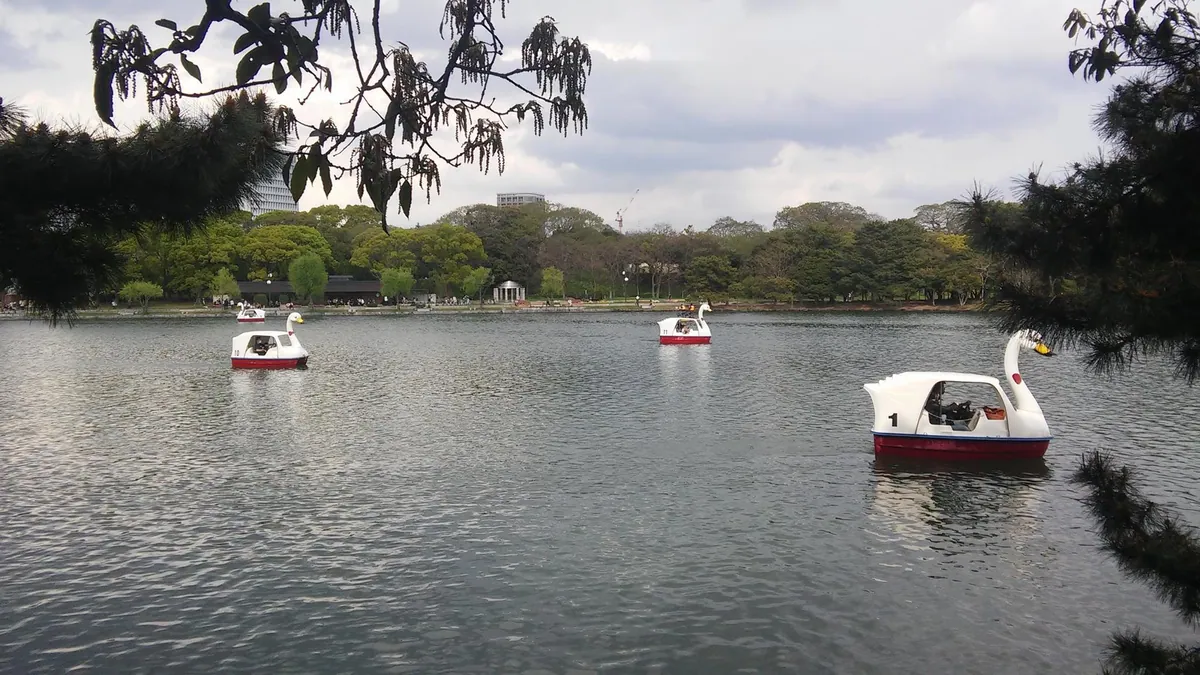
13:30Ohori Park and the castle ruins by subway from Tenjin (¥210), or Kushida Shrine and the Machiya museum. Tenjin's shops and underground mall are the rain plan.
16:00Motsunabe (offal hotpot) at Ooyama's main store near Gofukumachi, which opens at 16:00 and takes cards. Or save your appetite for the stalls.
18:10Walk to the Nakasu yatai by the river. The first stalls open from about 18:00, most at 18:30–19:00. One stall, one hour at most. There are no toilets.
19:05Taxi to the Cruise Center, about 4 km, 6–10 minutes and about ¥1,700. Back by about 19:15, 15 minutes ahead of the target.
How to think about your hours
Work backwards from the ship. All-aboard is usually 30 minutes before departure (check the daily programme), you want to be back at the gangway an hour before that, and the first half hour after arrival goes on getting off. So the time you can actually use is the call length minus about two hours.
Call
Usable
From Chuo Wharf
From Hakozaki Wharf
4 hours
about 2
Kushida, the Machiya museum and a bowl of ramen, by bus (20–25 min each way) or taxi (about 10 min). No Dazaifu.
Taxi to Kushida (about ¥1,900) and back; nothing else.
6 hours
about 4
One thing: Dazaifu (65–75 min each way, 90 min–2 h on site), or the old town, Tenjin and ramen.
Dazaifu by taxi (about ¥8,300 each way), or a taxi to Tenjin and the train; the old town by taxi.
8 hours
about 6
Dazaifu or the old town with Ohori Park; both only with a short Dazaifu visit.
The same, with a taxi at each end.
9–10 hours
about 7–8
Dazaifu and the old town, the first model day; on 10 hours add the Kyushu National Museum (not Mondays).
As Chuo, with taxi time added.
12 hours, 21:00 sailing
about 10
A full day, then one yatai at Nakasu from about 18:15 and a taxi back by 19:30.
No such call is scheduled.
October 2026's 20 calls run 8 to 12 hours, median 9½, and none stays overnight. Nine sail at 17:00, which puts you back on board by 16:30, well before the stalls light up. The city publishes its schedule only about two months ahead, so calls from November 2026 were not yet listed when we checked.
Tours worth booking, by how many hours you have
Every pick opens our own page first — what the operator actually includes, who should skip it, and which upcoming Fukuoka calls it fits. Prices are the operator's "from" price as of 26 Sep 2026.
8h+A relaxed island afternoon, and the step-free choice
It is not a tour of Fukuoka's famous sights. It suits people who have seen shrines at every port and want an easy few hours with lunch included. It is also the only tour here whose listing flags wheelchair-accessible vehicles and surfaces.
Tours are booked through Viator (a Tripadvisor company). If you book, we may earn a small commission at no extra cost to you. It never decides what we recommend — which is why each tour page has a "think twice" note.
About the return to the ship. None of the five Fukuoka tours in our catalogue puts an on-time-return promise in writing. The only related wording, from the multi-port operator, is that its itineraries "suit many of the major cruise lines' arrival and departure times". The two per-group private tours are non-refundable, and several listings name city hotels or a spot at Hakata Station as the meeting point, not the pier. Before you book, get the operator to confirm a Chuo Wharf pickup and a finish time in writing, one hour before your all-aboard. For most people on an 8–10-hour call, Dazaifu and the old town by bus and train are the better day, at about ¥1,380 in fares.
Money, cards and the practical stuff
Fukuoka is more card-friendly than most Japanese ports, but the bus is not:
Place
Pay with
Nishitetsu city buses (BRT and routes)
Cash (change for ¥1,000 notes and coins only) or IC card
Tabito bus to Dazaifu
¥800 cash; ¥780 by IC or credit card
Nishitetsu trains
Ticket machines or IC card
Subway
IC card, or contactless credit card at every gate (capped at ¥640 a day)
Kyushu National Museum
Card, IC card or QR payment
Motsunabe Ooyama
Cards
Yatai
Bring cash; stalls set their own rules
Cruise Center
Exchange machine: foreign cash to yen only
The subway's contactless gates take Visa, Mastercard, JCB, Amex, Diners, Discover and UnionPay at all 36 stations, and never charge more than the ¥640 day-pass price in a day. Short hops such as Tenjin to Ohori-koen cost ¥210.
Cash machines. Near the International Terminal bus stop there are a FamilyMart about 420 m away, a 7-Eleven with a cash machine about 650 m away, the Hakata-ko post office about 680 m away and two Lawsons. 7-Eleven and Japan Post machines generally accept foreign cards. Get notes of ¥1,000 for the bus.
Tipping. Not expected. Japan's national tourism organisation says tips are not customary in restaurants, cafés, taxis or hotels; a private guide used to overseas visitors may accept one as thanks, given discreetly in an envelope.
Opening days against your date. The Kyushu National Museum is closed on Mon 5 October (Asuka II), Tue 13 October (Carnival Luminosa, because Monday 12 October is a holiday) and Mon 19 October (Eastern Venus). It is open on Mon 12 October for Azamara Pursuit. The Korokan exhibition hall at the castle ruins is closed all season. No October call hits a closing day of the Machiya museum, Ichiran or Ooyama.
Autumn (October–November) is the easy season: average highs of 23.7 °C in October and 18.2 °C in November, and about 90 mm of rain a month. October 2026 has 20 calls.
Spring. Cherry blossom usually opens around 22 March and is at full bloom around 31 March; in 2026 the dates were 24 March and 3 April. Ohori Park and the castle ruins are the places to see it. Hakata Dontaku, on 3–4 May, is the city's biggest festival, with over 2 million visitors.
Summer is hot and wet. August averages 32.5 °C, and July is the wettest month at about 300 mm.
Typhoons approach northern Kyushu about four times a year, most often in August and September; October averages one approach every two or three years.
Winter highs are about 10 °C in January.
Rain plan: Canal City, the Machiya museum, the Kyushu National Museum and Tenjin's underground mall are all indoors. The yatai do not open in heavy rain or strong wind.
Things you will read about Fukuoka elsewhere — in older port guides, forum posts and some cruise-line pages — set against what the official source says today.
You may read
What the official source says
Source
Large cruise ships dock at Kashii Pier, not in central Hakata.
Kashii Park Port is the city's container and car terminal. Cruise passengers use Chuo Wharf (the Cruise Center and International Terminal), and the city's 2025 call list has no ship at Kashii: 201 of 208 calls were at Chuo Wharf, including the biggest ships.
The Nishitetsu train to Dazaifu starts at Nishitetsu Fukuoka (Tenjin): about 35 minutes, changing at Futsukaichi unless you catch one of the direct trains. From Hakata Station there is no train; take the Tabito bus from Hakata Bus Terminal 1F, stop 11 (about 40 minutes, ¥800 cash or ¥780 by IC or credit card).
The port runs a free shuttle bus from the cruise terminal into the city.
The terminal operator lists no port shuttle: the way into town is Nishitetsu route buses (BRT, 80, 151/152 to Tenjin for ¥210; BRT, 11, 19, 50 to Hakata Station for ¥260) from the International Terminal stop, about 500 m on foot. A shuttle runs only if your cruise line books one, so check the ship's daily programme.
Planning a yatai evening on a 17:00 or 18:00 sailing.The stalls open from about 18:00 and most at 18:30–19:00. In October 2026, on 17 of the 20 calls the time to be back at the ship (an hour before all-aboard) is before 18:00, and Azamara Pursuit's 18:30 target leaves no time either. On most calls the ramen has to be at a daytime counter.
Going to Hakata Station for the train to Dazaifu.The Nishitetsu line to Dazaifu starts at Nishitetsu Fukuoka (Tenjin), which is also the closer stop to the port: 15 minutes on the BRT. If you are already at Hakata Station, take the Tabito bus from the Bus Terminal, stop 11 (40 minutes, ¥800 cash or ¥780 by card).
Looking for the ship at Kashii.Some older pages say large ships use Kashii Pier. Kashii Park Port is a container and car terminal and had no cruise call in 2025 or 2026. The largest ships, MSC Bellissima and Spectrum of the Seas, use Chuo Wharf, normally Berth 5.
Waiting for bus 88 to go to Hakata Station.Route 88 runs from the station to the port, not the other way. Towards the station take the BRT (Hakata-Station direction) or routes 11, 19 or 50.
Arranging a car pick-up at the Cruise Center.The Cruise Center car park is for tour buses only, and there is no pick-up or drop-off space for cars. Friends or a hired car should meet you at the International Terminal, 500 m away.
Going to the Kyushu National Museum on a Monday.It is closed on Mondays: that means Asuka II on 5 October and Eastern Venus on 19 October 2026. Monday 12 October is a public holiday, so the museum opens that day and closes on Tuesday 13 October, the Carnival Luminosa call.
Boarding the bus with only ¥5,000 and ¥10,000 notes.Nishitetsu buses give change only for ¥1,000 notes and coins (not ¥2,000, ¥5,000 or ¥10,000 notes, nor the new ¥500 coin). Break a big note at the FamilyMart about 420 m from the bus stop, or use an IC card.
Expecting the castle's exhibition hall to be open.The Korokan Site Exhibition Hall in the castle ruins is closed from 1 October 2026 to late March 2027 for renovation. The ruins and Ohori Park are open and free.
Researched from official timetables, operators and the port authority. Every time and fare in this guide was checked against the sources listed above on 1 October 2026; where we had to estimate (a walk, a taxi in traffic), the text says so. Timetables change — if you find one that has, tell us and we will fix it.
Quick answers
Fukuoka cruise port questions
Where do cruise ships dock in Fukuoka?
At Hakata Port's Chuo Wharf Berth 5, beside the Chuo Wharf Cruise Center: 176 of the 208 calls in 2025 and 18 of the 20 scheduled for October 2026, including the largest ships such as Spectrum of the Seas. On two-ship days the second ship uses Chuo Berth 6 (25 calls in 2025) or Hakozaki Wharf Berth 5, about 3 km further east (7 calls in 2025, 2 in October 2026). Every call ties up alongside, so there is no tendering. Kashii is a container terminal and has no cruise calls.
What is at the Fukuoka cruise terminal?
The Chuo Wharf Cruise Center, opened in 2015, has up to 20 immigration booths, an information desk in Japanese, English, Chinese and Korean, free Wi-Fi and a currency-exchange machine that turns foreign cash into yen only. Its hours follow the ship, and it is not open to the general public. The car park is for tour buses only, with no space for private cars. For a cash machine, the nearest 7-Eleven is about 650 m from the International Terminal bus stop.
Can I walk from the Fukuoka cruise port into the city?
Only to the bus stop, really. The Hakata Port International Terminal bus stop is about 500 m (7 minutes) from the Cruise Center. Kushida Shrine, Canal City and the Nakasu riverside are about 3 km from the berth, roughly 40 minutes on foot along busy roads by our estimate, and Tenjin and Hakata Station are further. The BRT bus from that stop reaches Gofukumachi, by the old town, in 10–11 minutes and Tenjin in 15 minutes, for ¥210, every 15 minutes.
How do I get from the Fukuoka cruise port to Tenjin or Hakata Station?
Walk about 500 m (7 minutes) to the Hakata Port International Terminal (Chuo Wharf) bus stop. The BRT (Tenjin direction) reaches Tenjin in 15 minutes for ¥210, every 15 minutes; the BRT (Hakata-Station direction) reaches Hakata Station in 18–20 minutes for ¥260, also every 15 minutes. Routes 11, 19 and 50 go to the station too. By our estimate a taxi takes 5–7 minutes without traffic and costs about ¥1,400 to Tenjin or ¥1,700 to Hakata Station.
Is there a shuttle bus from the Fukuoka cruise terminal?
The city does not publish a port shuttle, and we could not confirm from any official or cruise-line source which lines run their own, so check the ship's daily programme. Public buses do the job: the International Terminal stop is about 500 m from the Cruise Center, with a BRT to Tenjin every 15 minutes (15 minutes, ¥210). Routes 151 and 152 also leave from a stop at the Cruise Center itself, about hourly, to Tenjin in 18 minutes for ¥210.
How do I get from the Fukuoka cruise port to Dazaifu?
Take the BRT to Tenjin (15 minutes, ¥210), walk to Nishitetsu Fukuoka (Tenjin) station, and take the Nishitetsu train to Dazaifu: 29 minutes on the direct express at :18 and :48, or 28 minutes on the limited express with a change at Nishitetsu-Futsukaichi. The fare is ¥480. Door to door about 65–75 minutes and ¥690 each way. The Tabito bus from Hakata Station takes 40 minutes for ¥800. A taxi is about 28 minutes without traffic and from about ¥7,600.
How do I get from the Fukuoka cruise port to Kushida Shrine, Canal City or Ohori Park?
For Kushida Shrine and Canal City, take the BRT (Hakata-Station direction) from the International Terminal stop to Gofukumachi, 10–11 minutes and ¥210, then walk about 800 m; Canal City is five minutes beyond the shrine. A taxi to Kushida is about 5 minutes and ¥1,400 by our estimate. For Ohori Park and the castle ruins, take the BRT to Tenjin (15 minutes, ¥210), then the subway from Tenjin to Ohori-koen for ¥210, or a taxi of about 8 minutes and ¥2,000.
How do I get from the Fukuoka cruise port to Fukuoka Tower?
About 35–45 minutes by bus: the BRT to Tenjin (15 minutes, ¥210), then Nishitetsu bus W1 or 302 from Tenjin Bus Center platform 1A to Fukuoka Tower South Exit or TNC Broadcasting Hall, about 15 minutes. A taxi from Chuo Wharf is about 6 km and about ¥2,200 by our estimate. The tower is open 9:30–22:00 (last entry 21:30), costs ¥1,000 for adults, and its highest deck is 123 m up, over Hakata Bay.
Can I do Dazaifu and Hakata in one port day?
Yes, on a call of about 9 hours at Chuo Wharf. Leave the ship at 08:30, be at Dazaifu by 09:47, take the 12:11 train back to Tenjin, spend the afternoon on ramen and Kushida Shrine, and take the BRT from Gofukumachi to be back by about 15:10. On an 8-hour call, do Dazaifu or the old town, or both only with a short visit to Dazaifu.
What can I do in Fukuoka on a short port call?
Subtract about two hours from the call for getting off and getting back early. On a 4-hour call that leaves about 2 hours: Kushida Shrine, the ¥200 Hakata Machiya Folk Museum and a bowl of ramen, 10–11 minutes away by BRT (¥210) or about 5 minutes by taxi. On a 6-hour call, choose one thing: Dazaifu Tenmangu (65–75 minutes each way, 90 minutes to 2 hours on site) or the old town with Tenjin. The yatai are not open on any daytime call.
What are the best things to do in Fukuoka on a cruise stop?
On a typical 9-hour call: Dazaifu Tenmangu, the shrine to the god of learning (about 70 minutes away by bus and train, ¥690); Kushida Shrine and its Yamakasa festival float in the old town of Hakata (10–11 minutes by BRT); tonkotsu ramen at a counter in Nakasu, Canal City or Tenjin; Ohori Park and the free Fukuoka Castle ruins; and mentaiko, spicy cod roe, to take home. The yatai street stalls open from about 18:00, so they suit only a late sailing.
Can I visit the yatai food stalls on a cruise port day?
Only if your ship sails late. The stalls open from about 18:00 and most at 18:30–19:00, and they may not open at all if rain or strong wind is forecast. In October 2026 only the two Luminara calls (sailing 21:00, back on board by 19:30) leave a realistic window: about 18:15–19:05 at Nakasu, then a taxi of about 10 minutes back to the ship.
Where can I eat tonkotsu ramen near the Fukuoka cruise port?
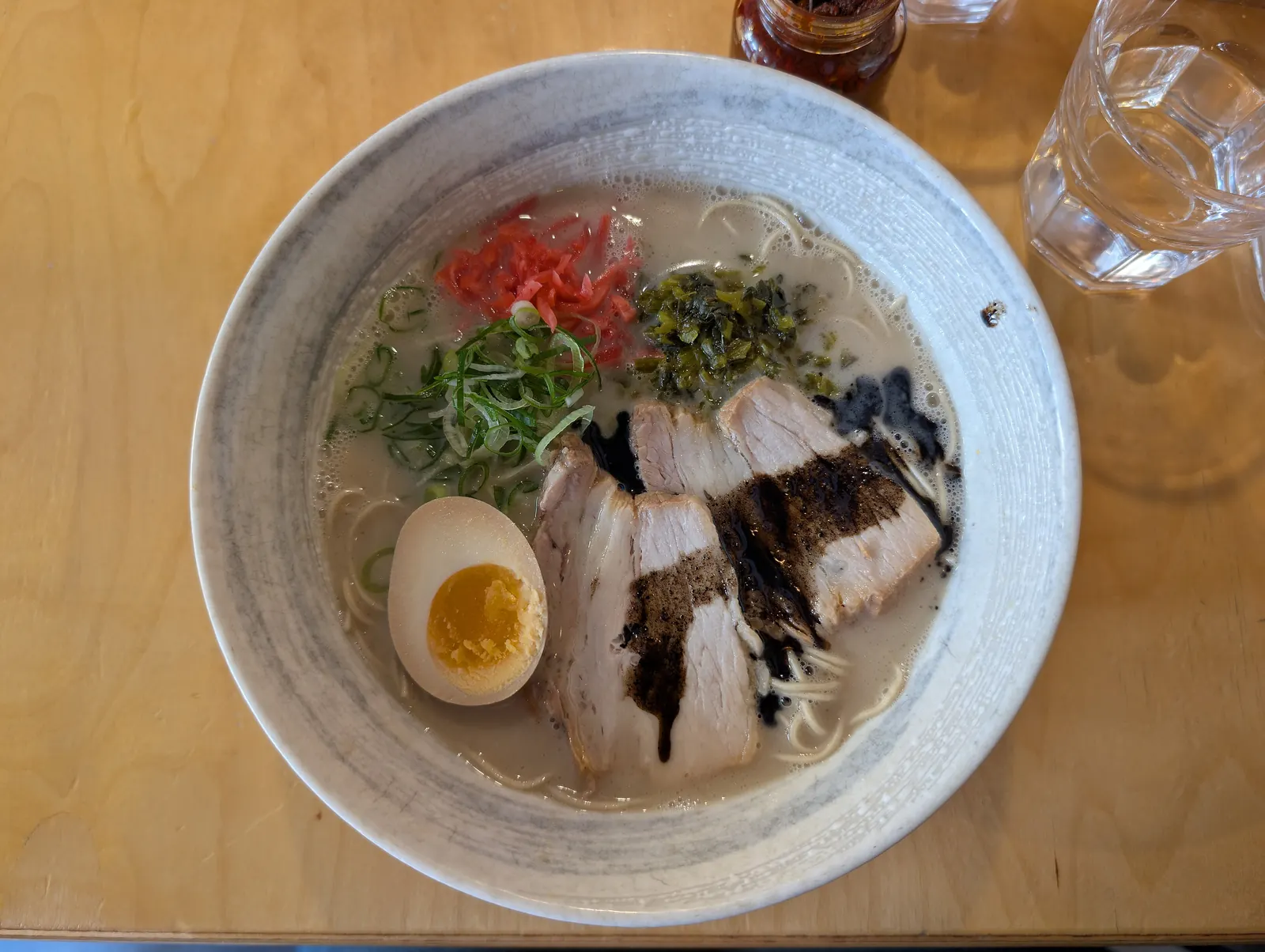
In Nakasu, Canal City or Tenjin, 10–15 minutes from the port by BRT (¥210); there is nothing we can confirm by the berth itself. Ichiran's main store in Nakasu is listed as open 24 hours, its Canal City branch 9:30–23:00 and its Tenjin branch 11:00–23:00. Hakata ramen comes with thin, straight noodles in a pork-bone broth; ask for kaedama, a second helping of noodles, when the bowl is half gone. On most calls the yatai are not yet open.
How much is a taxi from the Fukuoka cruise port?
From the official Fukuoka-area fares, a regular taxi from Chuo Wharf costs about ¥1,400 to Tenjin, ¥1,700 to Hakata Station or the Nakasu stalls, ¥2,000 to Ohori Park and ¥7,600 to Dazaifu. These are distance-only floors; traffic adds time charges. Hiring a taxi by time costs ¥2,650–2,780 per 30 minutes.
What if my ship docks at Hakozaki Wharf?
Hakozaki has no bus stop and no terminal building described in any official source, so plan on a taxi: about ¥2,200 to Tenjin, ¥1,900 to Kushida Shrine and ¥2,400 to Hakata Station, 6–8 minutes without traffic. Ask at the ship's shore desk the night before whether the line runs a shuttle.
Do I need cash in Fukuoka?
Some. City buses take cash or IC cards and give change only for ¥1,000 notes and coins, and it is safest to assume the yatai take cash. The subway (contactless credit cards at every gate, capped at ¥640 a day), the Tabito bus to Dazaifu, the Kyushu National Museum and many restaurants take cards. The Cruise Center's exchange machine turns foreign cash into yen; the nearest 7-Eleven with a cash machine is about 650 m from the bus stop.
Should I tip in Fukuoka?
No. Japan's national tourism organisation says tipping is not customary in restaurants, cafés, taxis or hotels, and the bus fare box gives change only for ¥1,000 notes and coins, not for extras. The one exception it notes: a private guide used to overseas visitors may accept a tip as thanks, and if you give one, put it discreetly in an envelope. At a yatai, pay what the stall asks, including any table charge.
How much is the Kyushu National Museum, and when is it open?
The collection galleries cost ¥700; visitors over 70 and under 18 enter free. It opens 9:30–17:00 (last entry 16:30) and closes on Mondays, or the next working day when Monday is a holiday: in October 2026 it is closed on 5, 13 and 19 October. It takes cards, IC cards and QR payments.
What is the weather like in Fukuoka for a cruise call?
October averages a high of 23.7 °C and November 18.2 °C, with about 90 mm of rain a month, which makes autumn the easy season. August averages 32.5 °C and July is the wettest month at about 300 mm. Typhoons approach northern Kyushu about four times a year, most often in August and September. Cherry blossom is usually at full bloom around 31 March. In rain, Canal City, the Machiya museum and Tenjin's underground mall are indoors, and the yatai stay shut.
How do I get from Fukuoka Airport to the cruise port?
About 20 minutes by taxi or car, according to the city. By public transport, take the subway from Fukuoka Airport to Hakata Station (about 5 minutes, ¥260), then the bus from Hakata-eki Nishi-Nippon City Bank-mae stop F to Hakata Port International Terminal (Chuo Wharf), about 20 minutes and ¥260; the Cruise Center is about 500 m (7 minutes) on foot from there. Allow about an hour in all with the walks and transfer.
Is Fukuoka Japan's busiest cruise port?
By the national ranking, yes: MLIT counted 204 calls at Hakata in 2024, first in Japan, and 209 in 2025, joint first with Yokohama. The city's own count for 2025 is 208. The pace slowed in 2026, with 68 calls to 1 September, so expect fewer two-ship days than in 2025.
What is the best tour from the Fukuoka cruise port?
For most couples on an 8–10-hour call, no tour: Dazaifu and the old town by bus and train cost about ¥1,380 each. For a group of up to 15, the private per-group culture-and-food day (218600P7, about $119 each for six) on a call of 10 hours or more. For limited mobility, the Nokonoshima island tour (5506974P1) with wheelchair-accessible vehicles, once a pier pickup is confirmed. None of them promises in writing to get you back to the ship on time.