
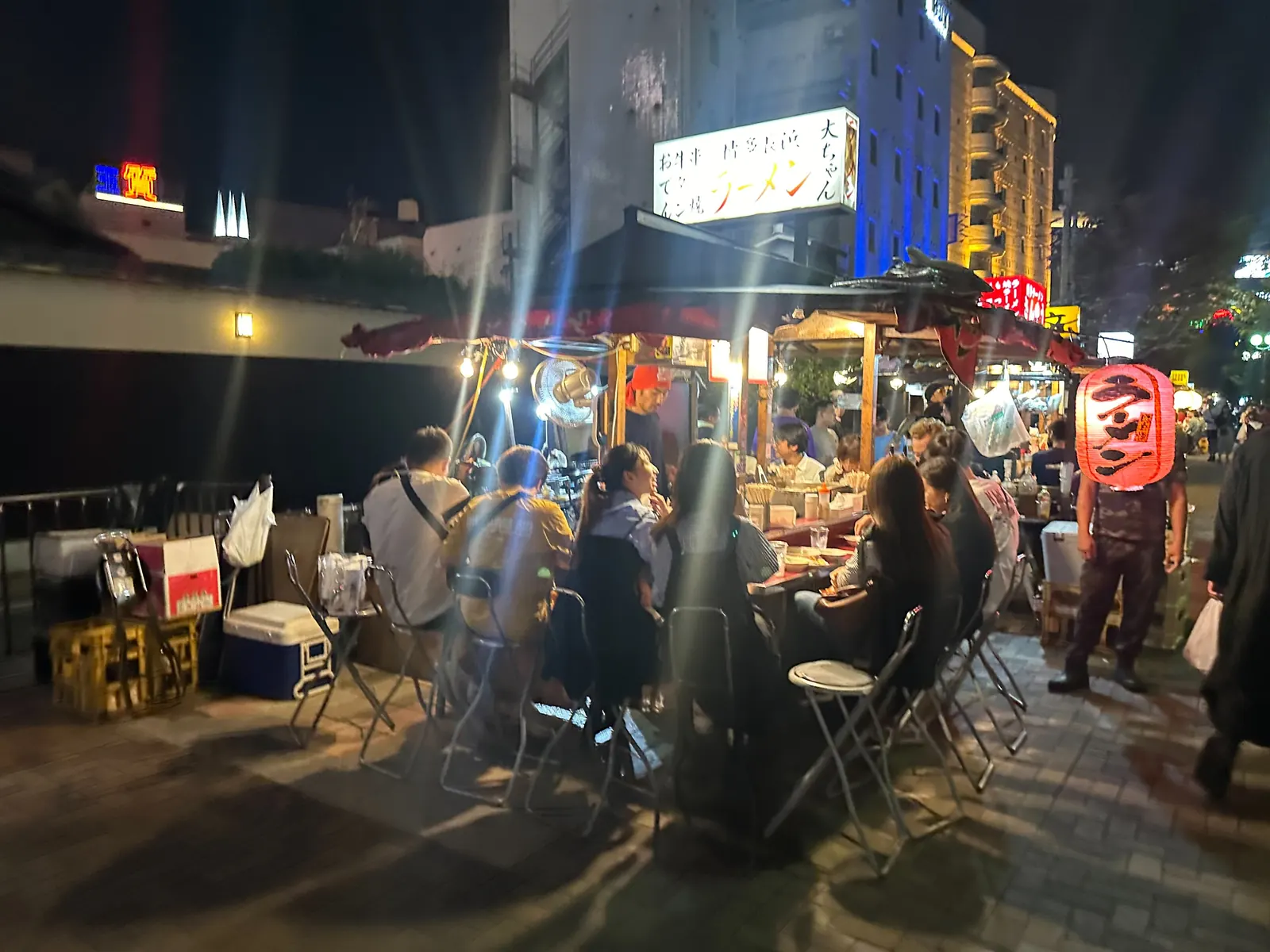
The yatai
Japan regulated its street stalls almost out of existence. This city refused.
After the war, Japanese cities were full of yatai — mobile food stalls set up on the pavement each night. Health rules, road rules and redevelopment removed them almost everywhere. Fukuoka has around a hundred left, which is the large majority of every one still operating in Japan.
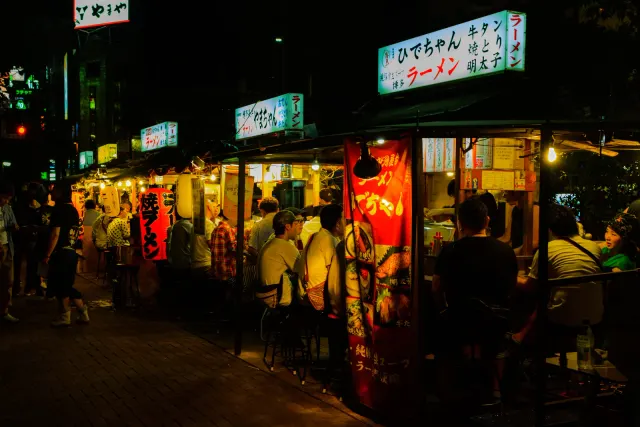
A yatai is a cart. It arrives in the late afternoon, is assembled on a marked pitch on the pavement, seats about eight people under a plastic sheet, serves until the small hours, and is taken apart and towed away before morning. The pavement is a pavement again by breakfast.
How they survived
The rest of Japan phased them out through licensing that expired with the operator and could not be inherited or transferred. Fukuoka did the same for decades and the number fell steadily.
Then the city changed course. Since the 2010s it has run a public tender for vacant pitches — anyone can apply, plans are judged, and licences are granted to new operators rather than left to die out. The result is that the stalls are now a deliberately maintained institution rather than a survival, and some of them are run by people in their thirties doing French or Italian food.
They are inspected, licensed and taxed. This is not a loophole or a folk survival — it is a city that decided the stalls were worth the administrative trouble.
How to use one
Sit down anywhere there is a space. Order quickly — ramen, gyoza, yakitori, oden in winter, and beer or shochu. Pay cash. Many stalls add a small seat charge, which is normal and is not a tourist surcharge.
Stay about an hour. There are eight seats and people are waiting, and the unspoken rule is that you eat, drink, talk and go. Nobody will ask you to leave.
And talk to the person next to you
This is the actual product. At eight seats with your elbows touching, conversation is not optional and Fukuoka people are among the most willing in Japan to have one with a stranger. The stall owner will translate if needed, badly and cheerfully.
A cruise passenger who eats one yatai meal has done something the great majority of visitors to Japan never do.
How it happened
- post-warYatai fill Japanese cities
Cheap food where there were no kitchens
- 20th c.Licensing phases them out nationally
Permits die with the operator
- 2010sFukuoka opens public tenders for pitches
New operators, including young ones
- today~100 stalls, most of Japan’s total
Inspected, licensed, and gone by dawn
Where this becomes real on your port day
One stall, one hour, cash, and talk to whoever is beside you. That is the entire instruction.
The vocabulary of the yatai
- Yatai 屋台
- A mobile food stall. Assembled at dusk, gone by dawn.
- Nakasu 中洲
- The riverfront row. The photograph, and the most foreigner-ready.
- Tenjin 天神
- The other cluster. Quieter, cheaper, often better.
- Kaedama 替え玉
- A second helping of noodles. Say it when the bowl is half gone.
FAQ
Why does Fukuoka still have yatai?
Because the city decided to keep them. Elsewhere in Japan, licences expired with the operator and could not be transferred, so the stalls died out. Since the 2010s Fukuoka has instead run public tenders for vacant pitches, granting licences to new operators — so the roughly one hundred stalls are a maintained institution rather than a survival.
How does a yatai work?
Sit in any free space among about eight seats, order quickly — ramen, gyoza, yakitori, oden in winter — and pay cash. Many stalls add a small seat charge, which is normal. Stay about an hour, because people are waiting, and talk to whoever is beside you; at that distance, conversation is not really optional.
More from Fukuoka
Why the city is called Fukuoka and the station is called Hakata
Read →
One tonne, five kilometres, at 4:59 in the morning
Read →
An accident in 1937, and the vocabulary you need to order it right
Read →
Two invasions landed on this bay, and the word kamikaze came from what stopped them
Read →