
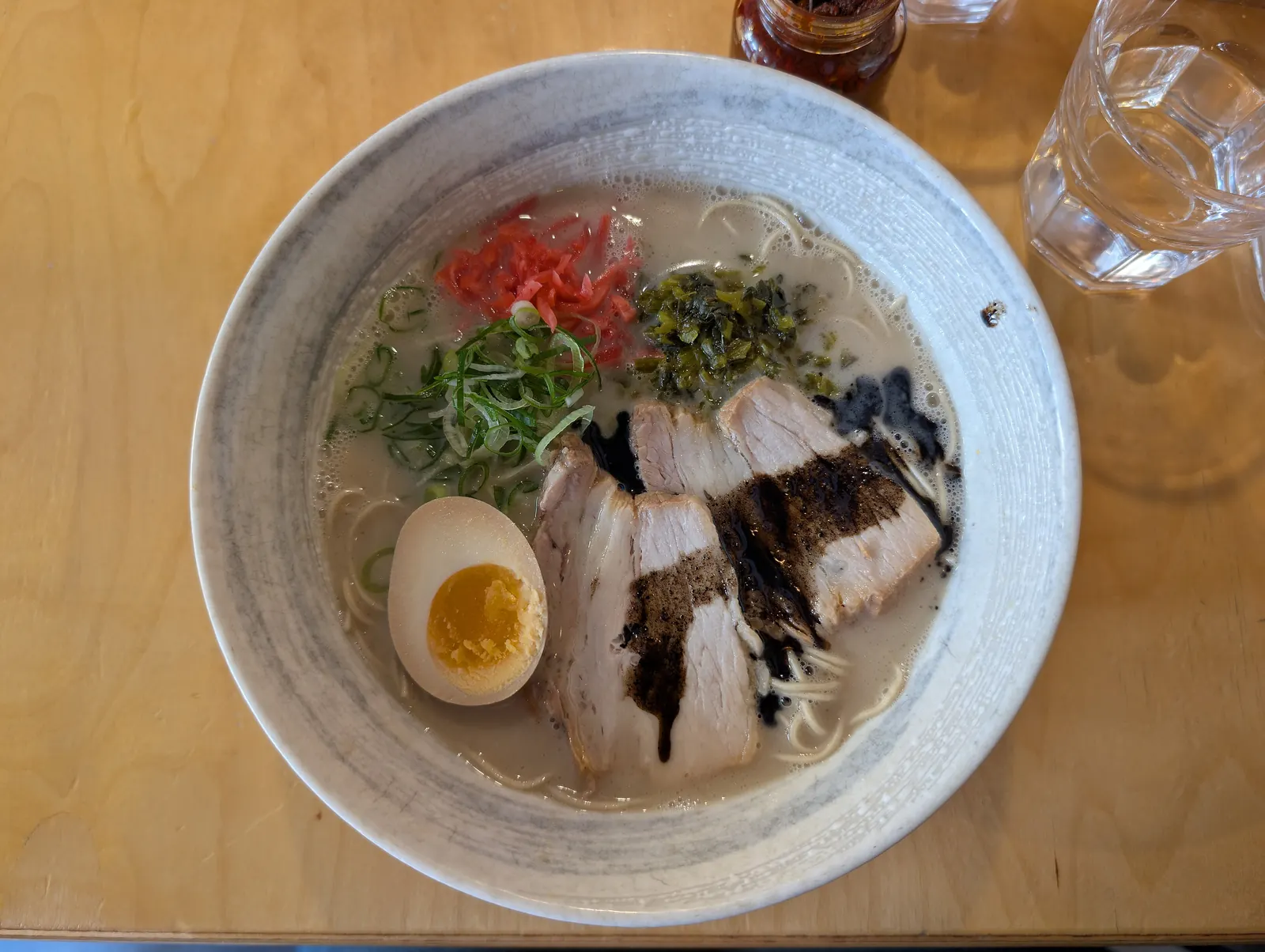
Tonkotsu
An accident in 1937, and the vocabulary you need to order it right
The cloudy white pork broth that now defines Japanese ramen abroad was, by the usual account, a mistake — a pot left boiling too hard in a Kurume stall in 1937. Hakata refined it, added the thin noodles and the refill system, and exported it to the world.
Pork bone broth simmered gently stays clear. Boiled hard, the collagen and fat emulsify and it turns opaque and white. The story told across Kyushu is that a stall owner in Kurume, south of here, left a pot at a rolling boil by accident in 1937, tasted the result, and kept it.
What Hakata changed
Hakata took the broth and rebuilt the bowl around speed. The noodles are very thin and straight, which means they cook in seconds — and also that they go soft fast.
The solution is kaedama: you order a second helping of noodles, dropped into the broth you have left, when the first is about half gone. That is why the portion looks small. It is designed to be topped up.
Ordering firmness is not fussiness — it is the system working. Say <em>barikata</em> and the kitchen will nod.
The words
You are asked how firm you want the noodles, on a scale. From soft to hard: yawa, futsu (normal), katame, barikata, harigane (wire), konaotoshi (barely through the water).
Barikata is the regular’s answer and the right one to try. Harigane and konaotoshi are close to raw and are mostly a test of how far you will go.
Add beni shoga (red pickled ginger), karashi takana (spicy mustard greens) and sesame from the pots on the counter. They are free and they are not optional garnish — they are the second half of the dish.
Where to eat it
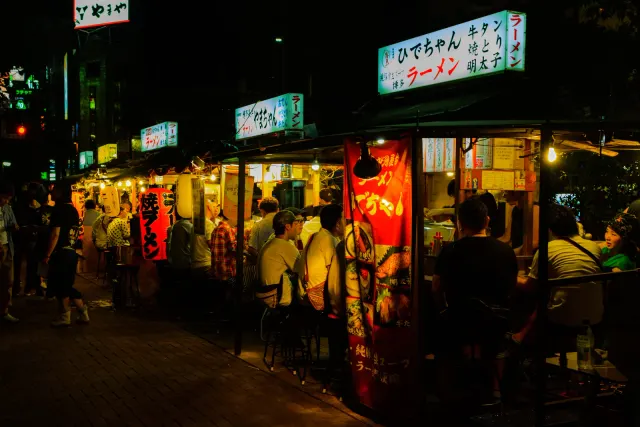
At a yatai on Nakasu after dark, or at a counter in the city at any hour. Hakata has chains with individual booths and a paper order form, which sounds bleak and is actually a very good way to eat alone without any language at all.
Do not expect the heavy, sweet, thick tonkotsu served abroad. The Hakata original is lighter than its reputation and you can drink the broth.
How it happened
- 1937A pot boils over in Kurume
And the broth turns white
- post-warHakata rebuilds the bowl around speed
Thin straight noodles that cook in seconds
- post-warKaedama solves the soft-noodle problem
A second helping into the broth you have left
- todayThe style the world means by "ramen"
Lighter at the source than abroad
Where this becomes real on your port day
Order barikata, add the free mustard greens, and call kaedama when the bowl is half gone.

The vocabulary of tonkotsu
- Kaedama 替え玉
- A second helping of noodles. ~¥150, and the whole point.
- Barikata バリカタ
- Very firm. The regular’s answer on the noodle scale.
- Karashi takana からし高菜
- Spicy mustard greens on the counter. Free, and not optional.
- Beni shoga 紅生姜
- Red pickled ginger. Also free, also part of the dish.
FAQ
What is kaedama?
A second helping of noodles dropped into the broth you have left, ordered when the first is about half gone. Hakata noodles are very thin and go soft fast, so the portion is deliberately small and designed to be topped up. It costs around ¥150 and not ordering it is the clearest sign of a first-timer.
How do I order Hakata ramen?
You are asked how firm you want the noodles. From soft to hard: yawa, futsu, katame, barikata, harigane, konaotoshi. Barikata is the regular’s answer. Then add the free red pickled ginger and spicy mustard greens from the counter pots — they are the second half of the dish, not garnish.
More from Fukuoka
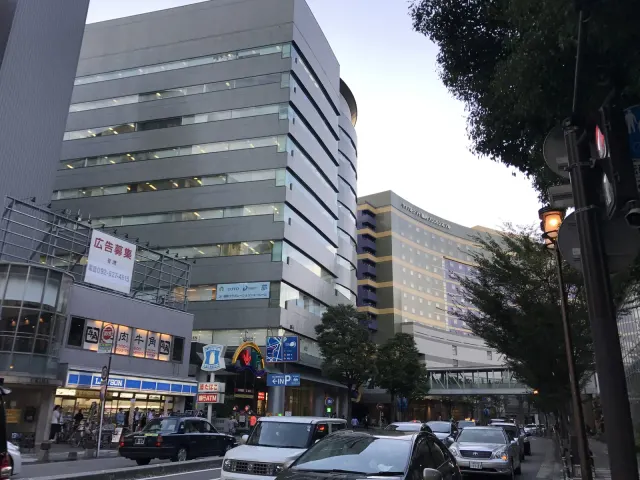
Why the city is called Fukuoka and the station is called Hakata
Read →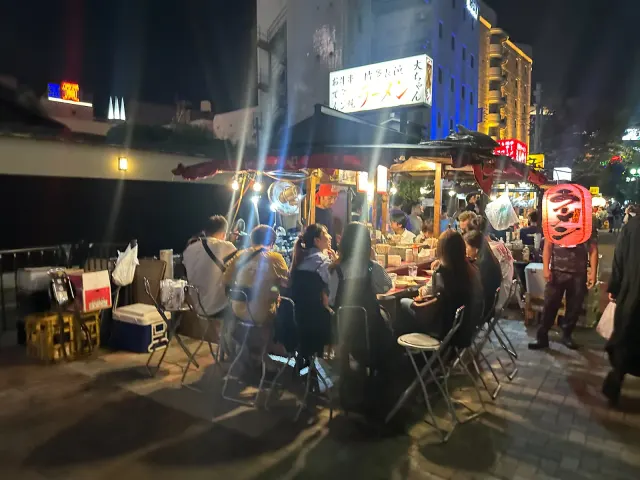
Japan regulated its street stalls almost out of existence. This city refused.
Read →
One tonne, five kilometres, at 4:59 in the morning
Read →
Two invasions landed on this bay, and the word kamikaze came from what stopped them
Read →