
Yamakasa
One tonne, five kilometres, at 4:59 in the morning
On 15 July, at four fifty-nine in the morning, a one-tonne float leaves Kushida Shrine carried at a run by twenty-six men, with hundreds more rotating in along a five-kilometre course. Seven teams follow at five-minute intervals. It is over by six, and it has run for roughly 780 years.
The tradition dates the festival to 1241, when a monk is said to have been carried through a plague-stricken Hakata on a platform, scattering purifying water. Whatever the origin, the neighbourhood teams — the nagare — have organised it for centuries and still do.
Two kinds of float
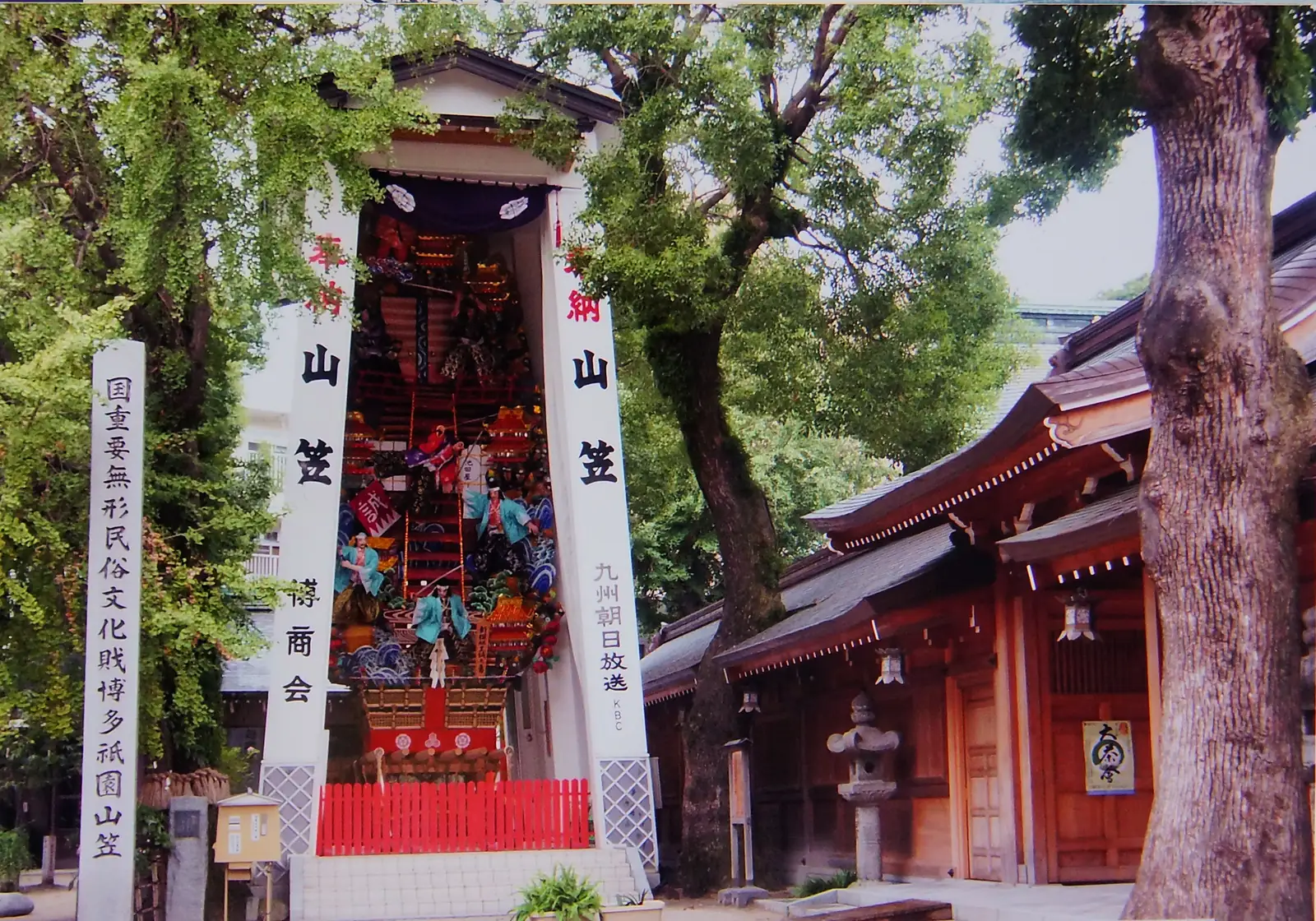
The kazariyama are the decorated ones: towers of figures up to about ten metres, put up around the city on 1 July and photographed by everybody. One stands in the grounds of Kushida Shrine all year, which is how a cruise passenger arriving in November can still see the thing.
The kakiyama are what actually races: stripped down, roughly a tonne, carried on the shoulders of a rotating crew at a genuine run.
The float is timed from the moment it clears the shrine. Teams train for months and the difference between them is measured in seconds over five kilometres.
The rules that surround it
Participants avoid cucumbers for the duration, because a sliced cucumber resembles the crest of the shrine’s deity. Men in the teams do not eat them; some families in Hakata still do not buy them in July.
The costume is a shimekomi loincloth and a happi coat, and the men are soaked continuously by spectators throwing water — which is both cooling and, in the original logic, purification.
UNESCO inscribed the festival in 2016, as part of a group of Japanese float festivals.
If you are here in July
The decorated floats go up on the first, and the whole city changes. The final run — Oiyama, on the fifteenth — starts before five in the morning, and people arrive from about three to get a position. It is free, it is enormous, and it is genuinely one of the great things to see in Japan.
If your ship is in port on the fourteenth or fifteenth, this outranks everything else on the itinerary.
How it happened
- 1241The traditional founding
A monk carried through a plague-stricken town
- centuriesNeighbourhood nagare organise it
And still do
- each 1 JulyDecorated floats go up across the city
Up to ten metres, and photographed by everyone
- each 15 JulyOiyama, from 4:59am
One tonne, five kilometres, seven teams
- 2016UNESCO Intangible Cultural Heritage
With Japan’s other great float festivals
Where this becomes real on your port day
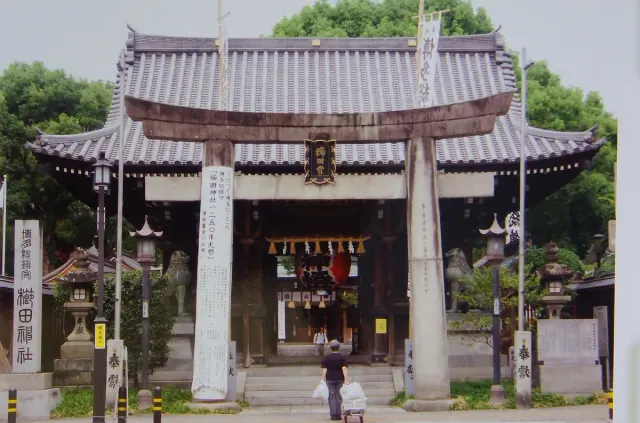
Whatever month you arrive, go to Kushida Shrine — a full decorated float stands there all year.
The vocabulary of Yamakasa
- Kakiyama 舁き山笠
- The racing float. About a tonne, carried at a run.
- Kazariyama 飾り山笠
- The decorated tower. One stands at Kushida all year.
- Nagare 流
- A neighbourhood team. The unit the whole festival runs on.
- Oiyama 追い山
- The final run, 15 July, from 4:59 in the morning.
FAQ
When is Hakata Gion Yamakasa?
From 1 to 15 July. Decorated floats go up across the city on the first, and the final race — Oiyama — starts at 4:59 in the morning on the fifteenth, when seven teams carry one-tonne floats five kilometres through Fukuoka at five-minute intervals. UNESCO inscribed it in 2016.
Why do Yamakasa participants avoid cucumbers?
Because a sliced cucumber resembles the crest of the deity of Kushida Shrine. Men in the teams do not eat them for the duration of the festival, and some Hakata families still avoid buying them in July at all.
More from Fukuoka
Why the city is called Fukuoka and the station is called Hakata
Read →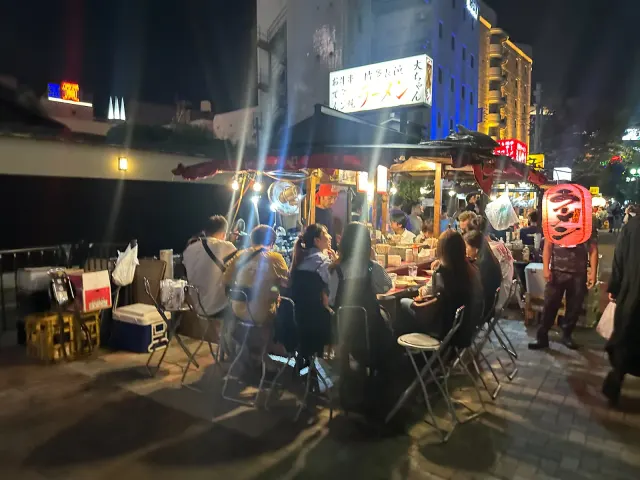
Japan regulated its street stalls almost out of existence. This city refused.
Read →
An accident in 1937, and the vocabulary you need to order it right
Read →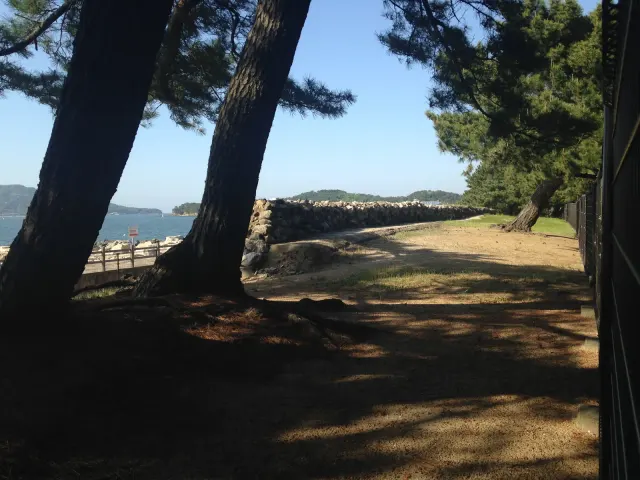
Two invasions landed on this bay, and the word kamikaze came from what stopped them
Read →