
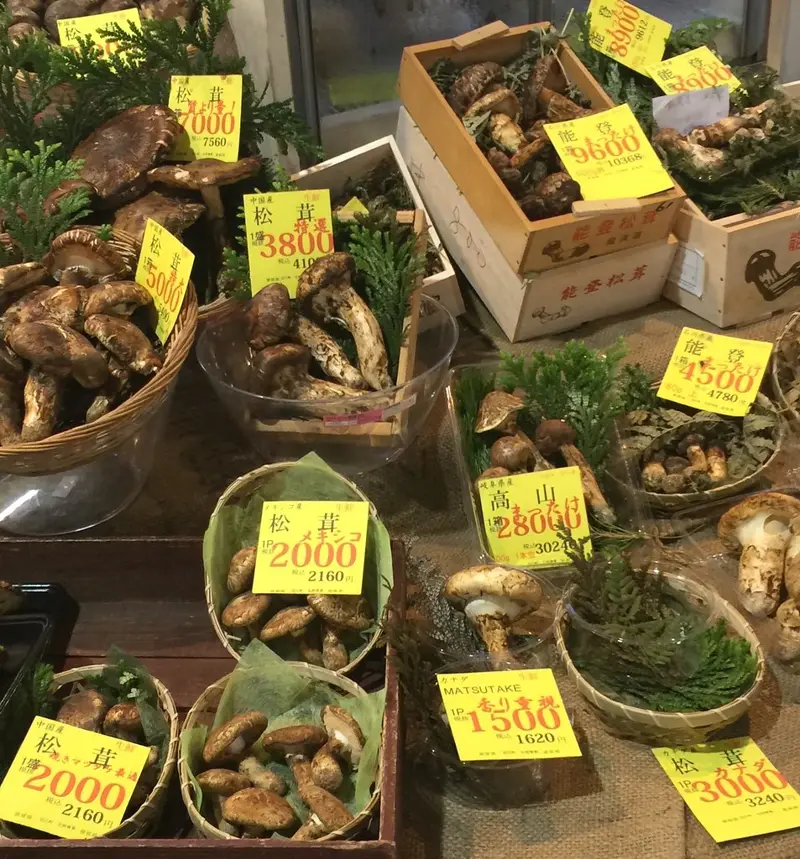
 Photo: afs1180 / CC BY
About 170 shops under one roof, running since the Edo period, and still the market Kanazawa households actually use. The Sea of Japan in winter is cold, rough and shallow over a wide shelf — bad for fishermen, excellent for fish — and this is where the result arrives.
Snow crab season runs from early November to about March. Every legally landed crab carries a coloured tag identifying its port, and locals read the tag before the price. Outside the season an honest shop will tell you the crab is frozen or imported.
Five things the plaques won't tell you
- Eat at a counter inside the market, not at a restaurant with a view. Better fish, lower price.
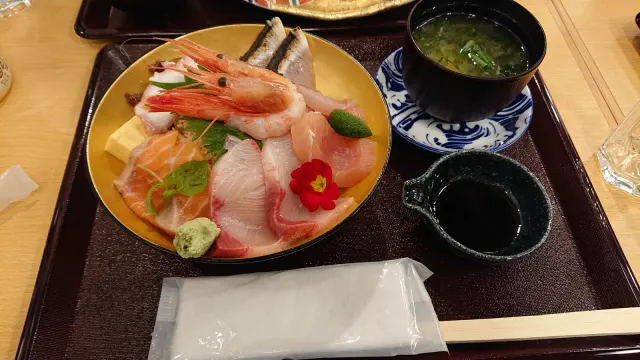
- Order kaisen-don — sliced raw fish over rice — and let them choose the fish.
- Out of crab season, order nodoguro (blackthroat seaperch), grilled with salt.
- Hours vary by shop, and some eateries close on Wednesdays or Tuesdays. Check before you build a plan around one.
- Cash is easier, though more stalls take cards each year.
Outside the season an honest shop will tell you the crab is frozen or imported.
Guided days from Kanazawa
Booked before you sail — there is no tour desk at the pier. Booking through these links supports the site.


More in Kanazawa
Questions people ask here
What should I eat at Omicho Market?
Kaisen-don — sliced raw fish over rice — at a counter inside the market rather than a restaurant with a view; the fish is better and the price lower. From early November to March, snow crab. Outside that window, order nodoguro grilled with salt instead, because out-of-season crab here is frozen or imported.
Is Omicho Market touristy?
Less than most. It has about 170 shops under one roof, has run since the Edo period, and is still where Kanazawa households buy food. Some eateries close midweek, which is a good sign — it operates on the city's schedule, not a visitor's.