
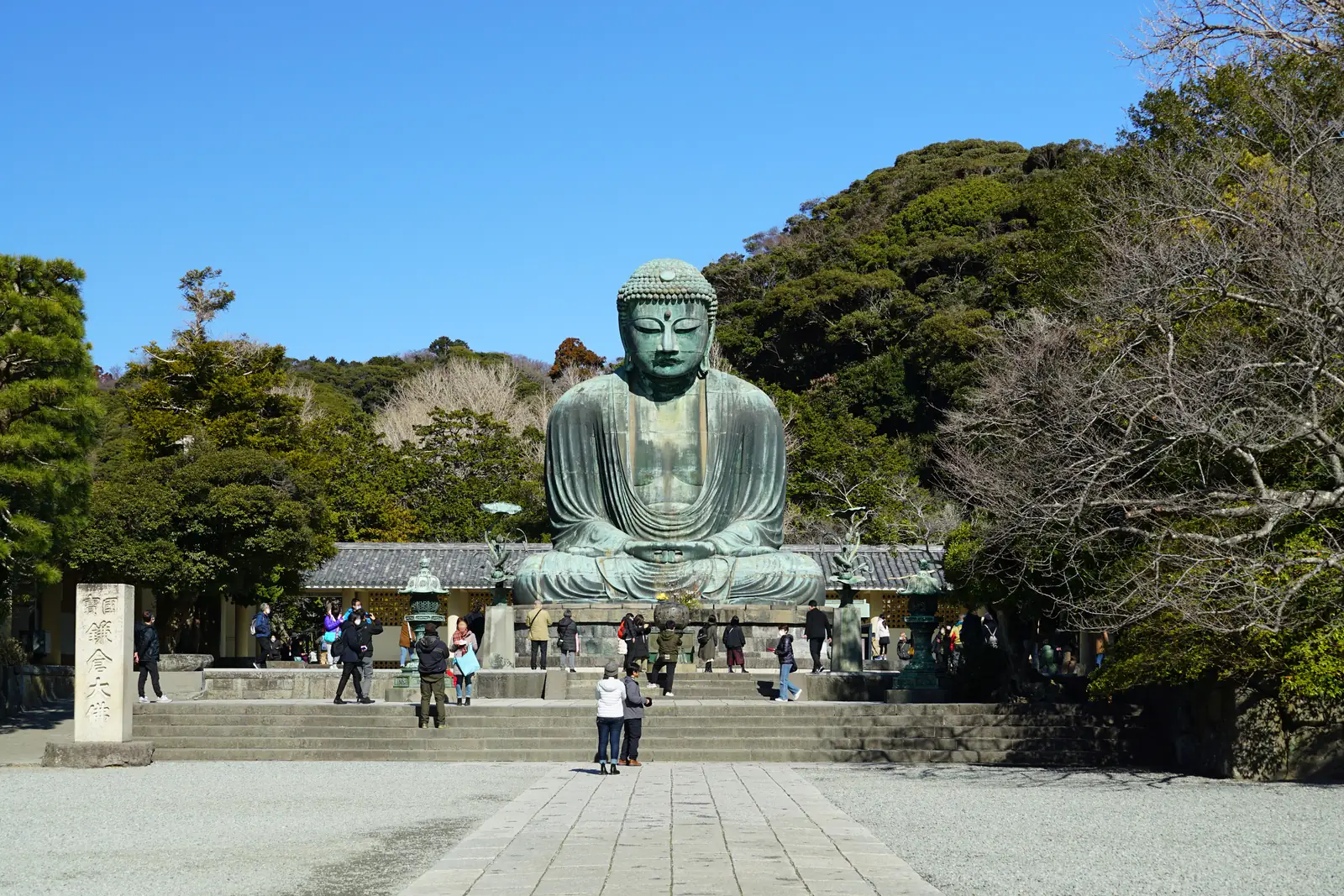
 Photo: 663highland / CC BY-SA 4.0
The Great Buddha of Kamakura is a National Treasure, and the temple (Kotoku-in) says it is unusual among Japan's big Buddhas because it sits in the open air. It stands about 11.3 metres tall and weighs around 121 tonnes, and its construction began in 1252. It is the image on the front of half the guidebooks about Japan, and it is an easy line from Yokohama.
What you actually do is simple. You pay at the gate, walk up to the statue across a gravel forecourt, and look. For a further ¥50 you can step inside the hollow bronze, which most passengers find a better souvenir than the photograph. The temple says the hall that once housed the Buddha was wrecked by typhoons in 1334 and 1369 and finally by the earthquake of 1498, which is why the figure now sits in the weather. Hasedera, with its tall eleven-faced Kannon and a lookout over the bay, is the usual second stop and is about a five-minute walk from Hase station.
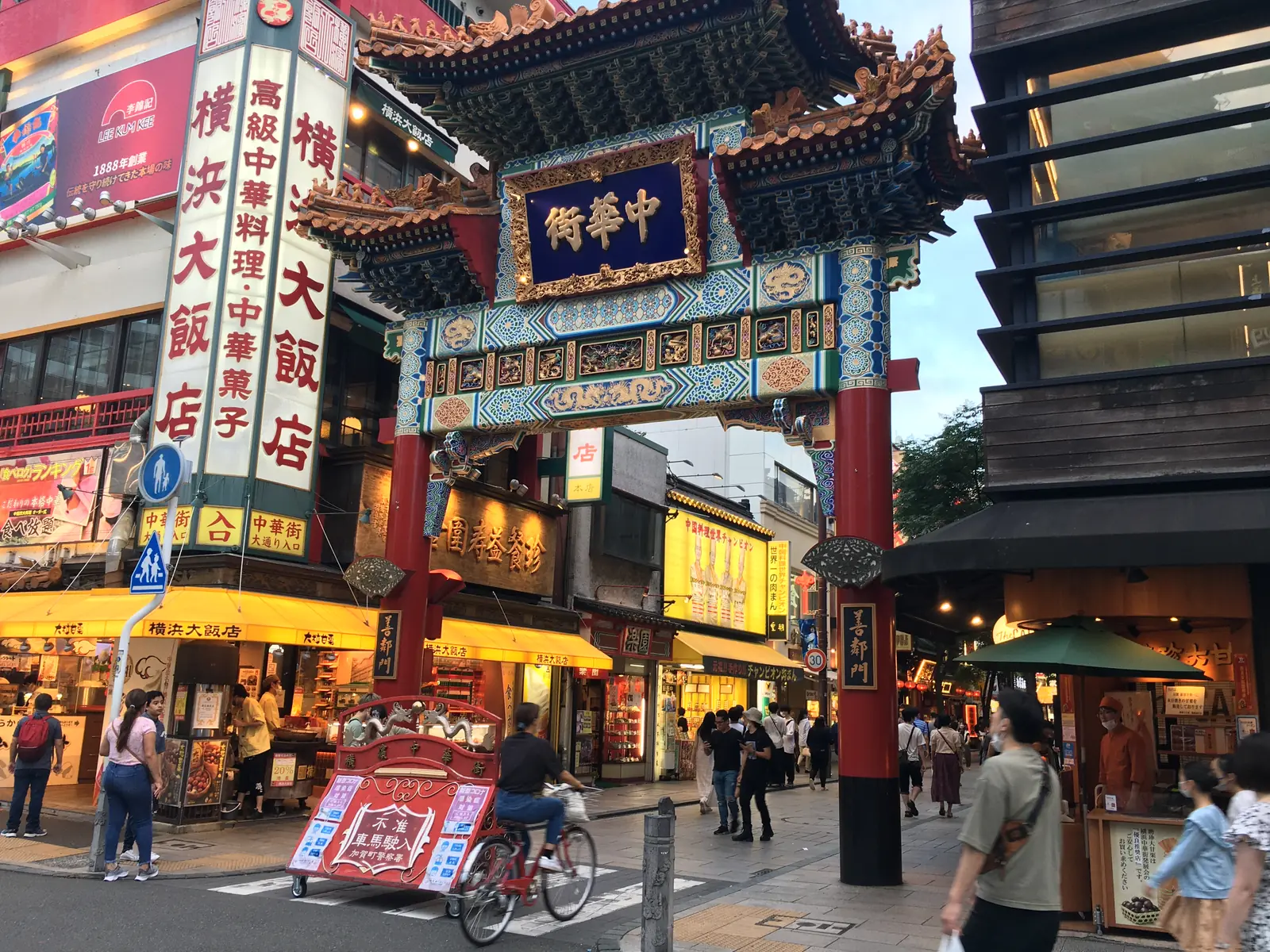
The catch is the clock. This is a train-and-train-and-tram day, not a stroll, and the ride is only cheap if you have a firm return time. Kamakura is also a busy weekend town. On a call shorter than about eight hours we would not go; stay in Yokohama and spend the saved ninety minutes at Chinatown or Yamashita Park instead.
Five things the plaques won't tell you
- Take the JR Yokosuka line from Yokohama to Kamakura (the Kamakura tourism site gives about 25 minutes), then choose: the Enoden tram to Hase (about 7 minutes, the temple says) or the bus from the Kamakura East Exit to Daibutsu-mae (about 10 minutes).
- The Great Buddha is a seven-minute walk from Hase station (the temple's own figure). Hasedera is about five. Do both on foot and you need no bus at all.
- Hasedera's last entry is 16:30 from July to March (17:00 April–June), so the Buddha first and the temple last is the order that works on a late-October or November call.
- Stepping inside the Buddha costs ¥50 extra and the interior shuts at 16:30. If you want it, do it first.
- Carry coins and a Suica or Pasmo card. The Enoden one-day pass is ¥800 (adults); the plain Kamakura–Hase return fare is unverified, so compare at the machine before buying.
Hasedera, with its tall eleven-faced Kannon and a lookout over the bay, is the usual second stop and is about a five-minute walk from Hase station.
Guided ways to do Kamakura Great Buddha
Booked before you sail — there is no tour desk at the pier. Booking through these links supports the site.
Questions people ask here
How do I get from Yokohama cruise terminal to the Kamakura Great Buddha?
From Osanbashi, walk about 7 minutes to Nihon-odori station, ride the Minatomirai line to Yokohama (¥230), take the JR Yokosuka line to Kamakura (about 25 minutes, per the Kamakura tourism site), then the Enoden tram to Hase (about 7 minutes) and walk 7 minutes to Kotoku-in. By our sum that is roughly 1 h 15 min to 1 h 30 min each way. Fares for the JR and Enoden legs are unverified.
How much does the Great Buddha cost, and can you go inside?
Entry to the grounds is ¥300 for adults (¥150 for children aged 6–12). Going inside the statue is an extra ¥50 per person. Hours are 8:00–17:00 from October to March, with entry up to 15 minutes before closing; the interior closes at 16:30. No reservation is needed.
Is Kamakura worth it on a Yokohama cruise call?
Only on a long call. We would use it for ships staying about eight hours or more. On a short call the train time eats most of the day; Yokohama's own waterfront and Chinatown are better value.