Updated 1 October 2026 · 30 official and operator sources · Researched from official timetables, operators and the port authority · Takumi Yamada
Most ships tie up at Osanbashi, a seven-minute walk from Nihon-odori station, and a quarter use Shinko Pier (Yokohama Hammerhead), ten minutes from Bashamichi — so from either you can walk the harbour, Yamashita Park and Chinatown without a ticket. The best thing within reach of a typical 8-hour call is Kamakura: the Great Buddha is 46–60 minutes and ¥870 away by train, and an 09:30 start puts you back at the gangway with an hour to spare. Tokyo is further than the '30 minutes' you will read — 42–51 minutes to Tokyo Station — so on a port day it means one district, not the city, and Mt Fuji is not a port-day trip at all. For most English-speaking passengers Yokohama is where the cruise starts or ends, so the real decision is whether you give it the day before or after.
Your call, your day
What fits the time your ship gives you?
Pick your ship from the official Yokohama schedule — or just the hours you have — and this page picks the plan and the tours that fit, with the hour before all-aboard already set aside.
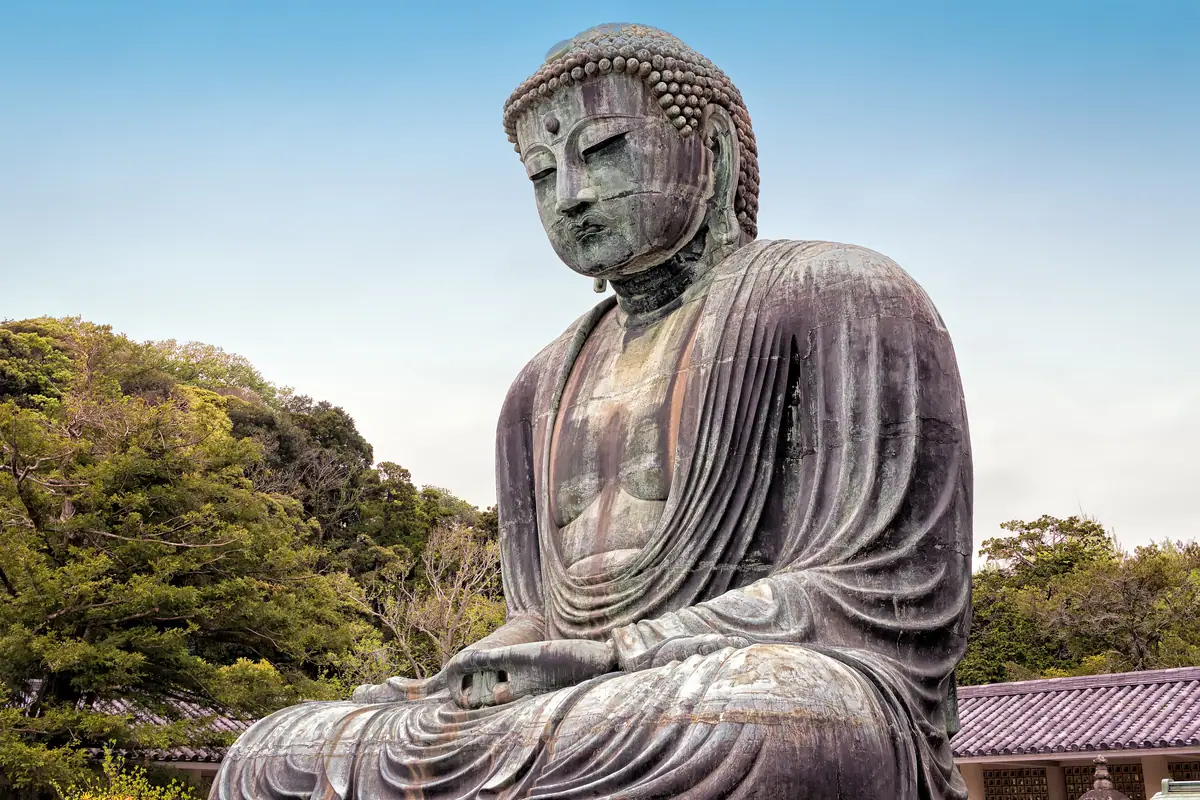
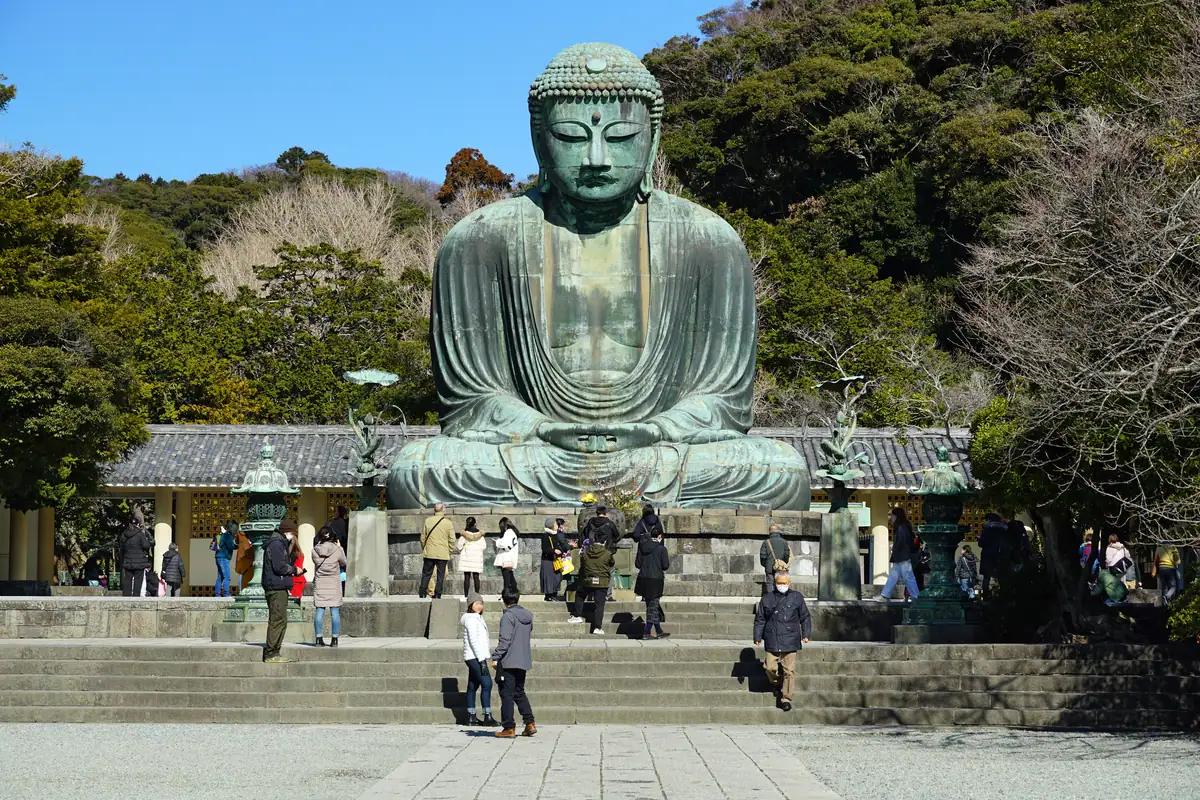
A great bronze Buddha sitting in the open air in the old capital of Kamakura, with Hase-dera's hillside temple a short walk away. It is the one sight near Yokohama that fits an ordinary port day and still feels like a day out.
From the shipMinatomirai Line from Nihon-odori, JR from Yokohama, then the Enoden to Hase: 46–60 minutes and ¥870 each way. Both temples open at 8:00.
The harbour on foot: Osanbashi, Yamashita Park, Chinatown
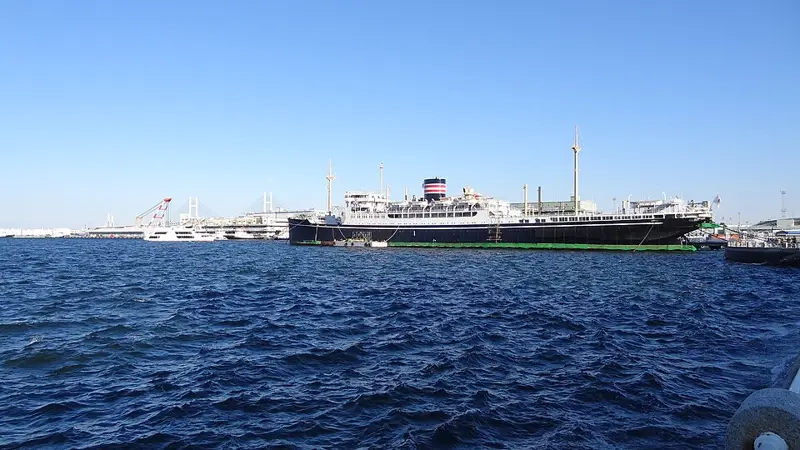
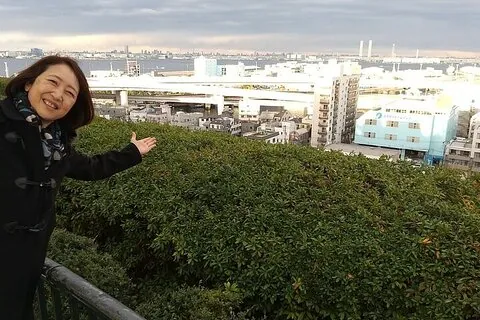
Your pier is the first sight — a free rooftop deck, open 24 hours, facing the Minato Mirai skyline. From it a flat waterfront walk runs past a 1930 ocean liner to the gates of Chinatown.
From the shipOn foot from Osanbashi: Yamashita Park about 14 minutes, Chinatown about 16 minutes, the Red Brick Warehouse about 18 minutes (our estimates).
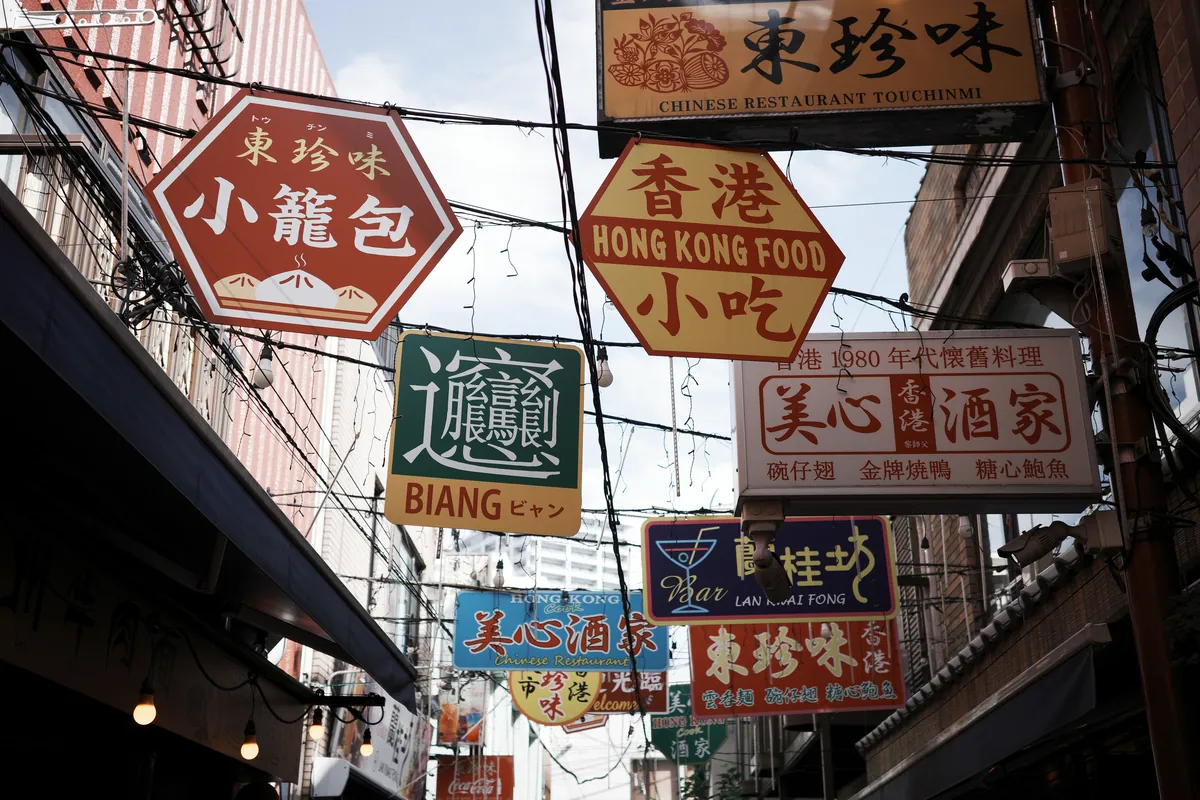
The city counts more than 600 shops and restaurants in its Chinatown. Add Kiyoken's shumai, ie-kei ramen from the shop that started the style, and the Napolitan spaghetti at the Hotel New Grand, and lunch is a reason to stay in town.
From the shipChinatown is about 16 minutes' walk from Osanbashi, or 3 minutes by train from Nihon-odori to Motomachi-Chukagai (¥200).
Start with the thing most port pages leave out. For English-speaking passengers, Yokohama is mostly where the cruise begins or ends. Of the 15 calls by international ships between October and December 2026, the cruise lines' own listings show Diamond Princess, Norwegian Jade, Celebrity Millennium, Navigator of the Seas, Star Seeker and Luminara all starting or finishing voyages here; the other 31 calls are Japanese ships. So "a day in Yokohama" usually means one of three things: the day before you board, the day after you land, or a back-to-back day while your ship turns round. This guide covers all three; the upcoming calls show which yours is.
Whichever it is, the port itself is on your side. Osanbashi, the pier most ships use, runs straight out from the old downtown: Yamashita Park, the 1930 liner Hikawa Maru and the gates of Chinatown are all within a quarter of an hour on foot, on the flat. Forty-five minutes to an hour by train brings you to Kamakura, the old shogun capital, where the Great Buddha sits in the open air — the one great sight near Yokohama that fits a normal port day. Tokyo is within reach too, but it is further than the brochures say.
What Yokohama is not: a place to see Mt Fuji up close, or Tokyo "in 30 minutes". Fuji shows itself behind the skyline on clear days, most often in winter, but getting there is an all-day trip. The Landmark Tower's 69th-floor Sky Garden, the obvious place to look for it, is closed for renovation until 2028 or later. Everything below comes from the city's schedule and terminal pages, operators' fares and dated timetable searches, checked on 30 September 2026.
First: which berth are you at?
Yokohama has three cruise terminals, and the city tells passengers to check which one with their cruise line. Two of them are downtown; the third is not.
Osanbashi (most ships)
Shinko Pier / Yokohama Hammerhead
Daikoku Pier (tallest ships)
Calls, Oct–Dec 2026
33 of 46 (72%)
11 (24%)
2 (4%)
Who uses it
Diamond Princess, Norwegian Jade, Celebrity Millennium, Asuka II and III, Pacific World
Small ships such as Star Seeker and Luminara; most Mitsui Ocean Fuji and Sakura calls
Costa Serena (7 Oct), Navigator of the Seas (18 Oct)
Terminal
Large terminal with a free rooftop deck (24 hours), exchange machine, lockers, free Wi-Fi; step-free, with lifts; no ATM
Cruise terminal combined with a hotel, food hall and shops; exchange machine, lockers, Wi-Fi; 7-Eleven next door
CIQ halls and waiting space only; no cafés, no shops, no convenience store nearby
Nearest station
Nihon-odori, 7 min on foot
Bashamichi, 10 min on foot
None walkable — shuttle, taxi or city bus
Address (for a taxi)
1-1-4 Kaigan-dori, Naka-ku (大さん橋国際客船ターミナル)
2-14-1 Shinko, Naka-ku (新港ふ頭客船ターミナル)
Daikoku-futo 13, Tsurumi-ku (大黒ふ頭客船ターミナル)
Our reading of the schedule (not an official rule): mid-size and large ships use Osanbashi, small ships and many Japanese calls use Shinko, and Daikoku is kept for ships that cannot pass under the Yokohama Bay Bridge. Schedules change. Check the berth in your ship's daily programme the night before.
Daikoku opens only on ship days, to passengers only, with nothing to buy — take water off the ship.
Getting from Osanbashi into Yokohama and beyond
The Minatomirai Line is the backbone. Its Nihon-odori station is 7 minutes from the terminal, and it runs through Yokohama Station onto the Tokyu Toyoko Line to Shibuya. It takes Suica and PASMO and, unusually for Japan, contactless credit and debit cards and phone wallets at the gates. A one-day Minatomirai Line pass is ¥460. Journey times below come from dated timetable searches for October and November 2026; walking times are our estimates from map routing at 80 m a minute, measured from the middle of the terminal.
To
How
Time
Cost
Yamashita Park and Hikawa Maru
Walk
about 14 min
Free
Chinatown (Zenrinmon gate)
Walk
about 16 min
Free
Red Brick Warehouse
Walk
about 18 min
Free
Yokohama Station
Minatomirai Line from Nihon-odori
6 min + 7 min walk
¥230 (IC ¥224)
Kamakura
Minatomirai Line, then JR from Yokohama
35–42 min
¥670
Hase, for the Great Buddha
As above, then the Enoden
46–60 min
¥870
Shibuya
Through train from Nihon-odori
36–46 min
¥540
Tokyo Station
Minatomirai Line, then JR from Yokohama
42–51 min
¥760
Asakusa
Minatomirai Line, JR and Toei Asakusa Line
57–59 min
¥980
Shin-Yokohama (Ramen Museum)
Minatomirai Line, then subway or JR
21–31 min
¥440–570
Sankeien garden
Taxi
about 11 min without traffic; allow 15–20
about ¥2,500
Taxi fares are our estimates from the Keihin-district tariff in force since 16 March 2026 (¥500 for the first kilometre), for distance only — treat them as a floor.
The Akaikutsu loop bus is the gentle alternative for the waterfront: it runs from Sakuragicho past the Red Brick Warehouse, Chinatown, Harbor View Park and Yamashita Park, with a stop at the Osanbashi terminal. The fare is ¥220, paid on boarding; buses run about every 20 minutes on weekdays and every 15 at weekends, from about 10:00.
From Shinko Pier (Hammerhead)
Shinko sits at the north end of the harbour, next to Minato Mirai's museums.
To
How
Time
Cost
Bashamichi station
Walk, on the pedestrian deck
10 min
Free
Cup Noodles Museum
Walk
about 8 min
Free
Red Brick Warehouse
Walk
about 12 min
Free
Chinatown
Walk, or taxi
about 25 min, or about 5 min by taxi
Taxi about ¥1,000
Yokohama Station
Seabass ferry from Hammerhead's pier
15 min
¥1,300
Red Brick Pier and Yamashita Park
Seabass ferry
10 min
¥1,000
Sakuragicho
Walk, or Air Cabin ropeway and a walk
15 min
Air Cabin ¥1,000 one way
Kamakura or Tokyo
Walk to Bashamichi, then as from Nihon-odori
add about 5 min
about the same
Seabass ferries can be suspended by tides; check at the pier.
From Daikoku Pier
Daikoku is an industrial island, and walking out is not a plan. Your cruise line will run a shuttle into town; the city publishes no timetable for it, so the ship's own notice is the source, and the last shuttle back is your real deadline. By our estimate, allow an hour to an hour and a half less usable time than the same call at Osanbashi.
There are two alternatives. A taxi to Osanbashi or Chinatown is about 5 km and about ¥2,400–2,500 by our estimate, plus any expressway toll on the Bay Bridge; to Yokohama Station about ¥4,000. City buses also run: route 109 from Yokohama Station east exit (stop 14) to Daikoku Zeikan Seimon-mae, then 8 minutes on foot, or route 17 from Tsurumi station east exit (stop 6), then 9 minutes. The city itself warns that these buses are very crowded on ship days and suggests taxis.
Kamakura is the day trip that fits. The route is three trains with two changes, all on one card:
Minatomirai Line from Nihon-odori (or Bashamichi, from Shinko) to Yokohama, 6 minutes.
JR Yokosuka or Shonan-Shinjuku Line from Yokohama to Kamakura: 35–42 minutes and ¥670 from Nihon-odori.
Enoden, the small coastal railway, from Kamakura to Hase, 4 minutes (¥200 or IC card). From the pier to Hase takes 46–60 minutes in all and costs ¥870.
How much you can see depends on the hours you have. By our estimates, the Great Buddha alone takes about three hours door to door from the ship; the Buddha and Hase-dera take four and a half to five; add Komachi-dori and Tsurugaoka Hachimangu near Kamakura station and it becomes five and a half to six. So the Buddha and Hase-dera fit comfortably into the six usable hours of the commonest 8-hour call, and the whole set fits an 8-hour call only if you are ashore early. On the 06:30–15:00 turnaround mornings the early opening does the work: both temples open at 8:00, and the 07:14 from Nihon-odori reaches Hase at 08:14. Both timed days are in the model days below.
Kamakura is busiest at weekends and on holidays, so a weekend call needs the earliest train you can make.
Kamakura's Great Buddha and Hase-dera: how to do them well
Kotoku-in is the temple of the Great Buddha, the seated bronze figure in the open air that most people come to Kamakura to see. It is 7 minutes' walk from Hase station. From October to March it opens 8:00–17:00 (to 17:30 from April to September), with last entry 15 minutes before closing. Admission is ¥300; for another ¥50 you can climb inside the statue, between 8:00 and 16:30. Wheelchair users are admitted, and the temple recommends a companion. Allow 30–45 minutes.
Hase-dera is the other half of the pair: a hillside temple with a viewing terrace at the top of its steps. It opens 8:00–17:00, last entry 16:30 (to 17:30 from April to June), and costs ¥400. It is 5 minutes' walk from Hase station, and the terrace is up a flight of steps. Allow 45–60 minutes.
The order matters less than the clock: both open at 8:00, and by our estimate the first hour is the quietest of the day, so go early and do the Buddha first. Carry some yen for the temples — we could not confirm whether either takes cards.
With longer, add Tsurugaoka Hachimangu and Komachi-dori near Kamakura station; we could not confirm the shrine's current hours, so check on the day.
Tokyo from the ship: one district, not the city
The ship's itinerary may say Tokyo, and the city is certainly within reach — but plan in real times from the pier, not from Yokohama Station:
Shibuya: 36–46 minutes, ¥540, often on a single through train from Nihon-odori. Shibuya and Meiji Jingu make one district's worth of day.
Tokyo Station: 42–51 minutes, ¥760, changing to JR at Yokohama. The quickest JR connection; Asakusa is a further change away.
Asakusa: 57–59 minutes, ¥980. Senso-ji's main hall opens 6:30–17:00 from October to March, with no admission charge.
On the six usable hours of an 8-hour call, one district gives you about three to three and a half hours on the ground. Two districts need a guide who knows the connections, or a call of 10 hours or more. The Tsukiji Outer Market is closed on Sundays, holidays and some Wednesdays, so check the date before building a morning around it.
The real Tokyo opportunities are the days before and after the cruise and the overnight calls, such as Celebrity Millennium's on 16–17 October.
Mt Fuji is a different matter. The only Fuji tour in the catalogue runs 8–10 hours and needs a 12-hour call, the mountain is in cloud on many days, and the operator allows weather cancellations. Look for it from the Osanbashi deck on a clear morning, and read our Fuji odds before you pay for a Fuji day.
The harbour on foot: Osanbashi, Yamashita Park and Chinatown
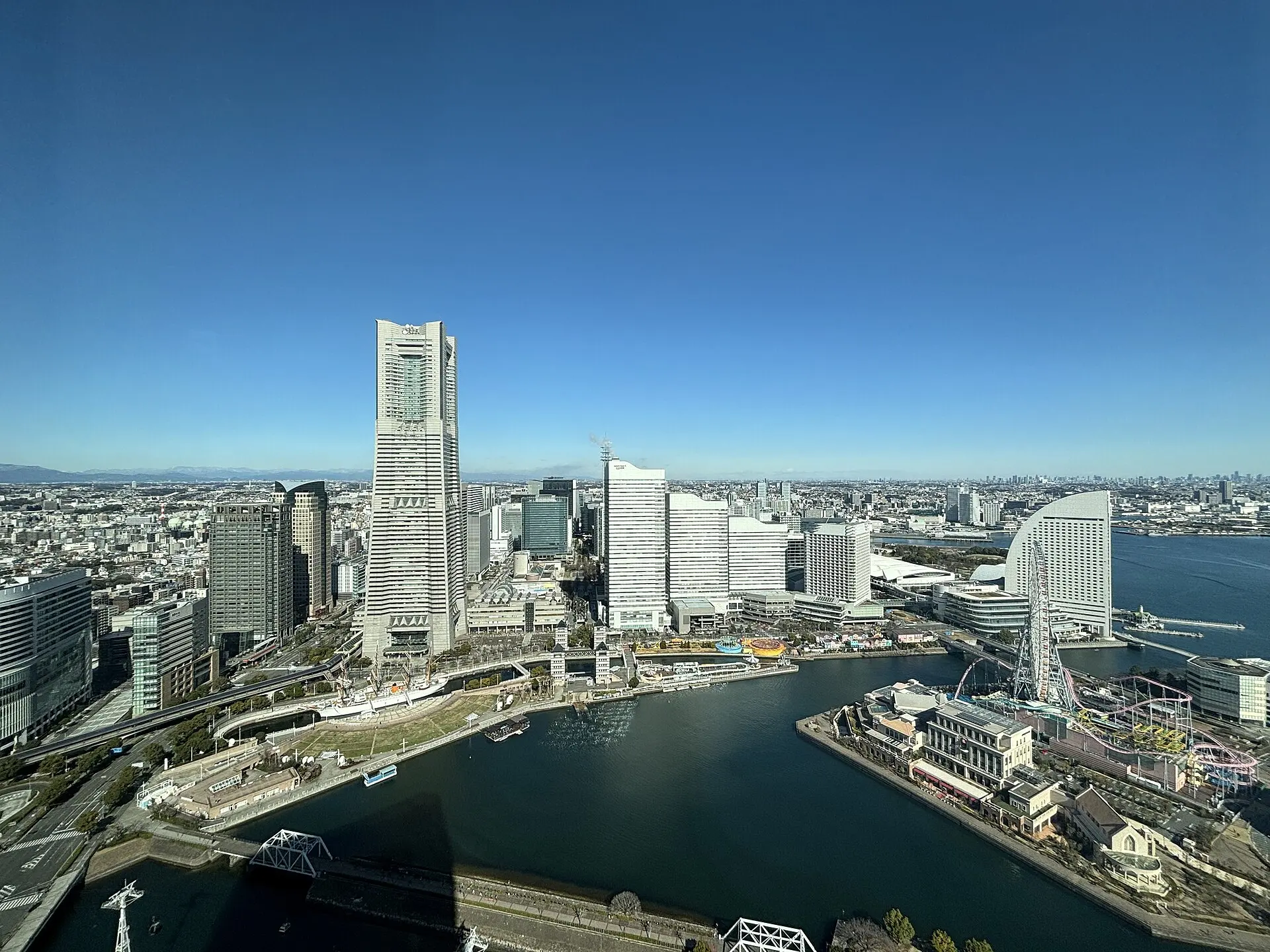
Osanbashi Pier's rooftop deck, the free viewpoint on top of the cruise terminalPhoto: 経済特区 / CC BY-SA 4.0
On a short call, or with no wish to ride trains, the waterfront is a complete day on its own, and all of it is flat.
The Osanbashi rooftop deck is free and open 24 hours, and the whole terminal is step-free, with lifts, accessible toilets on every level and free wheelchairs and pushchairs to borrow between 9:00 and 17:00 (limited numbers, no reservations). Go up once when you get off and again at sailaway — the skyline of Minato Mirai lies across the water.
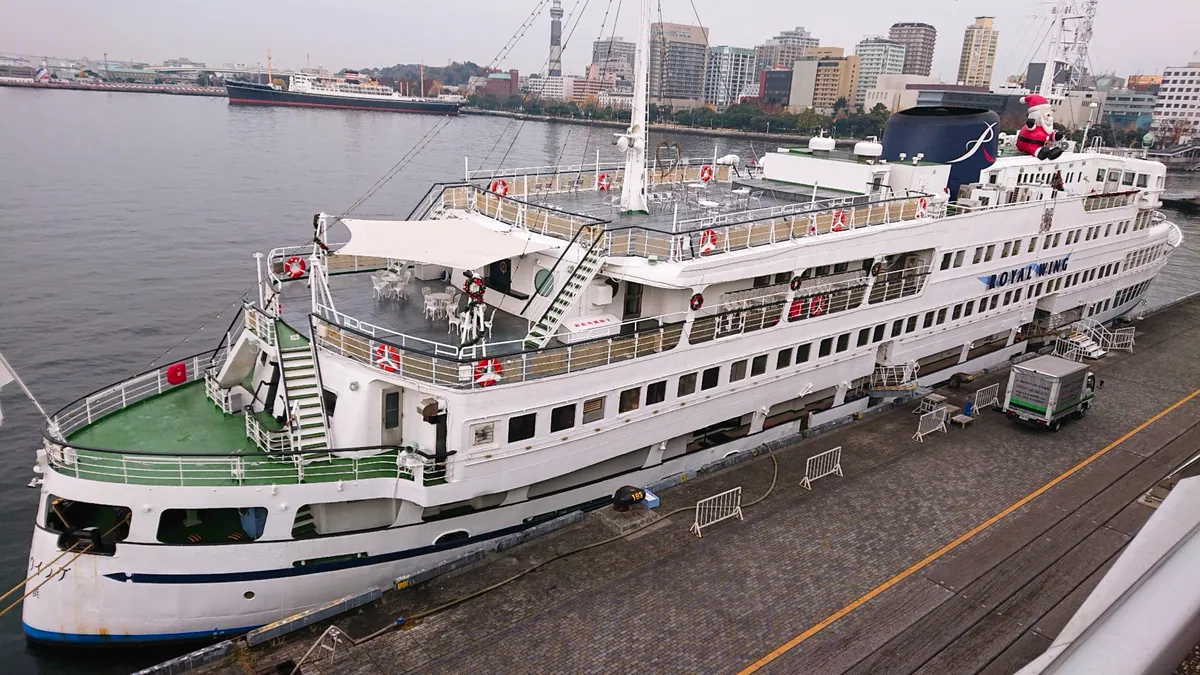
Yamashita Park runs along the water about 14 minutes' walk away, and at its far end lies Hikawa Maru, a 1930 NYK liner you can board. It opens 10:00–17:00 (last entry 16:30) and costs ¥300, or ¥200 for visitors 65 and over, in cash only. It closes on Mondays and on some other listed days, including Tuesday 13 October 2026; there is no lift inside, and boarding can be affected by the tide. Across the road, the Hotel New Grand's The Café (10:00–21:30) serves Napolitan spaghetti (¥1,980), seafood doria and pudding à la mode — dishes the hotel counts as its own creations.
Chinatown begins about 16 minutes' walk from the terminal, or 3 minutes by train from Nihon-odori to Motomachi-Chukagai. The city counts more than 600 shops and restaurants; the Chinatown association's own directory lists over 400. It is busiest at lunchtime and at weekends, and graze-as-you-go works better than a long sit-down meal on a port day: Edosei's main store sells its pork buns (¥600) from 10:00, 3 minutes from Motomachi-Chukagai station. From Chinatown the uphill walk to Harbor View Park and the Yamate hill quarter is the natural afternoon, or ride the Akaikutsu bus (¥220).
The Red Brick Warehouse — two brick warehouses turned into shops and cafés — is about 18 minutes' walk in the other direction, free to enter (Building 1 10:00–19:00, Building 2 11:00–20:00). Its plaza hosts events most weekends, and from 20 November to 25 December 2026 a Christmas Market, which covers every call from 20 November to 23 December.
Sankeien, a large landscaped garden set with historic buildings, is the quiet option: ¥900, 9:00–17:00 (last entry 16:30), closed 26–31 December — which rules out Asuka III's call on 26 December. It is a taxi of about 15–20 minutes from Osanbashi (about ¥2,500), or a bus of about 15 minutes from the Yamashita-cho stop near Motomachi-Chukagai (¥220) plus a 3-minute walk. Give it one and a half to two hours.
The best things to do in Yokohama on a port day
Our full list, with the time each takes from the berth, is on the Yokohama top 10. In brief:
For a rainy day: the Red Brick Warehouse, Hammerhead's food hall, the Cup Noodles Museum (not Tuesdays) and the Shin-Yokohama Ramen Museum (¥450, 21–31 minutes by train). See also the wet-weather plan and the Yokohama plans.
One day in Yokohama: model days
Kamakura's Great Buddha: an 8-hour call at Osanbashi
Fits the commonest pattern, 09:00–17:00 at Osanbashi (Asuka II and III, Mitsui Ocean Fuji and Sakura), and any longer call. From Shinko, walk to Bashamichi instead of Nihon-odori and add about 5 minutes each way.
The best day within reach of a normal call: two of Kamakura's great temples by train, with lunch in Hase. Times are the Ekitan timetable for Wednesday 4 November 2026 on a 09:00–17:00 call, so all-aboard 16:30 and our target back at the gangway 15:30. Check the times for your own date; weekends differ slightly.
09:30Off the ship. Walk to Nihon-odori station, exits 3 or 4 — 7 minutes by the city's reckoning, a few more from the far end of a long ship.
09:44Minatomirai Line to Yokohama, JR to Kamakura (arrive 10:24), then the Enoden four minutes to Hase, arriving 10:34. ¥870 in all; tap a contactless card or IC card at the first gate.
10:41Kotoku-in, the Great Buddha, 7 minutes' walk from Hase station. ¥300, plus ¥50 to step inside the statue (8:00–16:30). Allow 45 minutes.
11:30Hase-dera, about 10 minutes' walk back towards the station (our estimate). ¥400; hillside steps up to the viewing terrace. Allow an hour.
12:30Lunch near Hase station, between the two temples — keep it to 45 minutes so the 13:23 is easy.
13:23Train from Hase back to Nihon-odori, arriving 14:19 (¥870). The 13:51 is your fallback, arriving 14:49.
14:30Back at the gangway, 60 minutes ahead of the 15:30 target. On the 13:51 fallback you arrive about 15:00, still 30 minutes ahead.
Early Kamakura on a 06:30–15:00 turnaround day
Fits Diamond Princess (06:30–15:00, six calls in Oct–Nov 2026) and Norwegian Jade (06:30–16:00) for back-to-back guests, or anyone ashore by 07:00. Check with the ship whether in-transit guests may go ashore that early.
The Great Buddha opens at 8:00, which is exactly why an early turnaround morning works. Times are Ekitan's for Wednesday 11 November 2026: all-aboard 14:30, target back at the gangway 13:30.
07:00Off the ship and walk to Nihon-odori, 7 minutes. Bring water from the ship; the nearest 24-hour store we could confirm is a Lawson about 615 m away.
07:14Train from Nihon-odori to Hase, arriving 08:14, ¥870. On Saturday 10 October the best connection is the 07:30, arriving at the same 08:14.
08:20Kotoku-in (opens 8:00, ¥300). By our estimate the queues are at their shortest of the day now.
09:15Hase-dera (opens 8:00, ¥400). Climb to the viewing terrace; allow about an hour.
10:30Coffee or a snack near Hase station before the ride back.
11:03Train from Hase to Nihon-odori, arriving 11:57. Fallback: the 11:31, arriving 12:21.
12:05Chinatown lunch, about 5–8 minutes' walk from Nihon-odori (our estimate). Keep it to steamed buns and a bowl — you have 45 minutes.
12:50Walk back to the terminal, about 16 minutes, arriving about 13:10 — 20 minutes ahead of the 13:30 target.
The harbour on foot from Shinko Pier (Hammerhead)
Fits 09:00–17:00 at Shinko Pier (Mitsui Ocean Sakura and Fuji). On Mitsui's 11:30–19:00 calls, move every step 2½ hours later and cut lunch by 30 minutes: back at 17:00, 30 minutes ahead of a 17:30 target.
Shinko Pier sits at the north end of the waterfront, next to the museums of Minato Mirai, so the day walks south along the water to Chinatown and ends with a short taxi ride. No trains, no tickets to buy in advance. Target back at the gangway 15:30 on a 09:00–17:00 call.
09:30Off at Yokohama Hammerhead: a currency-exchange machine, coin lockers and free Wi-Fi in the terminal, and a 24-hour 7-Eleven about 100 m away.
10:00Cup Noodles Museum, about 8 minutes' walk (¥500; opens 10:00). The make-your-own-cup workshop runs on numbered tickets handed out on the day. Closed on Tuesdays, including Star Seeker's 6 October call.
11:15Red Brick Warehouse, about 12 minutes on foot: two brick warehouses of shops and cafés, free to enter (Building 1 from 10:00, Building 2 from 11:00).
12:00Walk on to the Osanbashi rooftop deck, about 10–15 minutes to the land end of the pier (our estimate), for the skyline you just walked through.
12:30Chinatown for lunch, about 16 minutes from Osanbashi through Yamashita Park, or via Hikawa Maru (not Mondays; ¥300, cash) if you would rather eat later.
14:30Taxi back to Hammerhead from Chinatown, about 5 minutes and roughly ¥1,000 (our estimate), or a 25-minute walk.
15:00Back at the gangway, 30 minutes ahead of the 15:30 target.
How to think about your hours
Work backwards from the ship. All-aboard is usually 30 minutes before departure (check the daily programme), you want to be back at the gangway an hour before that, and the first half hour after arrival goes on getting off. So the time you can actually use is the call length minus about two hours. At Daikoku, take off another hour or so for the shuttle.
Call
Usable
From Osanbashi
From Shinko
From Daikoku
6–7 hours
about 4–5
The rooftop deck, Yamashita Park and a Chinatown lunch; or Sankeien by taxi; or the Great Buddha alone, tight
Cup Noodles Museum, the Red Brick Warehouse and the waterfront
The shuttle to town and one area on foot
8 hours
about 6
Kamakura's Buddha and Hase-dera; or one Tokyo district; or a full waterfront day with Sankeien
The harbour-on-foot day; or Kamakura via Bashamichi
The waterfront and Chinatown, around the shuttle times
8½–9½ hours, early arrival
about 6½–7½
Early Kamakura, back for a Chinatown lunch
Kamakura with Komachi-dori
Kamakura only if the first shuttle is early
10 hours+
about 8
Kamakura in full; or two Tokyo districts with a guide
The same, adding about 5 minutes each way
Kamakura or one Tokyo district
The commonest pattern here is 09:00–17:00: 21 of the 46 calls to the end of 2026, nearly all Japanese ships. Diamond Princess keeps 06:30–15:00 and Norwegian Jade 06:30–16:00, but those are turnaround days — for most passengers on board they are embarkation or disembarkation, and only back-to-back guests have a port day to plan. The long calls are the overnights: Celebrity Millennium on 16–17 October, Asuka III on 19–20 October and 19–20 November, Asuka II on 9–10 December, and Pacific World from 13 to 15 December. Calls from January to March 2027 will be added to the city's schedule in early December.
Tours worth booking, by how many hours you have
Every pick opens our own page first — what the operator actually includes, who should skip it, and which upcoming Yokohama calls it fits. Prices are the operator's "from" price as of 26 Sep 2026.
6h+Old Yokohama and Sankeien with a local guide
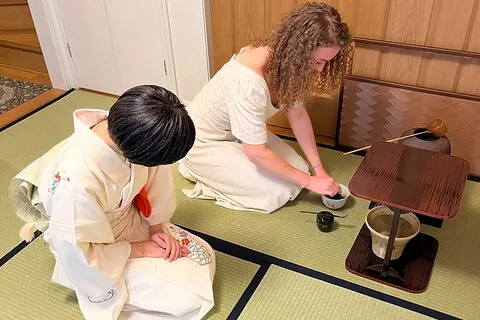
The hill walk meets one stop from the pier; the tea ceremony is a long ride into the suburbs. On a 6½–7-hour call, book only if the start time leaves your hour's margin.
Tokyo takes 35–60 minutes each way from the pier, so a guided day needs a 10-hour call — Celebrity Millennium's overnight on 16–17 October, the Asuka overnights, or better, the day before or after your cruise.
Tours are booked through Viator (a Tripadvisor company). If you book, we may earn a small commission at no extra cost to you. It never decides what we recommend — which is why each tour page has a "think twice" note.
About the return to the ship. None of the seven Yokohama tours in the catalogue puts an on-time-return promise in writing, and only two meet you at a cruise terminal: the Best of Tokyo guide and the Mt Fuji day. The others start at a station, a bus stop or a hotel, so the time to get there and back is yours to manage. Tell the guide your all-aboard time when you book and again when you meet, and agree to be back at the gangway an hour before it. All seven offer a full refund if you cancel at least 24 hours ahead, which helps if your ship changes berth or time. The guided Yokohama page has the full list.
If Yokohama is where your cruise starts or ends
Luggage. Osanbashi's terminal does not hold luggage for passengers, and ask your cruise line about courier services rather than assuming one exists. There are coin lockers in the 2F lobby. Luggage forwarding in Japan is not same-day. With big bags, a taxi from the terminal to Yokohama Station (about ¥2,000 by our estimate) beats the Minatomirai Line at rush hour.
Airports. The airport buses leave from YCAT, the Yokohama City Air Terminal on the east side of Yokohama Station, a taxi of about ¥2,000 from Osanbashi by our estimate. To Haneda the bus takes about 30 minutes and costs ¥800, payable on board by IC card or contactless credit card; the Keikyu train from Yokohama Station takes about 27 minutes. To Narita the limousine bus takes about 100 minutes and costs ¥4,000 (book on the Limousine Bus website; without a booking you get whatever seat is free five minutes before departure), and the Narita Express from Yokohama Station about 90 minutes. Journey times are the city visitors' bureau's figures; traffic on a disembarkation morning adds to the bus times. A taxi all the way runs to about ¥12,000 to Haneda and ¥70,000 to Narita by Holland America's figures.
The day before. Sleeping near the pier means walking to embarkation instead of hauling bags across Tokyo. The pre-cruise hotel playbook covers where to stay, and your first Japanese port of entry explains the arrival formalities if Yokohama is your first stop in Japan.
Which terminal. If your ticket says Tokyo, our terminal explainer shows which one you will actually use.
Money, cards and the practical stuff
Yokohama is card-friendly by Japanese standards, but a few places still want yen.
Place
Pay with
Minatomirai Line
IC card, contactless credit or debit card, phone wallet, or cash ticket
Enoden (Kamakura–Hase)
IC card or ¥200 ticket
Akaikutsu bus
¥220, paid on boarding
Yokohama Hammerhead shops and food hall
Visa, Mastercard, JCB, IC cards, QR payments
Hikawa Maru
Cash only
Sankeien
Cash at the gate, or tickets bought online in advance; car park cash only
Kamakura temples
Bring cash; we could not confirm card acceptance
Chinatown stalls
Mixed; cash is safer
Guide's expenses on the Best of Tokyo tour
Yen, settled at the end
ATMs. Osanbashi's terminal has none. The nearest is the Japan Post Bank ATM at Yokohama-ko Post Office, about 430 m away; a Lawson (about 380 m), a Daily Yamazaki and two 7-Elevens lie within about 550 m, and a 24-hour Lawson about 615 m away. At Shinko, the 7-Eleven is about 100 m from the terminal, and Queen's Square Yokohama Post Office is about 700 m away. At Daikoku, there is nothing nearby. 7-Eleven and Japan Post machines generally accept foreign cards. Both downtown terminals have a currency-exchange machine; Osanbashi's takes 12 currencies, including US dollars, euros, pounds and Australian dollars. More on cards and connectivity is in money, Wi-Fi and eSIM.
Autumn (October–November) is the main cruise season here and the most comfortable walking weather: average highs of 22.0 °C in October and 17.1 °C in November. October is still wet, with about 240 mm of rain; November has less than half that.
Autumn colour comes late. The city observatory's normal ginkgo date is around 30 November and its maple date around 14 December, so late-November and December calls are the likeliest to catch colour at Sankeien and on the Yamate hill.
December is cool and dry, highs of about 12.5 °C and 66 mm of rain, with the Red Brick Christmas Market running to 25 December. Clear winter air gives the best chance of seeing Fuji from the waterfront.
Spring. Cherry blossom opens around 25 March in a normal year and is in full bloom around 1 April (22 March and 1 April in 2026). GREEN×EXPO 2027 runs from 19 March to 26 September 2027, about 15 minutes by car from the waterfront.
Typhoons. The Kanto region averages about three approaches a year, most in September (1.2) and still some in October (0.7 on the 1991–2020 normals, closer to one in recent years). September is also the wettest month.
Crowds. Kamakura and Chinatown are at their fullest at weekends and on holidays; Cup Noodles workshop tickets can run out early on school-trip days. Of the calls to the end of 2026, eight fall on a Saturday and seven on a Sunday.
What other guides get wrong about Yokohama
Things you will read about Yokohama elsewhere — in older port guides, forum posts and some cruise-line pages — set against what the official source says today.
You may read
What the official source says
Source
Cruise ships dock at Osanbashi Pier.
Yokohama has three cruise terminals. Of the 46 calls from October to December 2026, 33 are at Osanbashi, 11 at Shinko Pier (Yokohama Hammerhead) and 2 at Daikoku Pier, where nothing is within walking distance. Check your berth in the daily programme.
That is Yokohama Station to Tokyo. From Osanbashi you first walk 7 minutes to Nihon-odori and ride the Minatomirai Line to Yokohama, so allow 42–51 minutes to Tokyo Station and 36–46 to Shibuya — on an 8-hour call, one district, not the city.
Osanbashi is on the waterfront at Kaigan-dori, nearest Nihon-odori station. Chinatown starts about 1.3 km inland: roughly 16 minutes on foot past Yamashita Park (our estimate), or one stop on the Minatomirai Line to Motomachi-Chukagai.
Believing Tokyo is 30 minutes away.Yokohama Station to Tokyo Station is 26 minutes on JR, but from the pier it is 42–51 minutes to Tokyo Station, 36–46 to Shibuya and about an hour to Asakusa. On an 8-hour call that leaves about three hours in one district.
Assuming you know your terminal.Most Tokyo-branded Japan cruises use Yokohama, and Yokohama has three terminals. A quarter of calls to the end of 2026 are at Shinko Pier, which many pages never mention; the tallest ships go to Daikoku, where nothing is walkable. Check the ship's daily programme the night before.
Planning the Landmark Tower Sky Garden.The 69th-floor observatory is closed for renovation until 2028 or later. The Osanbashi rooftop deck is free, open 24 hours and faces the same skyline.
Going to the Cup Noodles Museum on a Tuesday, or Hikawa Maru on a Monday.The museum closes on Tuesdays (6 October, 13 October and 15 December calls); Hikawa Maru closes on Mondays and on 13 October (19 October, 2 November, 30 November and 7 December calls). Yoshimuraya ramen also closes on Mondays.
Dragging luggage onto trains on disembarkation day.The Minatomirai Line at rush hour with two suitcases is miserable, the terminal will not hold your bags, and luggage forwarding does not arrive the same day. A taxi to Yokohama Station or the hotel is money well spent.
Underestimating the airport taxi.Holland America quotes about ¥12,000 to Haneda and about ¥70,000 to Narita, and Keihin-district taxi fares rose again on 16 March 2026. Price the airport bus or train before you walk to the rank.
Trying to fit Mt Fuji into a port call.The only Fuji tour in the catalogue runs 8–10 hours and needs a 12-hour call, and the mountain is often in cloud. On a clear winter morning you can see Fuji from the waterfront; keep the trip itself for a pre- or post-cruise day.
Researched from official timetables, operators and the port authority. Every time and fare in this guide was checked against the sources listed above on 1 October 2026; where we had to estimate (a walk, a taxi in traffic), the text says so. Timetables change — if you find one that has, tell us and we will fix it.
Quick answers
Yokohama cruise port questions
Where do cruise ships dock in Yokohama?
At one of three terminals. Osanbashi Yokohama International Passenger Terminal takes most ships (33 of the 46 calls from October to December 2026), including Diamond Princess, Norwegian Jade and Celebrity Millennium; it is 7 minutes' walk from Nihon-odori station. Shinko Pier Cruise Terminal (Yokohama Hammerhead) takes smaller ships and most Mitsui Ocean calls (11), 10 minutes' walk from Bashamichi station. Daikoku Pier takes ships too tall to pass under the Yokohama Bay Bridge (2 calls, Costa Serena and Navigator of the Seas).
How far is the Yokohama cruise port from Tokyo?
42–51 minutes by train from Osanbashi to Tokyo Station (¥760), changing to JR at Yokohama, and 36–46 minutes to Shibuya (¥540) on a through train from Nihon-odori; Asakusa is 57–59 minutes (¥980). The '30 minutes' you will read is Yokohama Station to Tokyo Station. Ships sold as 'Tokyo' usually use Yokohama. On an 8-hour call that leaves about three hours in one Tokyo district, so Tokyo and Kamakura do not both fit one port day: save Tokyo for a pre- or post-cruise day or an overnight call.
How do I get from the Yokohama cruise port to Kamakura and the Great Buddha?
35–42 minutes and ¥670 to Kamakura: walk 7 minutes to Nihon-odori, take the Minatomirai Line to Yokohama, then JR (Yokosuka or Shonan-Shinjuku line) to Kamakura. For the Great Buddha, change at Kamakura to the Enoden for the 4-minute ride to Hase: 46–60 minutes and ¥870 in all, then 7 minutes on foot to Kotoku-in. One contactless card or Suica covers every leg. From Shinko Pier, start at Bashamichi instead and add about 5 minutes.
Can I see Kamakura on a port day in Yokohama?
Yes, on the commonest 8-hour call. Leaving Osanbashi at 09:30, the 09:44 from Nihon-odori reaches Hase at 10:34; the Great Buddha and Hase-dera take about two hours, and the 13:23 back gets you to the terminal about 14:30, an hour before a 15:30 gangway target on a 09:00–17:00 call. On a 6-hour call the Buddha alone is possible but tight.
What can I do within walking distance of the Yokohama cruise terminal?
From Osanbashi the whole waterfront is a flat walk of under 25 minutes (our estimates): the terminal's free rooftop deck, open 24 hours; Yamashita Park and the 1930 liner Hikawa Maru, about 14 minutes; Chinatown, about 16; the Red Brick Warehouse, about 18; and the Cup Noodles Museum, about 23. From Shinko Pier (Yokohama Hammerhead) the Cup Noodles Museum is about 8 minutes and the Red Brick Warehouse 12. From Daikoku Pier nothing is walkable: use the ship's shuttle or a taxi.
What can I do in Yokohama on a short port call of 4–6 hours?
Two to four usable hours — the call length minus about two hours — so stay on foot. On a 4-hour call: the Osanbashi rooftop deck, Yamashita Park and one Chinatown snack. On a 6-hour call: add Hikawa Maru (¥300, cash only, closed Mondays) and a Chinatown lunch, or take a taxi of about 15–20 minutes to Sankeien garden (¥900) instead. The Great Buddha at Kamakura, about three hours door to door by our estimate, fits only if you are off the ship early. Tokyo does not fit.
Can you walk from the Yokohama cruise port to Chinatown?
Yes: about 16 minutes on foot from Osanbashi (1.3 km, flat, through or past Yamashita Park), or 3 minutes by train from Nihon-odori to Motomachi-Chukagai (¥200). From Shinko Pier it is about 25 minutes on foot or a 5-minute taxi, roughly ¥1,000 by our estimate. Chinatown is busiest at lunchtime and at weekends; Edosei's main store sells pork buns (¥600) from 10:00.
What should I eat in Yokohama on a port day?
Three local dishes, none more than 20 minutes from Osanbashi or a short train ride: pork buns in Chinatown (Edosei's main store, ¥600, from 10:00); Napolitan spaghetti at the Hotel New Grand's The Café (¥1,980, 10:00–21:30), a dish the hotel counts as its own creation; and Kiyoken shumai, created in 1928, from the main store at Yokohama Station's east exit. For ramen, Yoshimuraya, where ie-kei ramen began, is about 8 minutes' walk from Yokohama Station and closed on Mondays.
Can I see Mt Fuji from Yokohama?
Sometimes, from the waterfront on clear days, most often in winter. A trip to Fuji itself does not fit a port day: the catalogue's Fuji tour runs 8–10 hours and needs a 12-hour call, and the Landmark Tower observatory, the city's high viewpoint, is closed until 2028 or later. Our Fuji odds piece is at /journal/will-you-see-mt-fuji/.
Is there a shuttle from the Yokohama cruise terminal?
At Osanbashi and Shinko you do not need one: stations, Chinatown and the waterfront are all walkable. At Daikoku Pier the cruise line runs a shuttle; the city publishes no details, so use your ship's notice and treat the last shuttle back as your deadline. Taxis and city buses 109 (from Yokohama Station east exit) and 17 (from Tsurumi) also serve Daikoku, with an 8–9 minute walk from the stop, but the buses are crowded on ship days.
How much is a taxi from the Yokohama cruise port?
Our estimates from the Keihin-district tariff in force since 16 March 2026 (¥500 for the first kilometre), distance only: Osanbashi to Yokohama Station about ¥2,000, to Sankeien about ¥2,500; Shinko Pier to Chinatown about ¥1,000; Daikoku to Chinatown about ¥2,400–2,500 plus any expressway toll. Traffic adds time and yen. To the airports, Holland America quotes about ¥12,000 to Haneda and about ¥70,000 to Narita.
Can I pay by credit card on the trains in Yokohama?
On the Minatomirai Line, yes: contactless credit and debit cards, Apple Pay and Google Pay work at the gates, as do Suica and PASMO. A one-day Minatomirai Line pass costs ¥460. For JR and the Enoden to Kamakura, a Suica or PASMO card is the easy option; the Enoden also sells ¥200 tickets.
Do I need cash in Yokohama, and is there an ATM at the cruise terminal?
A little cash, and there is no ATM in the Osanbashi terminal; the nearest is a Japan Post Bank ATM about 430 m away, with several convenience stores within 600 m. At Shinko, a 24-hour 7-Eleven is about 100 m from the terminal. Hikawa Maru takes cash only, as does Sankeien's car park, and small Chinatown stalls are safer with yen. Trains, Hammerhead's shops and most restaurants take cards. Osanbashi and Hammerhead both have currency-exchange machines.
What facilities are at the Yokohama cruise terminal — Wi-Fi, lockers, exchange?
At Osanbashi: free Wi-Fi in the 2F lobby, coin lockers, a currency-exchange machine taking 12 currencies including US and Australian dollars, euros and pounds, cafés and shops, an information counter (9:00–17:30) and the free rooftop deck, open 24 hours. There is no ATM and the terminal does not hold passengers' luggage. Shinko Pier (Yokohama Hammerhead) has an exchange machine, lockers, Wi-Fi, a food hall and a 7-Eleven about 100 m away. Daikoku has waiting space only, with nothing to buy.
Is the Yokohama cruise port manageable with limited mobility or a wheelchair?
Largely, yes. Osanbashi is step-free throughout, with lifts, accessible toilets on every level and free wheelchair and pushchair loans from 9:00 to 17:00 (limited numbers, no reservations), and the waterfront to Yamashita Park and Chinatown is flat, about 14–16 minutes on foot. Watch for three limits: Hikawa Maru has no lift, Hase-dera's terrace is up steps, and Kotoku-in admits wheelchair users but recommends a companion. The private-car Tokyo tour (92136P289) lists a wheelchair-accessible vehicle, but collects from hotels.
How do I get from Yokohama Station to the cruise terminal with luggage?
About ¥2,000 and 7 minutes without traffic by taxi to Osanbashi, by our estimate — the easy way with suitcases. By train, the Minatomirai Line runs from Yokohama to Nihon-odori in 6 minutes (¥230), then it is 7 minutes on foot; for Shinko Pier, get off at Bashamichi and walk 10 minutes, or take the Seabass ferry (15 minutes, ¥1,300). Osanbashi does not hold luggage for passengers, but has coin lockers in the 2F lobby. Avoid rush-hour trains with big bags.
How do I get from the Yokohama cruise port to Haneda Airport?
About 30 minutes and ¥800 on the airport bus from YCAT, the Yokohama City Air Terminal at Yokohama Station's east side; pay by IC card or contactless credit card on board, or buy a ticket at the YCAT machines. Reach YCAT by taxi from Osanbashi (about ¥2,000, our estimate). The Keikyu train from Yokohama Station takes about 27 minutes by the city's figure. A taxi straight to Haneda costs about ¥12,000 by Holland America's figure.
How do I get from the Yokohama cruise port to Narita Airport?
About 100 minutes and ¥4,000 on the limousine bus from YCAT at Yokohama Station, or about 90 minutes on the Narita Express from Yokohama Station, by the city's figures. Book the bus on the Limousine Bus website; without a booking you get whatever seat is free five minutes before departure. A taxi straight to Narita costs about ¥70,000 by Holland America's figure, so take a taxi only as far as Yokohama Station (about ¥2,000, our estimate). Allow for traffic on a disembarkation morning.
What is the address of the Yokohama cruise terminal?
Osanbashi Yokohama International Passenger Terminal is at 1-1-4 Kaigan-dori, Naka-ku, Yokohama; Shinko Pier Cruise Terminal (Yokohama Hammerhead) at 2-14-1 Shinko, Naka-ku; and Daikoku Pier Cruise Terminal at Daikoku-futo 13, Tsurumi-ku. For a taxi, show the Japanese name: 大さん橋国際客船ターミナル, 新港ふ頭客船ターミナル or 大黒ふ頭客船ターミナル. Osanbashi is 7 minutes' walk from Nihon-odori station and Shinko 10 minutes from Bashamichi; Daikoku has no station within walking distance.
What is the Yokohama cruise ship schedule for 2026?
46 calls from October to December 2026 on the City of Yokohama's schedule (as of 8 September): 33 at Osanbashi, 11 at Shinko Pier and 2 at Daikoku. They include Diamond Princess (6 calls), Norwegian Jade (3), Celebrity Millennium (2), Asuka II and III, and Mitsui Ocean Fuji and Sakura. The commonest call is 09:00–17:00. Calls for January to March 2027 will be added in early December. Our list of upcoming calls, with berths and times, is at /cruises-to/yokohama/.
What is the weather like in Yokohama for an autumn or winter cruise?
Average highs of 22.0 °C in October, 17.1 °C in November and 12.5 °C in December, on the Japan Meteorological Agency's normals. October is wet, about 240 mm of rain, and Kanto still sees about one typhoon approach in October in recent years; December is dry, about 66 mm. Autumn colour comes late, around 30 November for ginkgo. On a wet day, stay indoors: the Red Brick Warehouse, Hammerhead's food hall, the Cup Noodles Museum (closed Tuesdays) or the Shin-Yokohama Ramen Museum (¥450).
What is the best tour from the Yokohama cruise port?
On an ordinary 8-hour call, the private Yamate hill, Motomachi and Sankeien walk (458016P1): about US$45 each, four hours, meeting one train stop from the pier, with Sankeien entry included. For a group of up to six with 10 hours or a spare pre-cruise day, the private Best of Tokyo guide who meets you at the terminal (5542162P2). For limited mobility, the private-car Tokyo day (92136P289), but it collects from hotels. None of them promises in writing to return you to the ship.