ChukagaiJapan's largest Chinatown, and the interpreters who built it
About five hundred shops and restaurants in roughly a fifth of a square kilometre — the largest Chinatown in Japan and one of the largest in Asia. It exists because when Britain and Japan tried to trade, neither could read the other, and Chinese clerks could read both.
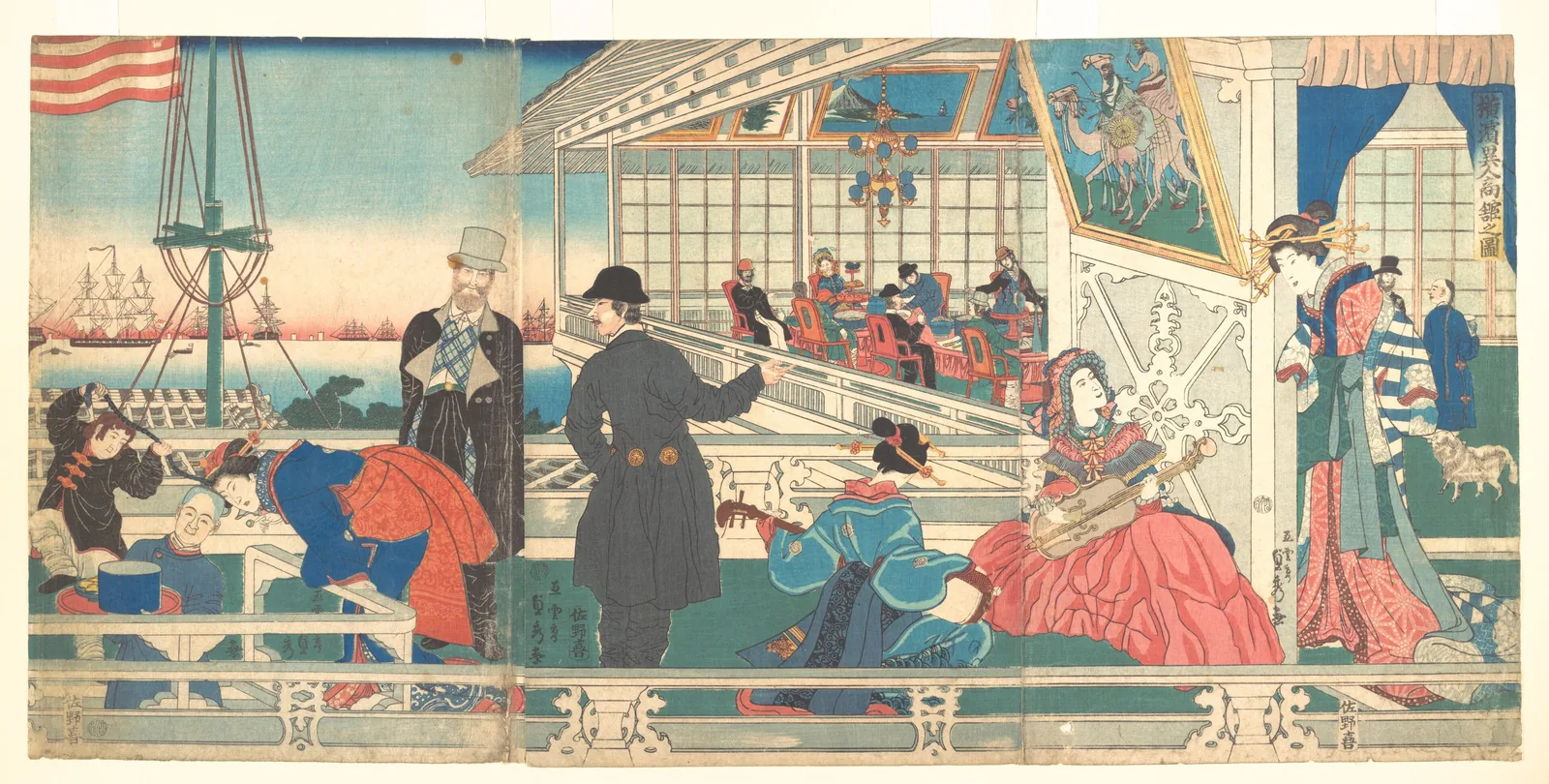
The Western firms that arrived in 1859 had a problem. Their staff spoke English; the Japanese merchants spoke Japanese; nobody spoke both. But educated Chinese clerks could read kanji — the same characters Japanese uses — and many had already worked with British firms in Shanghai and Hong Kong.
So the trading houses brought their Chinese compradors with them, and the compradors brought families, cooks, tailors and carpenters. A Chinese quarter formed immediately west of the foreign settlement, and it has been there ever since.
Reading the gates
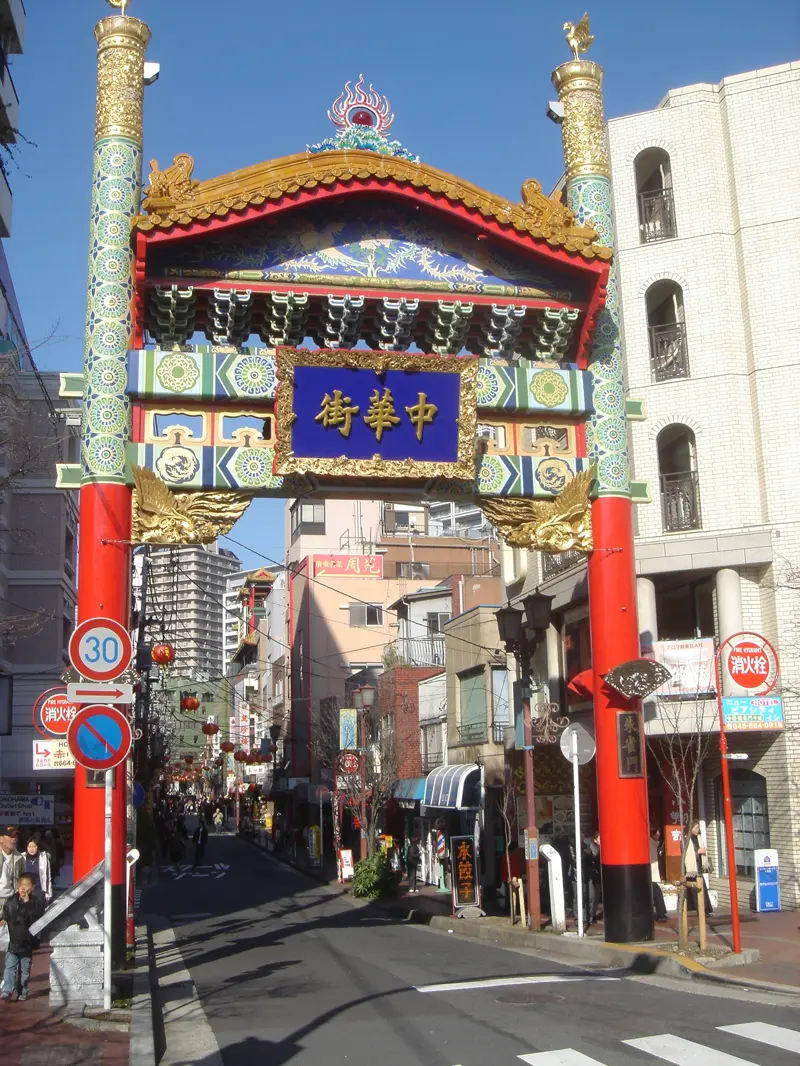
Ten decorated gates mark the district. The one everyone photographs is Zenrinmon, whose name means "good neighbours" — a phrase chosen deliberately in 1955, when relations were anything but. The four characters on the reverse read, roughly, "be humane, be a good neighbour."
The four cardinal gates carry the guardian beasts — the azure dragon east, the vermilion bird south, the white tiger west, the black tortoise north. At the centre sits Kanteibyo, a temple to Guan Yu, a third-century general worshipped as the god of commerce because he was famously incapable of breaking a promise. Merchants have prayed to him here since 1873. It has burned and been rebuilt more than once; the current hall is dense, gold, and loud with incense.
Guan Yu is the god of business here because he could not be bribed. A quarter built by middlemen chose the one figure in Chinese history known for keeping his word.
How to eat it
The mistake is to sit down at the first restaurant with an English menu. Chukagai is a standing-and-walking district: buy one thing, eat it, walk fifty metres, buy the next.
The essentials: butaman — pork buns the size of your palm, sold hot from stacked steamers; shumai, which in this city means Kiyoken, a company founded in 1908 whose boxed shumai has been sold on Yokohama platforms since the 1920s and is the single most recognisable food souvenir in the Kanto region; and tanghulu, fruit in hardened sugar, which exists mainly to be photographed and is genuinely good.
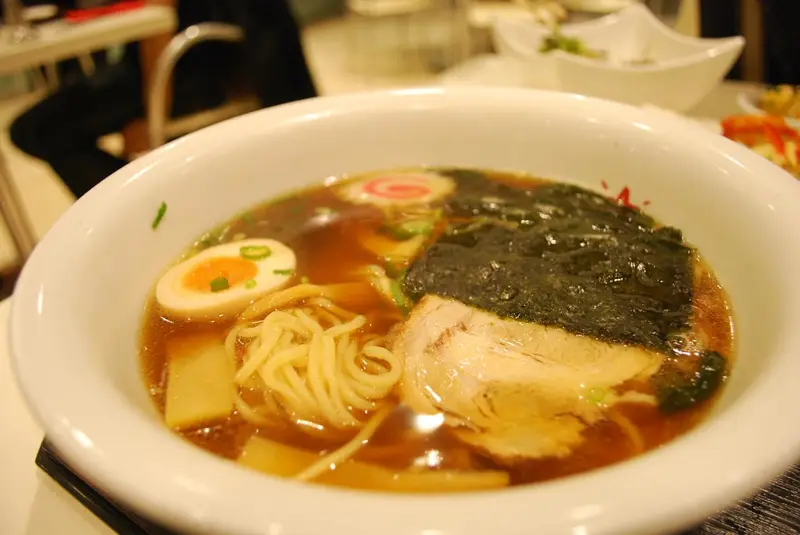
And one dish you will find nowhere else: sanma-men, a Yokohama invention — ramen under a thickened stir-fry of bean sprouts and pork. Chinese cooks made it as staff food and the city adopted it.
The timeline
How it happened
1859
Chinese compradors arrive with the Western firms
They can read kanji; the foreigners cannot
1873
Kanteibyo is founded
A temple to Guan Yu, god of commerce and kept promises
1908
Kiyoken is founded
Its shumai becomes the Kanto region's signature souvenir
1955
Zenrinmon gate is raised
"Good neighbours" — a deliberate choice of words
today
~500 shops in ~0.2 km²
Japan's largest Chinatown, and its most concentrated
Experience it
Where this becomes real on your port day
Do not sit down. Butaman, then shumai, then tanghulu, walking. Twenty minutes on foot from Osanbashi.
Chinatown. Yokohama's is simply "the" Chukagai in Japanese.
Butaman 豚まん
Steamed pork bun. Buy it from a steamer on the street, not from a menu.
Sanma-men サンマーメン
Ramen under thickened stir-fried vegetables. A Yokohama invention.
Kanteibyo 関帝廟
The Guan Yu temple at the centre of the quarter, founded 1873.
Quick answers
FAQ
Why does Yokohama have such a large Chinatown?
Because when the port opened in 1859, Western trading firms needed intermediaries who could read Chinese characters — which Japanese also uses — and Chinese compradors already working in Shanghai and Hong Kong could. They came with the firms, brought families and trades, and settled immediately west of the foreign settlement.
What should I eat in Yokohama Chinatown?
Eat standing and walking rather than sitting: butaman pork buns hot from the steamer, Kiyoken shumai, tanghulu candied fruit, and if you see it, sanma-men — ramen under a thickened vegetable stir-fry, invented in this city by Chinese cooks as staff food.