Ie-keiOne shop in 1974, thousands today — and it started twenty minutes from your ship
A truck driver opened a ramen shop in southern Yokohama in 1974 and combined two things nobody had combined: pork-bone broth from Kyushu and soy-sauce seasoning from Tokyo. Every one of the thousands of shops that copied him puts the character for "house" in its name.
In 1974 Yoshimura Minoru, who had been driving long-distance trucks, opened Yoshimuraya in Shin-Sugita, in the industrial south of Yokohama. He had eaten tonkotsu — cloudy pork-bone broth — in Kyushu, and shoyu ramen in Tokyo, and he could not see why the two should be separate.
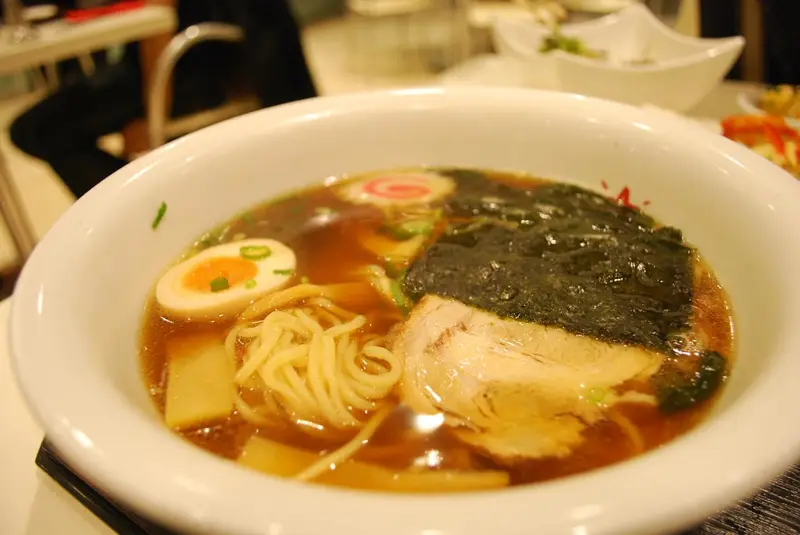
What came out was tonkotsu-shoyu: pork bone boiled hard until it emulsifies, then hit with dark soy and a slick of chicken fat. Onto that go thick, short, straight noodles — the opposite of the thin curly noodles most shops used — with boiled spinach, sheets of nori, and a slab of chashu.
Why every shop is called something-ya
Yoshimura trained apprentices and let them open their own shops. Nearly all of them ended their names in -ya, written with the character 家, meaning house. Ramen writers started calling the whole lineage ie-kei — "the house line."
It is now one of the largest ramen genres in Japan, with shops in every major city and a permanent presence in student districts. And it is the only major ramen style that can be traced to one man, one address and one year.
Order by giving three settings: noodle firmness, oil level, seasoning strength. "Katame, abura ōme, futsū" is the default of the faithful.
How to order it correctly
A proper ie-kei shop will ask you three questions, or hand you a card. Men no katasa — noodle firmness: katame (firm) is what regulars say. Abura no ryo — fat: ōme (more) if you want the full thing. Aji no nosa — seasoning: futsū (normal) is correct until you know better.
Then: take a sheet of nori, dip it in the broth until it goes soft, wrap it around some rice, and eat that. Rice is not a side dish here — it is part of the design, and in many shops it is free at lunch.
And the museum, which is not a museum
The Shin-Yokohama Ramen Museum, opened in 1994, is a basement built as a Tokyo street in 1958 — the year instant noodles were invented — with a handful of famous regional ramen shops brought in from around the country. Every shop sells a half-size bowl so you can eat three or four in a sitting.
The timeline
How it happened
1974
Yoshimuraya opens in Shin-Sugita
A former truck driver joins tonkotsu to shoyu
1980s
Apprentices open their own shops
Almost all end their names with 家 — "house"
1994
The Shin-Yokohama Ramen Museum opens
A basement rebuilt as a 1958 Tokyo street
today
Thousands of ie-kei shops nationwide
One of the few styles traceable to one address
Experience it
Where this becomes real on your port day
Order katame, abura ōme, futsū. Then dip the nori, wrap it round the rice, and eat that — it is the point.
"The house line" — every shop in the lineage ends its name in 家.
Tonkotsu-shoyu 豚骨醤油
Emulsified pork-bone broth seasoned with dark soy. The Yokohama formula.
Katame 硬め
Firm noodles. The regular's answer to the first of the three questions.
Nori 海苔
Seaweed sheets. Dip in broth, wrap round rice, eat. Not a garnish.
Quick answers
FAQ
What is ie-kei ramen?
A Yokohama ramen style created at Yoshimuraya in 1974: emulsified pork-bone broth seasoned with dark soy sauce, thick straight noodles, spinach, nori and chashu. It is named for the character 家 ("house") that nearly every shop in the lineage puts in its name, and it has spread to thousands of shops nationwide.
How do you order ie-kei ramen?
You are asked three things: noodle firmness (katame for firm), oil level (ōme for more), and seasoning strength (futsū for normal). Then dip a sheet of nori in the broth until it softens, wrap it around rice, and eat that — the rice is part of the design, not a side dish.