The village that became the doorHow a hundred houses on a mudflat turned into the place Japan met the world
The treaty said Kanagawa. The shogunate built the port at Yokohama instead — a fishing village of about a hundred households, safely off the highway, where foreigners could be watched. It worked, and then it worked far too well.
The Treaty of Amity and Commerce, signed in 1858, named Kanagawa as one of the ports Japan would open to foreign trade. Kanagawa was a busy post town on the Tokaido, the highway between Edo and Kyoto, and that was precisely the problem: the shogunate did not want foreign merchants standing on the road its own lords travelled.
So it built the port two miles away, on a sandspit in front of a fishing village called Yokohama, and declared that this was, for treaty purposes, Kanagawa. The foreign envoys objected in writing. Then the ships came anyway, and on 1 July 1859 the port opened.
A city designed to be a quarantine
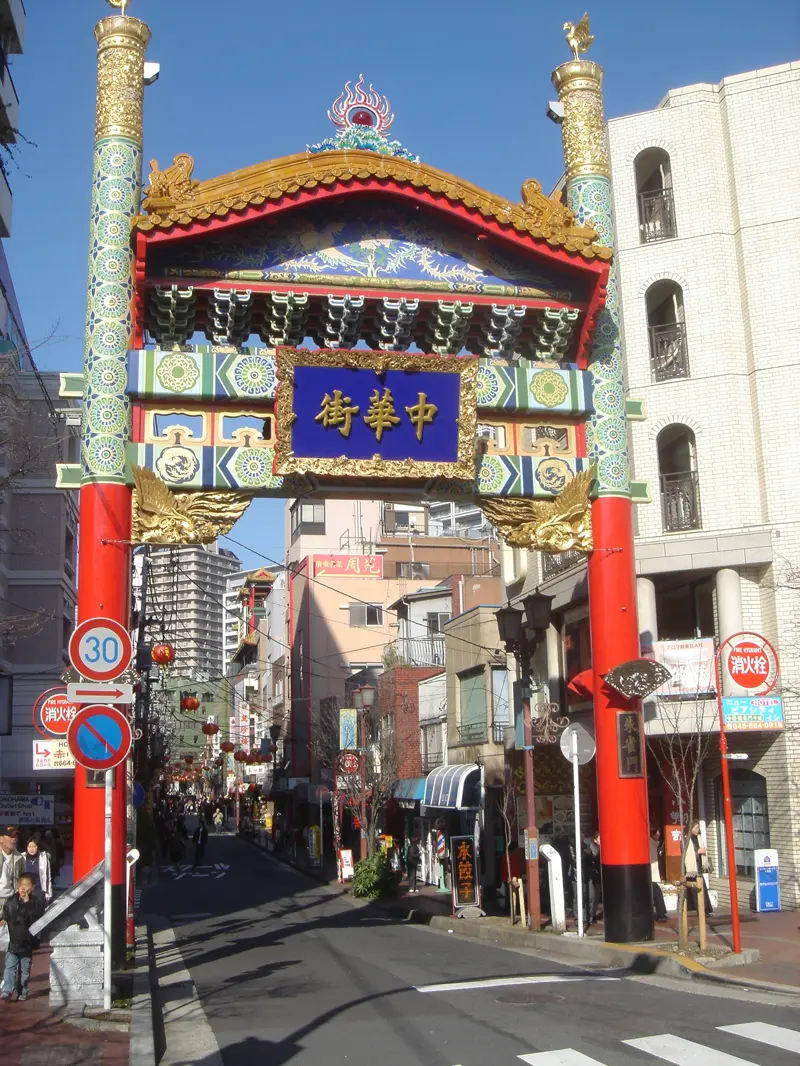
The settlement was laid out inside a moat with guarded gates. The area is still called Kannai — "inside the barrier" — and the name is the whole policy in four syllables. Foreigners lived and traded inside; the Japanese town grew outside; a bridge and a checkpoint sat between them.
Within a decade the containment had failed in the most complete way possible. The village of a hundred households became a city. Japan's first railway ran from Shimbashi in Tokyo to Yokohama in 1872. Gas lamps lit Bashamichi the same year. Foreign merchants on the Bluff at Yamate looked down on a harbour handling most of Japan's trade with the outside world.
Kannai means "inside the barrier." The barrier is gone; the street grid it enclosed is still there, and it is still where you walk.
Then it was destroyed. Twice.
On 1 September 1923 the Great Kanto Earthquake struck almost directly beneath the bay. Yokohama, closer to the epicentre than Tokyo, lost the overwhelming majority of its buildings to the shaking and the fires that followed. Around twenty-six thousand people died in this city alone. The treaty port — the brick banks, the trading houses, the consulates — essentially ceased to exist in a single afternoon.
The city rebuilt, and then on 29 May 1945 it burned again in an air raid. After the surrender, the Allied occupation requisitioned the port and much of central Yokohama, and did not fully release it for years.
What you can actually still see
Very little survives, and the survivors are worth knowing by name. Three towers along the waterfront are known locally as the King, the Queen and the Jack: the Kanagawa Prefectural Government Office (1928), the Yokohama Customs House (1934), and the Port Opening Memorial Hall (1917). Sailors used them to fix their position coming in, and named them like playing cards.
The Red Brick Warehouse — two customs buildings finished in 1911 and 1913 — survived the earthquake in part and now holds shops. The Foreign General Cemetery on the Yamate bluff holds about 5,000 graves from more than forty countries, and reads like a directory of everyone who came here and stayed.
The timeline
How it happened
1858
The Harris Treaty names Kanagawa
Five ports to open to foreign trade
1859
Yokohama opens instead, on 1 July
A fishing village of ~100 households, walled and gated
1872
Japan's first railway: Shimbashi–Yokohama
And gas lamps on Bashamichi the same year
1911–13
The Red Brick Warehouses are completed
Customs inspection buildings, state of the art
1923
The Great Kanto Earthquake
Yokohama loses most of its buildings and ~26,000 people
1945
The May air raid
Rebuilt city burns again; occupation requisition follows
2002
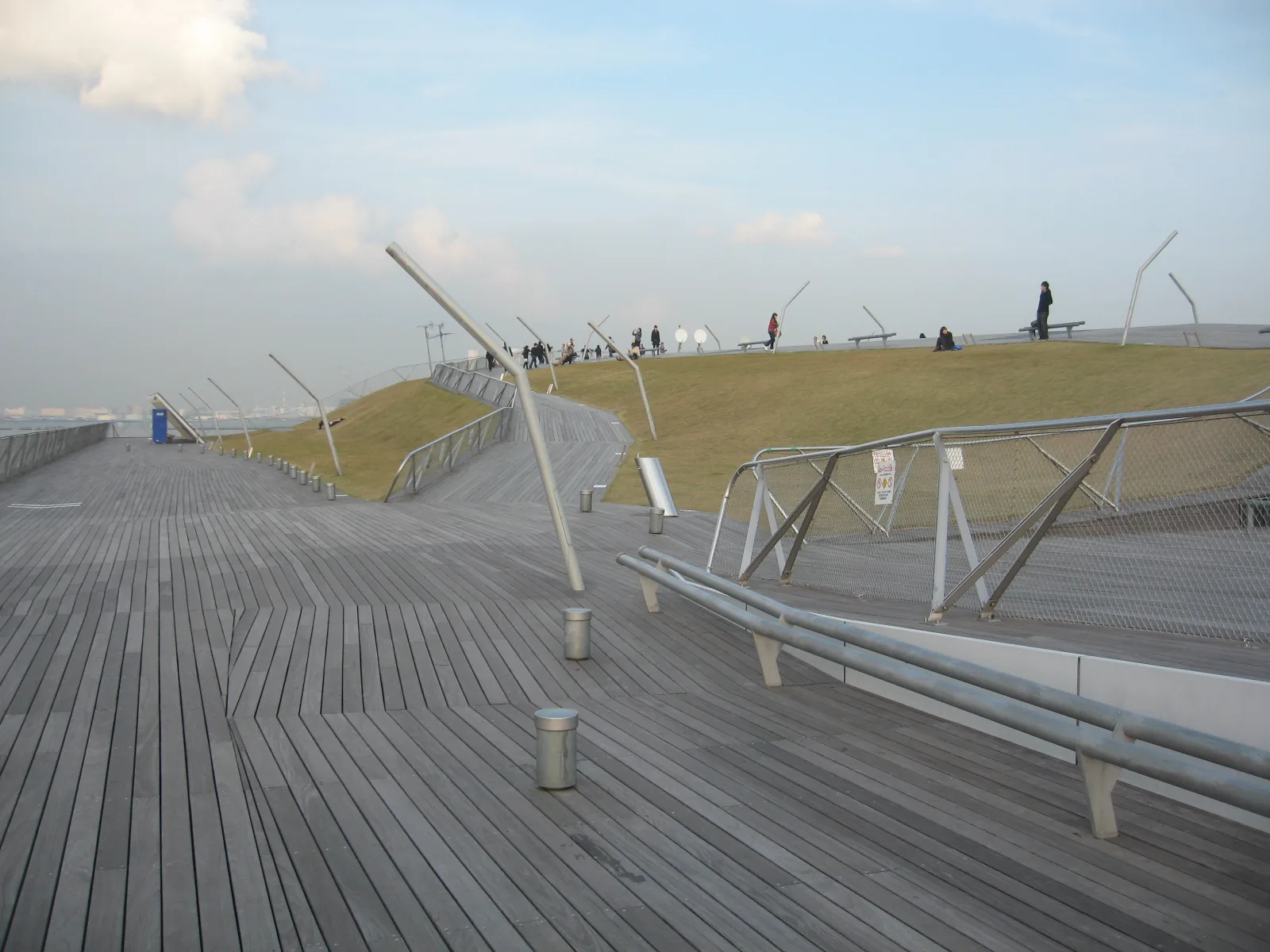
Osanbashi reopens as a wooden deck
A cruise terminal with a public park for a roof
Experience it
Where this becomes real on your port day
Walk Kannai on the grid, not the shops: Bashamichi to the Red Brick Warehouse to Osanbashi, about forty minutes, entirely free.
"Inside the barrier" — the walled foreign settlement, and still the district name.
Yamate 山手
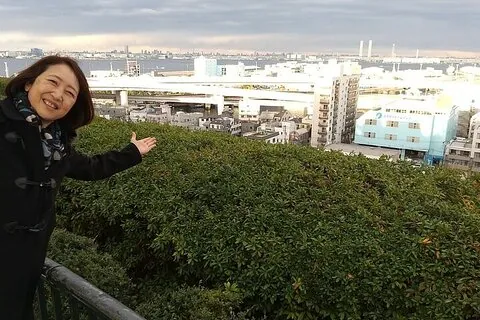
The Bluff. Where the foreign residents lived, above the smell of the harbour.
Bashamichi 馬車道
"Carriage road" — the street built wide enough for foreign carriages.
Yokohama-e 横浜絵
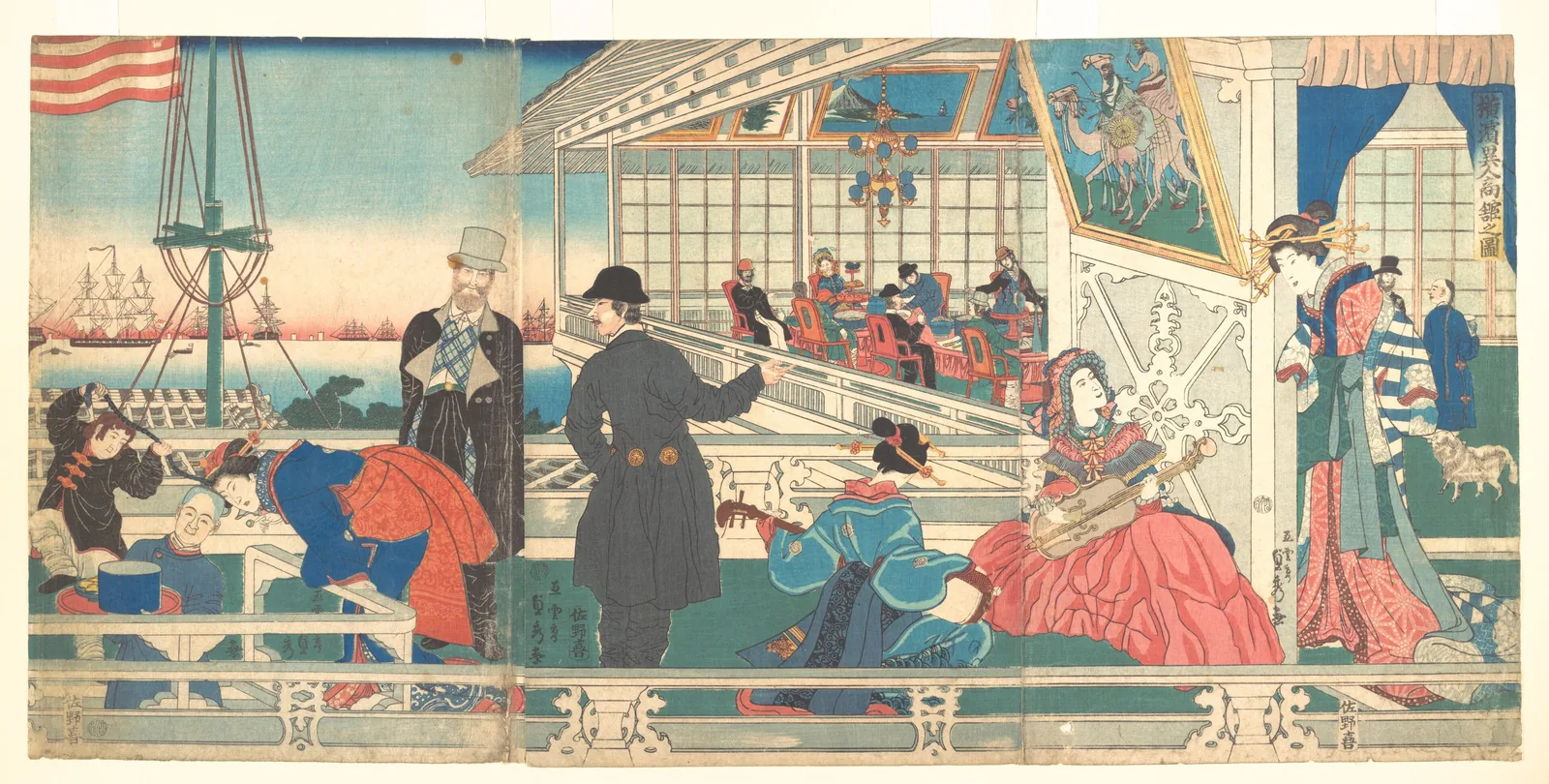
Woodblock prints of foreigners, sold to Japanese who had never seen one.
Quick answers
FAQ
Why was Yokohama opened instead of Kanagawa?
The 1858 treaty named Kanagawa, a post town on the Tokaido highway. The shogunate did not want foreign merchants on the road its own lords used, so it built the port two miles away at the fishing village of Yokohama and declared that this counted as Kanagawa. The foreign envoys objected; the ships came anyway.
Is anything left of old Yokohama?
Very little. The 1923 earthquake destroyed most of the treaty port and the 1945 air raid took much of the rebuild. What survives is the Kannai street grid, the three waterfront towers known as the King, Queen and Jack, the Red Brick Warehouses of 1911–13, and the Foreign General Cemetery on the Yamate bluff.