~1.5h on foot — the round trip from the gangway, with the 60-minute margin kept aside.
Tap a photo to see it large. 7 photographs, each credited.
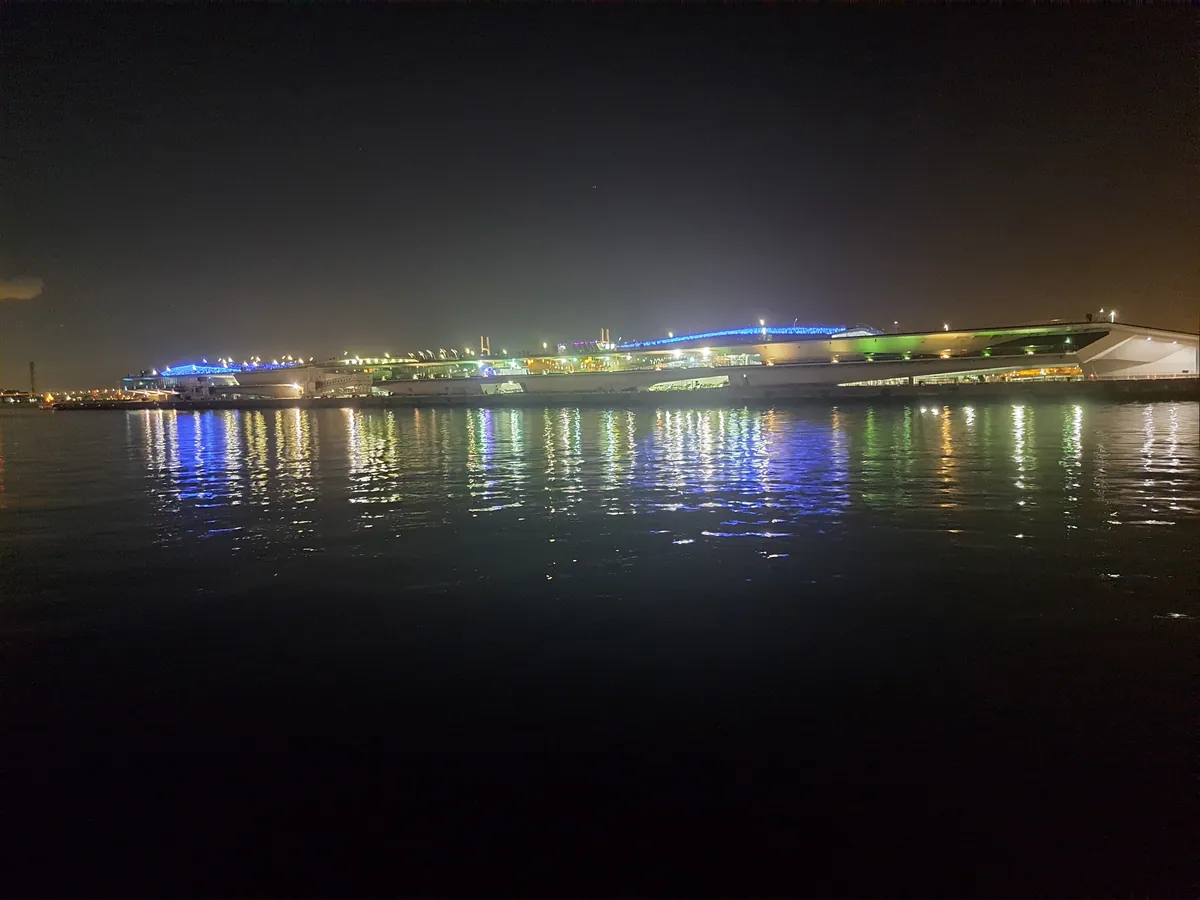
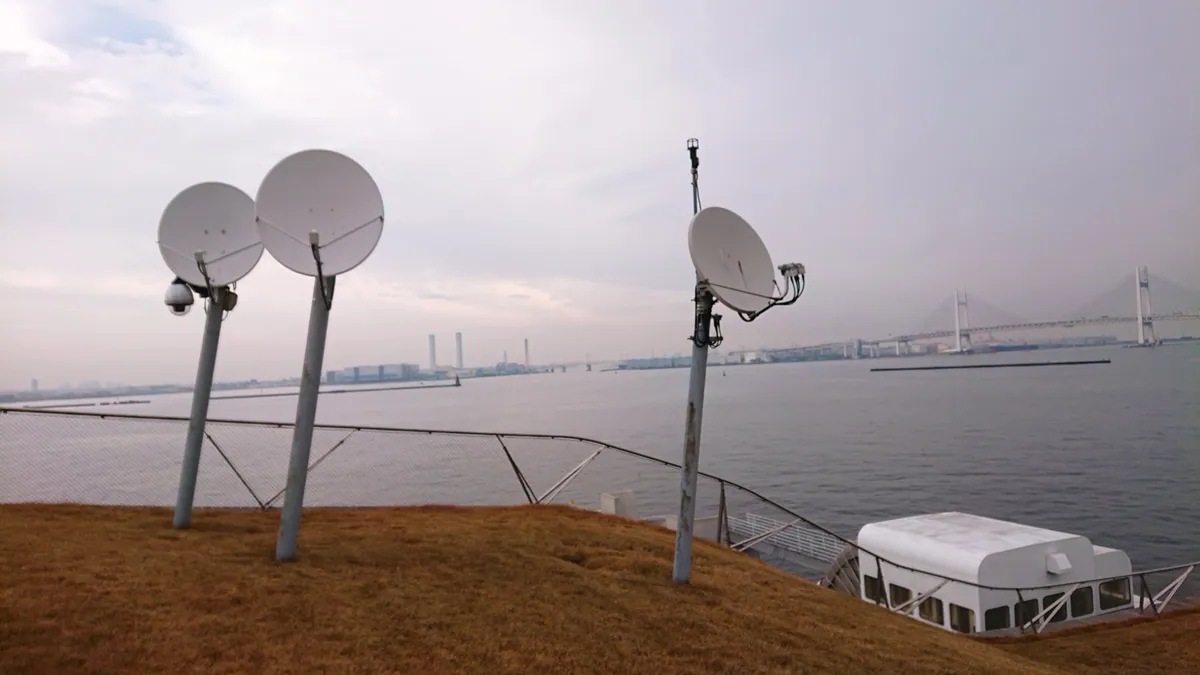
Your pier is the sight: a whale-back of wooden decks with the full skyline arranged in front. Walk it at sailaway even if you walk nothing else.
How a hundred houses on a mudflat turned into the place Japan met the world
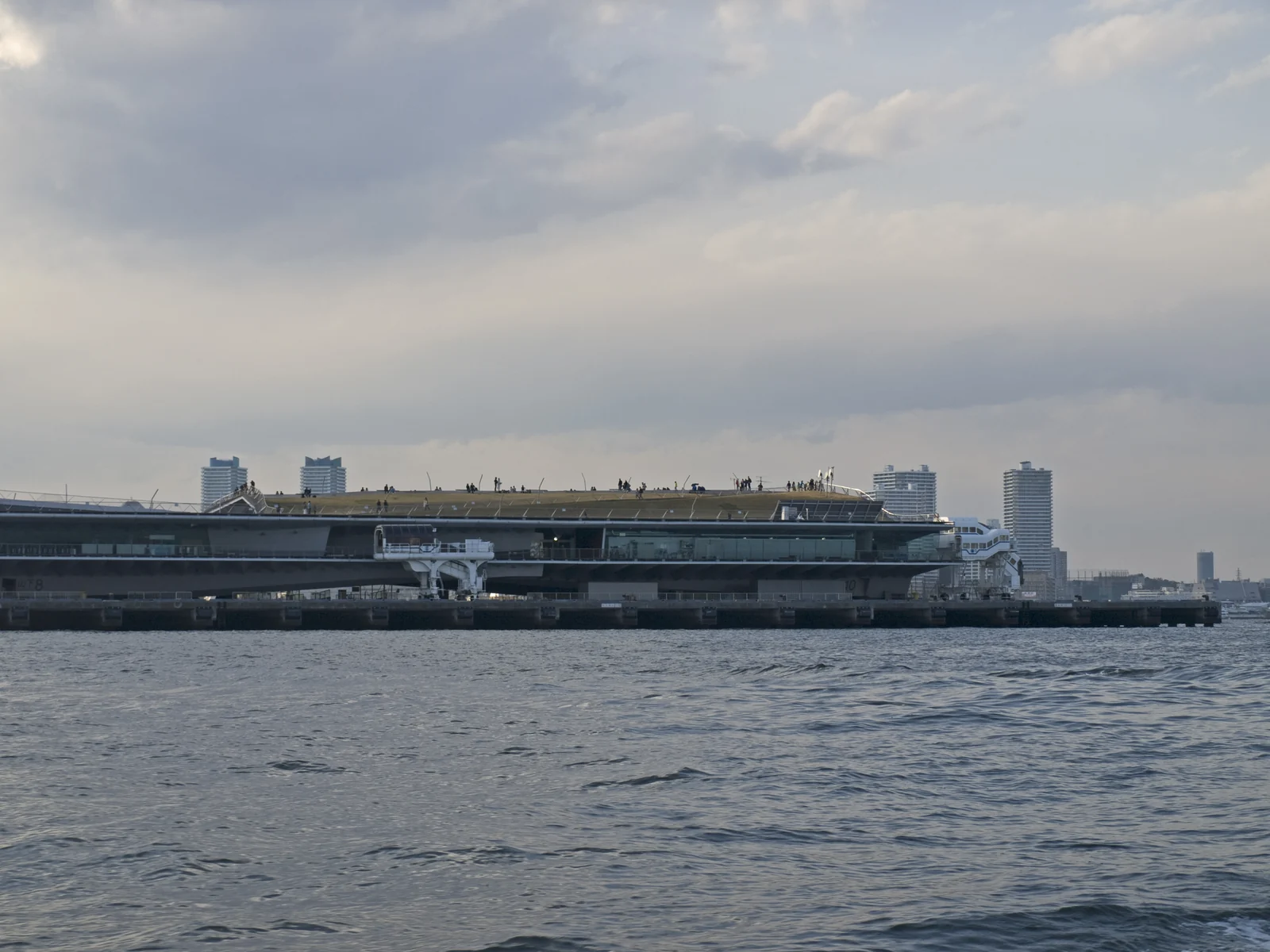
Osanbashi is a cruise terminal with no railings and no visible roof: the whole thing is a continuous wooden deck you can walk onto, designed by Alejandro Zaera-Polo and Farshid Moussavi and opened in 2002. It is a public park that happens to have ships moored under it.
The treaty said Kanagawa. The shogunate built the port at Yokohama instead — a fishing village of about a hundred households, safely off the highway, where foreigners could be watched. It worked, and then it worked far too well.
Rebuilt in 2002 by an architectural practice that won an open international competition, Osanbashi has no columns and no straight lines. The whole structure is a folded plate — you walk up a continuous ramp from the arrival hall onto a rolling deck of Brazilian hardwood and lawn, and there are no steps anywhere on it.
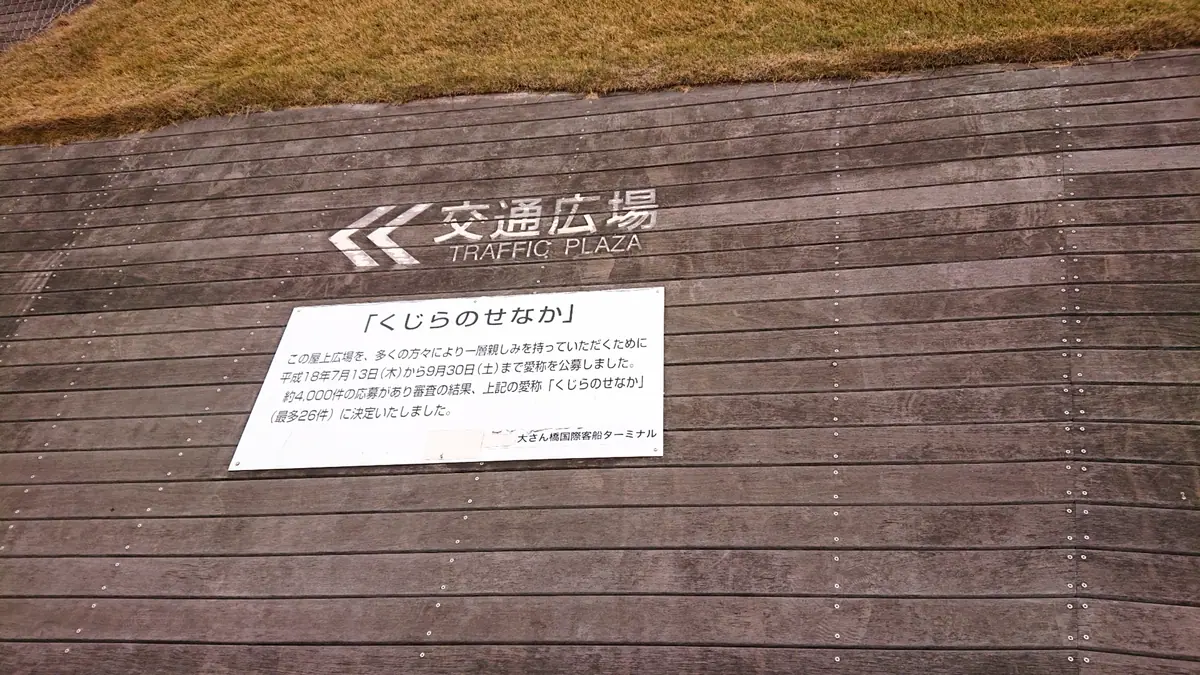
Yokohama calls it the whale's back. It is a working cruise terminal whose roof is a free 24-hour public park, and from it you get the Minato Mirai skyline on one side and the open bay on the other. It is also, for a visitor with a mobility concern, the single most accessible viewpoint in this city.
Five ports to open to foreign trade
A fishing village of ~100 households, walled and gated
And gas lamps on Bashamichi the same year
Customs inspection buildings, state of the art
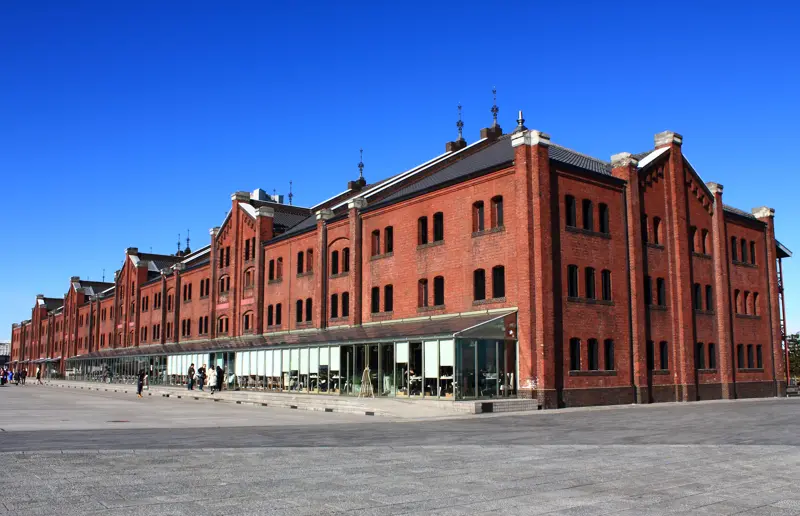
Walk Kannai on the grid, not the shops: Bashamichi to the Red Brick Warehouse to Osanbashi, about forty minutes, entirely free.
Both pins on one map, so the distance is a fact rather than a feeling.
Counted from the moment you step off the gangway. The hour before all-aboard is not in this bar; it is already set aside.
10 minutes each way is the honest figure for you are on it, not the optimistic one. If your ship is late, cut the 1 hr 10 min in the middle. Never cut the hour at the end.
Each of these still lands you back aboard with the hour to spare on a 6-hour stop ashore.
Yes — the roof is a free public deck of hardwood and lawn, open twenty-four hours, reached by a continuous step-free ramp from the terminal. It gives the Minato Mirai skyline on one side and the open bay on the other, and it is the most accessible viewpoint in Yokohama.
From Osanbashi: Chinatown in about twenty minutes, the Red Brick Warehouse in ten, the Hotel New Grand in five, all flat. From Daikoku Pier you cannot walk out at all — it is an industrial pier and the shuttle bus is the only exit, so confirm its timetable before planning anything.
Each one is a finished day we have walked and timed, with this stop in it. Read the route rather than assembling it yourself.
Each of these still lands you back aboard with the hour to spare.
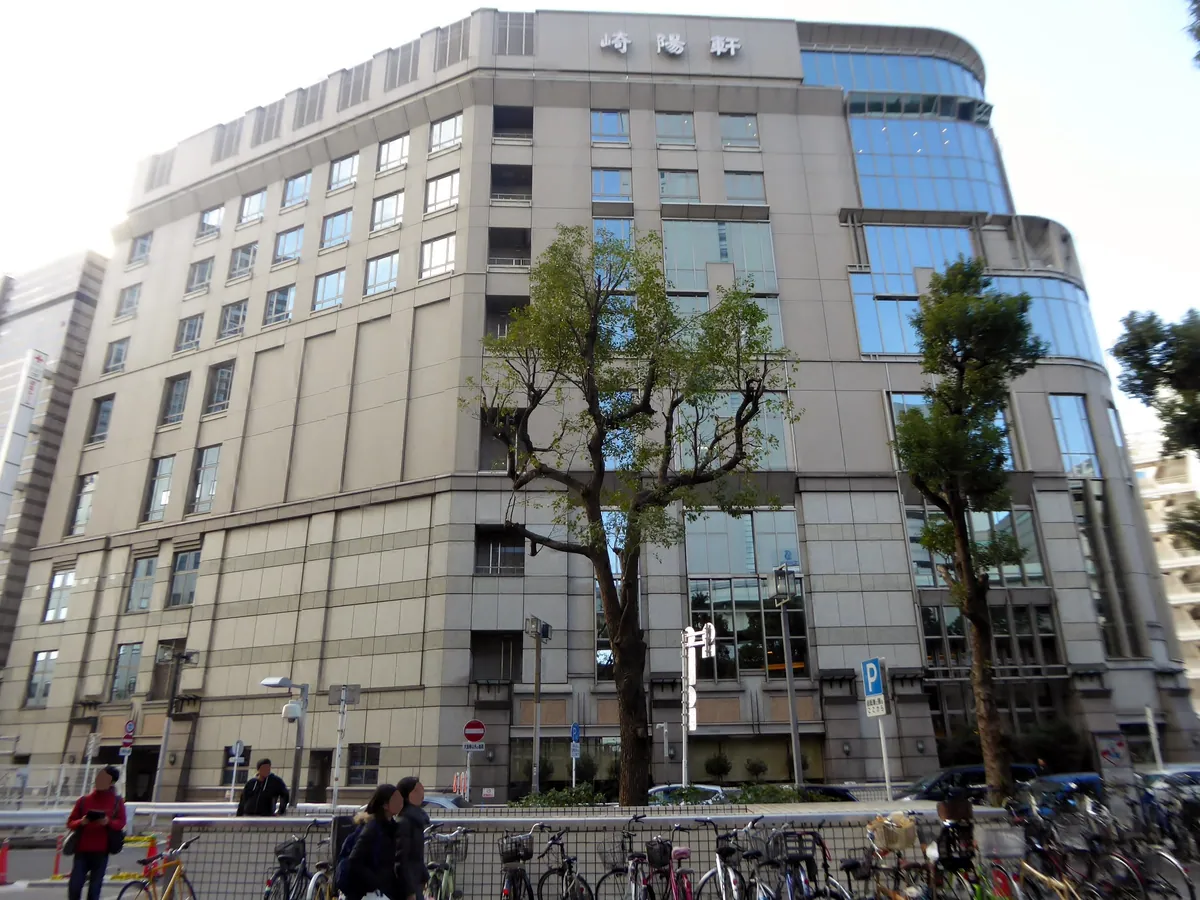 2 hr 30 min for both
The 1908 shumai that every Japanese traveler associates with this city — the main store serves them hot with the famous ceramic soy pot.
See the detail →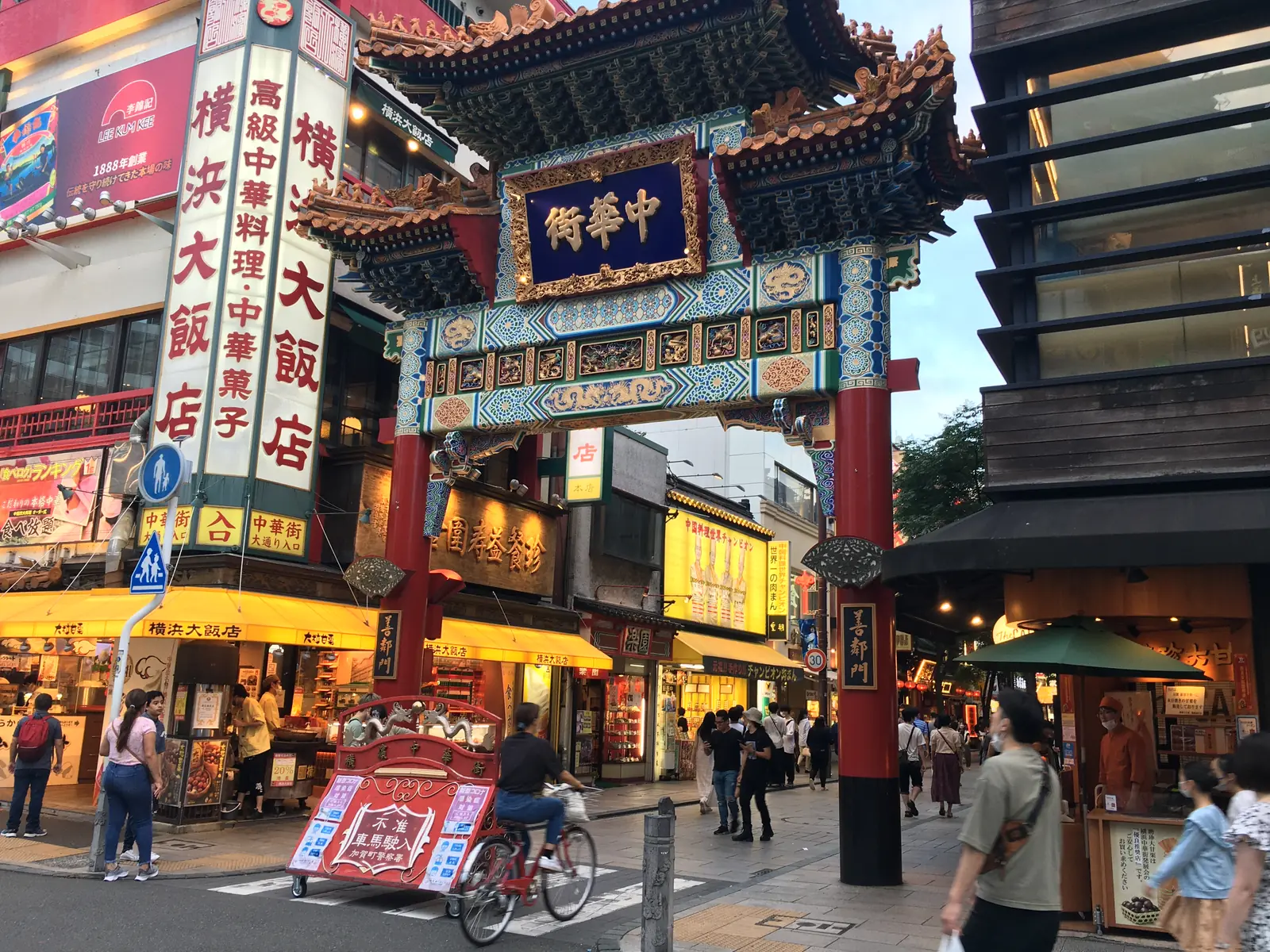 2 hr 30 min for both
Boat-shaped chestnut cakes that Yokohama gives when it visits anyone — soft, not-too-sweet, and boxed like jewelry.
See the detail →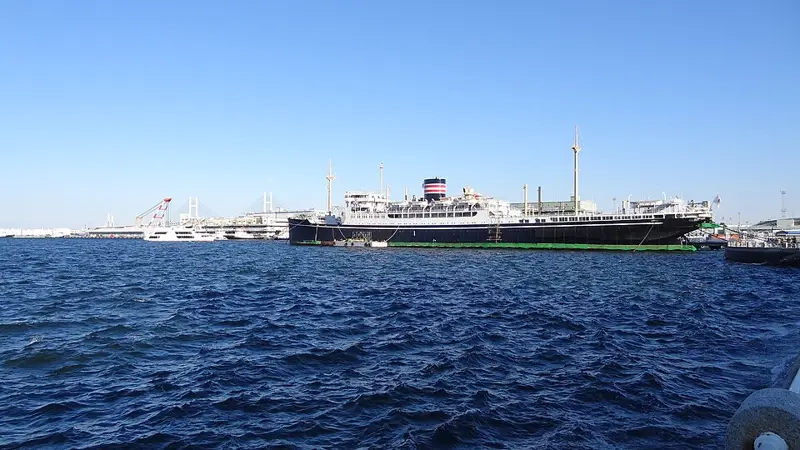 3 hr for both
The seaside promenade laid on 1923 earthquake rubble, with a 1930 ocean liner moored at the end.
See the detail →No typing needed — jump straight in:
Just docked? — the gangway toolStart from your shipThe ride from every berthAsk the editorGlossary