
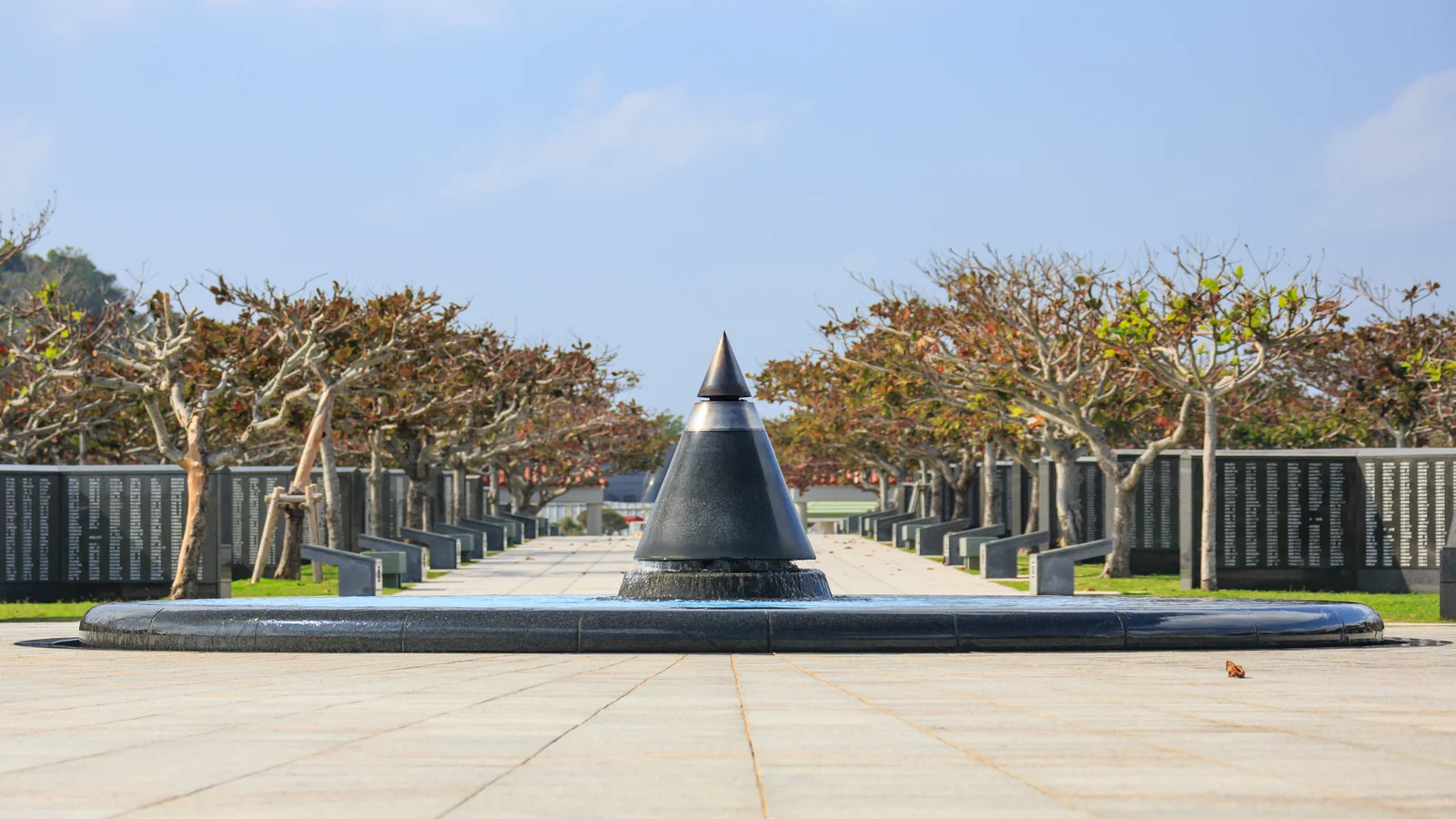
 Photo: CEphoto, Uwe Aranas / CC BY-SA 3.0
At Mabuni, on the cliffs where organised resistance ended in June 1945, the Cornerstone of Peace carries the names of everyone known to have died in the Battle of Okinawa — over 240,000, with no separation by nationality and none between the two sides. Okinawan civilians, Japanese, American, British, Korean and Taiwanese names stand together, and more are still being added.
Ten minutes away, the Himeyuri Peace Museum stands at the cave where student nurses were killed after their unit was dissolved into open combat. Of 240 mobilised, 136 died. The museum is built from survivor testimony recorded over decades, specifically so the account would outlive the witnesses.
Five things the plaques won't tell you
- Do both sites, in this order: Cornerstone of Peace first, Himeyuri second. The scale, then the individuals.
- Allow silence afterwards. Do not schedule shopping for the hour after Himeyuri.
- English materials are good at both. The Himeyuri testimony is available in translation.
- 23 June is Okinawa Memorial Day and a prefectural holiday — the park is full of families finding a name.
- Fix your return taxi. This is the southern tip of the island and there is no rank.
The museum is built from survivor testimony recorded over decades, specifically so the account would outlive the witnesses.
Guided ways to do Peace Memorial Park
Booked before you sail — there is no tour desk at the pier. Booking through these links supports the site.
More in Naha
Questions people ask here
What is the Okinawa Peace Memorial Park?
A park at Mabuni on the southern cliffs where the Battle of Okinawa ended in June 1945. Its centrepiece, the Cornerstone of Peace, carries the names of everyone known to have died in the battle — over 240,000 — with no separation by nationality and none between the two sides. Names are still being added as records are confirmed.
How long do I need for the Peace Park and Himeyuri?
Three hours on site for both, plus about forty-five minutes each way from the cruise terminal. On a call of four to six hours it should be the only thing you do. Visit the Cornerstone of Peace first for the scale, then Himeyuri for the individual accounts.