
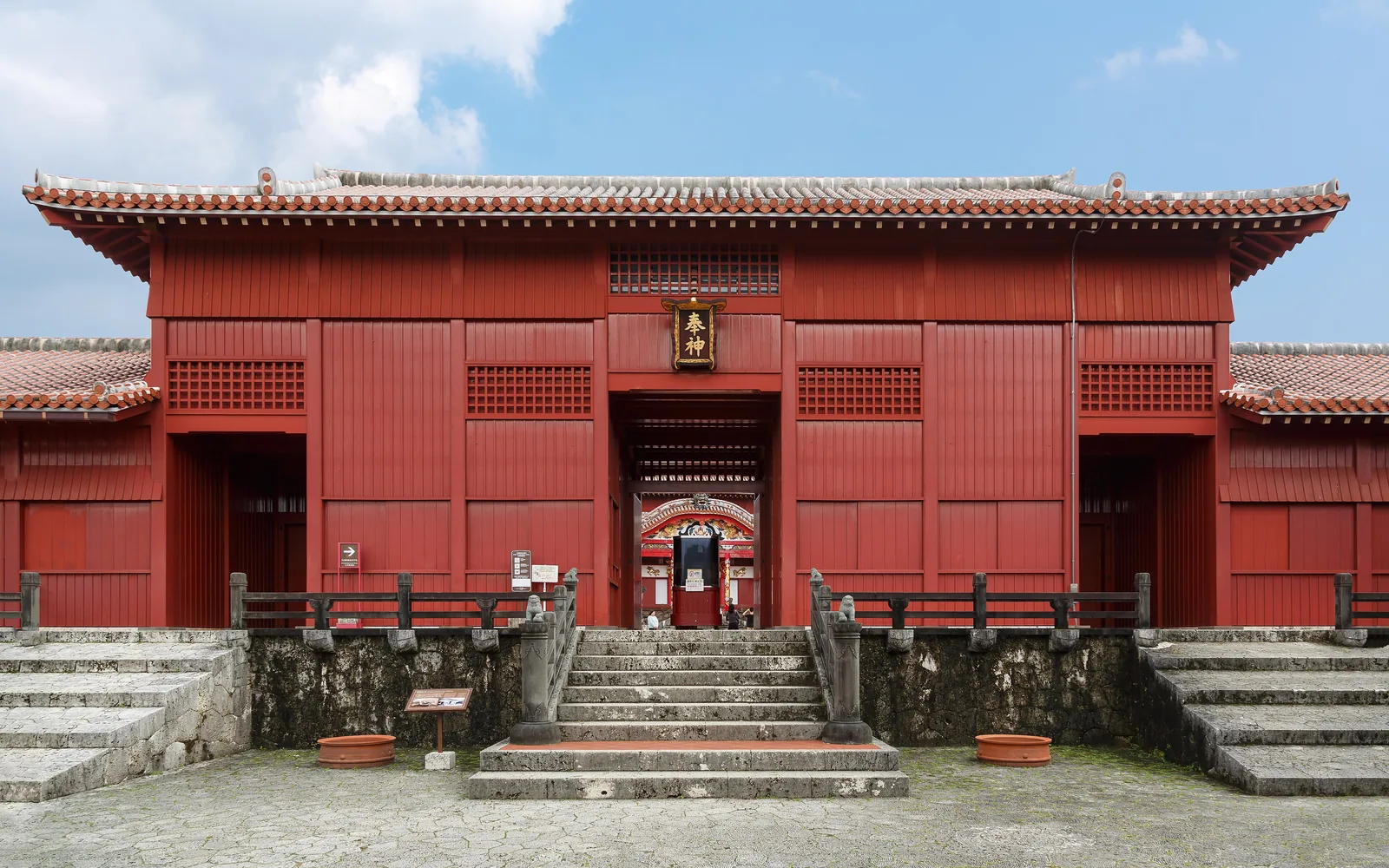
 Photo: CEphoto, Uwe Aranas / CC BY-SA 3.0
This was the seat of an independent kingdom for 450 years — not a Japanese castle and not built like one. There is no keep. The form is a gusuku: curving limestone walls following the contour of the ridge, with a vermilion Chinese-influenced hall at the centre and sacred groves inside the walls that predate the buildings.
The main hall burned in 1945, was rebuilt over decades and completed in 1992, and burned again on 31 October 2019. The re-rebuild was staged in public view, the scaffolding shed came down in late 2025, and the vermilion hall now stands complete — its interior opens to visitors on 23 November 2026.
Five things the plaques won't tell you
- Take the monorail to Shuri, then a taxi for the last uphill stretch — it is steeper than the map suggests.
- The stone walls, gates and sacred groves are original and survived both fires. They are the oldest thing here.
- Shureimon, the gate on the 2,000-yen note, is before the ticket barrier and free.
- The hall’s interior opens on 23 November 2026 (from 12:00; the whole park is closed on 22 November). Going inside needs a dated, timed web ticket, sold in advance — for 2027 visits from 13:00 JST on the 1st of the month two months before. Without one you see the hall from the viewing deck.
- Sunset from the western walls looks over Naha to the sea. The paid area closes first, so plan the order.
The re-rebuild was staged in public view, the scaffolding shed came down in late 2025, and the vermilion hall now stands complete — its interior opens to visitors on 23 November 2026.


Guided days from Naha
Booked before you sail — there is no tour desk at the pier. Booking through these links supports the site.



Questions people ask here
Is Shuri Castle worth visiting after the fire?
Yes. The 2019 fire destroyed the main hall, but the original stone walls, gates and sacred groves survived, the rebuilt vermilion hall has stood complete since the scaffolding came down in late 2025, and its interior opens to visitors on 23 November 2026.
How do you get to Shuri Castle from Naha cruise port?
By taxi, about 13–14 minutes from either berth. From Wakasa you can also walk about 20 minutes to the monorail and ride 16 minutes to Shuri station, then walk roughly twenty minutes uphill — or take a short taxi for the last stretch, which is steeper than it looks on a map. Budget about three hours door to door.