Updated 1 October 2026 · 25 official and operator sources · Researched from official timetables, operators and the port authority · Takumi Yamada
Naha gives you a lost kingdom and a hard history in one port: Shuri Castle, whose rebuilt main hall opens inside on 23 November 2026, and the Battle of Okinawa memorials in the south, with the Makishi market for lunch. Shuri and the market fit any call of about 8 hours by monorail from the Wakasa terminal; adding the south needs a car and about 11 hours. The decision to make first is your berth: over 40% of calls tie up at the 2nd Cruise Berth at Shinko, 5.6 km out with no terminal, station or cash machine, where the day starts in a taxi. From 23 November, book the Shuri hall slot online before you sail.
Your call, your day
What fits the time your ship gives you?
Pick your ship from the official Naha schedule — or just the hours you have — and this page picks the plan and the tours that fit, with the hour before all-aboard already set aside.
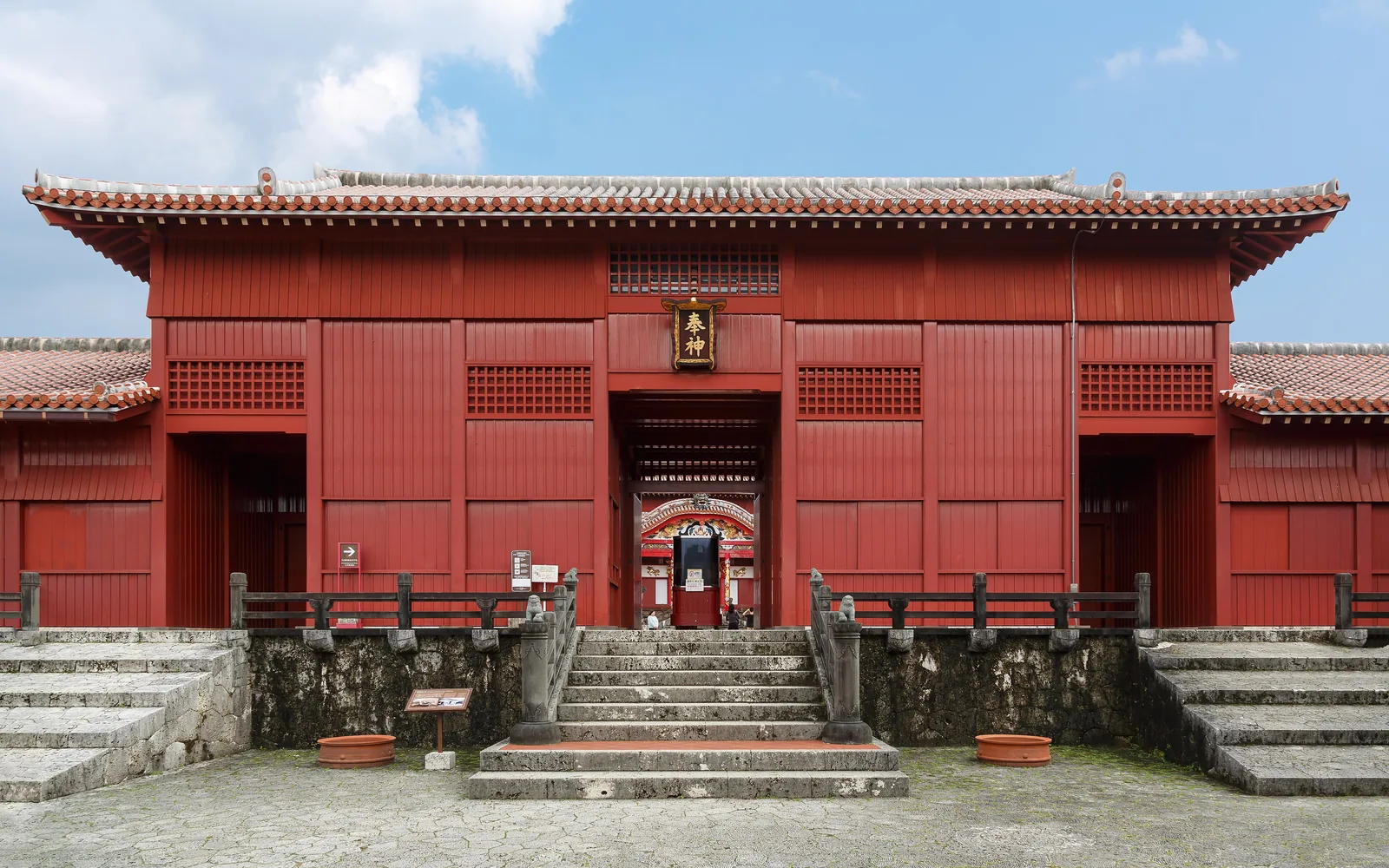
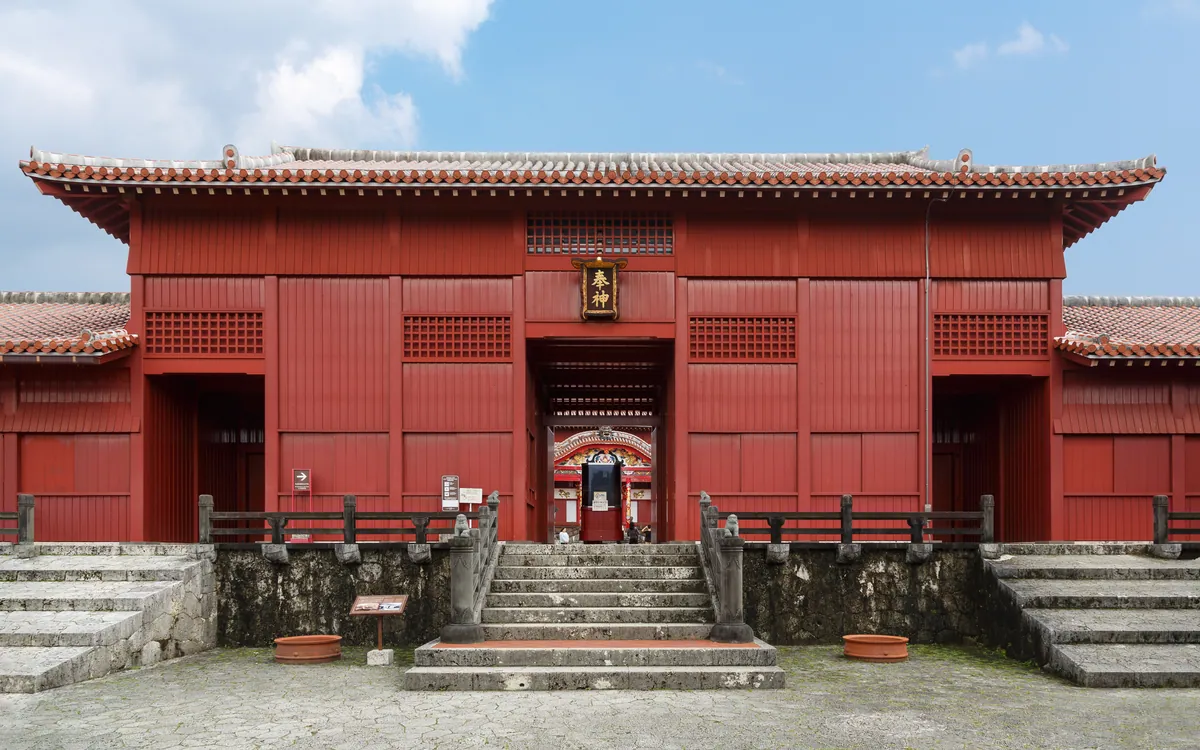
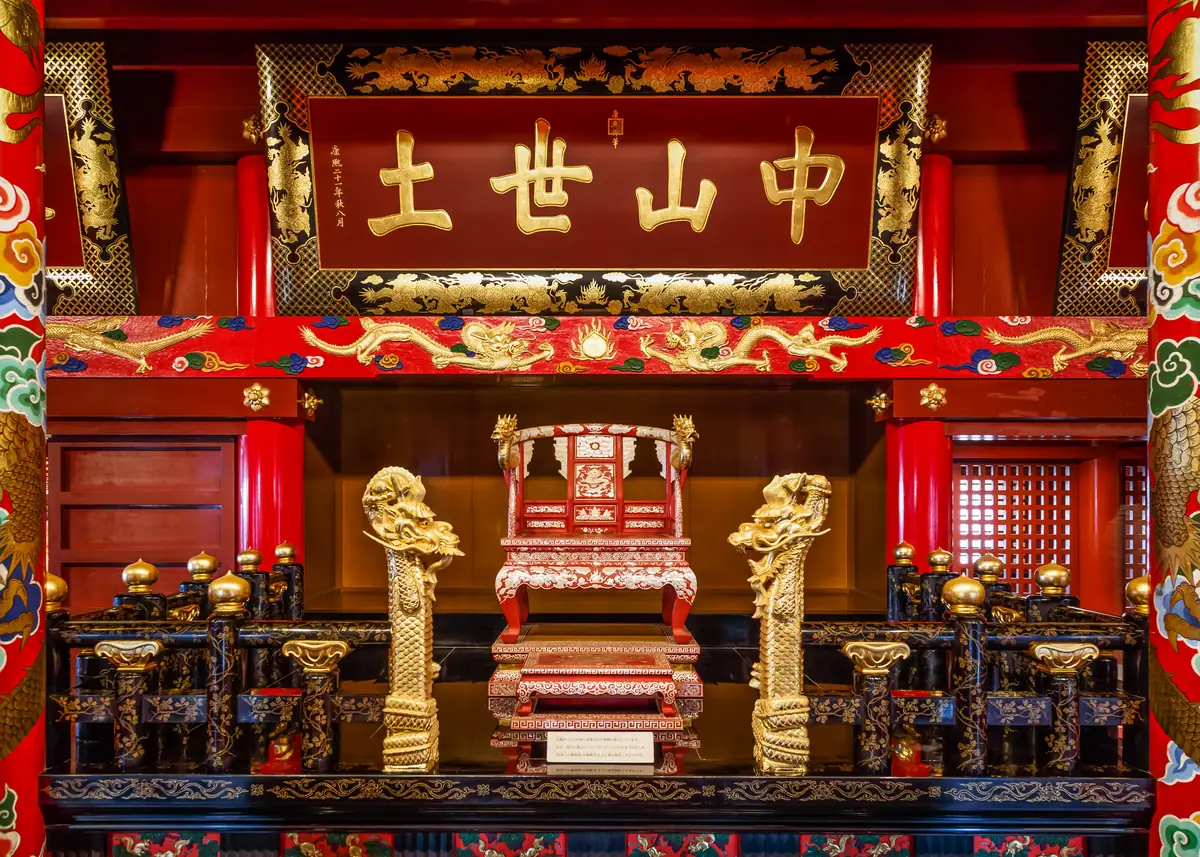
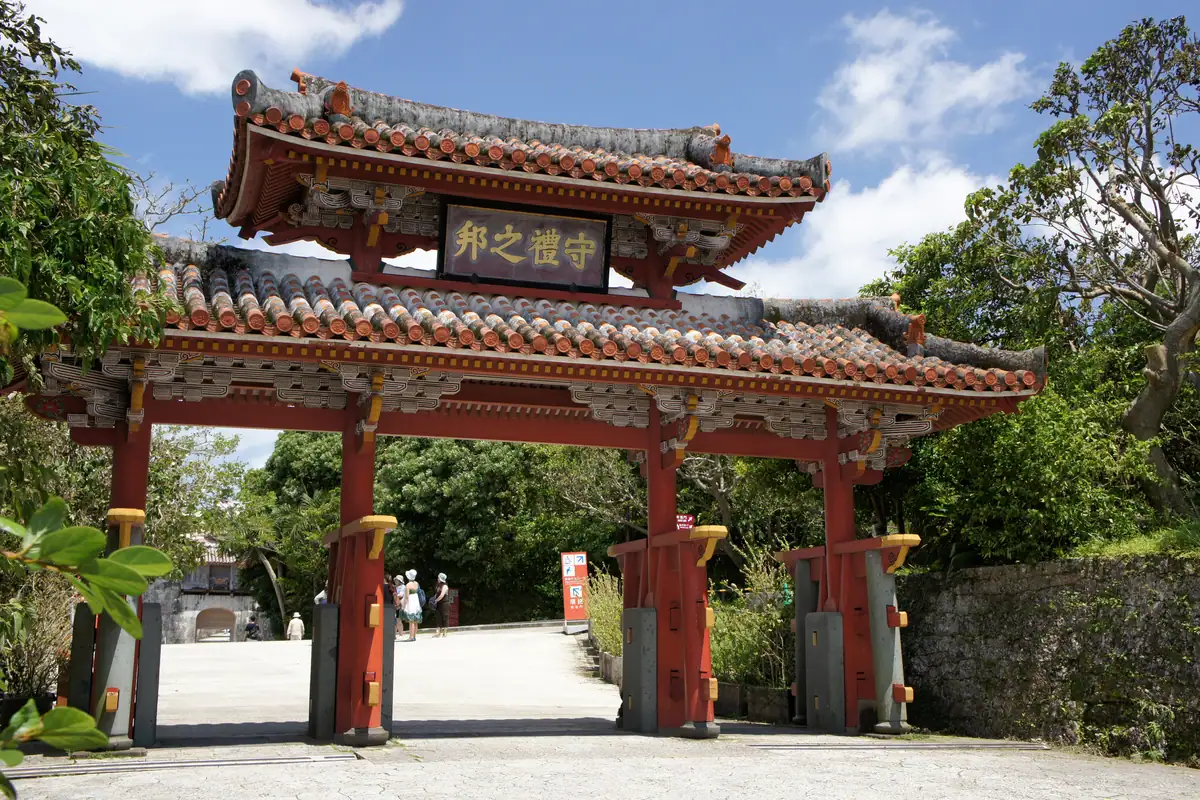
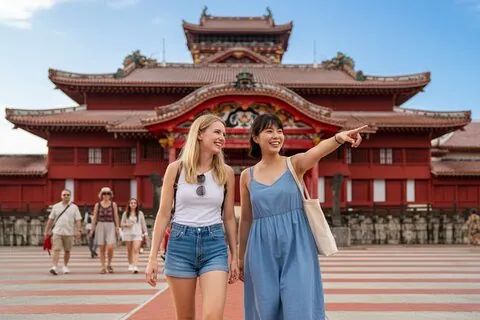
The hilltop seat of the Ryukyu kings, who ruled these islands until 1879. The main hall burned on 31 October 2019 and has been rebuilt; from 23 November 2026 you can go inside it again, on a timed web ticket. Allow 90–120 minutes on site, from the park information centre and back.
From the shipFrom the Wakasa terminal: walk 20 minutes to Kencho-mae, Yui Rail 16 minutes (¥320), then 20 minutes' walk uphill, about an hour door to door. By taxi about 13–14 minutes from either berth, from about ¥2,250–2,350. Entry ¥1,000 from 23 November 2026 (¥400 before).
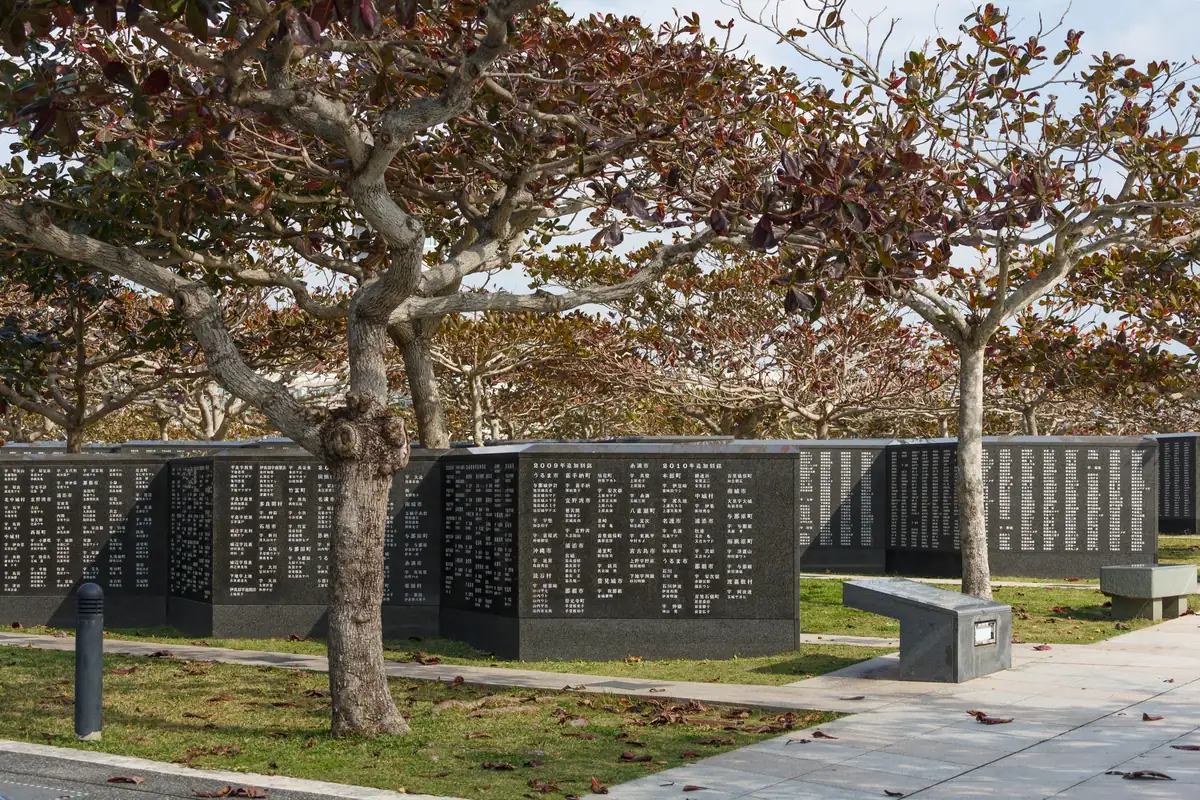
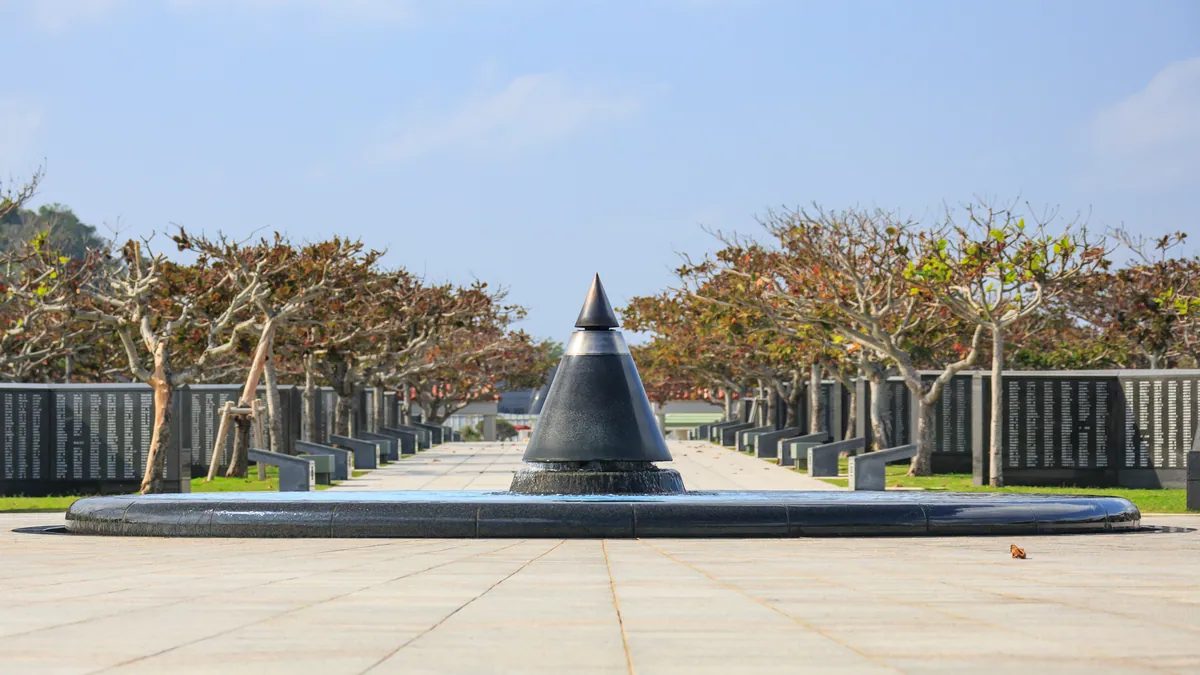
The Peace Memorial Park at Mabuni, where the Cornerstone of Peace carries 242,659 names of the dead of every nation, 14,012 of them American, and the Himeyuri Peace Museum, which tells the story of 136 schoolgirls and teachers who did not come back. For many visitors this is the part of Okinawa that stays with them.
From the shipBy car only on a cruise call: 28–38 minutes each way (map-routing estimate, no traffic), about ¥5,550–6,550 by taxi each way. About 4–4½ hours door to door for both. Public buses take 60–90 minutes each way.
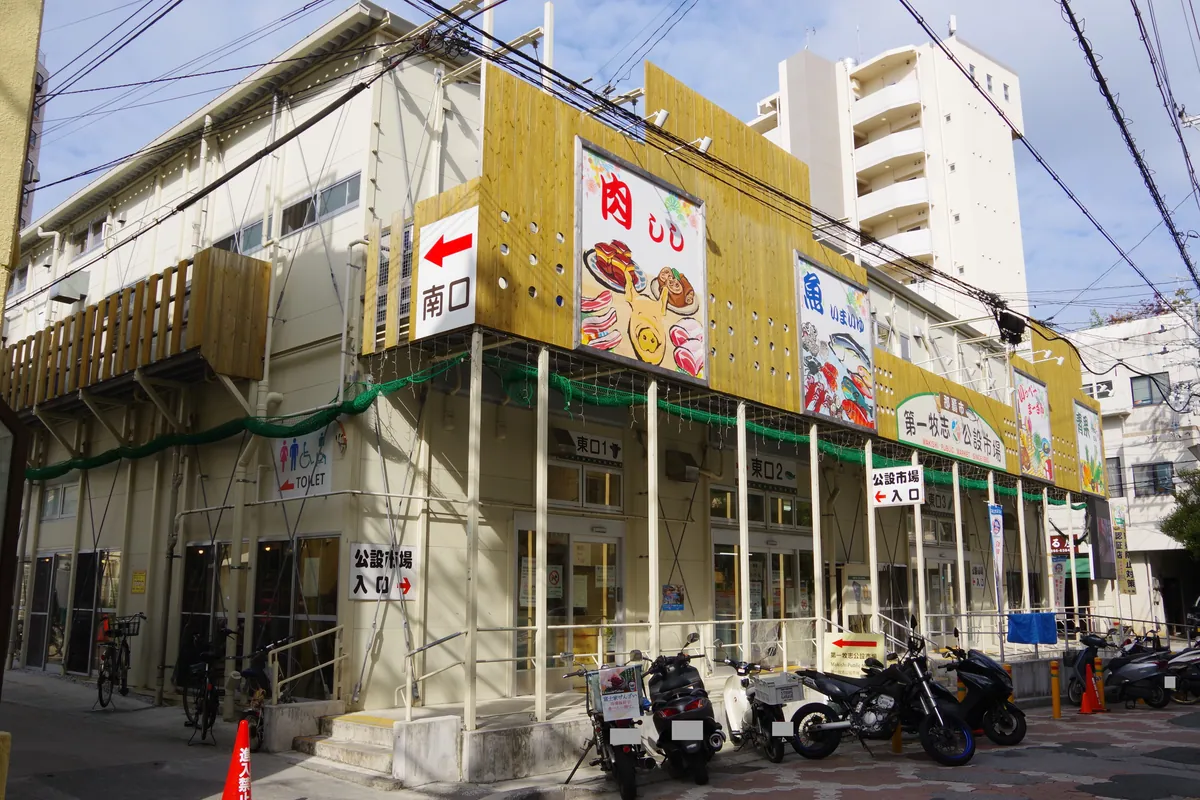
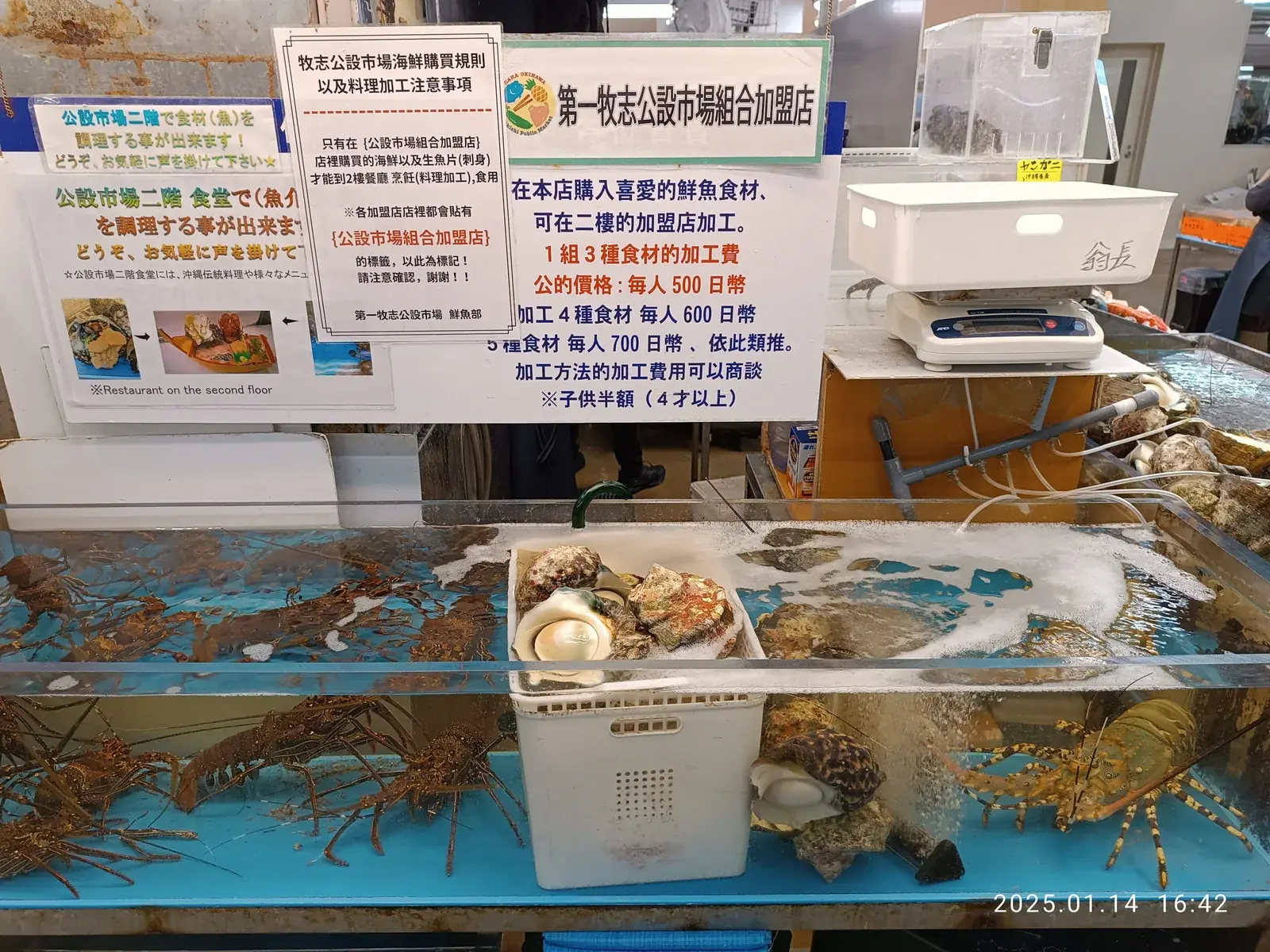
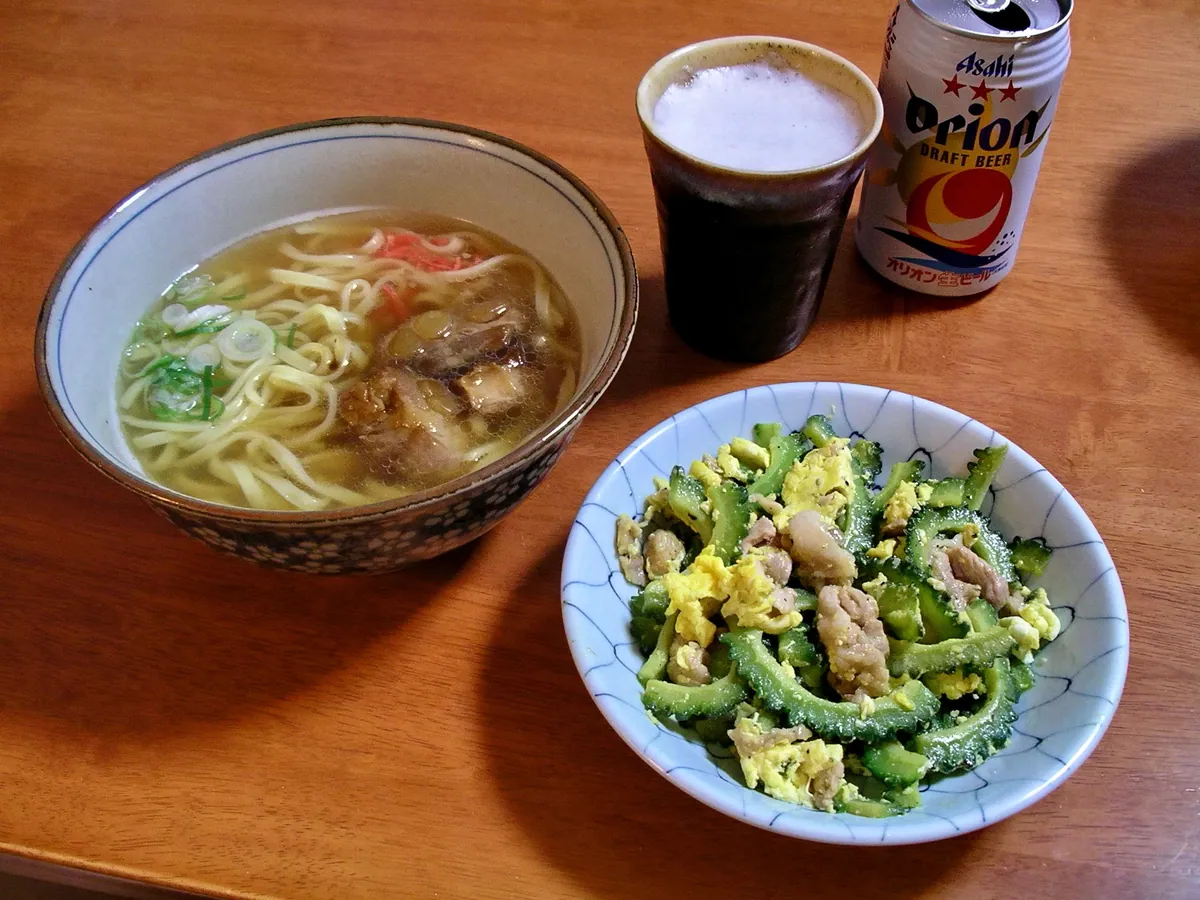
Buy fish or pork at a stall downstairs, pay a cooking charge upstairs, and eat it as the kitchen prepares it — then Okinawa soba, goya champuru and the pottery lanes of Tsuboya next door. It fits every call length.
From the shipTaxi about 7 minutes and ¥1,050 from Wakasa, or about 30 minutes on foot; about 11 minutes and ¥1,850 from Shinko. Yui Rail to Makishi station, then 9 minutes' walk.
Okinawa was a kingdom of its own until 1879 — the Ryukyu Kingdom, ruled from the hill at Shuri with trade links across Asia — and the island still does not feel like the rest of Japan. The food is pork, bitter melon and a rice spirit aged in clay; the roofs carry shisa lions; the court dress, the ryuso, is its own. Then there is 1945: the Battle of Okinawa was fought across the south of this island, and the Peace Memorial Park at Mabuni and the Himeyuri Peace Museum are where it is remembered.
This season has a particular reason to come. Shuri Castle's main hall burned on 31 October 2019 and has been rebuilt in full public view; from 23 November 2026 you can go inside it again. Twelve of this season's fifteen Western-market calls fall after that date — but the interior now runs on timed web tickets, sold in advance, and admission rises from ¥400 to ¥1,000.
What Naha is not: a beach stop. The one beach within walking distance of the terminal is Naminoue, Naha Port's only beach.
The answers below come from the Port Authority's call schedule, the Yui Rail timetable and fare table, the castle's and museums' own pages and the new taxi tariff, checked on 30 September 2026. Taxi and walking times are our map-routing estimates.
First: which berth are you at?
Naha has two cruise berths, and most cruise information describes only one of them.
Naha Cruise Terminal, Wakasa (Tomari No.8)
2nd Cruise Berth, Shinko (Shinko No.12)
Who goes there
Mid-size ships; most Western-market ships on a day they are alone in port
The biggest ships, almost always; the second ship on any two-ship day
Terminal
A permanent building (2014): immigration hall, toilets, free Wi-Fi, a temporary tourist-information desk and currency exchange on ship days
No building: immigration in tents, temporary toilets, no Wi-Fi, no vending machines
On foot
Kencho-mae station and Kokusai-dori about 20 minutes (1.5 km); Naminoue Shrine about 12 minutes
Nothing walkable: a cargo district, 5.6 km from downtown
Taxis
A rank for 10 cars; queues after disembarkation
A car park laid out for about 150 taxis and 80 buses
Cash
Exchange counter on ship days; convenience-store ATMs about 600 m away
No exchange, no ATM, no shop within 1 km
From October 2026 to March 2027 the Port Authority's schedule lists 155 calls: 86 at Wakasa and 69 at Shinko. Ships too long for Wakasa's 335 m limit (Spectrum of the Seas), and the largest ships generally (MSC Bellissima, Adora Flora City), go to Shinko even when alone. On two-ship days one ship goes to each berth, so a mid-size ship lands at Shinko when another has Wakasa: Celebrity Millennium on 5 November 2026 (Seven Seas Explorer has Wakasa), Diamond Princess on 11 March 2027, Silver Muse on 25 March. This is our reading of the schedule, not a published rule — check the berth in your daily programme the night before.
A new 4,000 m² terminal building is under construction at Shinko, not at Wakasa, and is due to open in November 2027. Until then, Shinko is a quay and some tents.
Getting from the Wakasa terminal into Naha
From Wakasa you can walk out of the gate and into the city. The monorail — Yui Rail, elevated, air-conditioned and simple — does the rest. It takes Suica and the other national IC cards, and contactless bank cards tapped at the gate; the machines sell QR tickets. Yui Rail does not sell Suica cards itself.
To
How
Time
Cost
Kokusai-dori, Kencho-mae end
Walk
about 20 min (1.5 km)
—
Kokusai-dori, Kencho-mae end
Taxi
about 5 min
about ¥850
Makishi Public Market
Taxi, or walk 2.3 km
about 7 min, or about 31 min on foot
about ¥1,050 by taxi
Tsuboya pottery street
Taxi
about 9 min
about ¥1,250
Naminoue Shrine and beach
Walk
about 12 min
—
Shuri Castle
Walk, Yui Rail from Kencho-mae, walk
about 60 min door to door
¥320
Shuri Castle
Taxi
about 13 min
about ¥2,350
Shikinaen garden
Taxi
about 15 min
about ¥2,050
Peace Memorial Park, Mabuni
Taxi
about 33 min
about ¥5,650
Himeyuri Peace Museum
Taxi
about 28 min
about ¥5,550
Times are map-routing estimates without traffic; Naha's roads add a quarter to a half, more when two ships are in. Taxi fares are the floor of the tariff in force since 24 August 2026 — ¥650 for the first 1.65 km, then ¥100 per 350 m — before time charges in slow traffic.
On the monorail, Kencho-mae to Shuri is ¥320 and about 16 minutes; to Makishi ¥250 and about 4 minutes; to Omoromachi, for the Prefectural Museum, ¥250 and 7–8 minutes. On weekdays trains run every 4–6 minutes until about 10:00 and every 8 minutes from about 10:30 to 15:30; at weekends every 10 minutes, with extra trains at busy times. A 1-day pass costs ¥1,000 and pays only if you take three or more rides. Kencho-mae station has an ATM and a currency-exchange machine inside the gates, lockers and lifts.
A ¥240 shuttle ran from the terminal to Kokusai-dori about every 30 minutes as a trial until at least March 2026. For the 2026–27 season the prefecture has tendered a programme for shuttles at both berths, running until 16 February 2027, for the cruise lines that take part. At Wakasa you do not need it; if your ship offers one, it saves the walk.
From the Shinko berth
At Shinko the day starts in a vehicle. The official port sheet says plainly that a shuttle is needed and that there is no station; any shuttle to Kokusai-dori is the ship's or the prefecture's arrangement for that call, so look in the daily programme. Otherwise:
To
How
Time
Cost
Kokusai-dori, Kencho-mae end
Taxi
about 10 min
about ¥1,750
Makishi Public Market
Taxi
about 11 min
about ¥1,850
Shuri Castle
Taxi
about 14 min
about ¥2,250
Omoromachi (Prefectural Museum)
Taxi
about 10 min
about ¥1,650
Peace Memorial Park, Mabuni
Taxi
about 38 min
about ¥6,550
Himeyuri Peace Museum
Taxi
about 34 min
about ¥6,450
For Shuri, the taxi from Shinko beats any combination with the monorail. Allow about 10 minutes more each way than from Wakasa for anything in town, and more on big-ship days: the Port Authority itself notes the traffic in this cargo district. Get yen before you land or in town — the berth has none.
Shuri Castle: tickets, the new hall and how long to allow
The castle sits on the hill above Shuri station. The main hall burned on 31 October 2019, and the rebuilt hall opens inside to the public at 12:00 on Monday 23 November 2026. The whole park is closed the day before.
Two ways in from 23 November. "Admission with main-hall viewing reservation" is sold on the web only, dated and timed, first come first served, at no extra charge; you need it even if you would otherwise enter free. "Admission without reservation" covers the rest of the paid area, including the hall's exterior from the viewing deck and the exhibition on the reconstruction; you can buy it on the web a month ahead or at the window on the day. Unsold hall slots can be bought online up to 15 minutes before the slot and at the Kofukumon ticket window.
When sales open. For visits from 1 January 2027, tickets go on sale at 13:00 Japan time on the 1st of the month two months before: March 2027 slots on 1 January, February slots on 1 December. Book the slot for about 40–50 minutes after you expect to reach Shuri station, as the park advises; by car, the park suggests 30–50 minutes after you reach the park.
April–November
December–March
Free area (inside the walls)
8:00–19:30
8:00–18:30
Paid area
8:30–19:00, last entry 18:30
8:30–18:00, last entry 17:30
Adult admission
¥400 to 21 Nov 2026; ¥1,000 from 23 Nov
¥1,000
There is no senior discount for visitors (free entry for people aged 70 and over is for Okinawa residents). The ticket window takes Visa, Mastercard, JCB, Amex and other cards, contactless included.
How long. The park's own breakdown, from Shurimori-kan (the information centre, with lockers in the basement): 5 minutes to Shureimon, the famous gate, which stands before the ticket gate and is free; 15 more to the ticket gate; 15 to the hall entrance; 15 inside; and about 40 to see the rest of the paid area and walk back. Allow 90–120 minutes, plus 20 minutes each way on foot between Shuri station and Shurimori-kan. The paths are stone-paved slopes and steps; there is a barrier-free route. The park expects crowds after the hall reopens and warns it may limit entry on busy days.
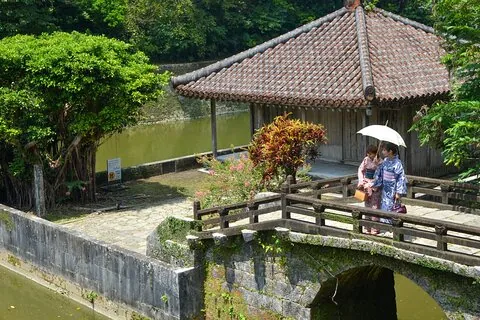
Shikinaen, the kings' garden villa, is 5 minutes away by taxi (¥400) and the natural companion on a long day. Guidebooks list it as closed on Wednesdays — the city's own page does not say, so check before you go.
Naha to the southern memorials: what is actually possible
The Battle of Okinawa ended in the south of the island, and two places there carry its memory:
The Peace Memorial Park, Mabuni. The Cornerstone of Peace, inscribed with the names of the dead of every side — 242,659 as of June 2026, 14,012 of them from the United States — is outdoors and free. The Okinawa Prefectural Peace Memorial Museum opens 9:00–17:00 (permanent exhibition entry until 16:30), closes 29 December–3 January, and charges ¥300 for the permanent exhibition, with no senior discount. Allow about 1–1½ hours inside and 30 minutes at the Cornerstone.
The Himeyuri Peace Museum, about 10 minutes' drive away, tells the story of the student nurses' corps: 240 schoolgirls and teachers were mobilised and 136 did not return. It opens every day, 9:00–17:25 (entry until 17:00), and may close when a typhoon approaches. Adults ¥450; cards and IC cards are accepted. Allow an hour. It has no car park of its own.
Getting there. By car it is 28–38 minutes each way without traffic, depending on the berth — about ¥5,550–6,550 each way by taxi at the new tariff (the museum quotes ¥5,000–5,500 under the old one). By public bus it is a change at Itoman and 60–90 minutes each way: not realistic on a call. You cannot count on finding a taxi at either museum, so keep the one you came in or book a driver.
Okinawa World and the Gyokusendo cave are in the same southern corner, about 29 minutes' drive from the Wakasa terminal (17 km, our map estimate; the operator says 30–40 minutes from Naha) and about ¥5,150 by taxi each way. It opens 9:00–17:30, last entry 16:00; adults ¥2,000. Several shore excursions pair it with the Peace Park. Added to the memorials it makes a car day of about 6–7 hours door to door, so a call of about 9 hours.
What it costs in time. Both museums and the Cornerstone take about three hours on site and about 4–4½ hours door to door by car. As the only thing, that fits a 7-hour call. Paired with Shuri and the market, it needs about 11 hours — the third model day below. Note two dates when the roads around Mabuni are restricted: 23 June (Okinawa Memorial Day) and the NAHA Marathon on Sunday 6 December 2026, which is an MSC Bellissima call day.
Churaumi Aquarium: the question every Naha call asks
Okinawa's most famous attraction is at Motobu in the north: about 90–113 minutes each way by car from either berth without traffic, and about two hours to see it properly. That is about six hours door to door, before any traffic. Adults pay ¥2,180; it opens 8:30–18:30 (last entry 17:30). There is no practical public transport for a cruise call.
The honest answer: only on a call of 11–12 hours, with a private car, doing nothing else. On a 9- or 10-hour call it swaps the whole of Naha for four hours in a car and a tight return.
The Daiichi Makishi Public Market is Naha's kitchen: fish and pork at the stalls downstairs, restaurants upstairs. Its trick is mochiage — buy at a stall downstairs, carry it upstairs, and a restaurant cooks it for a charge that depends on the dish (the charge is not published; ask first). The building is open 8:00–22:00, shops vary, ground-floor mochiage takes last orders at 19:45 and the upstairs restaurants at 20:00. It closes on the 4th Sunday of each month, except in December. It is 9 minutes' walk from Makishi station. Carry cash; payment varies by shop.
Five minutes' walk away, Tsuboya yachimun street is the potters' quarter: pottery shops and shisa lions. The Tsuboya Pottery Museum is closed for renovation from 1 September 2026 to 31 March 2027, so every call this season misses it; the shops remain.
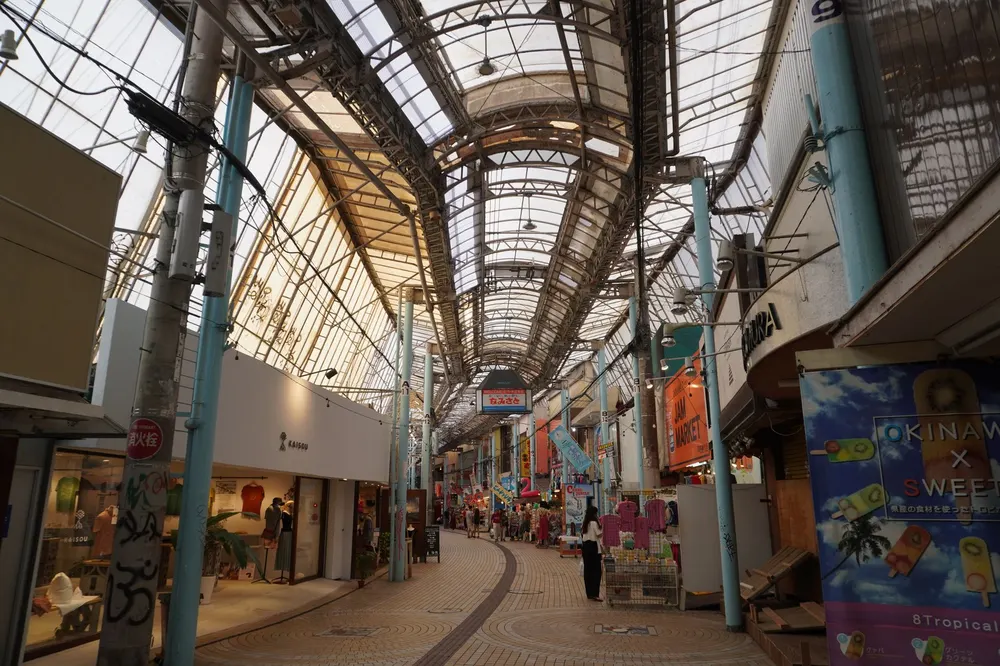
Kokusai-dori runs about 1.6 km from the Kencho-mae end to Asato: souvenirs, awamori, sata andagi. The covered arcades beside it — Heiwa-dori and Ichiba-hondori — are the better part and Naha's rain plan. On Sundays from 12:00 to 18:00 the street is closed to cars (buses excepted), so taxis cannot drop you on it.
The best things to do in Naha on a port day
Our full list, with the time each takes from the berth, is on the Naha top 10; ready-made itineraries are on Naha plans. In brief:
Shuri Castle and the rebuild — about three hours door to door by monorail; the hall interior from 23 November 2026 on a timed ticket.
Short of time at Wakasa? Naminoue Shrine is 12 minutes' walk from the terminal; Fukushuen, a Chinese garden 7 minutes from Kencho-mae, opens 9:00–21:00 (¥200; closed Wednesdays).
One day in Naha: model days
Shuri, the market and Kokusai-dori: a 9–10½-hour call at Wakasa
Fits 07:30–18:00 or 08:00–18:00 at the Naha Cruise Terminal, Wakasa (Azamara Pursuit, Nautica, Westerdam, Regatta, Sapphire Princess). Built on Azamara Pursuit, Monday 8 March 2027. Shift every time by your arrival.
Kingdom in the morning, market at lunch, the arcades in the afternoon — on foot and by monorail, for ¥610 in fares. Times assume a 07:30 arrival and an 18:00 departure: all-aboard 17:30, target back at the gangway 16:30. Book the Shuri hall slot for about 09:30 (sales for March 2027 open at 13:00 Japan time on 1 January 2027).
08:00Off the ship. Walk about 20 minutes (1.5 km, our map estimate) to Kencho-mae station at the south end of Kokusai-dori — usually quicker than the taxi queue. There is an ATM and a currency-exchange machine inside the gates.
08:25Yui Rail towards Shuri and Tedako-Uranishi (weekday departures 08:19, 08:25, 08:30). Tap a Suica-type card or contactless bank card, or buy a QR ticket: ¥320.
08:41Arrive at Shuri. Walk about 20 minutes up to Shurimori-kan, the park information centre; lockers in the basement.
09:05Shureimon gate, then the ticket gate and the walk up to the hall — about 35 minutes by the park's own breakdown, which is why it advises a slot 40–50 minutes after reaching the station.
09:30The main hall interior (about 15 minutes), then the rest of the paid area and the viewing deck, back to Shurimori-kan by about 10:35. ¥1,000.
10:57Walk back down to Shuri station (20 minutes) and take the train towards the airport (weekday departures 10:49, 10:57, 11:05) to Makishi, about 12 minutes, ¥290.
11:20Makishi Public Market, 9 minutes' walk from the station: choose fish or pork downstairs, have it cooked upstairs, or order Okinawa soba. Open 8:00–22:00; 8 March 2027 is not a 4th Sunday.
12:35Tsuboya yachimun street, about 5 minutes' walk: pottery shops and shisa lions. The pottery museum is closed for renovation until 31 March 2027.
13:15The covered Heiwa-dori arcades, then Kokusai-dori, walking south-west to the Kencho-mae end — about 1.6 km with stops for awamori and sata andagi.
14:45Taxi to the terminal (about 5 minutes, about ¥850) or walk 20 minutes. With time left, Naminoue Shrine is 12 minutes' walk from the terminal. Back at the gangway by 16:00 — 30 minutes ahead of target, or about 80 minutes without the shrine.
Shuri and the market by taxi: a 9-hour call at the Shinko berth
Fits 08:00–17:00 or longer at the 2nd Cruise Berth, Shinko Wharf No.12 (Navigator of the Seas, Celebrity Millennium, Silver Muse, Luminara, and the big Asia-market ships). Built on Navigator of the Seas, Tuesday 2 March 2027.
Shinko is a cargo wharf with tents, 5.6 km from downtown and nowhere near a station, so the monorail plan above loses an hour. Taxis do the joining instead; the car park is laid out for about 150. Times assume 08:00–17:00: all-aboard 16:30, target back at the gangway 15:30. Bring yen — there is no cash machine within 1 km. Book the Shuri hall slot for about 09:40.
08:30Off the ship through the temporary immigration tents. If the ship runs a shuttle to Kokusai-dori, it is the ship's arrangement: check the daily programme.
08:45Taxi to Shuri Castle: 7.1 km, about 14 minutes without traffic, from about ¥2,250. Ask for Shurimori-kan (首里杜館).
09:05Shurimori-kan, Shureimon, then the ticket gate and the walk up — about 35 minutes to the hall entrance.
09:40The main hall interior, then the paid area and the viewing deck, back at Shurimori-kan by about 10:45. ¥1,000.
10:50Taxi to the Makishi market: 4 km, about 10 minutes, about ¥1,350.
11:05Makishi Public Market: buy downstairs, eat upstairs, or a bowl of Okinawa soba. Cash is the safe assumption at the stalls.
12:25Tsuboya yachimun street for pottery and shisa, 5 minutes' walk; the museum is closed until the end of March 2027.
13:10Heiwa-dori and Kokusai-dori for awamori, sata andagi and a coffee. Get any yen you need in town: there is no cash machine at the Shinko berth.
14:20Taxi back to the Shinko berth: about 5.5 km, about 10–11 minutes without traffic — allow 25 on a busy day — about ¥1,750–1,850. Back at the gangway by about 14:50, 40 minutes ahead of target.
The south, Shuri and the market by car: a 12-hour call
Fits 07:00–19:00 or similar at either berth (Diamond Princess, Sapphire Princess, Celebrity Millennium, Luminara). Built on Diamond Princess at the Shinko berth, Thursday 11 March 2027; from Wakasa it is about 10 minutes shorter.
Okinawa's history in the order it happened to the island: the 1945 battlefield first, the rebuilt kingdom after lunch. This day needs a car — a taxi you keep, a hired driver or a private tour — because the south is 22 km away and buses take 60–90 minutes. Times assume 07:00–19:00: all-aboard 18:30, target back 17:30. Book the Shuri hall slot for about 13:30.
07:30Off the ship. Drive south to Mabuni: 22 km, about 38 minutes without traffic (allow 45).
08:30Peace Memorial Park: the Cornerstone of Peace, outdoors and free, with 242,659 names of the dead of every nation.
09:00Okinawa Prefectural Peace Memorial Museum as it opens, about 75 minutes. Permanent exhibition ¥300.
10:20Drive about 7–10 minutes to the Himeyuri Peace Museum; an hour inside. ¥450; cards and IC cards accepted. It has no car park of its own, so keep your driver.
11:35Drive north to Shuri: 18 km, about 32 minutes without traffic.
12:10Lunch at the Shurimori-kan cafe-restaurant, which serves Okinawan dishes. Shuri Soba near the station closes on Thursdays and Sundays.
12:50Shuri Castle: Shureimon, the paid area, the hall interior at your 13:30 slot. ¥1,000.
14:40Taxi to the Makishi market, about 10 minutes and ¥1,350. An hour for the market and Tsuboya street.
15:55Taxi back to the Shinko berth: about 11 minutes without traffic, allow 25, about ¥1,850. Back at the gangway about 16:20 — about 70 minutes ahead of target.
How to think about your hours
Work backwards from the ship. Your all-aboard time is usually 30 minutes before departure (check the daily programme), you want to be back at the gangway an hour before that, and the first half hour after arrival goes on getting off. So the time you can actually use is the call length minus about two hours.
Call
Usable
From Wakasa (Naha Cruise Terminal)
From Shinko (2nd Cruise Berth)
4 hours
about 2
On foot: Naminoue Shrine, or Kokusai-dori's south end and Fukushuen. Or a taxi to Makishi for 1½ hours and a bowl of soba. Not Shuri.
Only with a ship's shuttle or a waiting taxi: Makishi or Kokusai-dori for about an hour. Otherwise stay by the ship.
6 hours
about 4
One of: Shuri Castle by monorail (about 3 hours door to door) with a short market stop; the market, Tsuboya and Kokusai-dori unhurried; or the south by taxi and nothing else.
Shuri by taxi and lunch at Makishi; or the market loop; or the south by car alone.
8–9 hours
about 6–7
Shuri, Makishi, Tsuboya and Kokusai-dori by foot and monorail — the first model day, with less time on Kokusai-dori on an 8-hour call. Or the south by car, then Makishi.
Shuri and the market by taxi — the second model day, trimmed at Kokusai-dori on an 8-hour call. Or the south by car, then Makishi.
10 hours
about 8
Shuri, the south and Makishi by car or tour, tightly. Churaumi: no.
The same, about 10 minutes tighter each way.
12 hours+
about 10
Everything above at an easy pace. Churaumi becomes possible by private car, and nothing else.
The same; Churaumi tight.
The commonest call length this season is 9 hours, and the median across the whole schedule is 10½; the typical Western-market call is 07:00–19:00 or 08:00–18:00. Star Navigator often calls 15:00–22:00, when Shuri has a few hours left but the market's kitchens run until 20:00. Sixteen calls this season are overnights, all but one at Shinko; on those you can do everything, including Churaumi.
Tours worth booking, by how many hours you have
Every pick opens our own page first — what the operator actually includes, who should skip it, and which upcoming Naha calls it fits. Prices are the operator's "from" price as of 26 Sep 2026.
4h+A short call, or one hour of Okinawan craft
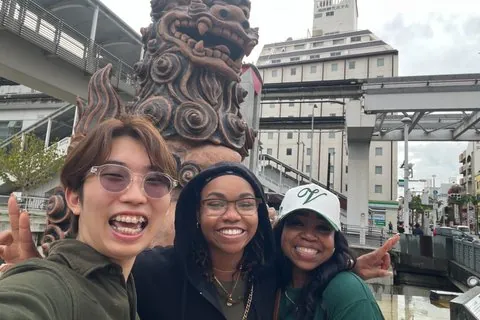
Neither berth is a walk to these meeting points. The food walk meets at the big shisa by Makishi station, at the north-east end of Kokusai-dori: from Wakasa, walk 20 minutes to Kencho-mae and ride Yui Rail two stops (¥250), or take a taxi (about ¥1,050). From Shinko, add about ¥1,750–1,850 of taxi each way.
Tours are booked through Viator (a Tripadvisor company). If you book, we may earn a small commission at no extra cost to you. It never decides what we recommend — which is why each tour page has a "think twice" note.
About the return to the ship. None of the seven Naha tours we list mentions cruise passengers, the cruise terminal or an on-time return to the ship; there is no such promise in any of them. The three car tours list hotel pickups but accept custom pickup points. So: ask the operator in writing to collect you at your berth — naming Wakasa or Shinko, because the drive differs by 10 minutes each way — give them your all-aboard time when you meet, and agree to be back at the gangway an hour before it. All seven can be cancelled for a full refund up to 24 hours ahead.
Money, cards and the practical stuff
Naha's big sights take cards; its taxis, market stalls and small soba shops are where cash still matters.
Place
Pay with
Yui Rail
IC card (Suica etc.), contactless bank card, or QR ticket from the machine
Shuri Castle
Cards including contactless, e-money, QR; web tickets online
Himeyuri Peace Museum
Cards, IC cards and e-money
Prefectural Museum & Art Museum
Cash, cards, e-money
Peace Memorial Museum
Carry cash; card payment not confirmed
Makishi market stalls and kitchens
Varies by shop — carry cash
Shuri Soba
Cash only
Taxis
Carry cash; card acceptance not confirmed
Cash machines. At Wakasa, a temporary exchange counter on ship days takes US dollars, euros, sterling, Australian dollars and four other currencies; the nearest 24-hour Lawson is about 600 m away, a FamilyMart about 750 m and a bank branch and post office about 650 m (straight-line distances). Kencho-mae station has an ATM and a foreign-currency exchange machine inside the gates. At Shinko there is nothing within 1 km — no exchange, no ATM, no shop. Seven Bank and Japan Post machines generally take foreign cards.
Where to eat, and when it is shut. The Makishi market's upstairs restaurants are the easy answer (closed 4th Sundays). Shuri Soba, 5 minutes from Shuri station, serves 11:30–14:00 or until sold out, cash only, and closes on Thursdays and Sundays. Yunangi, 3 minutes from Kencho-mae, opens 12:00–15:00 and from 17:30, closed on Sundays and holidays. Okinawa Soba Eibun in Tsuboya opens from 11:00 and closes on Wednesdays. The Shurimori-kan cafe-restaurant at the castle serves Okinawan dishes during park hours. The restaurant hours here come from guidebooks, not the shops themselves; check before you plan around one.
Closed days that hit this season's Western-market calls:
Thursdays (Shuri Soba): Celebrity Millennium and Seven Seas Explorer on 5 November 2026; Regatta on 11 February 2027 (also a national holiday, so Yunangi is shut and the monorail runs its holiday timetable); Diamond Princess on 11 March; Silver Muse on 25 March.
Wednesdays (Shikinaen, Fukushuen, Eibun): Sapphire Princess on 16 December 2026 and 27 January 2027; Westerdam on 24 February 2027.
Mondays (Prefectural Museum, the rain plan): Azamara Pursuit on 26 October 2026 and 8 March 2027; Nautica on 1 March 2027.
Sunday 28 March 2027 (Regatta): the Makishi market is closed for its 4th-Sunday rest, Shuri Soba and Yunangi are closed, and Kokusai-dori is car-free from 12:00. Go to Shuri in the morning and the arcades after lunch.
Starting or ending your cruise in Naha? Naha Airport is about 17 minutes and about ¥2,350 by taxi from the Wakasa terminal (7.5 km, our map estimate; the Japan Tourism Agency's port sheet says 10 minutes), and more from Shinko. Yui Rail ends at the airport, but Kencho-mae is a 20-minute walk from Wakasa — fine with a carry-on, not with suitcases. The 10-car taxi rank at Wakasa is the bottleneck on disembarkation morning: allow a margin before your flight.
Naha's cruise season runs the other way round from the rest of Japan: the calls peak from December to April (26–38 a month this season), when the northern ports are closed or cold.
Winter (December–February). Mild and grey: January averages 17.3 °C with highs of about 20 °C, about 100–115 mm of rain a month and only about three hours of sunshine a day. A jacket, not a swimsuit.
Cherry blossom in January. Okinawa's hikan-zakura bloom in midwinter: the normal first bloom in Naha is 16 January and full bloom about 4 February (first bloom was 18 January in 2026).
Spring (March–April). Highs of 22–24 °C; March 2027 is the busiest month of the season, with 38 calls.
Typhoons. About 7–8 a year approach Okinawa, most in August (about 2) and September (about 2), and about one in October; none from January to March. Shikinaen and the Tsuboya museum close under a storm warning, Himeyuri when the buses stop, the Prefectural Museum about two hours before.
Events on call days. Yui Rail runs festival timetables for the Naha Great Tug-of-War, 10–12 October 2026. The NAHA Marathon on 6 December 2026 restricts roads in the south.
Rain plan: the Prefectural Museum & Art Museum at Omoromachi (closed Mondays; ¥530, free for those aged 70 and over, with no residency condition in the fee table; carry ID), the Makishi market and the covered Heiwa-dori arcades, and the Himeyuri museum.
Things you will read about Naha elsewhere — in older port guides, forum posts and some cruise-line pages — set against what the official source says today.
You may read
What the official source says
Source
Ships dock at Naha New Port, about a 20-minute walk from downtown.
There are two berths. The Naha Cruise Terminal at Wakasa (Tomari No.8) is the walkable one: 1.5 km, 15–20 minutes on foot. The 2nd Cruise Berth at Shinko (No.12) is 5.6 km out, and the official sheet says a shuttle is needed; the biggest ships and the second ship on a two-ship day go there.
Shuri Castle's paid area costs ¥400 and you can simply walk in.
¥400 only until 22 November 2026. From 23 November it is ¥1,000, and going inside the rebuilt main hall needs a timed slot booked online in advance (no extra charge); same-day slots, if any are left, sell up to 15 minutes before.
The Yui Rail 1-day pass is ¥1,000 for 24 hours from purchase (2-day ¥1,800). At ¥320 to Shuri and ¥250 to Makishi it only pays off on three or more rides.
Assuming you dock at the Wakasa terminal.About 45% of this season's calls are at the 2nd Cruise Berth at Shinko, 5.6 km from downtown, with tents instead of a terminal, and no station, shop or cash machine within 1 km. The biggest ships nearly always go there, and so does the second ship on a two-ship day. Check the daily programme the night before.
Planning to walk into town from Shinko.The official port sheet says a shuttle is needed, and the way out is through a cargo district. Take the ship's shuttle where one runs, or a taxi: about 10 minutes and ¥1,750 to Kokusai-dori.
Queuing for a taxi at Wakasa.The rank holds 10 cars, and the prefecture itself describes long queues after disembarkation. Kencho-mae station is 20 minutes' walk, so on a busy day walking to the monorail can beat the queue.
Turning up at Shuri expecting to go inside the hall.From 23 November 2026, the hall interior needs a timed web ticket, released in advance (for 2027, at 13:00 Japan time on the 1st of the month two months before). Without one you see the hall from the viewing deck only.
Trying to fit in Churaumi Aquarium.It is about 90–113 minutes each way by car without traffic, plus two hours inside: about six hours door to door. Anything under an 11-hour call, with a private car, puts the ship at risk.
Following old prices.Many pages still quote a ¥560 taxi start, a ¥700 monorail day pass and ¥400 at Shuri. The current figures are ¥650 for the taxi start (since 24 August 2026), ¥1,000 for the monorail day pass, and ¥1,000 at Shuri from 23 November 2026.
Planning the Tsuboya Pottery Museum or a Makishi lunch on the wrong day.The pottery museum is closed from 1 September 2026 to 31 March 2027. The market closes on the 4th Sunday of each month (open daily in December).
Researched from official timetables, operators and the port authority. Every time and fare in this guide was checked against the sources listed above on 1 October 2026; where we had to estimate (a walk, a taxi in traffic), the text says so. Timetables change — if you find one that has, tell us and we will fix it.
Quick answers
Naha cruise port questions
Where do cruise ships dock in Naha?
At one of two berths. Mid-size ships use the Naha Cruise Terminal on Tomari Wharf No.8 in Wakasa, 1.5 km (about 20 minutes' walk) from Kencho-mae station and the south end of Kokusai-dori. The biggest ships — Spectrum of the Seas, MSC Bellissima and Adora Flora City — and the second ship on two-ship days normally use the 2nd Cruise Berth on Shinko Wharf No.12, 5.6 km from downtown, with temporary tents and no station. Of 155 calls from October 2026 to March 2027, 86 are at Wakasa and 69 at Shinko. Both are quays: no tenders.
Can you walk from the Naha cruise port to Kokusai-dori?
From the Wakasa terminal, yes: about 20 minutes (1.5 km) on foot to the Kencho-mae end of Kokusai-dori, or a taxi of about 5 minutes and ¥850. From the 2nd Cruise Berth at Shinko, no: it is 5.6 km through a cargo district, and the official port sheet says a shuttle is needed. Take the ship's shuttle if one runs, or a taxi — about 10 minutes without traffic and about ¥1,750.
Is there a shuttle bus from the Naha cruise terminal?
Sometimes. A ¥240 trial shuttle ran from Wakasa to Kokusai-dori about every 30 minutes until at least March 2026, and the prefecture has tendered a 2026–27 programme for shuttles at both berths, running until 16 February 2027, for participating cruise lines. Whether one runs on your call, and at what fare, is up to the ship: check the daily programme. Wakasa is walkable without one; Shinko is not.
What can I do in Naha on a short cruise stop of 4–6 hours?
With about 2 usable hours (a 4-hour call at Wakasa), walk 12 minutes to Naminoue Shrine, or take a 7-minute, ¥1,050 taxi to the Makishi market for soba. With about 4 usable hours (6-hour call), choose one: Shuri Castle by monorail, about 3 hours door to door; the market, Tsuboya and Kokusai-dori; or the Peace Memorial Park by taxi. At the Shinko berth, add about 10 minutes of taxi each way and skip Shuri on a 4-hour call.
What is there to do within walking distance of the Naha cruise terminal?
From the Wakasa terminal: Naminoue Shrine, on a cliff above the sea, about 12 minutes on foot; Naminoue beach, Naha Port's only beach, below it; Kokusai-dori and Kencho-mae station, about 20 minutes; Fukushuen Chinese garden, 7 minutes beyond Kencho-mae (¥200, 9:00–21:00, closed Wednesdays); and the Makishi market, about 31 minutes. From the 2nd Cruise Berth at Shinko, nothing is walkable — no shop, station or cash machine within 1 km.
What are the best things to do in Naha on a cruise port day?
Five carry most days: Shuri Castle, the Ryukyu kings' seat, with its rebuilt main hall open inside from 23 November 2026 (¥1,000, about 3 hours door to door); the Peace Memorial Park and Himeyuri Peace Museum in the south (about 4–4½ hours by car); lunch at the Makishi Public Market, bought downstairs and cooked upstairs; the pottery shops of Tsuboya yachimun street; and the covered arcades beside Kokusai-dori. On a long call, add Shikinaen garden (¥400).
How do I get from the Naha cruise port to Shuri Castle?
From Wakasa, walk 20 minutes to Kencho-mae, take Yui Rail to Shuri (about 16 minutes, ¥320, every 8 minutes at weekday middays), then walk about 20 minutes up to the park — about an hour door to door. By taxi, about 13–14 minutes from either berth and from about ¥2,250–2,350. From the Shinko berth, the taxi is clearly faster.
Can you go inside Shuri Castle, and do you need to book?
Yes, from 23 November 2026, and yes, you book. The rebuilt main hall opens to the public at 12:00 that day, and entry to the interior needs a dated, timed web ticket at no extra charge on top of the ¥1,000 admission. For visits from January 2027, tickets go on sale at 13:00 Japan time on the 1st of the month two months before — so March 2027 slots open on 1 January. The park suggests a slot 40–50 minutes after you reach Shuri station. The whole park is closed on 22 November 2026.
How much does Shuri Castle cost, how long does it take, and when is it open?
Adults pay ¥400 until 21 November 2026 and ¥1,000 from 23 November; there is no senior discount for visitors. Allow 90–120 minutes from the Shurimori-kan information centre, including the hall, and about 3 hours door to door from the ship. The paid area opens at 8:30 and closes at 19:00 from April to November (last entry 18:30) and at 18:00 from December to March (last entry 17:30).
How do I get from the Naha cruise port to the Peace Memorial Park and Himeyuri?
By car: 28–38 minutes each way without traffic, about ¥5,550–6,550 each way by metered taxi, depending on the berth. Public buses change at Itoman and take 60–90 minutes each way, which is not realistic on a call. The Peace Memorial Park at Mabuni and the Himeyuri Peace Museum are about 10 minutes' drive apart, and you cannot count on finding a taxi at either, so keep your car. Allow about 4–4½ hours door to door for both.
Can I see Shuri Castle and the Peace Memorial Park on one cruise call?
Yes, by car on a call of about 11 hours or more: the south first (about 38 minutes' drive from Shinko), two museums and the Cornerstone of Peace, then Shuri after lunch and the Makishi market at the end — back about 70 minutes before target on a 07:00–19:00 call. On a 9-hour call, choose one. By metered taxi, the legs add up to at least ¥16,350 per car.
Is Churaumi Aquarium possible on a cruise stop in Naha?
Only just. Churaumi Aquarium, at Motobu in the north, is about 90–113 minutes each way by car without traffic, and you need about two hours inside, so about six hours door to door. That needs a call of at least 11 hours with a private car and nothing else. Adults pay ¥2,180, and there is no practical public transport for a cruise call.
Can I visit Okinawa World and the Gyokusendo cave from the cruise port?
Yes, by car: Okinawa World, with the Gyokusendo limestone cave, is about 29 minutes' drive from the Wakasa terminal (17 km, our map estimate) and about ¥5,150 by taxi each way at the new tariff; the operator says 30–40 minutes from Naha. It opens 9:00–17:30 with last entry at 16:00, and adults pay ¥2,000. It sits in the south near the Peace Memorial Park, so it pairs with the memorials on a car day of about 9 hours or more.
How much are taxis in Naha, and is it easy to get one at the port?
Since 24 August 2026, ¥650 for the first 1.65 km, then ¥100 for each 350 m, plus time charges in slow traffic. As floors: Wakasa to Kokusai-dori about ¥850, to Shuri about ¥2,350, to the Peace Memorial Park about ¥5,650; Shinko to Kokusai-dori about ¥1,750. The Wakasa rank holds only 10 cars and queues form after disembarkation, so walking 20 minutes to the monorail often wins. Shinko's car park takes about 150 taxis. Carry cash.
Does the Yui Rail monorail in Naha take credit cards or Suica?
Yes to both. Yui Rail takes Suica and the other national IC cards, and contactless bank cards tapped at the gate; the machines also sell QR tickets. It does not sell Suica cards itself. Fares from Kencho-mae, 20 minutes' walk from the Wakasa terminal: ¥320 to Shuri (about 16 minutes), ¥250 to Makishi (about 4 minutes). The ¥1,000 1-day pass pays only if you take three or more rides.
Do I need cash in Naha, and is there an ATM at the cruise port?
Yes, carry yen. Yui Rail, Shuri Castle, the Himeyuri museum and the Prefectural Museum take cards, but taxi card acceptance is not confirmed, Shuri Soba takes cash only, and market stalls vary. Wakasa has a temporary exchange counter on ship days (dollars, euros, sterling, Australian dollars and more) and convenience-store ATMs about 600 m away; Kencho-mae station has an ATM inside the gates. The Shinko berth has neither.
Is the Makishi Public Market open on my call day?
It opens 8:00–22:00 (shops vary), with upstairs kitchens taking last orders at 19:45–20:00. It closes on the 4th Sunday of every month except December — this season, that hits Mitsui Ocean Sakura on Sunday 24 January 2027, and Regatta and Adora Mediterranea on Sunday 28 March 2027. It is 9 minutes' walk from Makishi station, or about 7 minutes and ¥1,050 by taxi from Wakasa.
What should I eat in Naha on a port day?
Okinawa soba — wheat noodles in a pork-and-bonito broth, nothing like ramen — and goya champuru, bitter melon stir-fried with tofu and egg. The easy place for both is the Makishi Public Market, where you can also buy fish downstairs and pay an upstairs kitchen to cook it (the charge is not published; ask first). Add sata andagi doughnuts and awamori, the clay-aged rice spirit, on Kokusai-dori. Shuri Soba near the castle is cash only and closed Thursdays and Sundays.
What is the weather like in Naha in winter, and do typhoons affect cruise calls?
Mild and often grey: January averages 17.3 °C with highs of about 20 °C, about 100–115 mm of rain a month and about three hours of sunshine a day — a jacket, not a swimsuit. Hikan-zakura cherry blossom usually starts around 16 January. About 7–8 typhoons a year approach Okinawa, mostly in August and September and about one in October; none from January to March. The rain plan is the Prefectural Museum (closed Mondays) and the covered market arcades.
Is Naha manageable with limited mobility or a wheelchair?
Partly. Shuri Castle's paths are stone-paved slopes and steps, but the park has a barrier-free route, and lockers at Shurimori-kan. Kencho-mae station has lifts, and the Yui Rail line is elevated throughout. From the Shinko berth everything starts by vehicle. For the distances, one listed tour (5596189P7, a driver and guide for 4–8 hours, up to 8 people) uses a wheelchair-accessible vehicle; ask for Shuri's barrier-free route when you book.
How far is the Naha cruise port from Naha Airport?
About 17 minutes and about ¥2,350 by taxi from the Wakasa terminal (7.5 km, our map estimate; the Japan Tourism Agency's port sheet says 10 minutes). Add time from the Shinko berth and on big-ship days. Yui Rail ends at the airport too: walk 20 minutes to Kencho-mae with light bags, or take a taxi there. If you are flying out after disembarking, the 10-car taxi rank at Wakasa is the bottleneck, so allow a margin.
What is the best tour from the Naha cruise port?
For a group of up to 13, the seven-hour private southern tour (5581729P6): Shuri, Shikinaen, Tsuboya and the Peace Park with admissions included, about $83 each for six. For a couple, the two-hour private morning food walk (5527264P1), then Shuri by monorail on your own. None lists cruise-terminal pickup or promises in writing to return you to the ship, so confirm your berth with the operator and keep an hour's margin.