
The Okinawan table
Pork, bitter melon, wheat noodles called soba — and an honest word about longevity
Okinawan food is not Japanese food with a suntan. It is a separate cuisine built on pork, bitter vegetables and Chinese technique — and the famous longevity story attached to it is true about the past and no longer true about the present.
The kingdom traded with China for five centuries and cooked accordingly. Stir-frying, braising, and a use of pork that no other Japanese region approaches: Okinawa has a saying that everything of the pig is eaten but the squeal, and it is not a joke about thrift so much as a description of the menu.
What to actually order
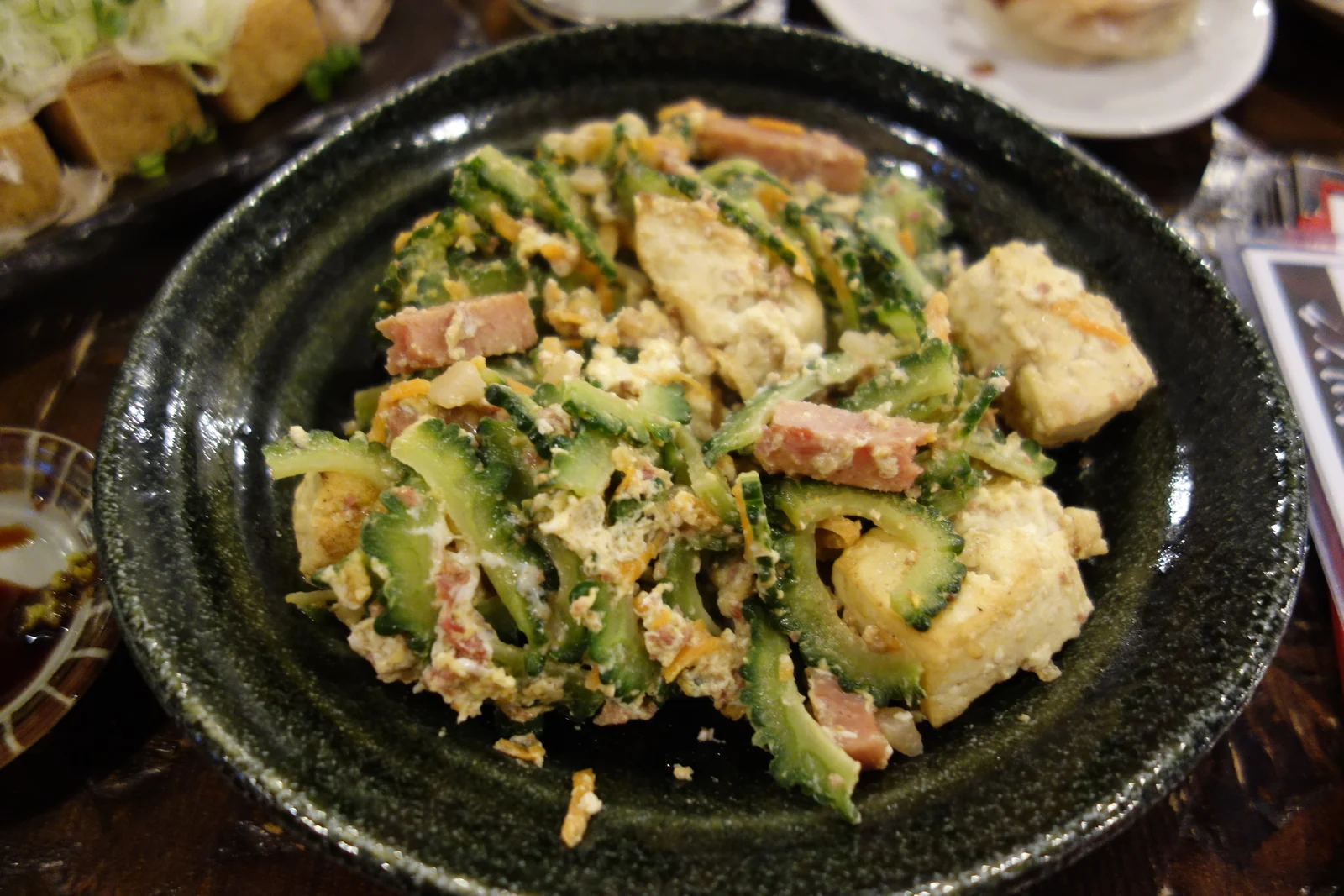
Goya champuru. Bitter melon stir-fried with tofu, egg and pork. Champuru means mixed together, and it comes from the same root as the Malay campur — a word that arrived by ship. The bitterness is not softened for you. It should not be.
Okinawa soba. Thick wheat noodles in a clear pork-and-bonito broth, with braised pork belly and fish cake. It contains no buckwheat at all, which caused a formal dispute in the 1970s with the mainland noodle authorities. Okinawa won the right to keep the name in 1978, and the anniversary — 17 October — is Okinawa Soba Day.
Rafute. Pork belly simmered slowly in awamori, soy and brown sugar until it gives way. Court cooking, and the single best thing on most menus.
Umibudo. "Sea grapes" — a seaweed of tiny green spheres that burst with salt water between the teeth. Eat them cold, with a little ponzu, and never over rice that is warm.
Order Okinawa soba where the locals eat it — at a plain shop with a plastic sign, at eleven in the morning. It is a working lunch, not a delicacy.
The longevity question, answered honestly
Okinawa genuinely was one of the longest-lived places on earth. That reputation was built on a generation born before the war, whose diet was overwhelmingly sweet potato, vegetables, soy and modest amounts of pork and fish, eaten in small quantity.
It has not held. Post-war Okinawa adopted American fast food earlier and more thoroughly than anywhere else in Japan, and by the turn of the century Okinawan men had fallen sharply down the prefectural life-expectancy table — a shift discussed locally in blunt terms. Obesity rates here are among Japan's highest.
So the traditional Okinawan diet is a real and well-documented thing worth eating. It is simply not what most people on the island eat now. Anyone selling you the myth in its present tense is selling you something.
How it happened
- kingdom eraChinese technique, Okinawan ingredients
Stir-frying and braising, five centuries of trade
- pre-warThe diet the longevity data describes
Sweet potato, vegetables, soy, a little pork and fish
- 1978Okinawa wins the right to call it soba
Despite containing no buckwheat. 17 October is Soba Day
- post-warAmerican food arrives early and stays
Taco rice, canned pork, and a real dietary shift
- 2000sMale life expectancy falls down the table
The reputation outlives the reality
Where this becomes real on your port day
Goya champuru, Okinawa soba, rafute, umibudo. In Makishi Public Market, upstairs, for about ¥2,000.
The vocabulary of the table
- Champuru チャンプルー
- "Mixed together" — from the same root as Malay campur. A word that arrived by ship.
- Rafute ラフテー
- Pork belly simmered in awamori and brown sugar. Court cooking.
- Nuchigusui ぬちぐすい
- "Medicine for life." Said about food that does you good.
- Umibudo 海ぶどう
- Sea grapes. Cold, with ponzu, never over warm rice.
FAQ
What should I eat in Naha?
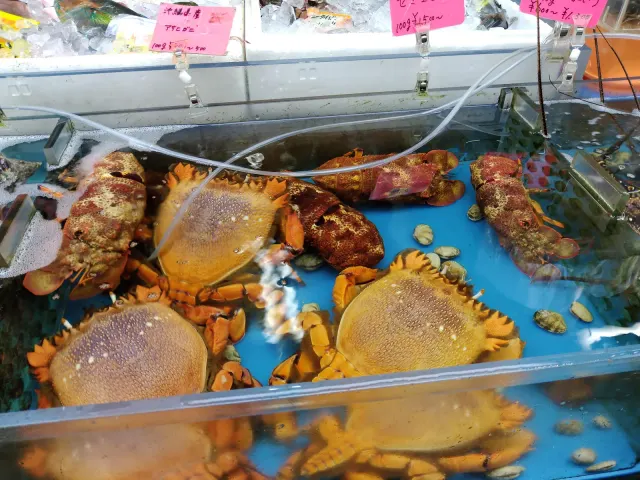
Goya champuru (bitter melon stir-fried with tofu, egg and pork), Okinawa soba (thick wheat noodles in pork-and-bonito broth — no buckwheat at all), rafute (pork belly simmered in awamori and brown sugar) and umibudo sea grapes. Makishi Public Market does all four, and the upstairs floor will cook fish you buy downstairs.
Is the Okinawan longevity diet real?
It was real for the generation born before the war, whose diet was mostly sweet potato, vegetables, soy and small amounts of pork and fish. It does not describe Okinawa today — the island adopted American fast food early, and male life expectancy has fallen sharply down the prefectural table. The traditional food is worth eating; the present-tense myth is not accurate.
More from Naha
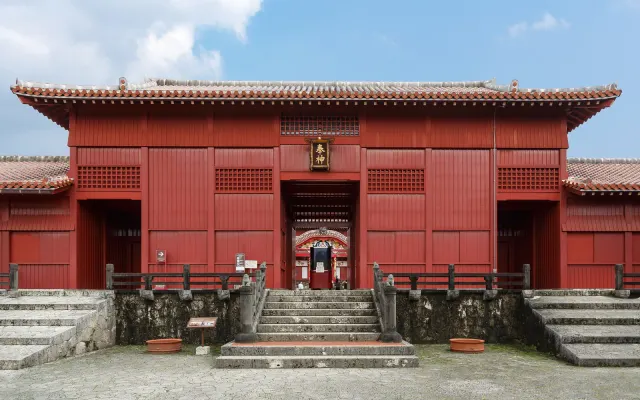
Four and a half centuries as an independent kingdom, and it was not Japan
Read →
A quarter of the civilian population died here, and the memorial names everyone
Read →
Pottery on one street since 1682, and a dye technique that exists nowhere else
Read →
Six hundred years old, made with Thai rice and a black mould, and it improves for decades
Read →