
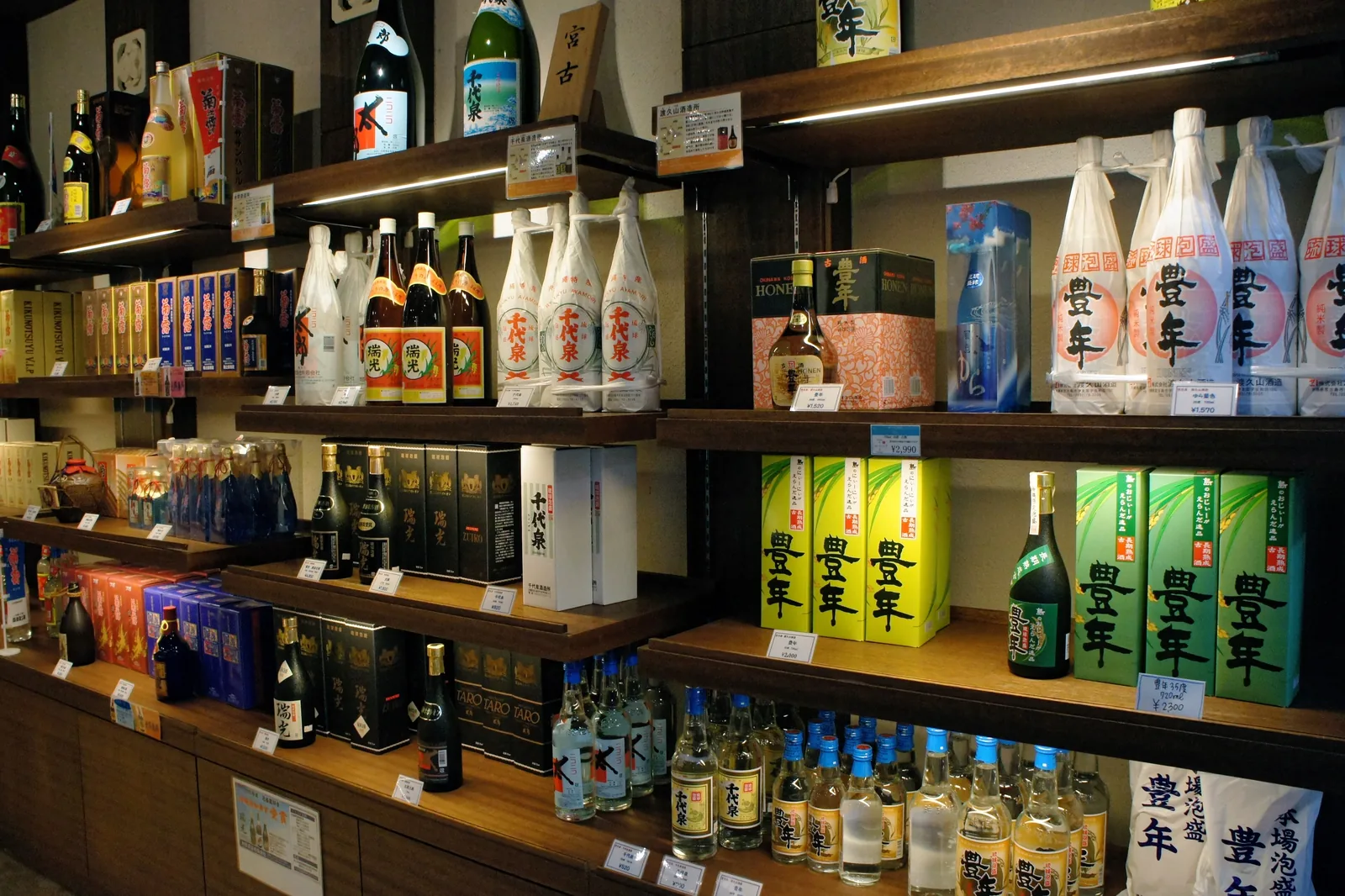
Awamori
Six hundred years old, made with Thai rice and a black mould, and it improves for decades
Okinawa's spirit is not shochu and it is not sake. It is distilled from long-grain Thai rice using a black mould that grows nowhere else in Japan, it has been made here for around six hundred years, and the good stuff is aged in clay for decades.
Distilling arrived in Ryukyu in the fifteenth century from Siam, along the same trade routes that brought the pepper and the sappanwood. The technique never changed to match Japan's, because for most of its history Okinawa was not part of Japan.
Three things make it different
The rice is Thai. Long-grain indica, not Japanese short-grain — and this is not nostalgia, it is chemistry. The drier, harder grain suits the mould and the process.
The mould is black. Awamori uses kuro-koji, a black Aspergillus that produces large amounts of citric acid as it works. In a subtropical climate with no refrigeration, that acidity is what stopped the mash from spoiling. It is the reason this drink exists at this latitude.
The whole batch ferments at once. Sake and most shochu build their mash in stages; awamori does it in a single mass. It is a simpler, older method and it is still the legal definition.
Awamori aged three years or more becomes kusu — "old liquor." It gets rounder, sweeter and less aggressive, and unlike almost every other spirit, it was traditionally aged in unglazed clay rather than wood.
Kusu, and the pots that were lost
Families kept awamori in clay pots and topped them up by the shitsugi method — draw from the oldest pot, refill it from the next oldest, and so on down the line, so that the oldest pot is never emptied and never entirely new.
Pots of a hundred and two hundred years existed. Almost all of them were destroyed in 1945. The oldest surviving awamori in Okinawa is measured in decades rather than centuries, and the distilleries are rebuilding that stock now, one year at a time.
How to drink it without regretting it
Standard awamori runs around 30% alcohol; some is far stronger. It is drunk mizuwari — cut with water and ice, often at half strength or less — and this is not a weak way to drink it, it is how the drink is designed to be served.
Order kusu if it is on the list. The difference between three-year and new is larger than the price gap suggests, and it is the difference between something you tolerate and something you want.
How it happened
- 15th c.Distilling arrives from Siam
On the same ships as the pepper trade
- kingdom eraAwamori becomes a court and tribute good
Presented to Satsuma and to Chinese envoys
- 1945The old clay stock is destroyed
Pots of 100 and 200 years, almost all gone
- post-warDistilleries rebuild
Kusu stock restarted from zero
- today~45 distilleries across the islands
Every island has one, and they taste different
Where this becomes real on your port day
Order kusu, mizuwari, with the food. Three-year against new is a bigger difference than the price suggests.
The vocabulary of awamori
- Kusu 古酒
- Aged three years or more. Rounder, sweeter, and the one to order.
- Kuro-koji 黒麹
- The black mould. Its citric acid is why this drink survives the heat.
- Shitsugi 仕次ぎ
- Topping the oldest pot from the next oldest, forever.
- Mizuwari 水割り
- Cut with water and ice. The intended serve, not a compromise.
FAQ
What is awamori and how is it different from shochu?
Awamori is Okinawa's distilled spirit, made for around six hundred years from long-grain Thai rice using black koji mould, with the whole mash fermented in a single stage. Shochu typically uses Japanese short-grain rice or other base ingredients, white or yellow koji, and a multi-stage mash. The black mould's citric acid is what let awamori be made safely in a subtropical climate.
How should I drink awamori?
Mizuwari — cut with water and ice, often to half strength or less. That is the designed serve, not a dilution. If kusu (aged three years or more) is on the list, order it: the difference from new awamori is much larger than the price gap.
More from Naha
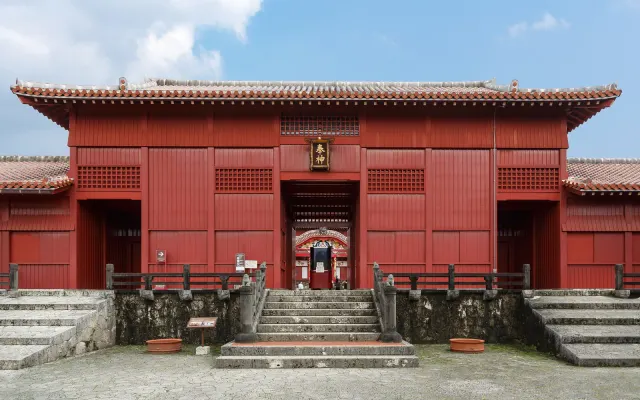
Four and a half centuries as an independent kingdom, and it was not Japan
Read →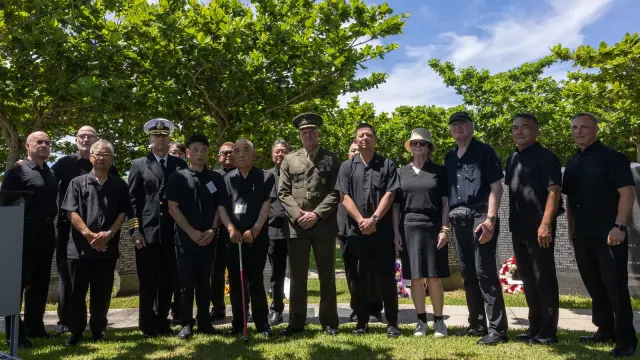
A quarter of the civilian population died here, and the memorial names everyone
Read →
Pottery on one street since 1682, and a dye technique that exists nowhere else
Read →
Pork, bitter melon, wheat noodles called soba — and an honest word about longevity
Read →