Jan–FebThe winter season properAround 17–19°C, dry and clear. Cherry blossom opens here in late January — the first in Japan.
MarchWarm, and the sea turnsComfortable walking everywhere. Whale watching season runs to about early April.
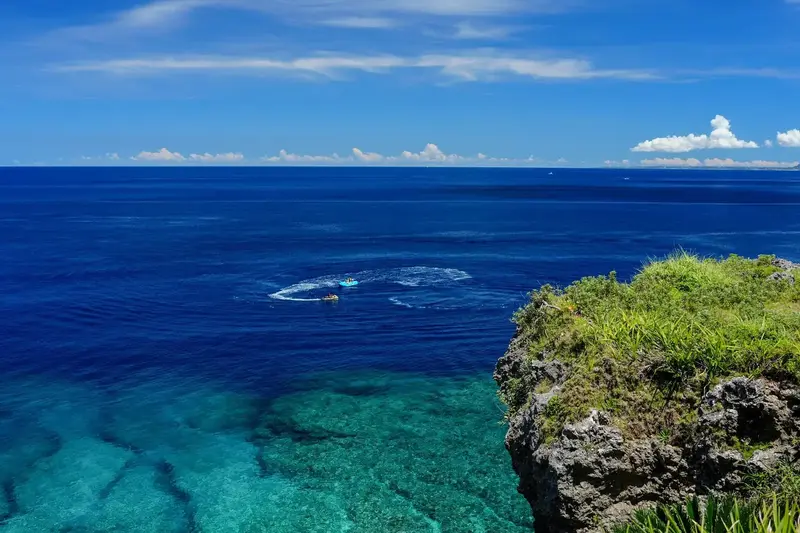
AprilThe best monthWarm without humidity, the sea already swimmable, and before the rains.
May–JuneThe rainy seasonOkinawa's rains come earlier than the mainland's. Heavy, warm, and short-lived each day.
JulyHot, bright and busyPeak beach season and peak domestic tourism. Eisa practice starts in the villages.
AugustTyphoon season beginsShips do reroute. Obon eisa dancing runs through the month in the neighbourhoods.
SeptemberThe typhoon peakThe hottest water and the highest risk. Check your itinerary rather than assuming.
OctoberThe other best monthWarm, calmer, and the sea still at its best. Cruise calls pick up sharply.
Nov–DecMild, dry, and openWhile the rest of Japan closes for winter, Naha is 20°C and taking ships.