
Ryukyu
Four and a half centuries as an independent kingdom, and it was not Japan
Okinawa became a Japanese prefecture in 1879. Before that it was a kingdom for 450 years, with its own king, its own languages, its own diplomacy — and a foreign policy of paying tribute to China while being militarily controlled by a Japanese domain, simultaneously, for two and a half centuries.
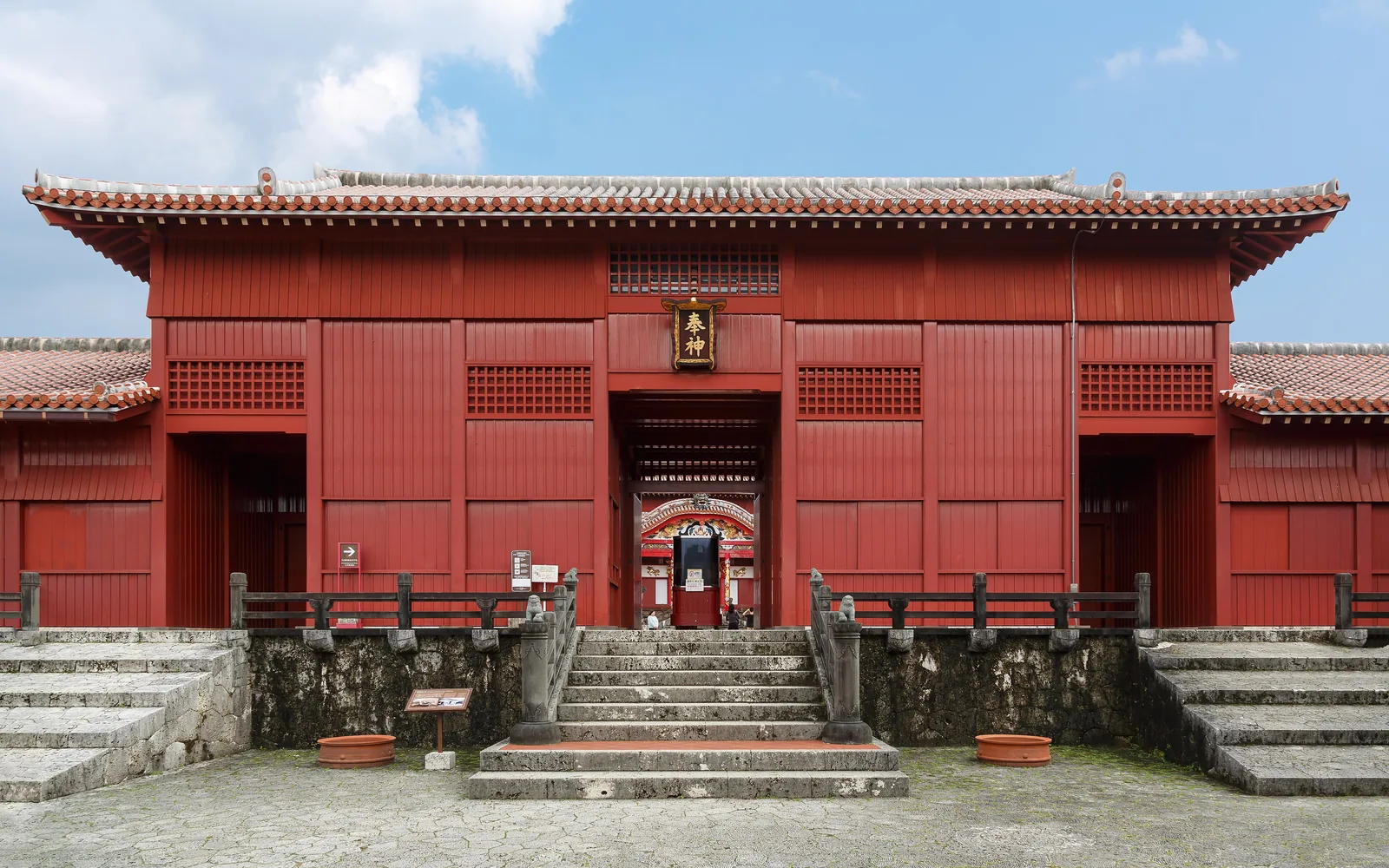
The islands were unified in 1429 under Sho Hashi, who built his seat at Shuri above the harbour of Naha. The kingdom had almost no natural resources and no army worth the name. What it had was position.
A country that lived on being in the middle
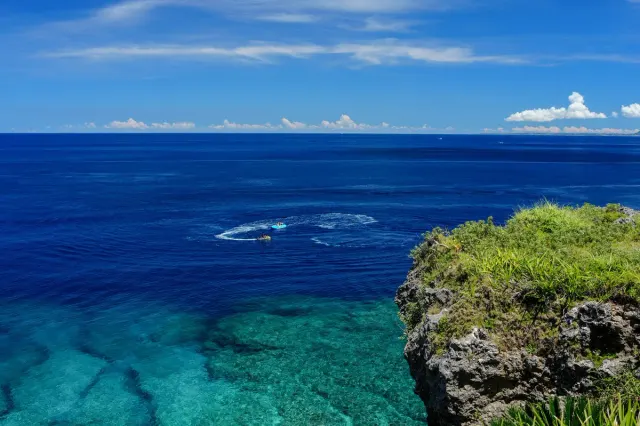
Ryukyu had entered the Chinese tributary system in 1372, and that status was worth more than any commodity: it gave Ryukyuan ships privileged access to Chinese ports at a time when China restricted private trade. Ryukyu bought Southeast Asian pepper and sappanwood, sold them in China, bought Chinese ceramics and silk, and sold those in Japan and Korea.
A bell cast for Shuri Castle in 1458 says it outright: the kingdom is a bridge between nations, and the ships are its treasure. The bell survives. It is the closest thing this culture has to a national statement.
In 1609 Satsuma invaded from Kyushu. Ryukyu lost in weeks — and then kept sending tribute to China for another 270 years, because Satsuma wanted the profit from that trade.
Two masters, one kingdom
After 1609 the kingdom continued to exist, with its king, its court and its Chinese investiture ceremonies. Behind the ceremony, Satsuma took the revenue and set the rules. Chinese envoys arriving to invest a new king were carefully managed so that nothing Japanese was visible in the capital.
It ended in 1879. Japan abolished the kingdom, made it Okinawa Prefecture, and deported the last king, Sho Tai, to Tokyo. What followed was a policy of assimilation: schoolchildren were punished for speaking Ryukyuan. The languages of these islands — several of them, not one, and not dialects of Japanese — are now all classified as endangered.
The castle has burned three times
Shuri Castle was destroyed in the Battle of Okinawa in 1945, rebuilt over decades and completed in 1992, then burned again in a fire on 31 October 2019. Reconstruction of the main hall has been under way since.
The rebuilding was run as a public event — "restoration you can watch" — and it has nearly finished. The scaffolding shed came down in late 2025, the vermilion main hall now stands complete against the sky again, and the interior opens to the public on 23 November 2026. Until then the grounds, the original stone walls and the sacred groves are open as ever. Seeing a country complete its own symbol, for the third time, is rarer than seeing the finished building.
How it happened
- 1372Ryukyu enters the Chinese tributary system
Trade access worth more than any resource
- 1429Sho Hashi unifies the islands
The kingdom is seated at Shuri
- 1458The Bridge of Nations bell is cast
"Ships are its treasure" — the national statement
- 1609Satsuma invades
The kingdom survives on paper; the revenue does not
- 1879Annexation; the last king is deported
Okinawa Prefecture, and a policy of assimilation
- 1945 / 2019Shuri burns, twice
Rebuilt 1992; rebuilt again by 2026, in public
Where this becomes real on your port day
Go to Shuri now: the hall stands complete again, and the interior opens on 23 November 2026.
The vocabulary of the kingdom
- Uchinaa うちなー
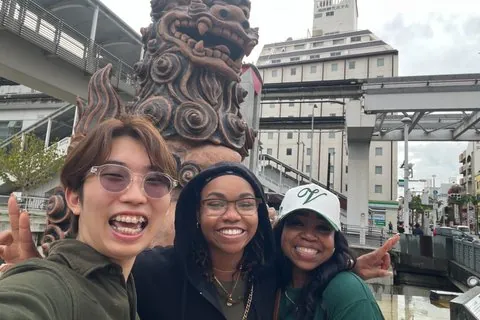
- Okinawa, in Okinawan. Uchinaanchu is an Okinawan person.
- Yamatu やまとぅ
- Mainland Japan — spoken of as a separate place, out of long habit.
- Gusuku グスク
- The Ryukyuan castle form: curved limestone walls, no keep.
- Mensore めんそーれ
- Welcome. You will see it before you leave the terminal.
FAQ
Was Okinawa always part of Japan?
No. The Ryukyu Kingdom was independent from 1429, paid tribute to China from 1372, and was annexed by Japan only in 1879, when the last king was deported to Tokyo. Between 1609 and 1879 it was controlled by the Satsuma domain while still performing Chinese investiture ceremonies — subordinate to two powers at once.
Can you visit Shuri Castle after the fire?
Yes. The main hall burned on 31 October 2019 and has been rebuilt in public view — the scaffolding came down in late 2025 and the vermilion hall stands complete again. Its interior opens to visitors on 23 November 2026; the original stone walls, gates and sacred groves are open throughout.
More from Naha
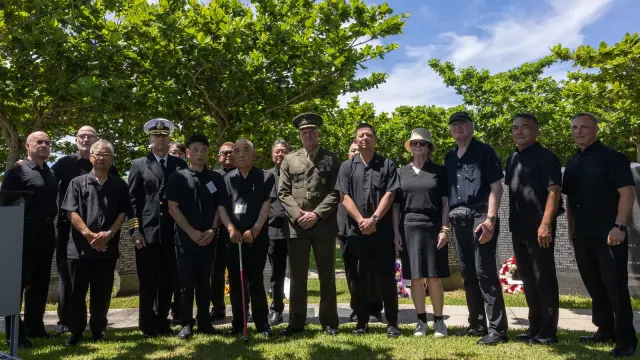
A quarter of the civilian population died here, and the memorial names everyone
Read →
Pottery on one street since 1682, and a dye technique that exists nowhere else
Read →
Six hundred years old, made with Thai rice and a black mould, and it improves for decades
Read →
Pork, bitter melon, wheat noodles called soba — and an honest word about longevity
Read →