
Yachimun and bingata
Pottery on one street since 1682, and a dye technique that exists nowhere else
The kingdom gathered its scattered kilns onto one Naha street in 1682 and they are still there. And its court developed a dyeing method — stencil, rice paste, mineral pigment, tropical colour — that no other part of Japan produced and no other part of Japan could have produced.
Yachimun: three hundred and forty years on one street
Yachimun is simply the Okinawan word for pottery. In 1682 the kingdom consolidated three separate kiln communities into a single district at Tsuboya, in what is now central Naha, to concentrate the craft and the taxation of it. The street is still there and the potters are still on it.
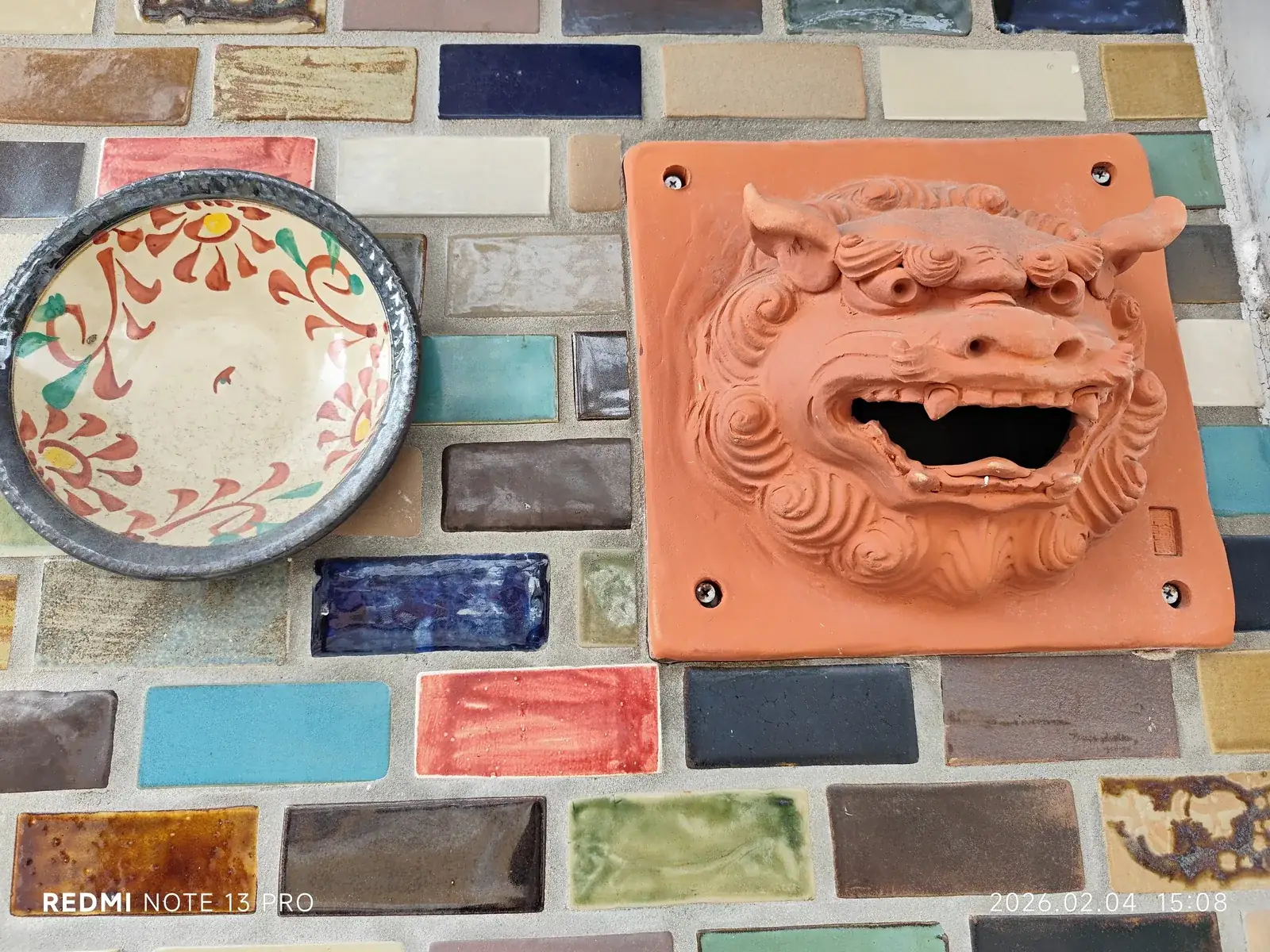
Okinawan pottery is thick, generously glazed, and unbothered. The traditional forms are functional: karakara flasks for awamori, drinking cups, fermentation jars, and the shisa — the lion-dog roof guardians that sit in pairs on every second building in this prefecture, one mouth open to take in good fortune and one closed to keep it from leaving.
A large climbing kiln survives in the district, and the Tsuboya Pottery Museum explains what you are looking at in about forty minutes. But the street itself is the point: two hundred metres of workshops where you can watch the work and buy directly.
Buy a pair of shisa, not one. A single shisa is half a guardian, and every Okinawan who sees it on your shelf will know.
Bingata: the colours a subtropical court could afford
Bingata is a resist-dyeing technique: a stencil is cut, rice paste is pushed through it onto the cloth, and pigment is brushed on and worked into the fibre by hand. The paste is washed out and the pattern remains, in colours nothing on mainland Japan matches — vermilion, indigo, yellow, deep green, all at full saturation.
The patterns mix motifs from everywhere the kingdom traded: Chinese phoenixes, Japanese pines, tropical hibiscus and banana leaf. It is the visual record of a trading state.
Under the kingdom, colour was regulated by rank — the brightest yellows were reserved for royalty, and lesser families were limited to specific palettes. Most historical bingata was destroyed in 1945; the craft was reconstructed after the war by a small number of surviving families working from fragments and memory.
How it happened
- 1682The kingdom consolidates its kilns at Tsuboya
One district, still working
- kingdom eraBingata colour is regulated by rank
The brightest yellow belongs to the royal house
- 1945Most historical bingata is destroyed
Along with almost everything else
- post-warA handful of families rebuild the craft
From surviving fragments and memory
- todayWorkshops on the same street
Watch, then buy directly from the maker
Where this becomes real on your port day
Walk Tsuboya yachimun street after Kokusai-dori, not before. And buy shisa in pairs.

The vocabulary of the crafts
- Yachimun やちむん
- Pottery, in Okinawan. The street name, the craft, the whole thing.
- Shisa シーサー
- Roof guardians in pairs — one mouth open, one closed.
- Bingata 紅型
- Stencil-and-paste resist dyeing. Saturated colour, and Okinawan alone.
- Karakara カラカラ
- The traditional awamori flask. It rattles when empty — hence the name.
FAQ
Where can I buy Okinawan pottery in Naha?
On Tsuboya yachimun street, one block from Kokusai-dori, where the kingdom consolidated its kilns in 1682. It is about two hundred metres of workshops and shops where you can watch the work and buy directly from the maker, plus a pottery museum and a surviving climbing kiln.
What is bingata?
A Ryukyuan resist-dyeing technique: a stencil is cut, rice paste pressed through it onto cloth, and mineral pigment brushed in by hand. It produces saturated vermilion, yellow and indigo found nowhere else in Japan, in patterns that mix Chinese, Japanese and tropical motifs — the visual record of a trading kingdom.
More from Naha
Four and a half centuries as an independent kingdom, and it was not Japan
Read →
A quarter of the civilian population died here, and the memorial names everyone
Read →
Six hundred years old, made with Thai rice and a black mould, and it improves for decades
Read →
Pork, bitter melon, wheat noodles called soba — and an honest word about longevity
Read →