
Eighty-two days
A quarter of the civilian population died here, and the memorial names everyone
The Battle of Okinawa ran from 1 April to 22 June 1945 and killed something on the order of two hundred thousand people. Roughly half were Okinawan civilians — about a quarter of everyone living on the island. The memorial that commemorates them lists the dead of every nationality, on both sides, without distinction.
Okinawa was the only part of Japan where a ground war was fought, and the plan on the Japanese side was not to win it. It was to make the battle long and expensive enough to delay an invasion of the main islands. That strategy was carried out on an island with 450,000 civilians on it.
The fighting moved south, and the civilian population moved south with it, into a shrinking pocket of caves and tombs on the southern tip. Many died in artillery fire. Many were killed by Japanese soldiers who wanted their shelter or suspected them of spying. And thousands died in mass suicides, in some cases after being handed grenades and told what the Americans would do to them.
Around 1,600 places on this island have been recorded as sites of civilian death. The southern third of Okinawa is, in that sense, one continuous memorial.
The Himeyuri students
In March 1945, 222 students and 18 teachers from two girls' schools in Naha were mobilised as a nursing unit and sent into the army field hospitals — cave complexes with no light, no anaesthetic and no way out.
On 18 June, with the army collapsing, the unit was abruptly dissolved and the girls were sent out into the open, into the middle of active combat. Most of the deaths happened after that order. Of the 240 mobilised, 136 died.
The Himeyuri Peace Museum stands at the cave where many of them were killed. It is built around survivor testimony — recorded over decades by the women who lived, specifically so that the account would not depend on them being alive. It is quiet, it is not graphic, and it is extremely hard.
The Cornerstone of Peace
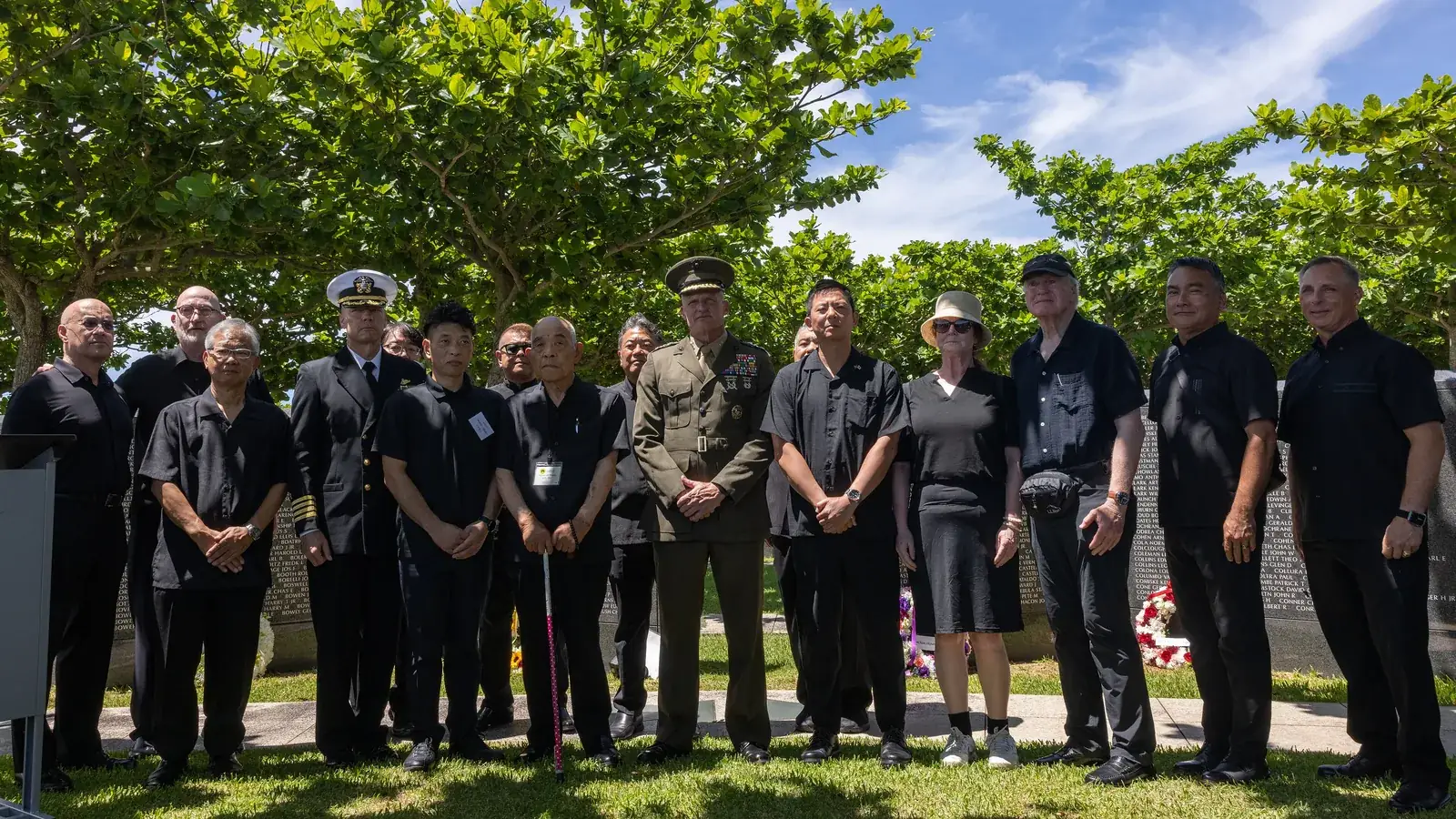
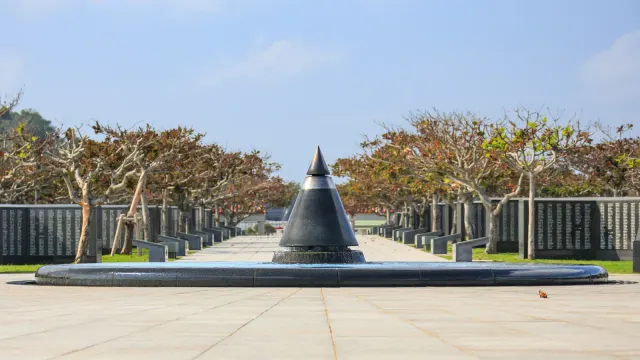
At Mabuni, on the cliffs where the battle ended, stands the Cornerstone of Peace, unveiled in 1995. It is a set of black granite walls radiating outward, and carved into them are the names of everyone known to have died in the battle — over 240,000 names.
Okinawan civilians. Japanese soldiers. American soldiers. British, Korean, Taiwanese. There is no separation by nationality and no separation between the sides. Names are still being added as records are confirmed.
Okinawa marks 23 June as Memorial Day, a prefectural holiday. Schools close. Families come to find a name.
How it happened
- 1 Apr 1945US forces land on the west coast
The largest amphibious assault of the Pacific war
- Apr–JunThe fighting is pushed south
Civilians retreat into caves with the army
- 18 JunThe Himeyuri unit is dissolved
Most of its deaths follow that order
- 22 Jun 1945Organised resistance ends
~200,000 dead; about a quarter of the civilian population
- 1972Okinawa returns to Japanese administration
Twenty years after the rest of the country
- 1995The Cornerstone of Peace is unveiled
240,000+ names, all nationalities, both sides
Where this becomes real on your port day
Give the Peace Memorial Park and Himeyuri three hours together. Neither works as a stop between other stops.
The vocabulary of the battle
- Himeyuri ひめゆり
- The student nurse corps. 240 mobilised, 136 dead.
- Heiwa no Ishiji 平和の礎
- The Cornerstone of Peace. Every name, every nation, both sides.
- Irei no Hi 慰霊の日
- 23 June. A prefectural holiday; schools close and families come.
- Gama ガマ
- A natural limestone cave. Shelter, hospital, and grave.
FAQ
What was the Battle of Okinawa?
The only ground battle fought on Japanese soil, from 1 April to 22 June 1945. Around 200,000 people died, roughly half of them Okinawan civilians — about a quarter of the island's population. Japanese strategy was to prolong the battle rather than win it, on an island holding 450,000 civilians.
What is the Cornerstone of Peace?
A memorial at Mabuni, unveiled in 1995, whose black granite walls carry the names of everyone known to have died in the battle — over 240,000 — with no separation by nationality and none between the two sides. Okinawan civilians, Japanese, American, British, Korean and Taiwanese names stand together, and more are still being added.
More from Naha
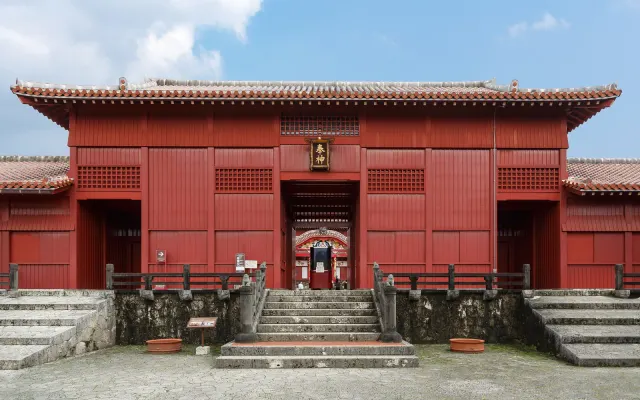
Four and a half centuries as an independent kingdom, and it was not Japan
Read →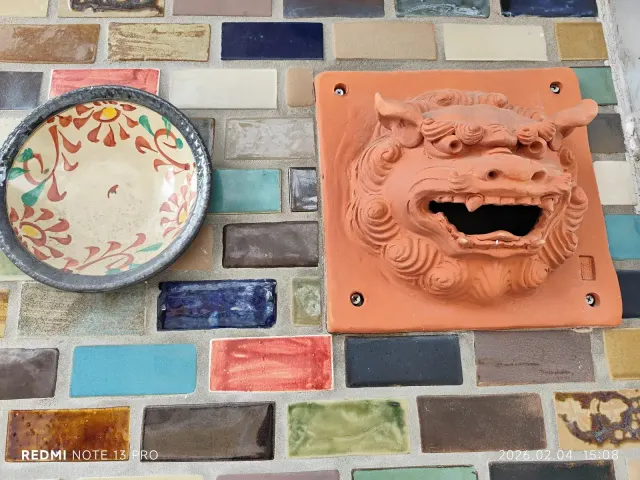
Pottery on one street since 1682, and a dye technique that exists nowhere else
Read →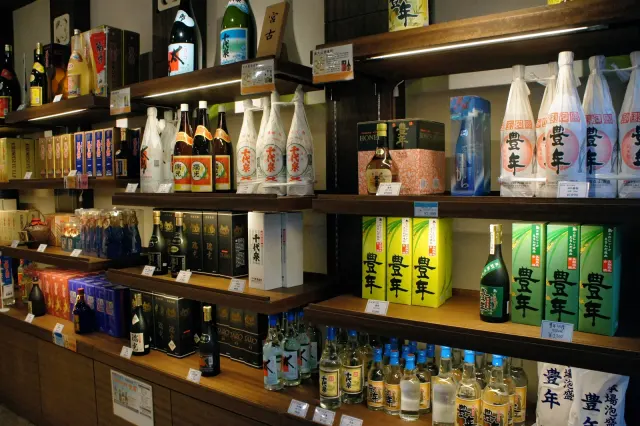
Six hundred years old, made with Thai rice and a black mould, and it improves for decades
Read →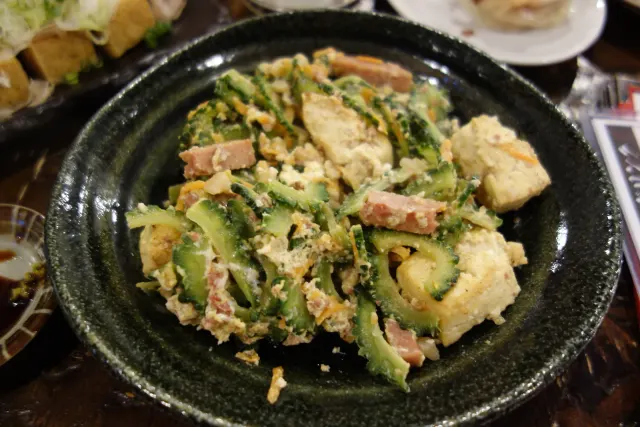
Pork, bitter melon, wheat noodles called soba — and an honest word about longevity
Read →