~1.5h — the round trip from the gangway, with the 60-minute margin kept aside.
Tap a photo to see it large. 6 photographs, each credited.
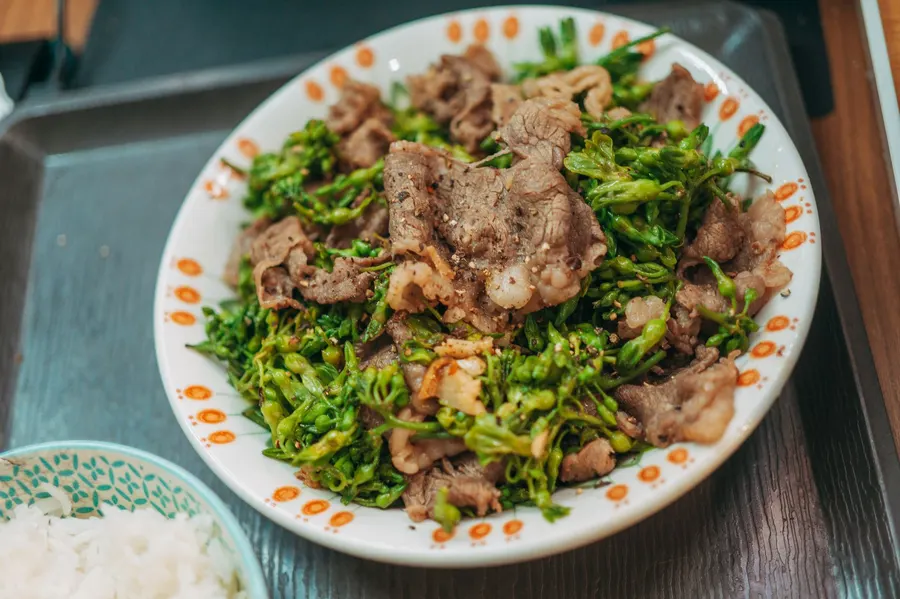
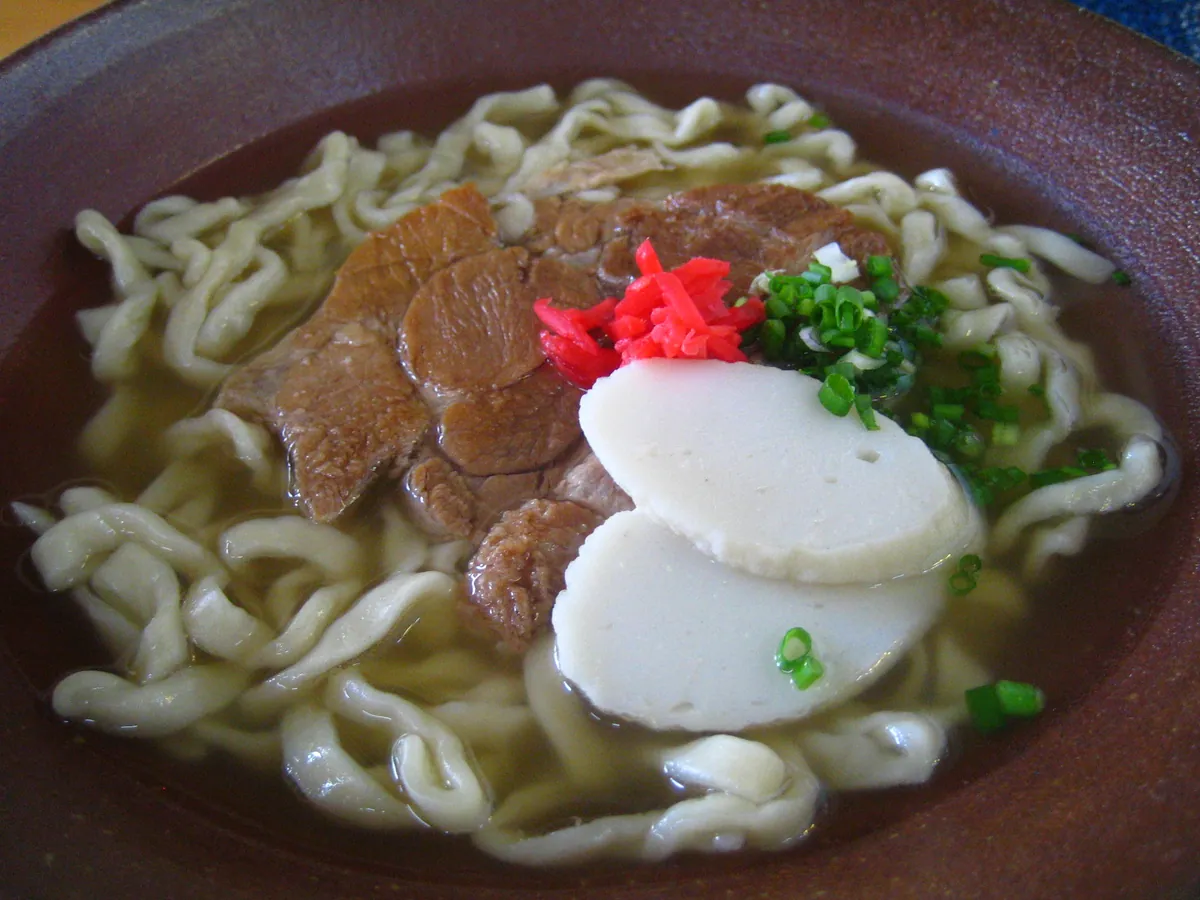
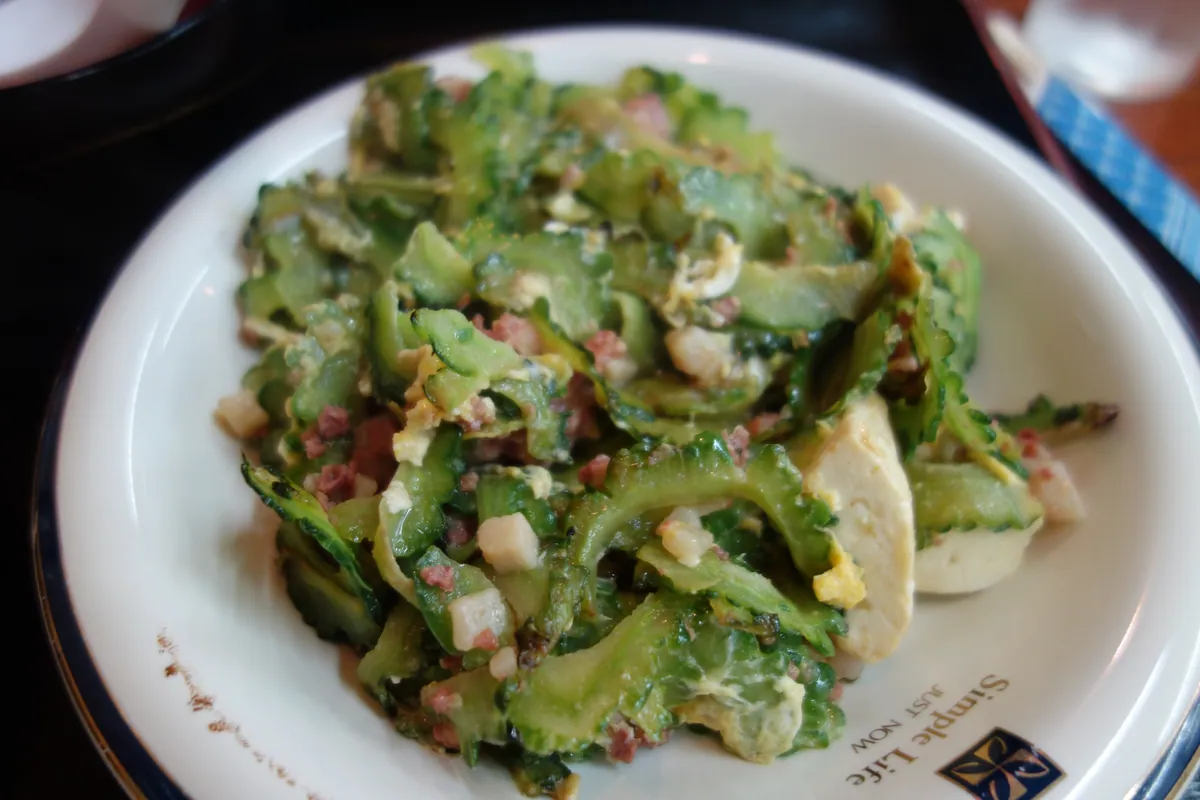
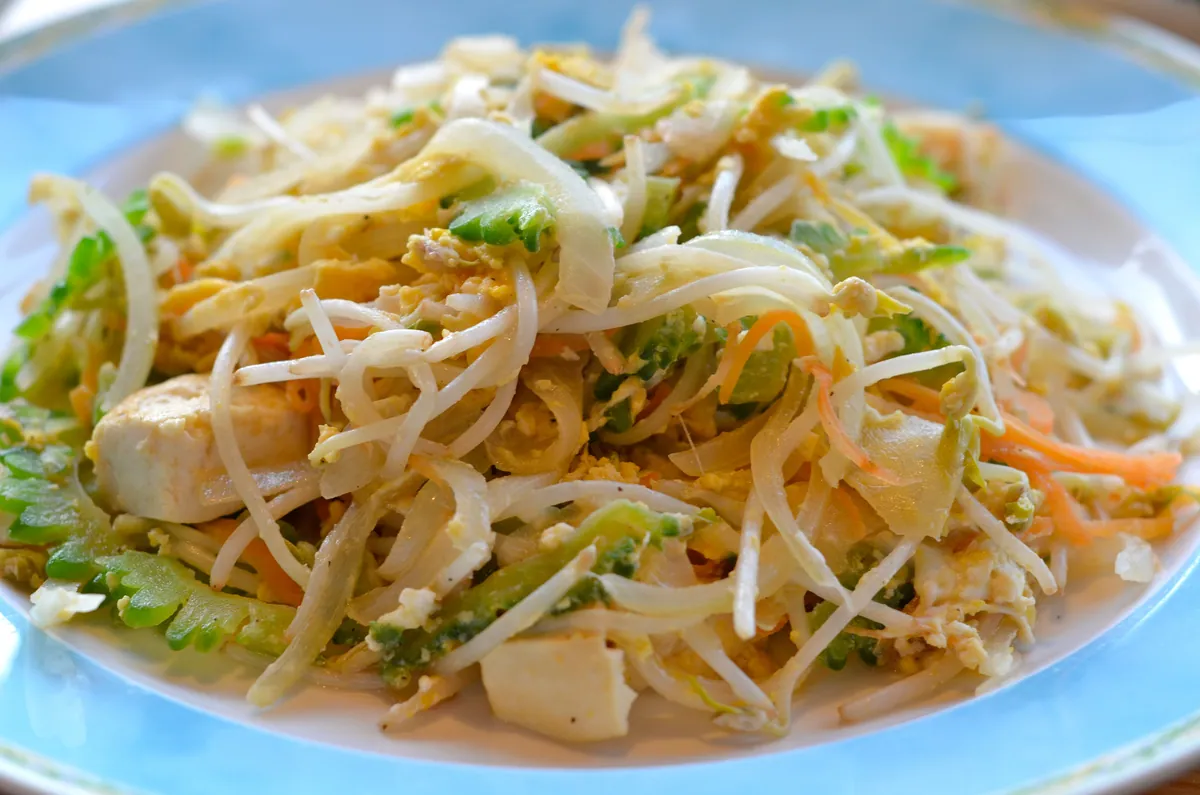
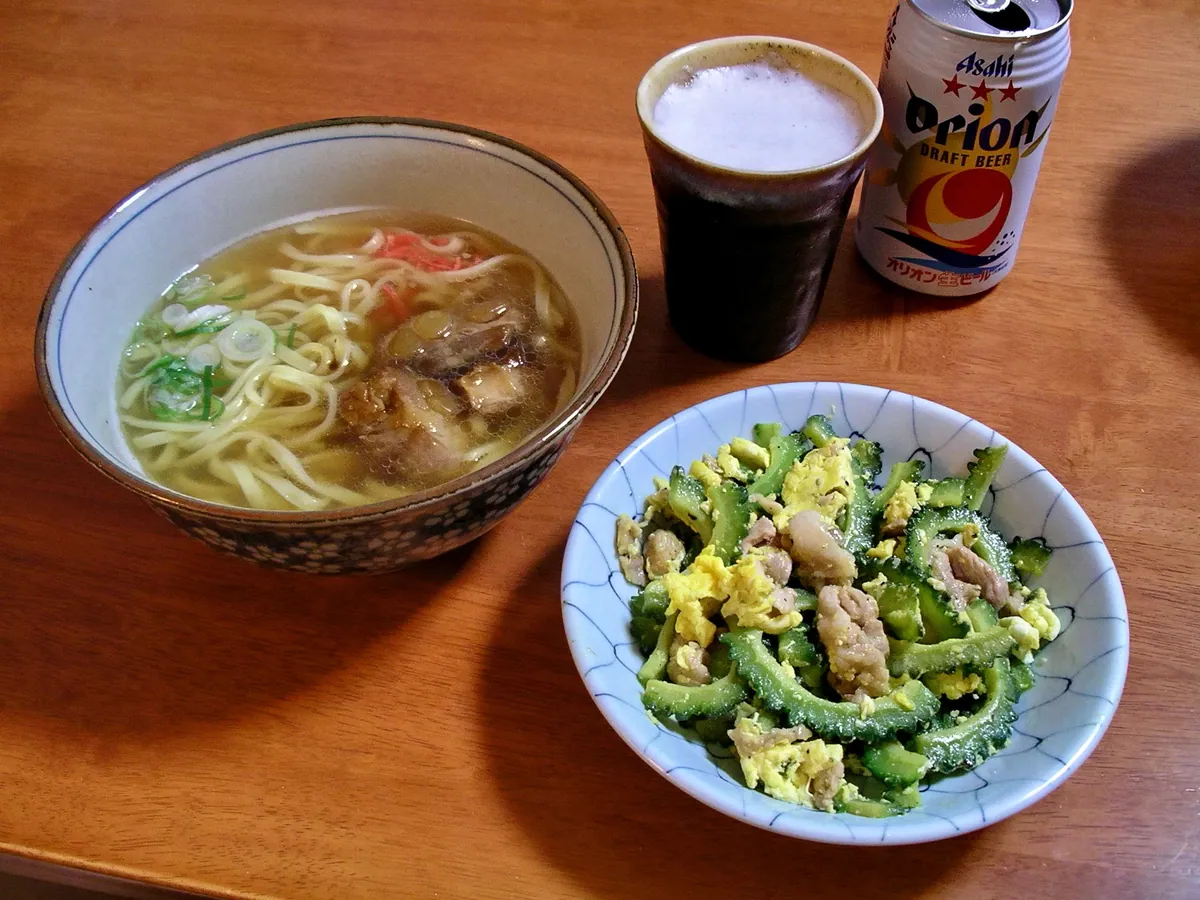
Bitter melon stir-fried with tofu, egg and pork, and thick wheat noodles in pork-and-bonito broth that contain no buckwheat at all. This is a separate cuisine, not Japanese food with a suntan.
Pork, bitter melon, wheat noodles called soba — and an honest word about longevity
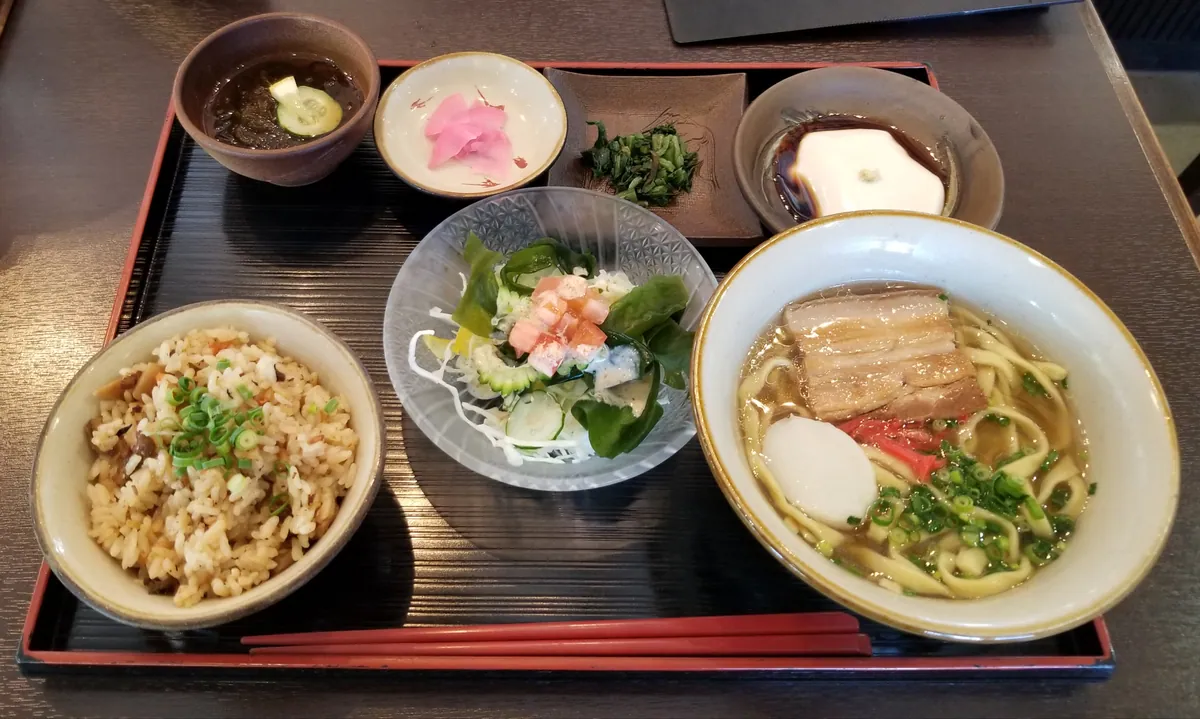
Champuru means mixed up, and goya champuru is bitter melon stir-fried with tofu, egg and pork. Okinawa soba is neither soba nor ramen: wheat noodles in a pork and bonito broth, protected by a 1978 ruling that let it keep the name. Both are everyday food here, not restaurant food.
Okinawan food is not Japanese food with a suntan. It is a separate cuisine built on pork, bitter vegetables and Chinese technique — and the famous longevity story attached to it is true about the past and no longer true about the present.
Stir-frying and braising, five centuries of trade
Sweet potato, vegetables, soy, a little pork and fish
Despite containing no buckwheat. 17 October is Soba Day
Taco rice, canned pork, and a real dietary shift
Goya champuru, Okinawa soba, rafute, umibudo. In Makishi Public Market, upstairs, for about ¥2,000.
The one the queue agrees on, the one people who live here use instead, and the one nearest your ship. Opening days change; check before you build a day around one.
The Okinawa soba most often named, near the castle, and it sells out early most days.
Open in Google MapsWhere locals goTakaesu Soba高江洲そばKnown for yushi-dofu soba, which is the version Okinawans order.
Open in Google MapsClosest to the berthOkinawa Soba Eibun沖縄そば えいぶんIn Tsuboya near the pottery street, and comfortable for a first bowl.
Open in Google MapsBoth pins on one map, so the distance is a fact rather than a feeling.
Each of these still lands you back aboard with the hour to spare on a 6-hour stop ashore.
Each one is a finished day we have walked and timed, with this stop in it. Read the route rather than assembling it yourself.
Each of these still lands you back aboard with the hour to spare.
 2 hr 30 min for both
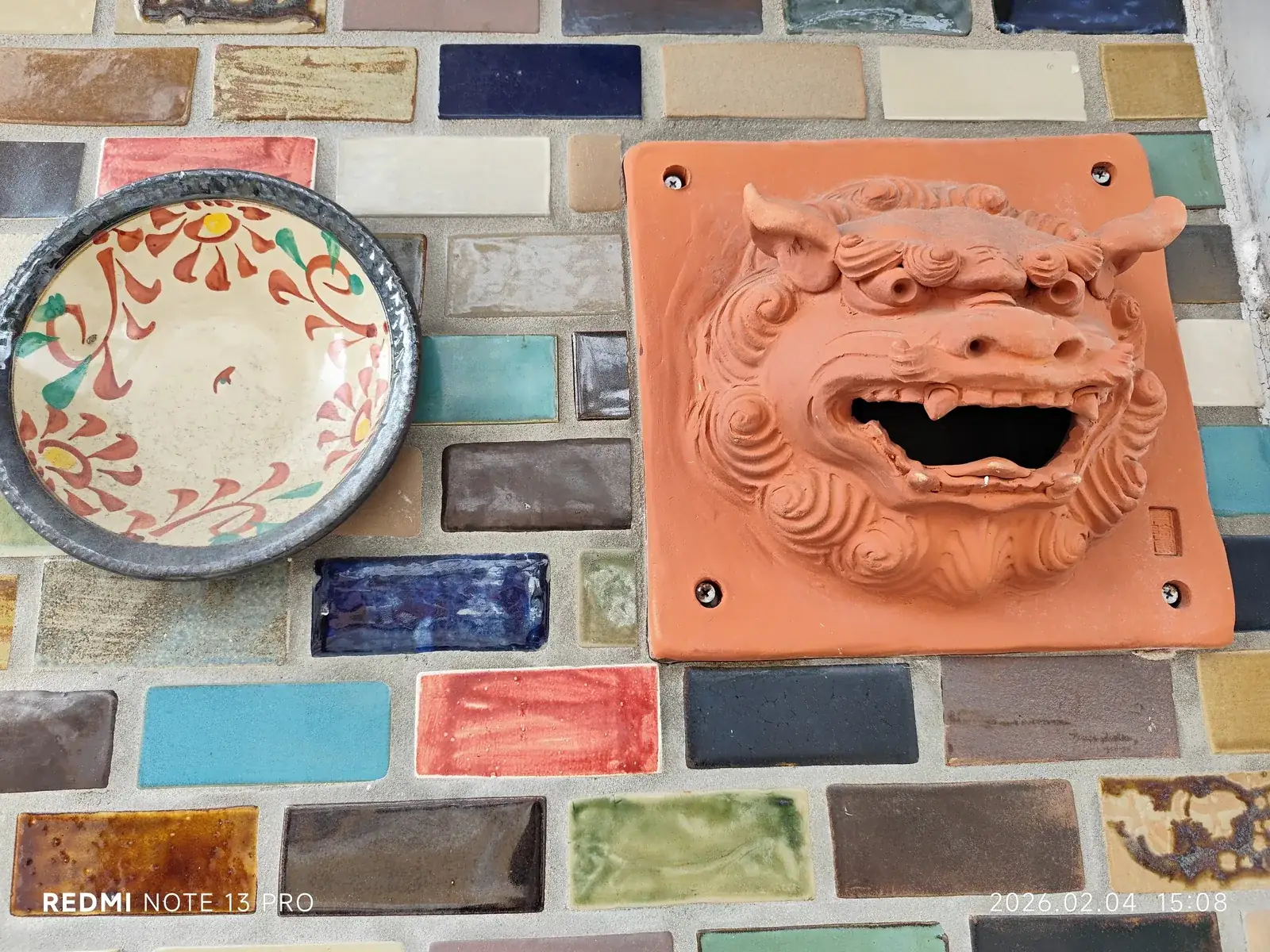
Potters have worked this street since 1682, when the kingdom gathered its kilns here.
See the detail →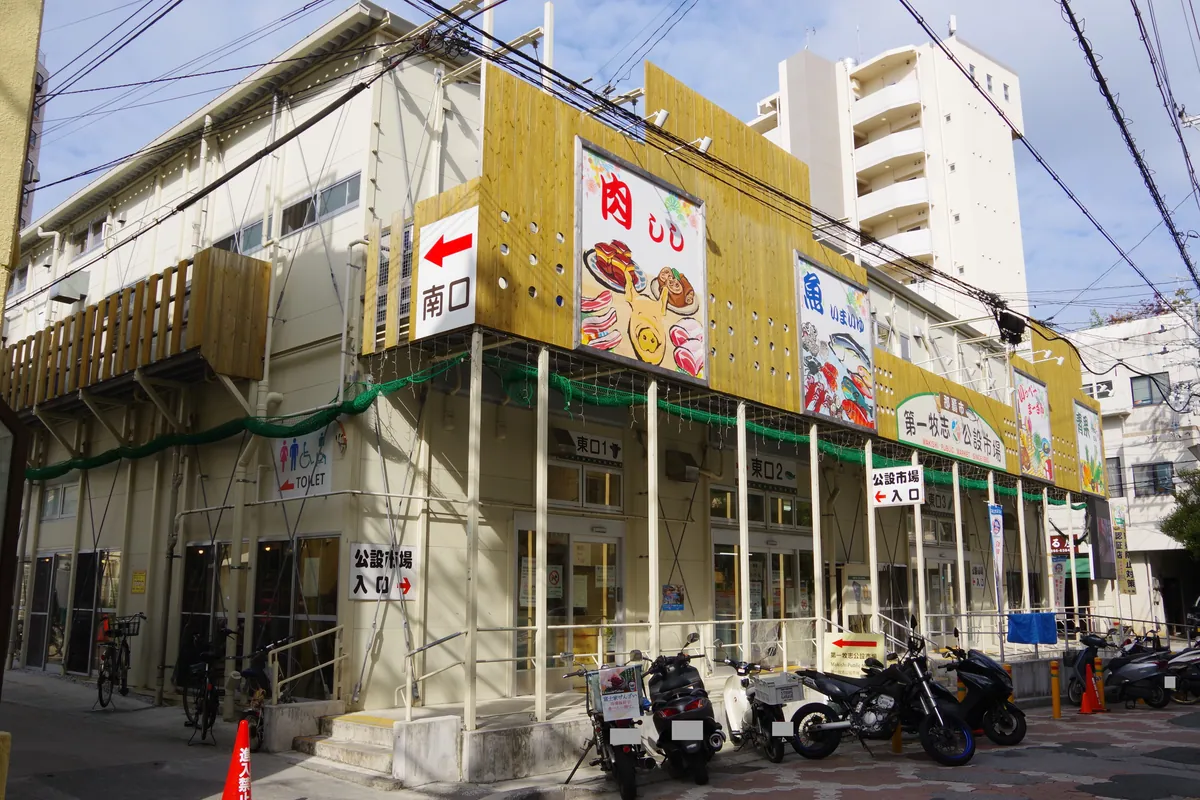 3 hr for both
Okinawa's reef fish are the wrong colours — electric blue, parrot green, hard red.
See the detail →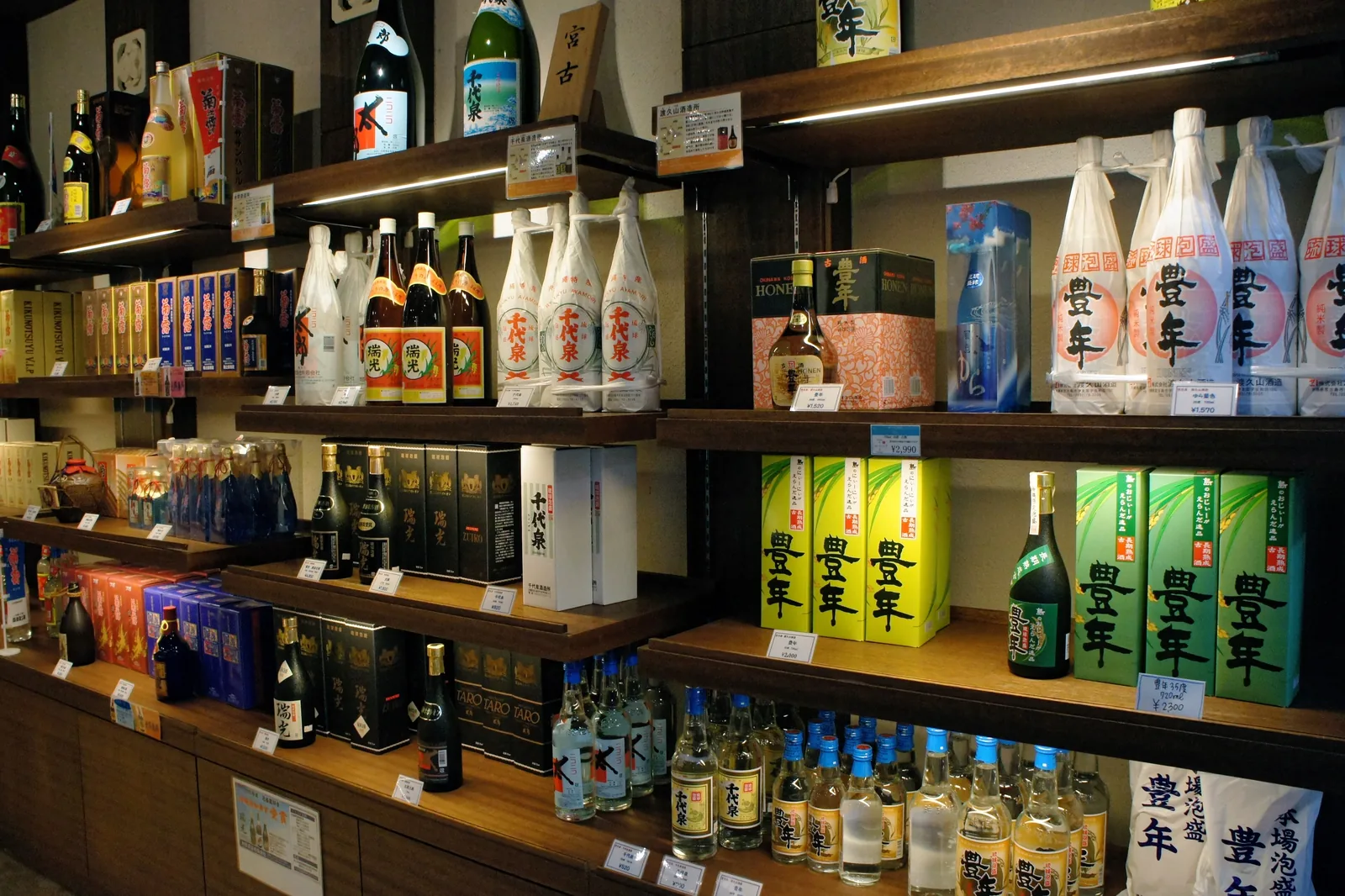 3 hr for both
Six hundred years old, distilled from Thai rice with a black mould, and aged in clay.
See the detail →No typing needed — jump straight in:
Just docked? — the gangway toolStart from your shipThe ride from every berthAsk the editorGlossary