
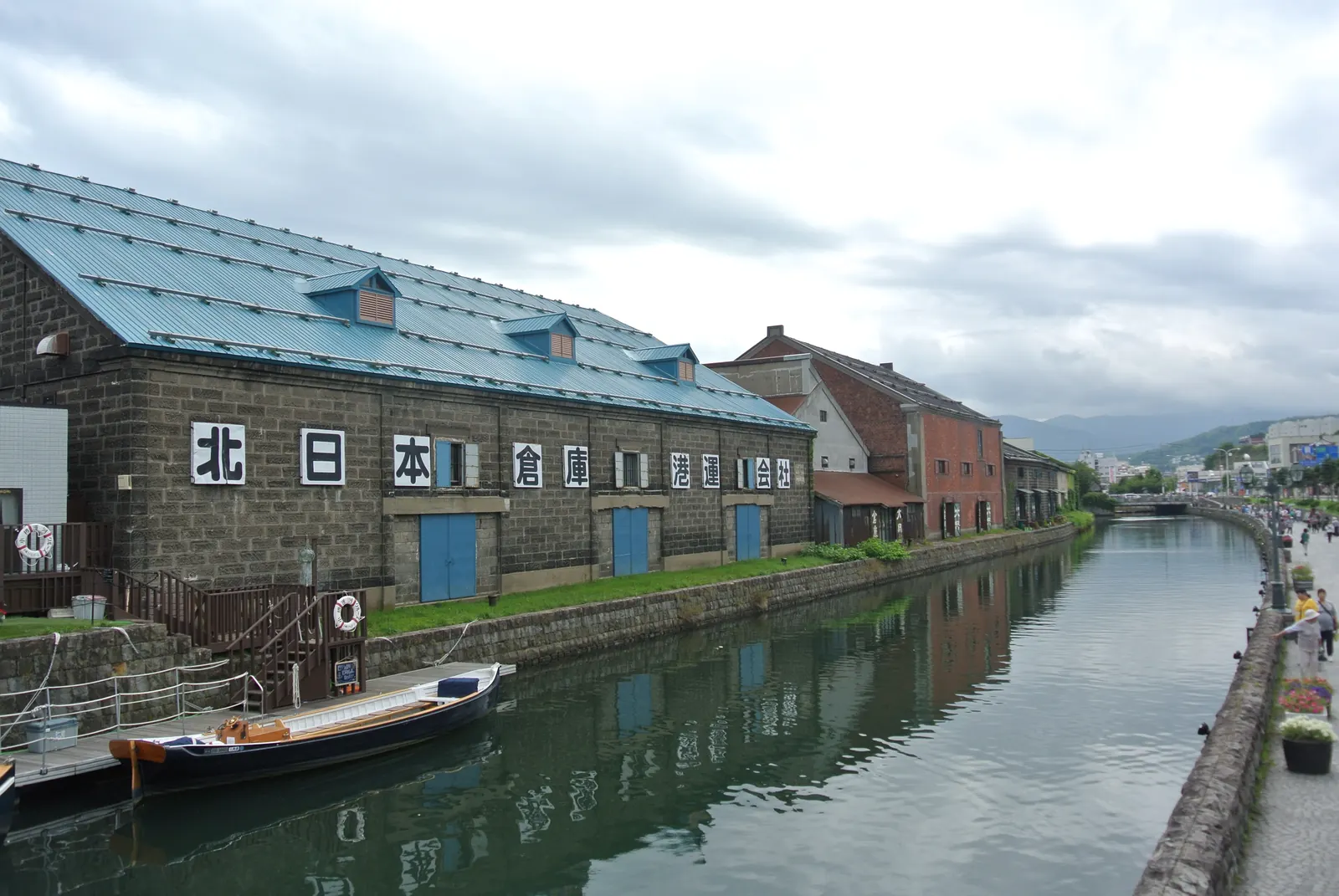
 Photo: Suicasmo / CC BY-SA 4.0
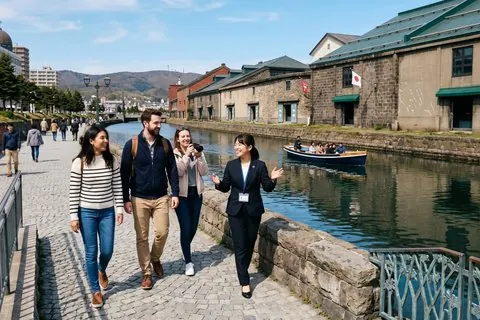
Finished in 1923 on reclaimed land, so that barges could carry cargo from ships anchored offshore straight to the warehouse doors. That is why the warehouses face the water and why the canal is wide — it was a working quay, not a scenic feature.
When lorries replaced barges the canal became derelict, and a plan to fill it in for a road set off a dispute that lasted more than ten years. The outcome was a compromise nobody loved: in 1986 half its width was filled in for the road, and the rest was kept as a promenade with 63 gas lamps. The half you walk beside is the half that survived the argument.
Five things the plaques won't tell you
- Walk the north end, past the tourist stretch — the working warehouses there are unrestored and better.
- Dusk is the photograph. The gas lamps come on and the warehouse brick goes warm.
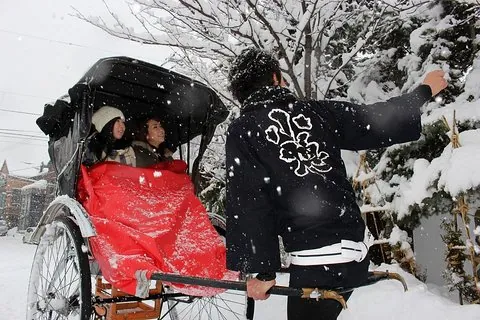
- The rickshaw runners wait at the canal and are genuinely good guides for thirty minutes.
- In February the Snow Light Path festival floats candles on the water. Not a cruise season, but worth knowing.
- The Bank of Japan museum is five minutes inland and free — the herring-money story is told properly there.
The half you walk beside is the half that survived the argument.
Guided days from Otaru
Booked before you sail — there is no tour desk at the pier. Booking through these links supports the site.
More in Otaru
Questions people ask here
How far is the Otaru canal from the cruise berth?
Ten to fifteen minutes on foot — no shuttle, no taxi, no train. Otaru is one of the very few Japanese cruise ports where the main sight is genuinely walkable from the ship.
Why is the Otaru canal so narrow in places?
Because half of it was filled in. The city condemned the derelict canal for a road in the 1960s, a citizens’ movement fought it for about a decade, and the settlement was to pave half and keep half. The landscaped stretch with gas lamps is the surviving half.