
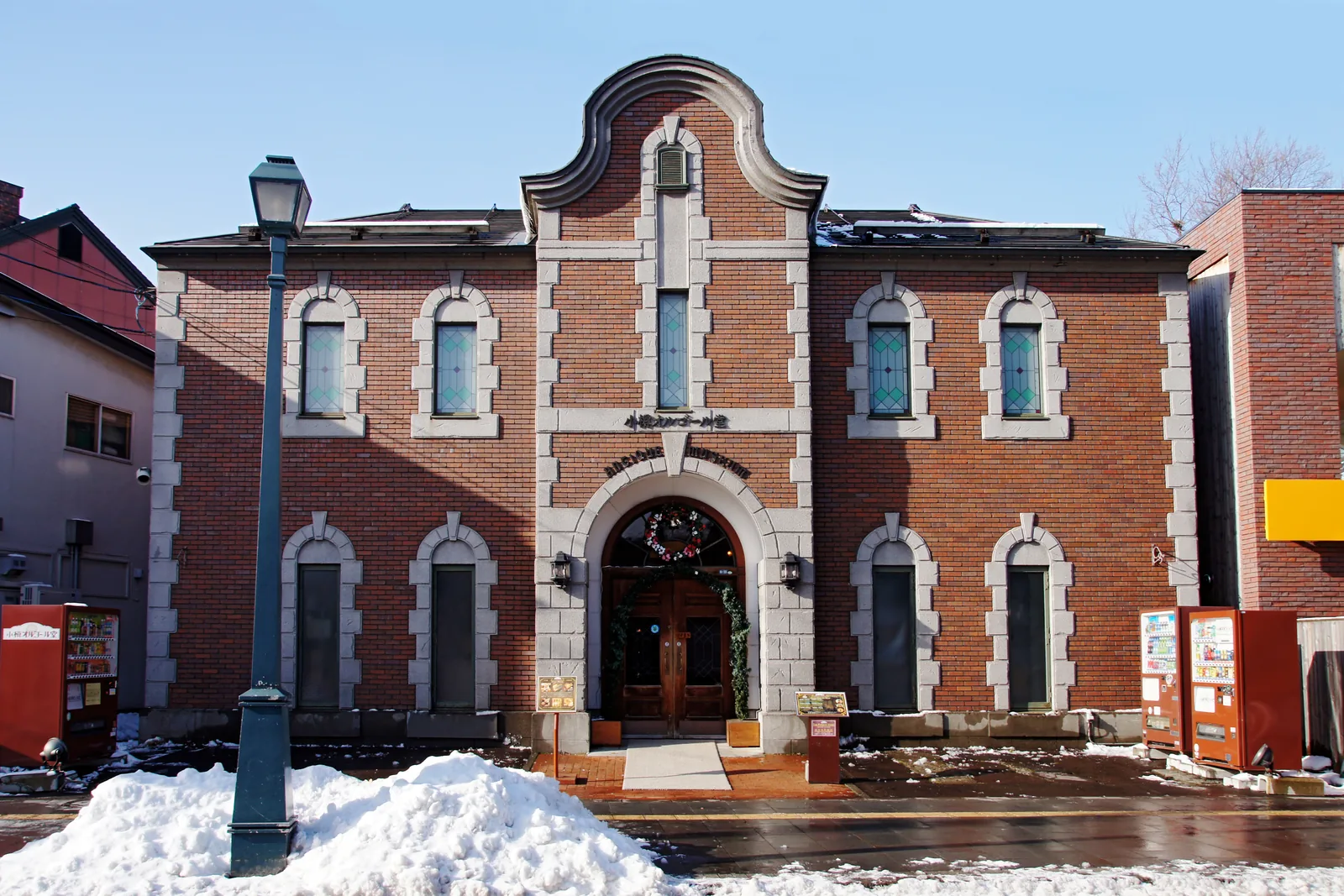
 Photo: 663highland / CC BY 2.5
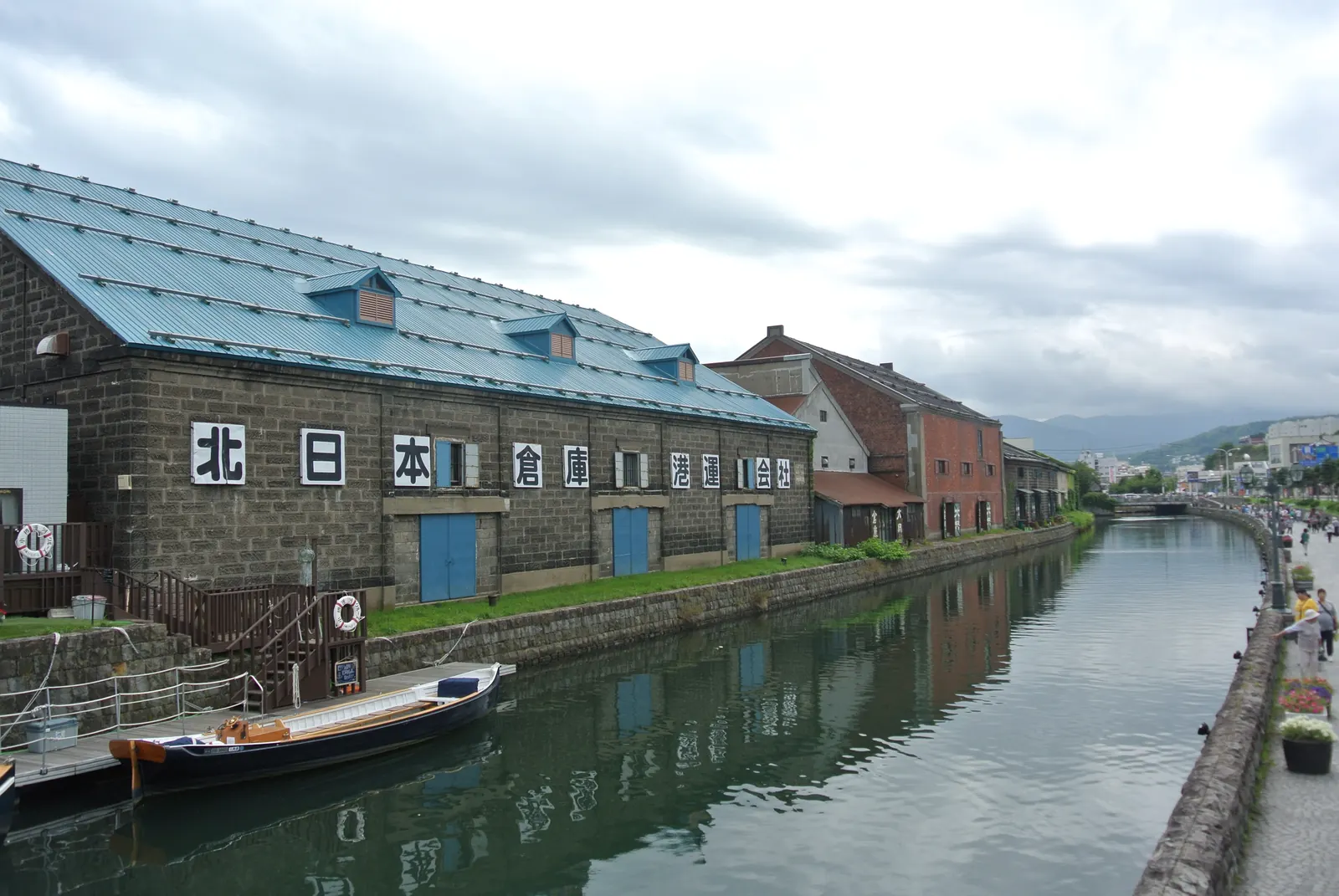
About a kilometre of stone and brick merchant houses from the herring decades, now holding glassworks, music-box makers, patisseries and a great deal of soft-serve. It is unashamedly a shopping street and it is also one of the best-preserved Meiji commercial streetscapes in Hokkaido.
The glass industry is the interesting part. Kitaichi began around 1901 making floats for herring nets and oil lamps for a town with no electricity. Plastic floats and electric light destroyed both products — so the workshop turned to ornament, and an accident of obsolescence became the thing Otaru is now known for.
Five things the plaques won't tell you
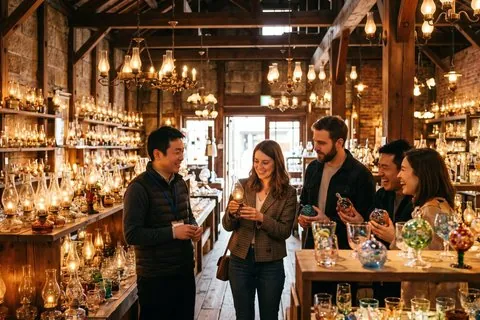
- Kitaichi Glass No.3 is in an 1891 warehouse; its hall is lit by 167 oil lamps, which staff light by hand from 9:00 to 9:30 — you can watch. Order coffee and sit down.
- The Music Box Museum (Orgel-do main building) is in a 1915 brick building with a steam clock outside that sounds every fifteen minutes.
- Walk the whole street rather than the first two hundred metres — the far end is quieter and the shops are better.
- Buy glass at a workshop, not a souvenir counter. The price difference is small and the object is different.
- It is a straight line and the ship is at one end. You cannot get lost here.
Plastic floats and electric light destroyed both products — so the workshop turned to ornament, and an accident of obsolescence became the thing Otaru is now known for.

Guided days from Otaru
Booked before you sail — there is no tour desk at the pier. Booking through these links supports the site.


More in Otaru
Questions people ask here
Why is Otaru known for glass?
Because the industry started with fishing. Workshops here made glass floats for herring nets and oil lamps for a town without electricity. Plastic floats and electric light killed both products, so the workshops turned to decorative glass — and an accident of obsolescence became the craft the town is now known for.
How long is Sakaimachi street?
About a kilometre, roughly twenty minutes on foot from the cruise berth, and it takes ninety minutes to walk properly with stops. Walk the whole length — the far end is quieter and the workshops there are better than the first two hundred metres.