Pick your hours and you get a finished day — every step timed from the gangway and back, and each route says how much room it leaves you before all-aboard. Swap anything you don't fancy.
10 hours, or an overnight ashore · 8 hr 30 min door to door
Two heavyweights
Long calls — Peace Park AND Miyajima, in the right order
On a 9-hour stop that leaves 30 min spare. Comfortable, but do not add to it.
+0:00
Early tram/taxi to Peace Park
Beat the museum opening if you can
+0:45
Museum + park, compressed to 2h
The full version belongs to the half-day plan
+2:45
Tram to Miyajimaguchi (~50 min), ferry across
JR ferry hugs the torii side
+4:00
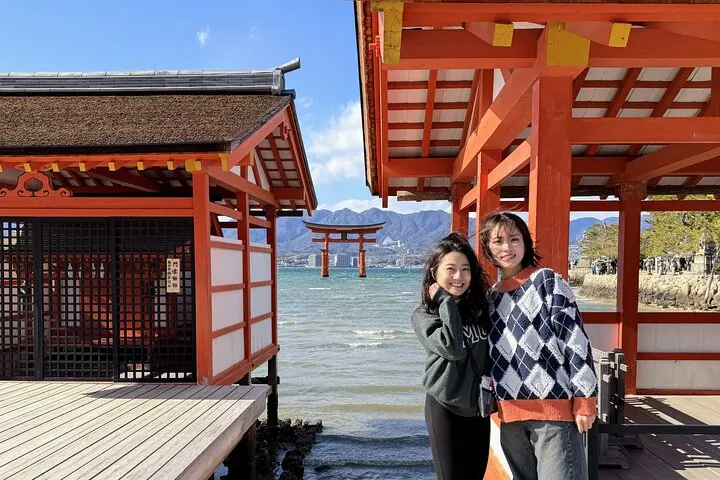
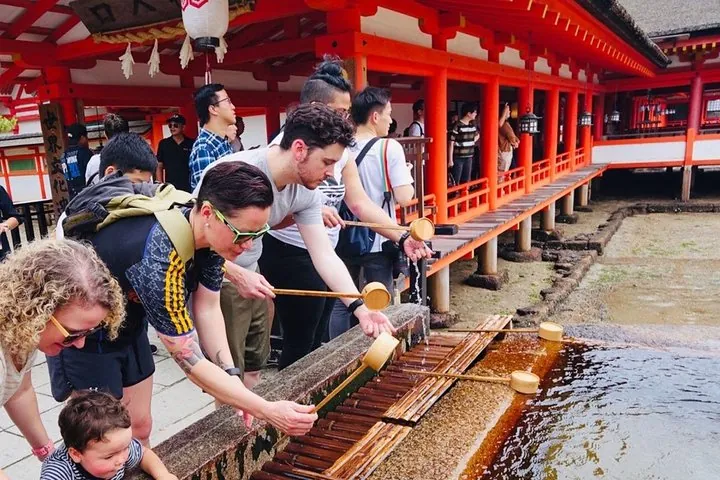
Itsukushima Shrine + Omotesando lanes
Anago-meshi at Ueno by the ferry if the queue allows
+5:30
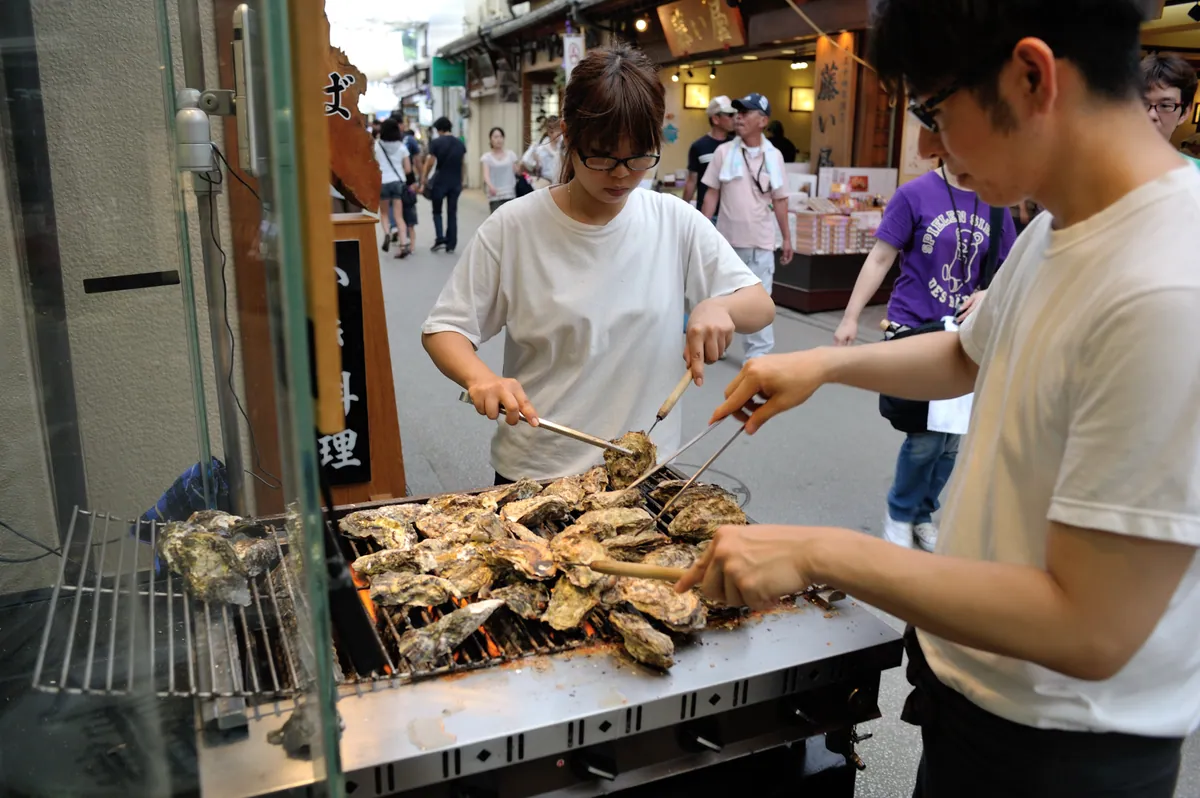
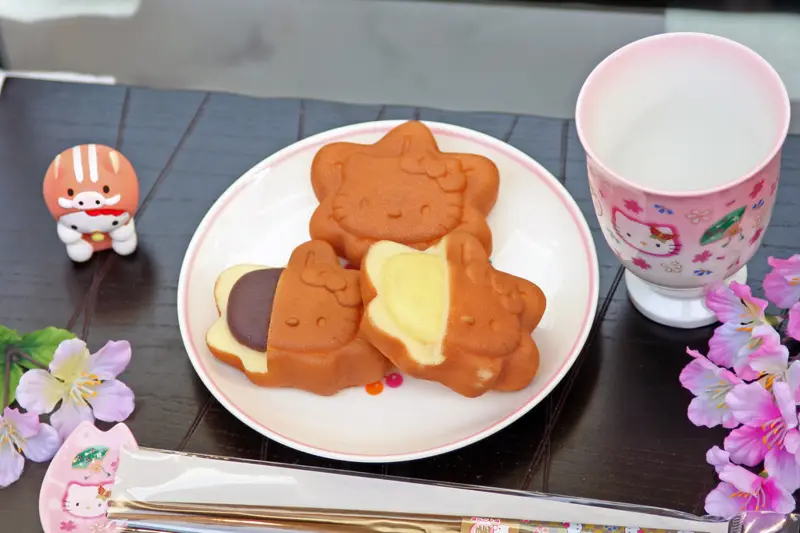
Grilled oysters + momiji manju, fresh-fried
Hayashi grill; Fujiiya bakes in view
+6:15
Ferry + tram/taxi back toward Ujina
This is the leg people misjudge — leave whole hours
+7:45
Back at the gangway
Running late? At 5:30 and still on the island? Skip the shrine interior next time, never the ferry margin — head back NOW.
Transport spend: trams + JR + Miyajima ferry ~¥1,500–2,000 pp; museum ¥200, shrine ¥300, and the ¥100 Miyajima visitor tax collected with the ferry fare. Map, photos and what you will see at each stop →
Rainy day ashore · 5 hr door to door
The rainy-day Hiroshima
Wet weather — the museum, the arcade and a griddle
On a 6-hour stop that leaves 1 hr spare — the full hour this site recommends, and then some.
+0:00
Tram or taxi from Ujina to the Peace Park
About 40 minutes by tram; taxi halves it for four people
+0:45
Peace Memorial Museum
Two indoor hours; the park itself can wait for a gap in the rain
+2:45
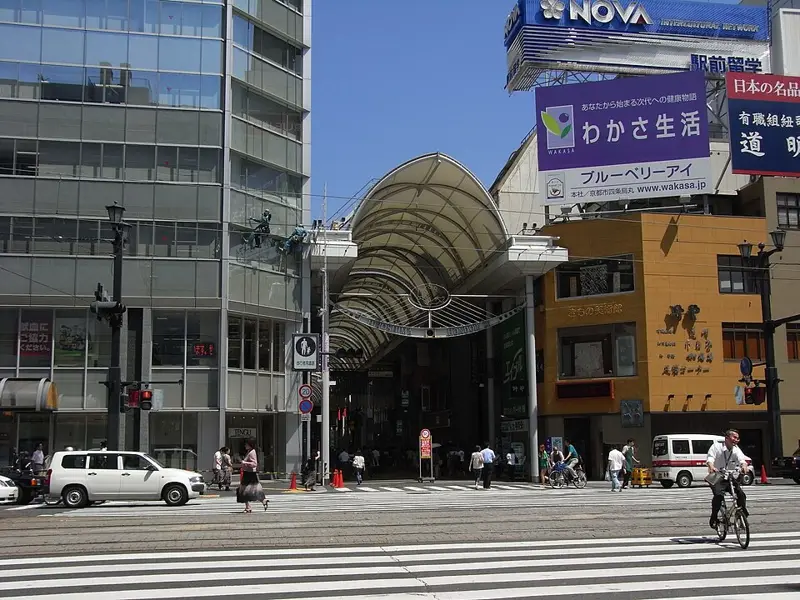
Cross to Hondori — 600 m of covered arcade
The city built a roof over its high street; use it
+3:15
Okonomiyaki at Mitchan or Okonomimura
A hot griddle in front of you is the correct answer to rain
+4:15
Tram back to the port
Running late? Miyajima in heavy rain is a wet ferry and a wet queue — swap it for the arcade without regret.
Round trips are measured from the gangway and include getting back. Two stops in the same direction overlap, so a real day usually comes in under the total you see, never over it.
¥240 flatLine 7: every 10–15 min mornings and late afternoon, about hourly midday · Line 1: every ~12 min all dayIC cards OK
How to get there
① From the Ujina berth: tram Line 7 (toward Yokogawa) from the Hiroshima Port stop — direct to Genbaku-Dome-mae, 35–37 min
Around midday Line 7 runs only about once an hour (weekdays roughly 11:00–14:30). Then take Line 1 instead — every ~12 min — to Hondori or Kamiyacho-higashi (32–34 min) and walk 5–10 min to the Dome and the Peace Park
Suica-type IC works again since July 2026. Line 1 stops two blocks short of the Dome, which is why it is the midday answer rather than the first choice. Line 5 is the fast one to the station.
The one rule: be back on board 60 minutes before all-aboard — every day above already banks it.Phones auto-switch to local time, but all-aboard runs on ship time. Check the daily programme's clock, not your lock screen.More to pick from on the Hiroshima guide and theTop 10.
MY SHIP DAY — fill this in before you walk off
Ship
Date
Docked at (berth)
All-aboard (SHIP time)
My deadline = all-aboard − 60 min
Last shuttle back
Phones auto-switch to local time; all-aboard runs on ship time. Write both if they differ.
GETTING AROUND — the facts that don't change by day (today's times: ship's program or Google Maps)
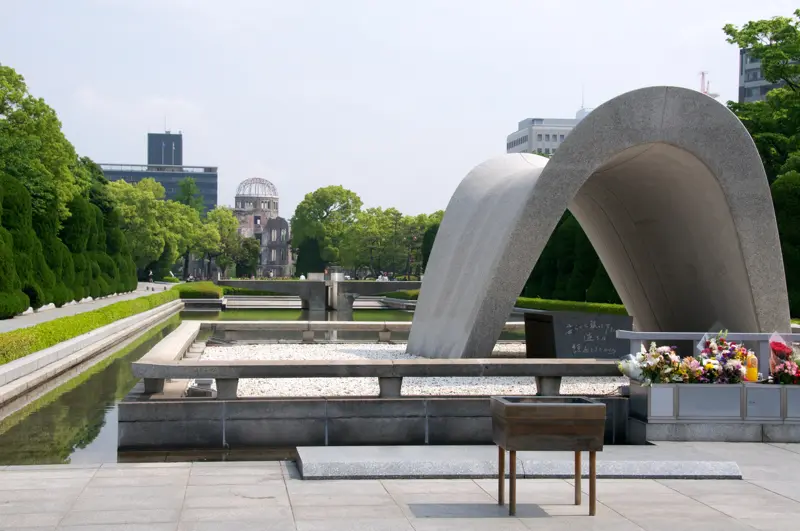
A-Bomb Dome & Peace Park: ① From the Ujina berth: tram Line 7 (toward Yokogawa) from the Hiroshima Port stop — direct to Genbaku-Dome-mae, 35–37 min Around midday Line 7 runs only about once an hour (weekdays roughly 11:00–14:30). Then take Line 1 instead — every ~12 min — to Hondori or Kamiyacho-higashi (32–34 min) and walk 5–10 min to the Dome and the Peace Park Fare ¥240 flat. Line 7: every 10–15 min mornings and late afternoon, about hourly midday · Line 1: every ~12 min all day.
Hiroshima Station: ① Line 5 via Hijiyama — 29 min, the fastest way Fare ¥240. every ~12 min.
From the Itsukaichi berth: ① Taxi to Itsukaichi Station (~6 min — nothing at the wharf is walkable) ② JR (~¥240) or the Hiroden tram (¥240 flat) into the city
SHOW THIS TO A TAXI DRIVER — 運転手さんへ
Please take me back to the cruise ship (Hiroshima port)
クルーズ船乗り場までお願いします
Peace Memorial Museum & Dome
広島平和記念資料館
Miyajima & Itsukushima shrine
厳島神社
Hondori arcades
広島本通
Shukkei-en garden
縮景園
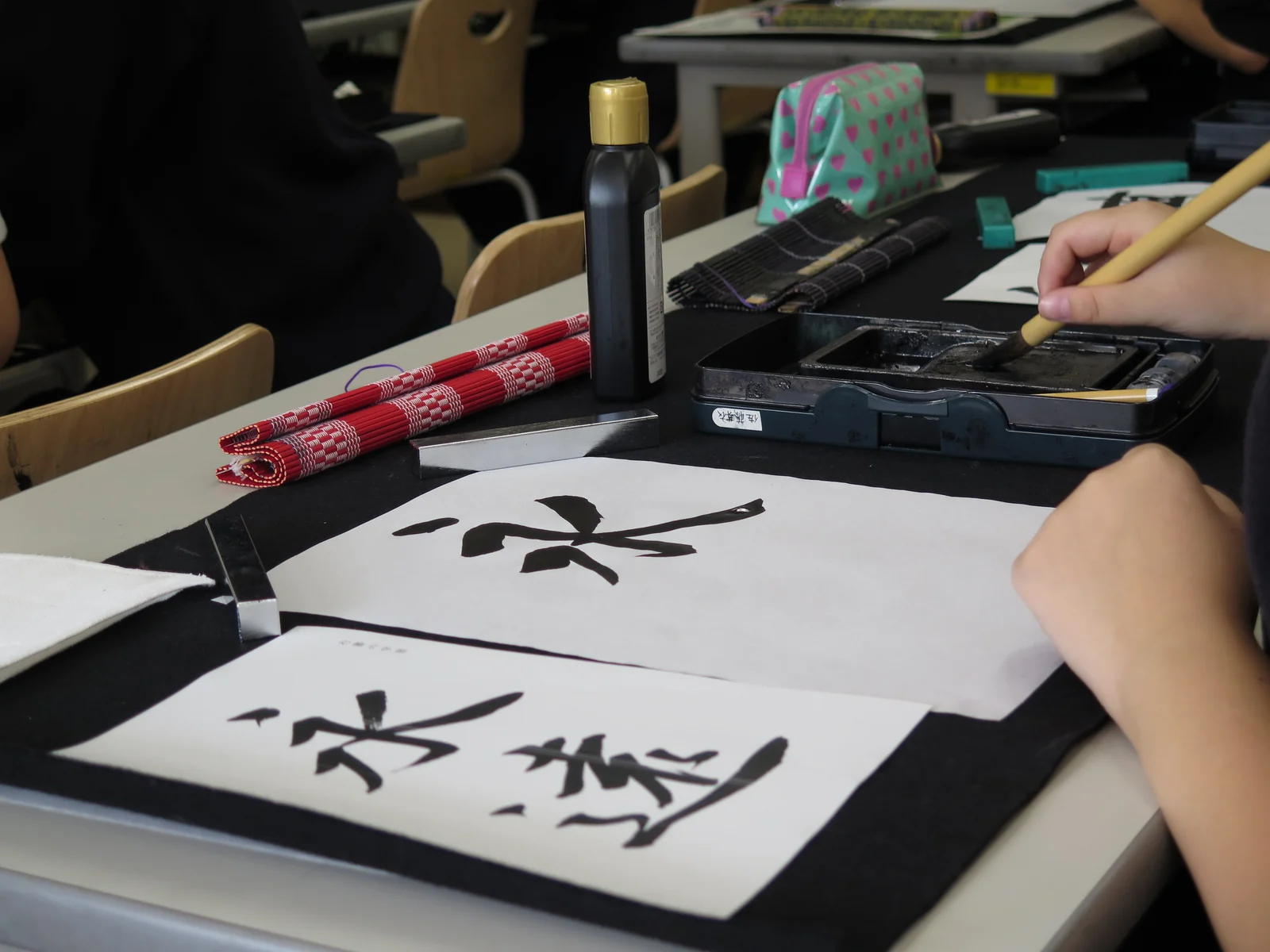
Kumano brushes
熊野筆
Point at a line. Taxis are metered and honest; tipping is not expected in Japan.
THE TWO-MINUTE PORT TALK — read aloud at breakfast
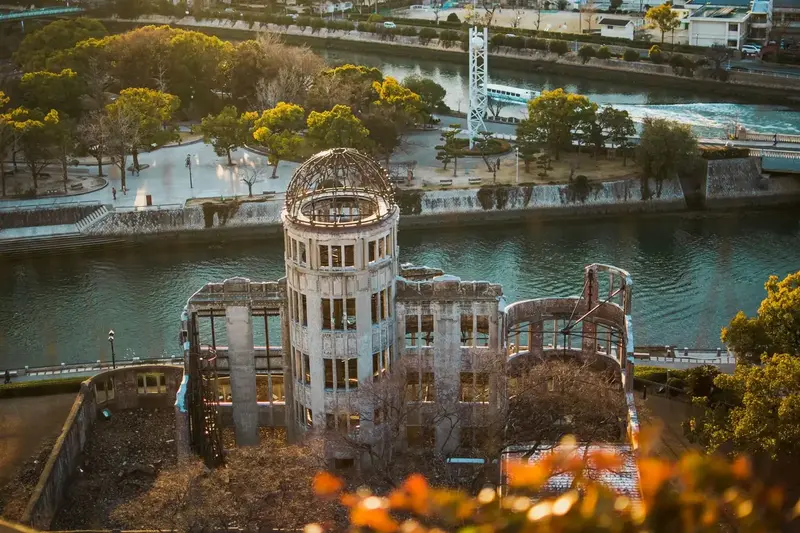
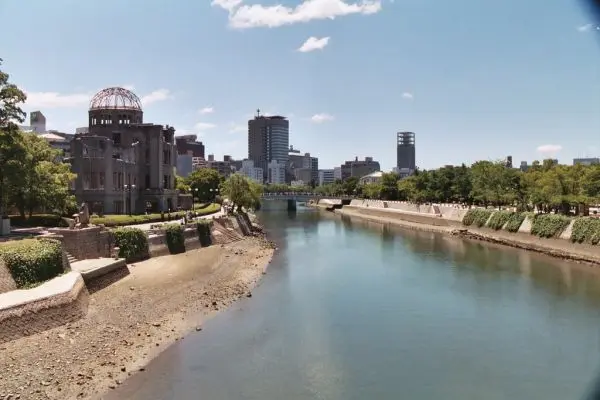
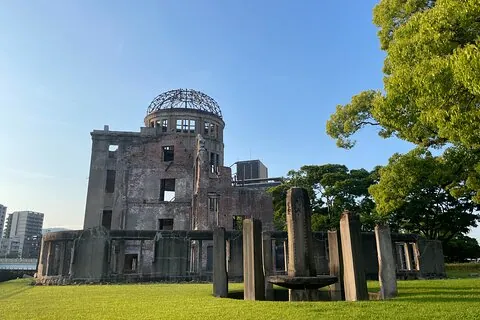
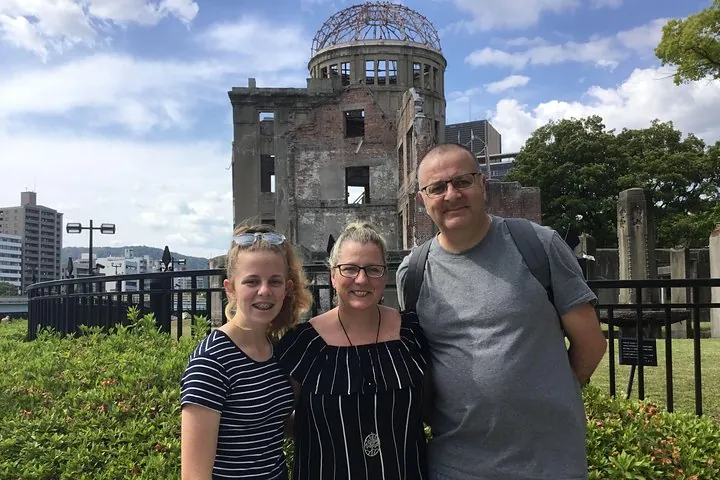
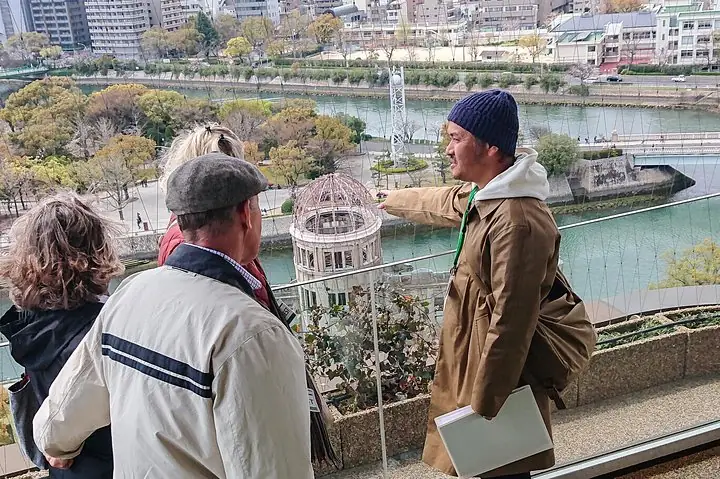
August 6, 1945. Almost directly beneath the detonation, one building kept its walls — because the blast came straight down on it rather than across. That accident of geometry is why you can stand in front of it today.
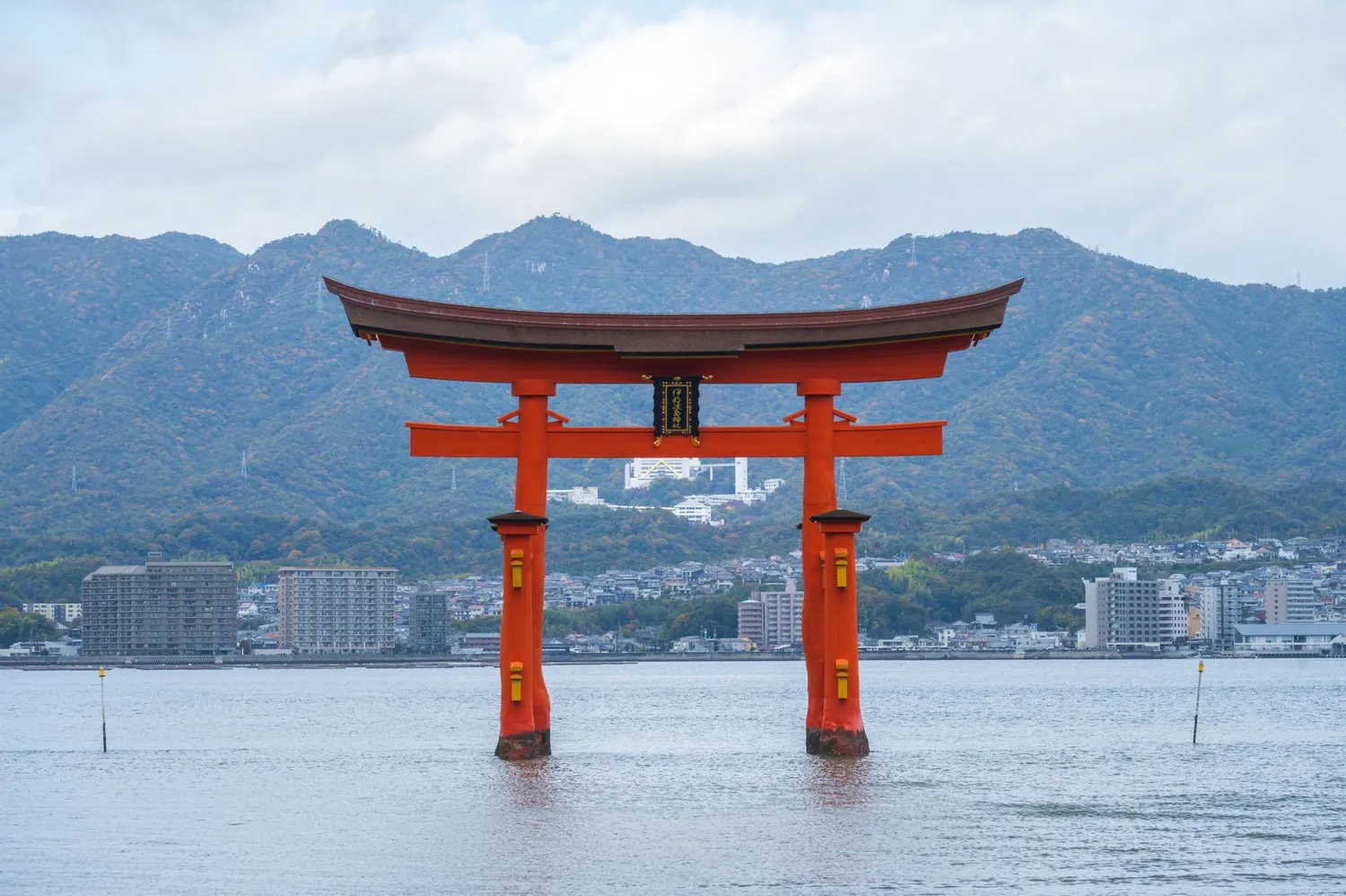
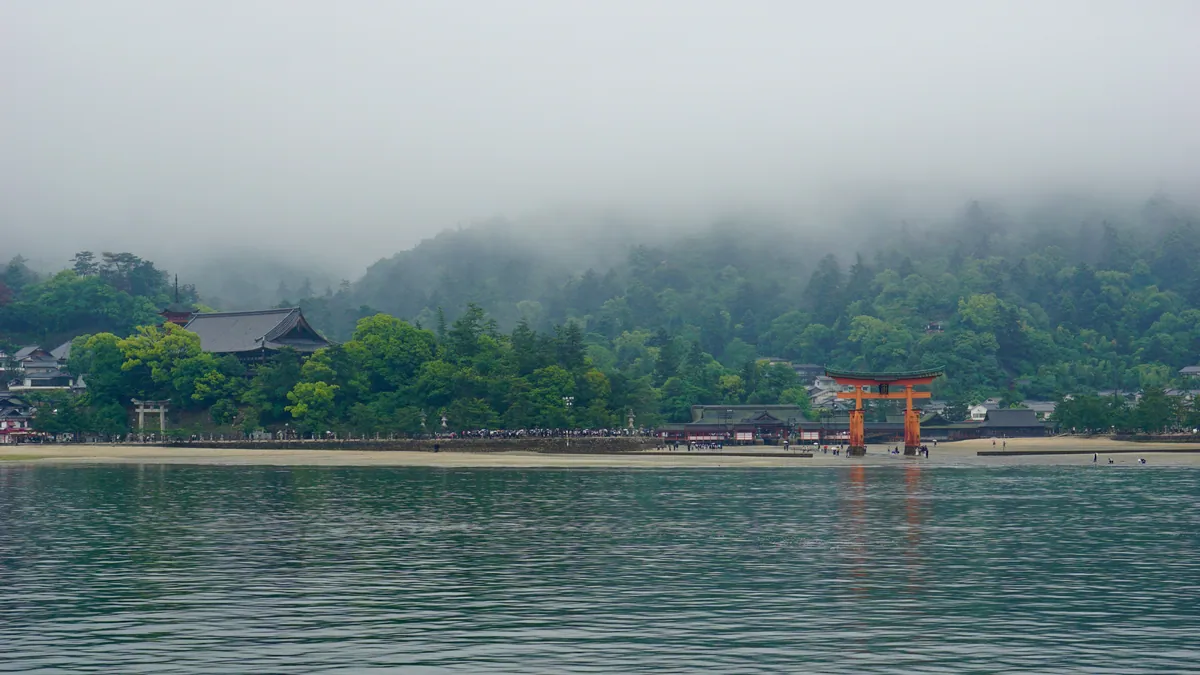
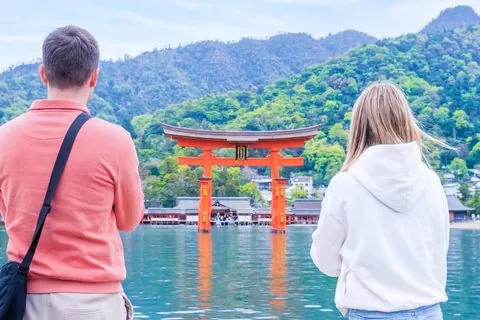
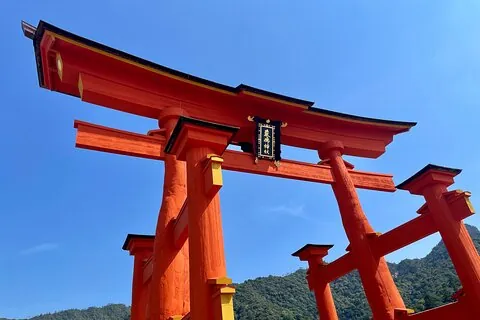
Miyajima. The gate stands in the sea and the shrine floats on stilts for one reason: the island itself was the deity, and no commoner was permitted to set foot on it. So they built the approach on the water instead.
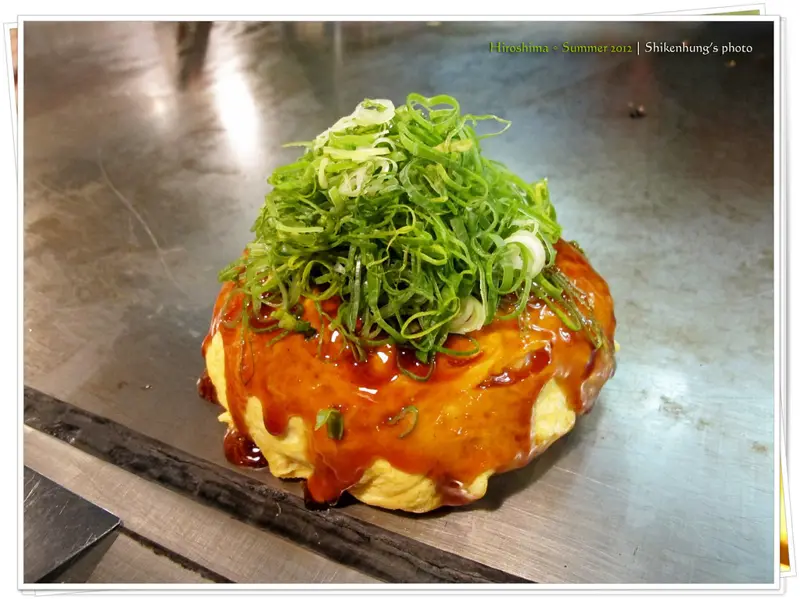
Okonomiyaki. Osaka mixes it. Hiroshima layers it — cabbage piled absurdly high on a paper-thin crêpe, pressed down as it cooks, with a nest of noodles underneath. The difference started as poverty and became an identity.
Oysters & the Inland Sea. The Seto Inland Sea is the reason. Enclosed, shallow, fed by rivers off the mountains and barely troubled by swell — the perfect nursery. Hiroshima has been farming oysters in it since the 1500s and now grows most of the country's supply.
The one rule: be back on board 60 minutes before all-aboard — every plan above already banks it. · Free guide: port-of-japan.com/hiroshima/ · By Takumi Yamada, Tokyo, Japan