Tap a photo to see it large. 3 photographs, each credited.
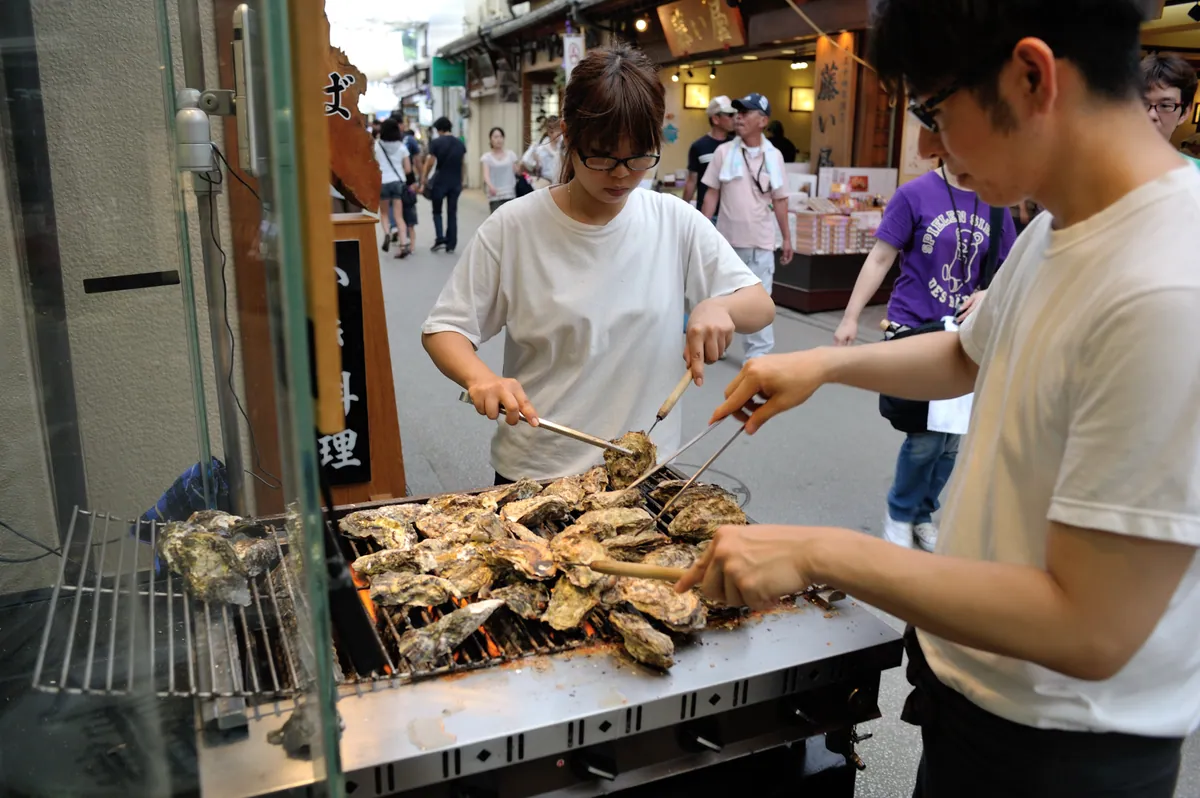
Fat Hiroshima oysters over charcoal, in the shell, two for pocket change. Yakigaki no Hayashi is the famous grill — the queue is the correct one.
Hiroshima produces around 60 percent of Japan's oysters, farmed on rafts in the Inland Sea. On Miyajima they are grilled in the shell at the roadside and eaten with the shell as the plate. The season is winter, but the grills run most of the year.
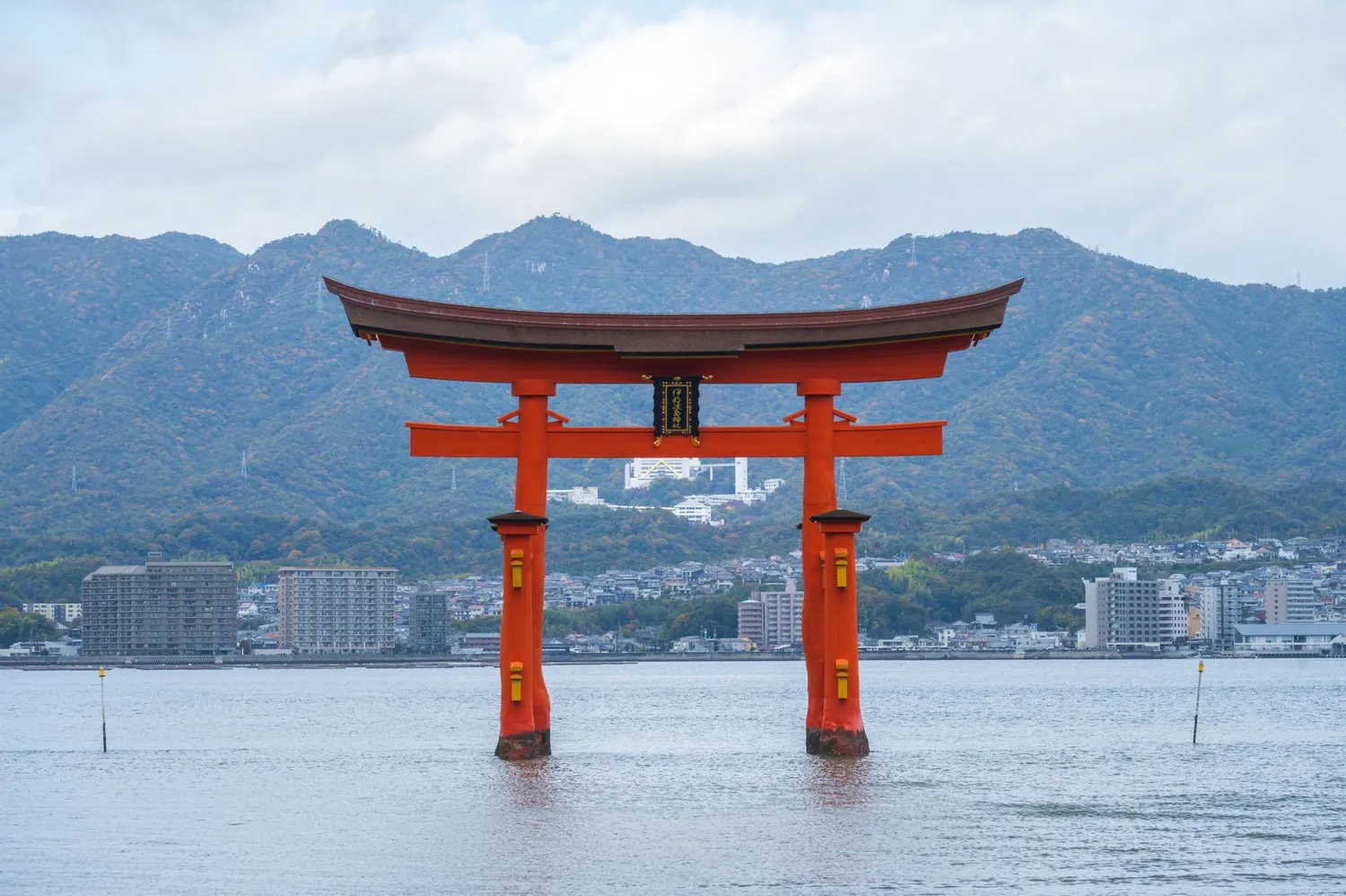
The island itself was the deity, so commoners could not set foot on it — and the shrine was therefore built on piles over the tidal flat, with its great torii standing in the sea. Worshippers arrived by boat and passed through the gate on the water without ever touching sacred ground.
A shrine has stood here since at least 593; the form you see was built by Taira no Kiyomori in 1168 as a Heian aristocratic mansion over the sea. The current torii is the ninth, raised in 1875, about 16 metres tall, held in place by nothing but its own weight.
The one the queue agrees on, the one people who live here use instead, and the one nearest your ship. Opening days change; check before you build a day around one.
On Miyajima since 1950, grilling oysters in the shell. The shell is the plate.
Open in Google MapsWhere locals goKakiya牡蠣屋On the same street, and the one that treats the oyster as the whole menu.
Open in Google MapsClosest to the berthOmotesando shotengai宮島表参道商店街The covered street from the pier to the shrine, with grills on both sides.
Open in Google MapsBoth pins on one map, so the distance is a fact rather than a feeling.
About two hours each way door to door — tram or taxi to Miyajimaguchi, then a ten-minute ferry — plus three hours minimum on the island. It works on an eight-hour stop ashore, is a straight either-or against the Peace Park on six, and does not fit a short call at all.
Different, not better. High tide gives the floating shrine of the photographs; low tide lets you walk several hundred metres out and stand beneath the torii itself. Check the tide table for your date and pick your ferry accordingly.
Each one is a finished day we have walked and timed, with this stop in it. Read the route rather than assembling it yourself.
Each of these still lands you back aboard with the hour to spare.
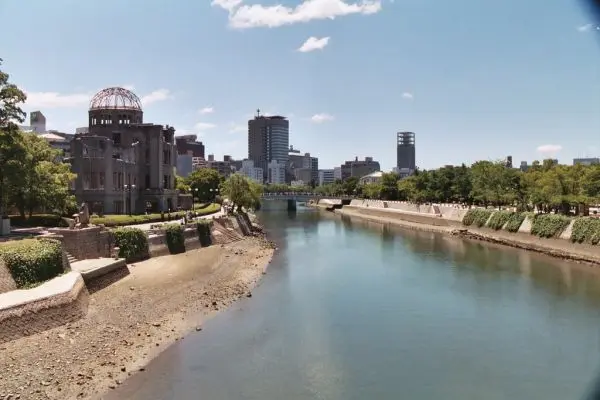 See · ~4h with tram
The reason your ship stops here.
See the detail →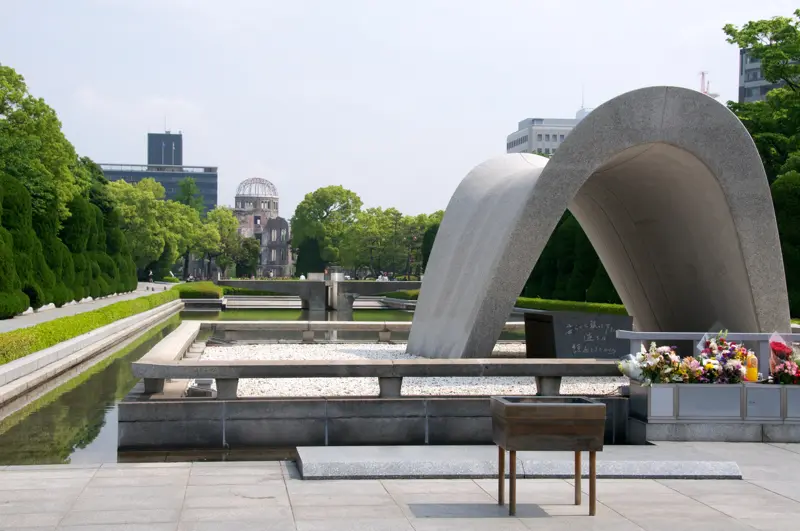 See · ~6h door to door
The vermilion gate in the sea, deer on the sand, oyster smoke in the lanes.
See the detail →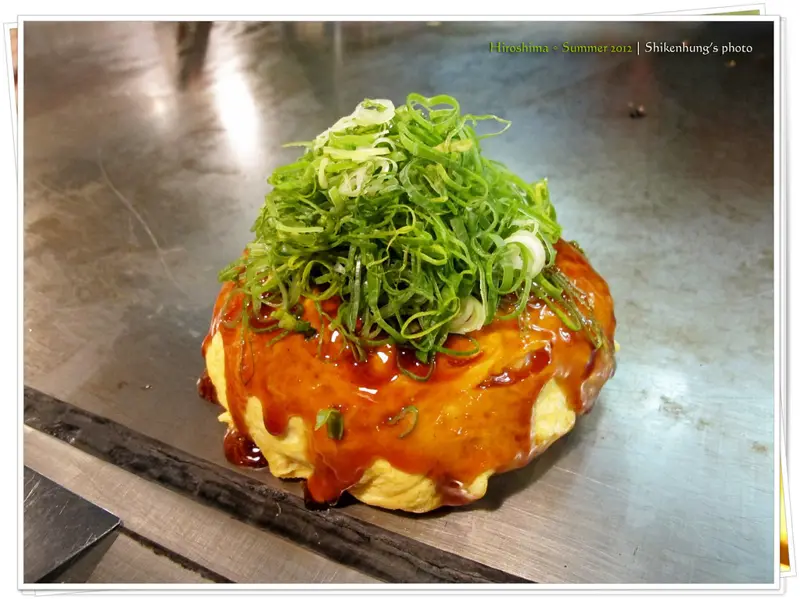 Eat · ~3h
Hiroshima-style means layers, not batter — cabbage, soba, egg, and the founder’s sauce.
See the detail →No typing needed — jump straight in:
Just docked? — the gangway toolStart from your shipThe ride from every berthAsk the editorGlossary