
 1 / 3
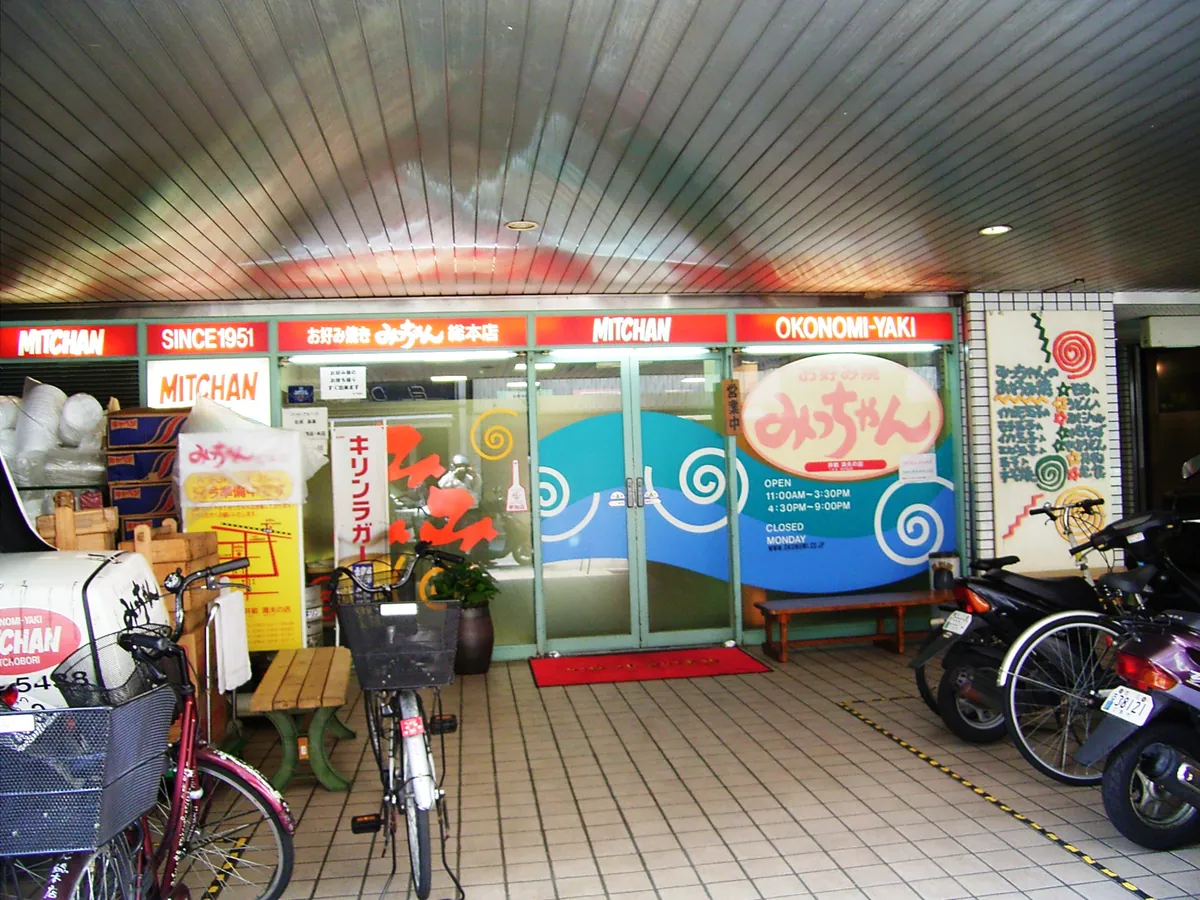
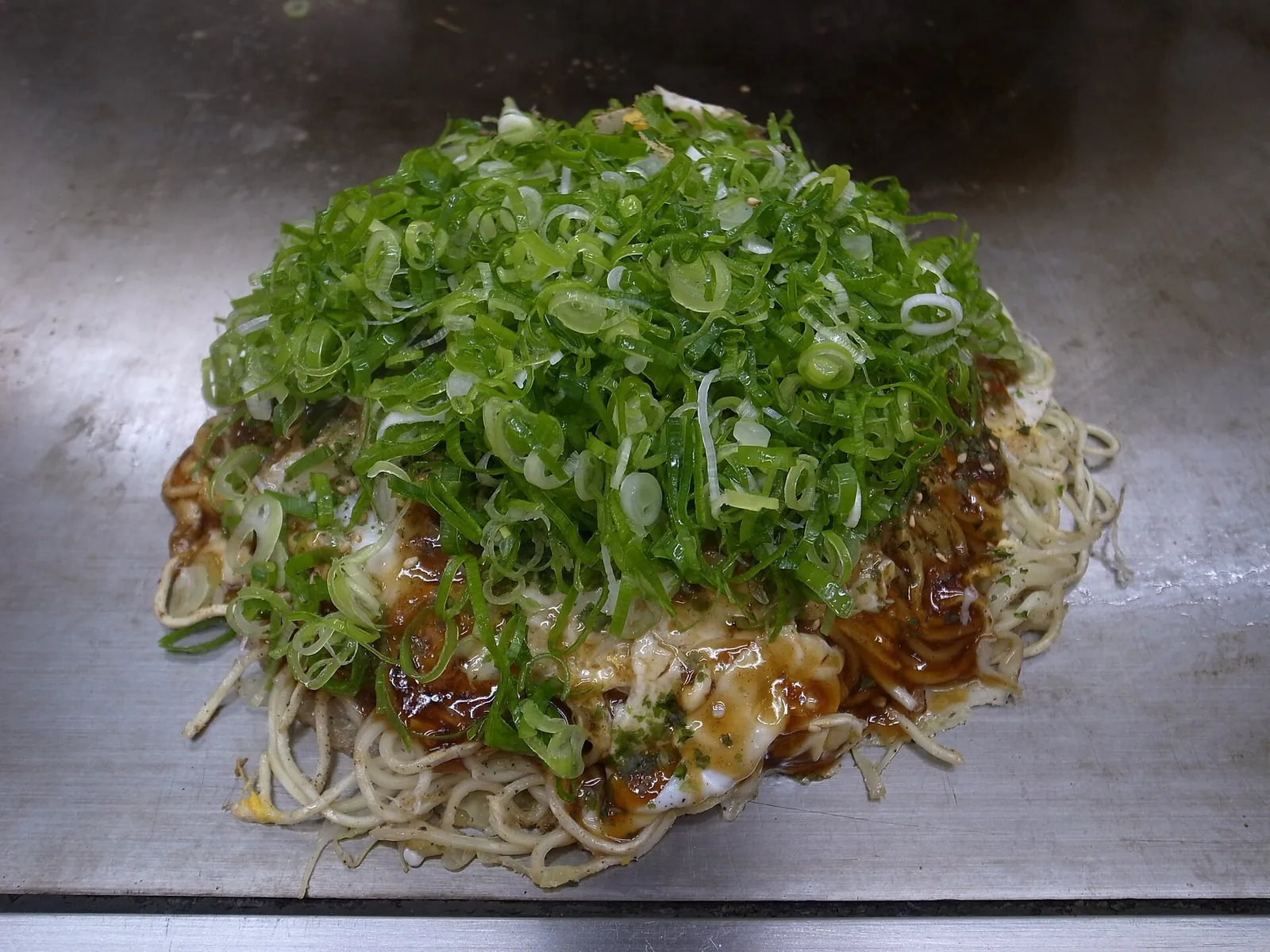
Okonomiyaki at MitchanPhoto: Ajay Suresh from New York, NY, USA / CC BY 2.0
Tap a photo to see it large. 3 photographs, every one credited.
Checked against official sources · updated · Takumi Yamada
Hiroshima-style means layers, not batter — cabbage, soba, egg, and the founder’s sauce. Mitchan started it all in 1950; the counter seats are the show. Lunch 11:30–14:30 (from 11:00 at weekends), dinner from 17:30 (17:00 at weekends). Open every day from November 2026.
- Our number 3 for Hiroshima, out of ten. It is the first thing we would spend the hours on.
- On a 4–6h ashore call our verdict is "Perfect" — peace park first, then lunch at a counter on the way back to the tram.
- It is not only a photo stop: how a city rebuilt itself around a hotplate.
- Each counter sets its own hours and days off: unverified — the building has no single opening time; most counters serve a lunch and an evening session (one example: 11:00–15:00 and 17:00–21:00)..
- 3 hr door to door needs a 5-hour call: a 2–3 hour stop cannot hold it. Pick something closer instead.
- No single published ride covers this one. Budget for a taxi both ways, or fold it into a guided day.
Why Okonomiyaki at Mitchan is famous
How a city rebuilt itself around a hotplate
Hiroshima okonomiyaki is layered, not mixed: batter crepe, a mound of cabbage, pork, then noodles and egg beneath it. The form came out of post-war scarcity, when cabbage stretched a thin batter. Mitchan has cooked it since 1950 and is generally credited with setting the layered standard.
Osaka mixes it. Hiroshima layers it — cabbage piled absurdly high on a paper-thin crêpe, pressed down as it cooks, with a nest of noodles underneath. The difference started as poverty and became an identity.
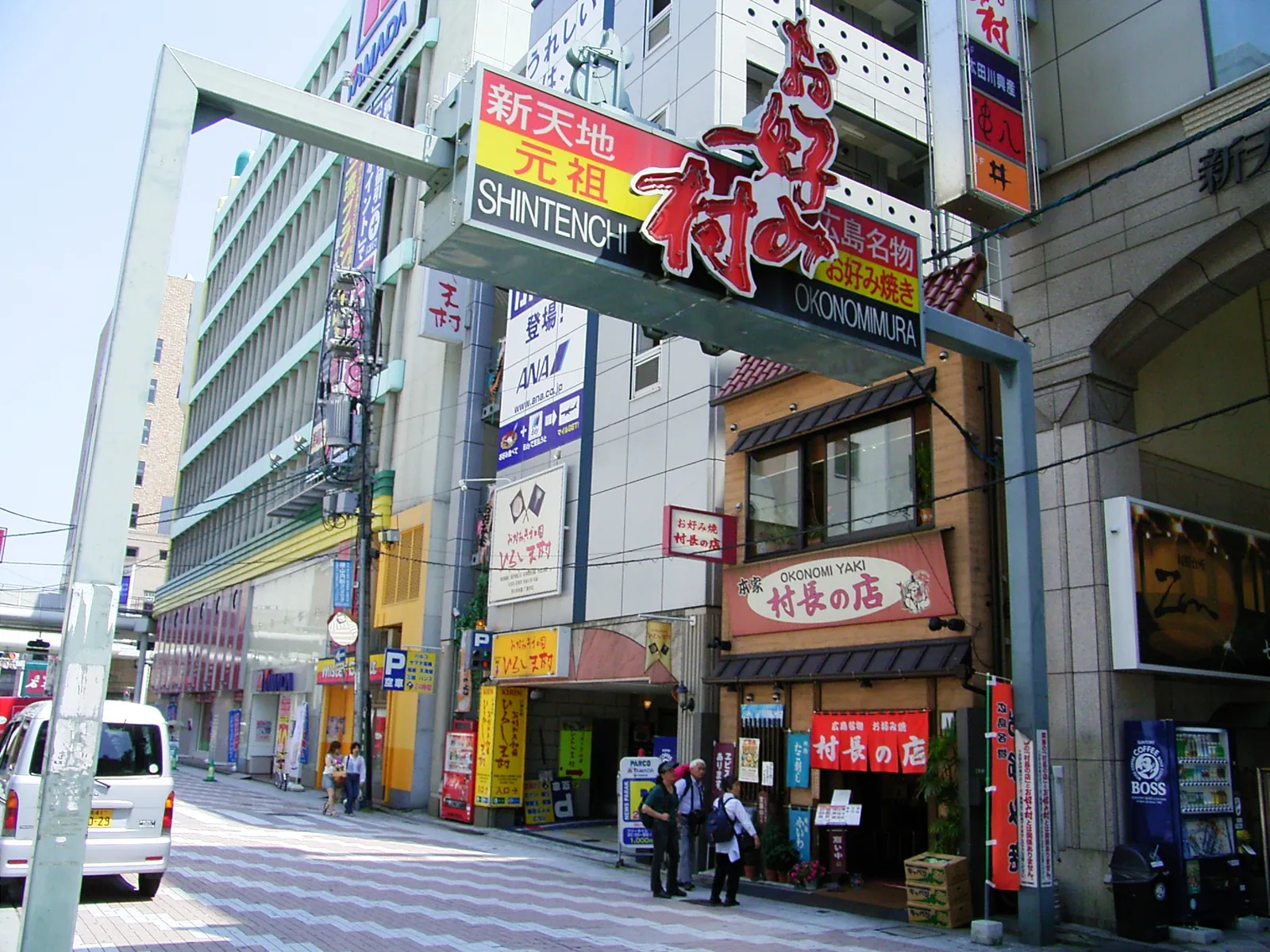
Hiroshima okonomiyaki is layered, not mixed: a thin crepe, a mound of cabbage and bean sprouts, pork, noodles and egg, topped with a sweet-sharp sauce. Okonomi-mura is the building that holds the best-known counters in one place. A consumer travel guide describes it as a multi-storey block of more than twenty counters at Shintenchi, formed from post-war stalls and rebuilt as a high-rise in 1992.
You choose a counter, sit at the hot plate, and watch it cooked in front of you. Each counter has its own cook and its own rules, so go with the line rather than the guidebook. It is a lunch rather than a sightseeing stop.
The catch: this is not a spot with an official website we could read today, and counters keep their own days off, so something will be shut. Pointing at the menu may be needed. If you would rather have a sure thing, Mitchan Sohonten operates inside Orizuru Tower beside the Dome.
A one-sen wheat crêpe with spring onion, sold to children
Cabbage piled high to fill people; noodles added for calories
Credited with formalising the layered Hiroshima style
Formulated in Hiroshima specifically for this style — thicker, fruitier
Hondori and Okonomimura sit together downtown, a short tram ride from the Peace Park — which is exactly the order the city would put them in.
Three places, three different answers
The one the queue agrees on, the one people who live here use instead, and the one nearest your ship. Opening days change; check before you build a day around one.
Cooking the layered Hiroshima style since 1950, and generally credited with setting it. Open every day from November 2026.
Open in Google MapsWhere locals goOkonomi-muraお好み村Three floors of about two dozen small okonomiyaki counters in one building. Pick by which griddle looks busy.
Open in Google MapsClosest to the berthNagataya長田屋Beside the Peace Park, which makes it the practical one if you are already there.
Open in Google MapsThings worth knowing
- Choose a counter that is open when you arrive; hours and days off differ counter by counter.
- Order the local style with noodles in the layers (soba, or udon at some counters); pork and egg are the standard filling.
- Expect to sit at a counter around a hot plate; carry cash in case a counter does not take cards (unverified).
- Mitchan Sohonten has a branch in Orizuru Tower beside the Dome (per the tower's floor guide) if you want to eat without leaving the Peace Park area.
- Okonomiyakiお好み焼き — "Grilled how you like it." In Hiroshima it is layered, never mixed.
- Issen yoshoku一銭洋食 — The pre-war one-coin crêpe the whole dish descends from.
Okonomiyaki at Mitchan and your ship
Both pins on one map, so the distance is a fact rather than a feeling.
Questions people send us
What is Okonomi-mura?
A multi-storey building at Shintenchi, near Hondori, with more than twenty okonomiyaki counters, each with its own hours and days off. A consumer guide says it began as post-war stalls and became a high-rise in 1992.
How do I get from the Hiroshima cruise port to Okonomi-mura?
Take the Hiroden tram from Ujina to Hondori (about 30–40 minutes, ¥240, no change, per a route search) and walk. The exact walk is unverified; a guide gives about 5 minutes from Hatchobori.
How is Hiroshima okonomiyaki different from Osaka's?
Osaka mixes the cabbage into the batter. Hiroshima layers it, with noodles, over a thin crepe. Both cities are firm that theirs is correct.
Routes that already include it
Each one is a finished day timed from the official timetables, with this stop in it. Read the route rather than assembling it yourself.
What to put beside it
Each of these still lands you back aboard with the hour to spare.
 See · ~5h with tram
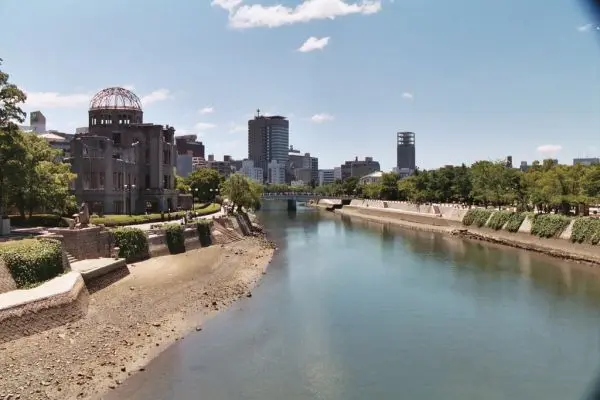
Peace Memorial Museum & Dome
The reason your ship stops here.
See the detail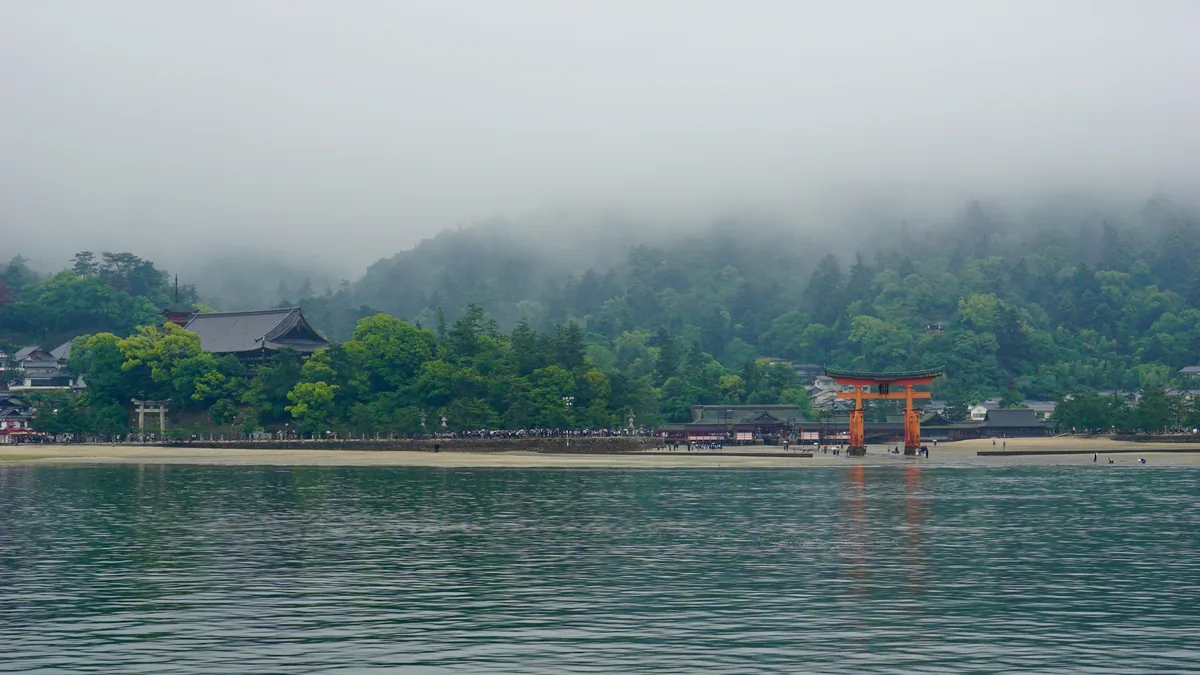 See · ~6h by tram and JR, ~4.5h by the direct boat
Miyajima & Itsukushima shrine
The vermilion gate in the sea, deer on the sand, oyster smoke in the lanes.
See the detail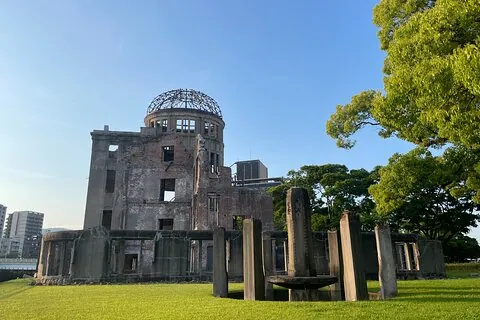 Do · ~4h
Peace Memorial, privately guided
A local guide turns the museum’s weight into understanding — survivor stories, the neighborhoods that vanished, what rebuilt.
See the detail