How a city rebuilt itself around a hotplate
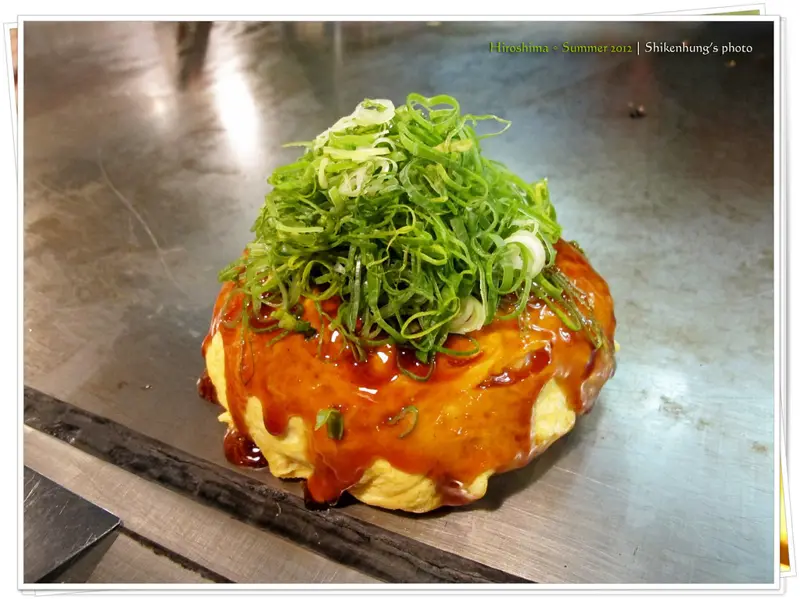
Osaka mixes it. Hiroshima layers it — cabbage piled absurdly high on a paper-thin crêpe, pressed down as it cooks, with a nest of noodles underneath. The difference started as poverty and became an identity.
Before the war there was issen yoshoku — "one-sen Western food" — a thin wheat crêpe with spring onion, cooked on a griddle and sold to children for a coin. After 1945, in a city with almost nothing standing, that batter became the base of something larger.
Flour came in as relief aid. Cabbage was cheap and grew fast. Vendors set up hotplates in the rubble, piled the cabbage higher and higher to fill people up, and added noodles — udon or soba — because noodles are calories. What began as making a coin's worth of batter feed an adult became Hiroshima-style okonomiyaki.
The dish is a record of what was available in 1946, refined for eighty years and never abandoned.
It is layered, not mixed, and the order is not negotiable:
1. A paper-thin crêpe of batter, spread on the griddle. 2. Bonito flakes and a mountain of shredded cabbage — genuinely a mountain, often 200 grams or more. 3. Bean sprouts, then pork belly slices laid on top. 4. The whole tower flipped, and pressed down so the cabbage steams inside itself rather than frying. 5. Noodles crisped separately on the griddle, and the tower moved on top of them. 6. An egg broken and spread flat, and the whole thing flipped onto it. 7. Sauce.
The pressing is where technique lives. Too hard and you crush the cabbage into water; too little and the middle stays raw. A good cook does it with two spatulas, without looking, while talking to you.
The standard is Otafuku, a Hiroshima company that formulated its okonomiyaki sauce in 1952 specifically for this style — thicker and fruitier than the Osaka equivalent, because it has to cling to a wet cabbage tower rather than a flat pancake.
As for the rivalry with Osaka: it is real, it is enjoyed, and if you say "mixed" in a Hiroshima shop you will be corrected with great warmth. Hiroshima Prefecture has well over a thousand okonomiyaki restaurants, the highest concentration in Japan, and locals treat the neighbourhood one as a second kitchen.
Mitchan Sohonten is the historical answer — the shop credited with formalising the style in 1950, now with several branches. Okonomimura, "okonomiyaki village," stacks around two dozen small shops across three floors of one building downtown, which is either wonderful or overwhelming depending on your appetite for choice.
Sit at the counter, not a table. The griddle is the table, your okonomiyaki is cooked in front of you and left on the hot surface, and you eat it straight off the steel with a small spatula rather than chopsticks. Ask for a plate if you would rather; nobody minds.
A one-sen wheat crêpe with spring onion, sold to children
Cabbage piled high to fill people; noodles added for calories
Credited with formalising the layered Hiroshima style
Formulated in Hiroshima specifically for this style — thicker, fruitier
Two dozen shops stacked on three floors downtown
Hondori and Okonomimura sit together downtown, a short tram ride from the Peace Park — which is exactly the order the city would put them in.
Osaka mixes the batter, cabbage and fillings together and cooks it as one pancake. Hiroshima layers them — a paper-thin crêpe, then a mountain of cabbage, pork, a nest of fried noodles and a flat-spread egg, pressed as it cooks so the cabbage steams. The Hiroshima version is taller, wetter inside and built around noodles.
Calories. The style took its modern form in the rubble after 1945, when relief-aid flour and cheap cabbage were what existed; vendors added udon or soba to make a coin's worth of batter fill an adult. What began as making do became the defining feature.
Mitchan Sohonten is the historical choice — the shop credited with formalising the style in 1950. Okonomimura downtown stacks about two dozen small shops over three floors if you want to browse. Sit at the counter and eat off the griddle with the small spatula; between November and February, order it with oysters.
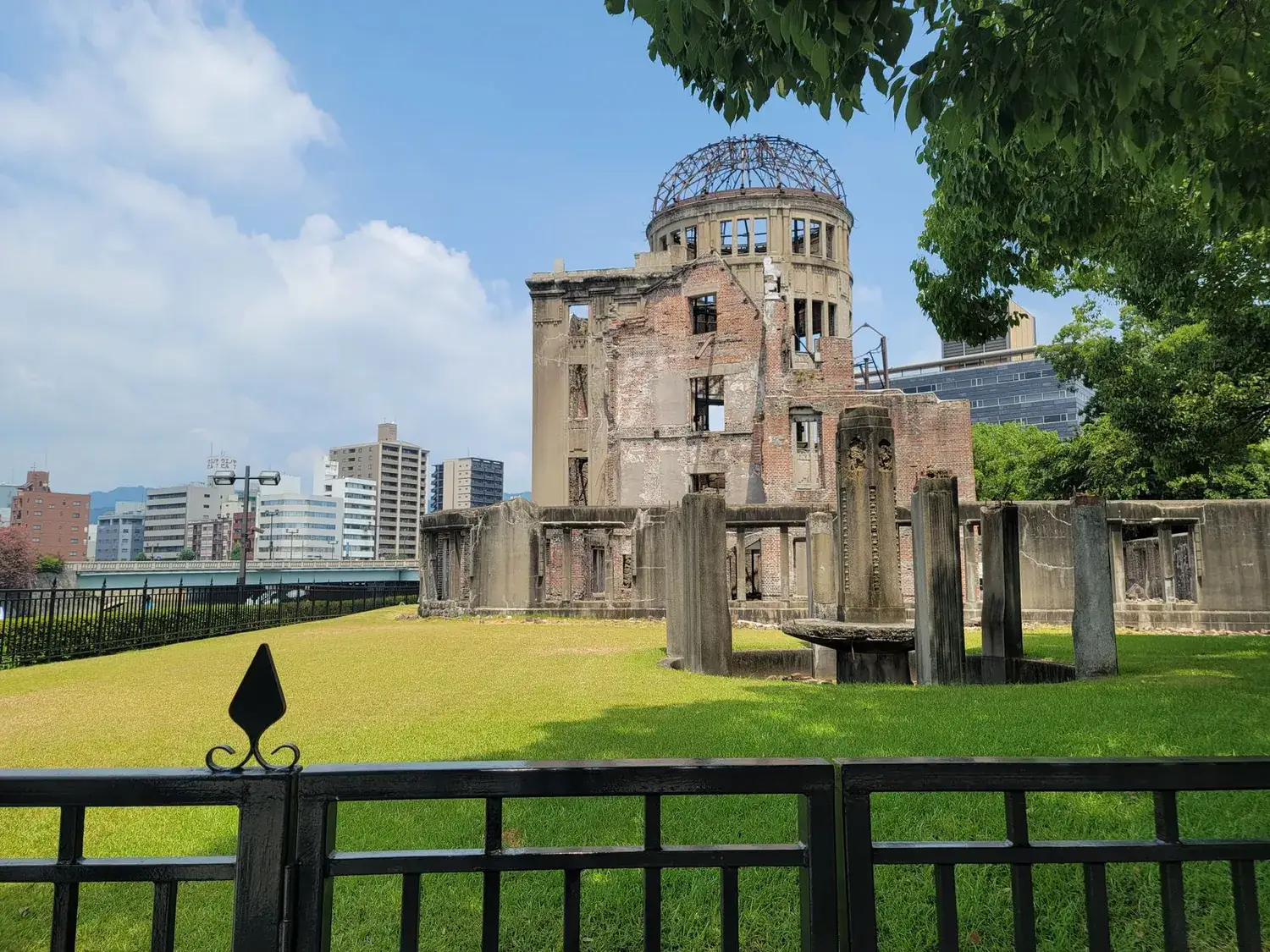
Eight-fifteen, and the building that stayed up
Read →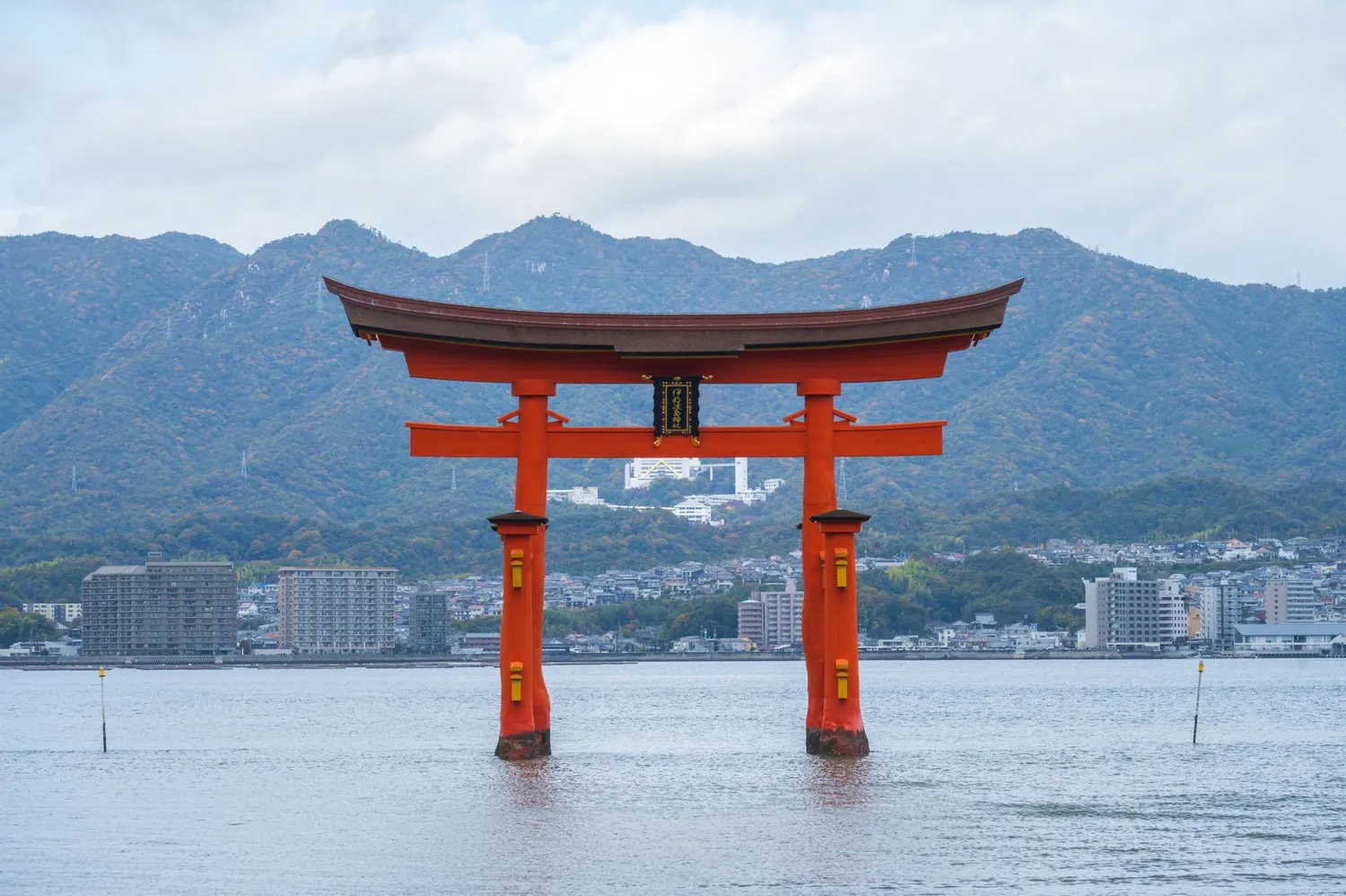
A shrine built over water because the ground was too sacred to stand on
Read →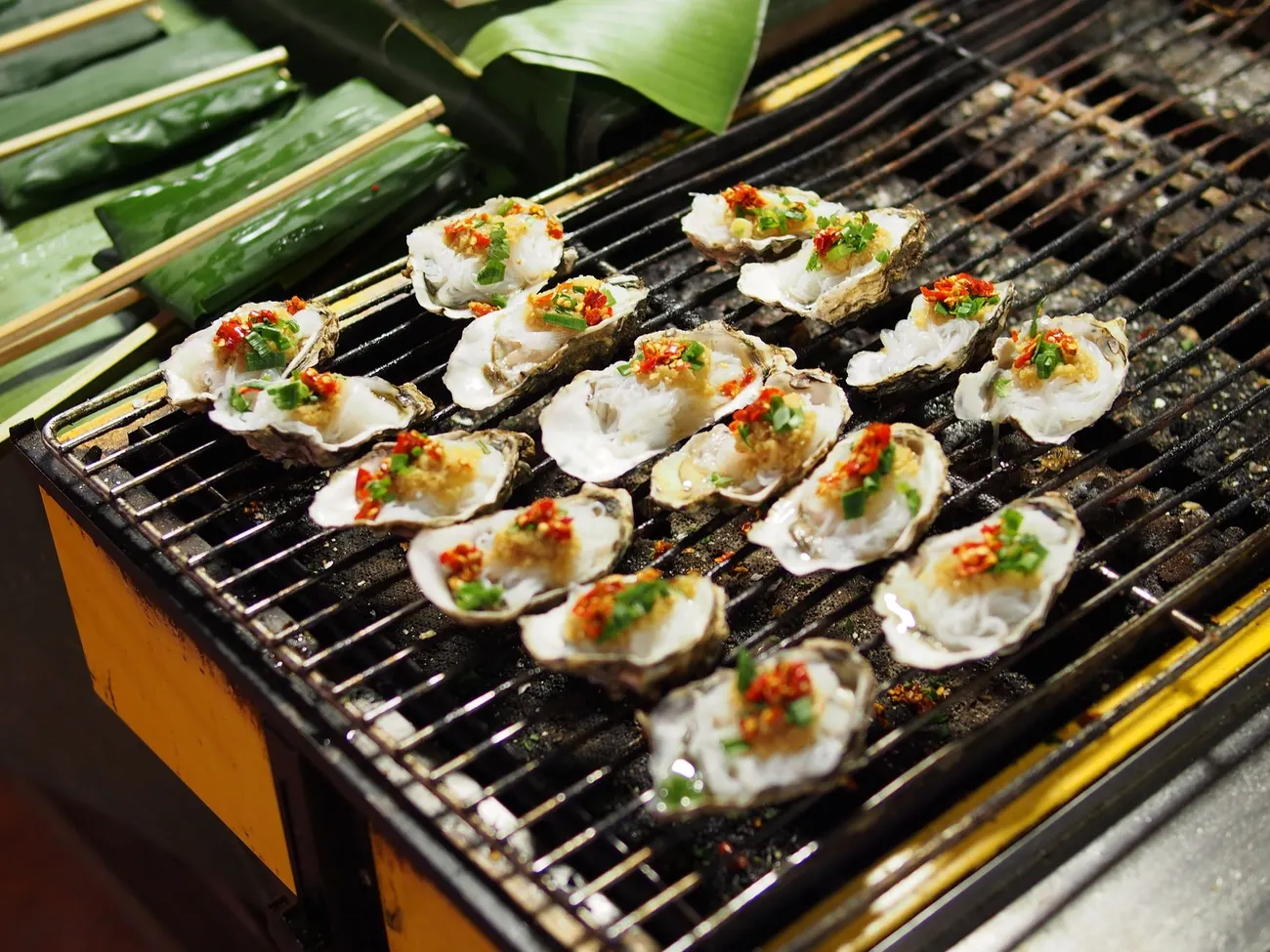
Three thousand islands, no waves, and most of Japan's oysters
Read →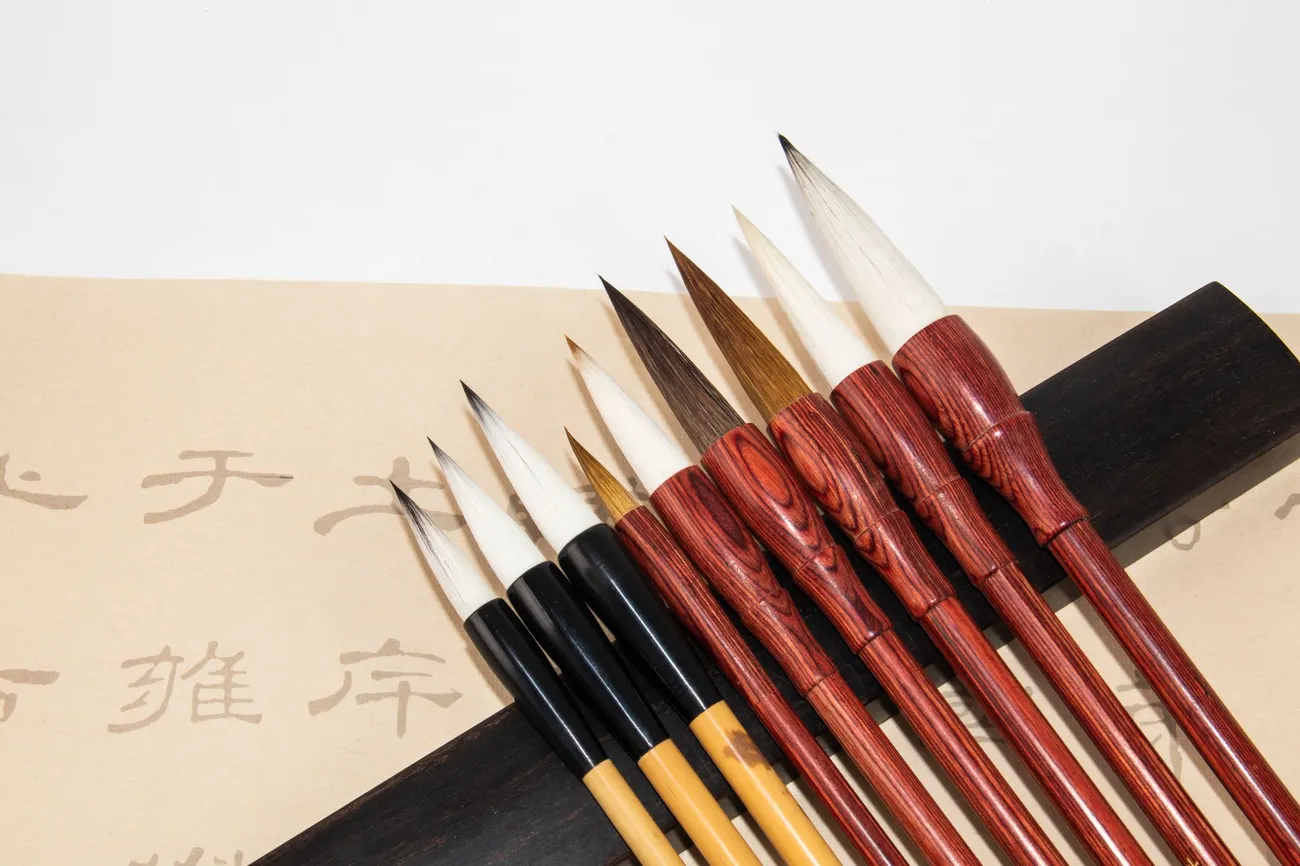
A farming town that supplies the world's make-up bags
Read →No typing needed — jump straight in:
Just docked? — the gangway toolStart from your shipThe ride from every berthAsk the editorGlossary