A shrine built over water because the ground was too sacred to stand on
The gate stands in the sea and the shrine floats on stilts for one reason: the island itself was the deity, and no commoner was permitted to set foot on it. So they built the approach on the water instead.
Miyajima — properly Itsukushima, "the island of worship" — has been sacred for longer than there are records for. The whole island was understood to be a god, which produced an architectural problem: how do you build a shrine for pilgrims on ground they are not allowed to walk on?
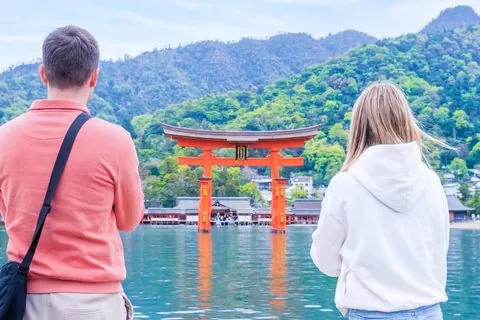
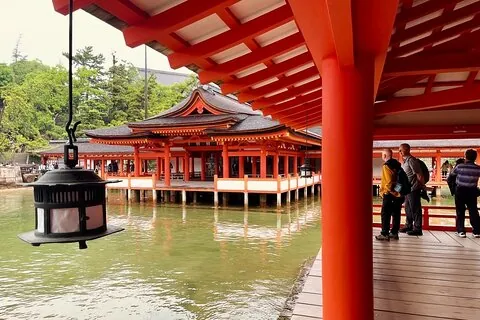
The answer is the thing you have seen photographs of. The shrine stands on piles over a tidal flat, and its great torii rises out of the sea, so worshippers arrived by boat and passed through the gate on the water without ever profaning the island itself.
It is not a shrine that happens to be beside the sea. It is a shrine deliberately built off the land.
A shrine has existed here since at least 593. The form you see is owed to Taira no Kiyomori, the warrior-aristocrat who effectively ruled Japan, and who rebuilt it in 1168 in the style of a Heian aristocratic mansion — vermilion corridors, open galleries, a stage over the water — and treated it as his clan's protective shrine.
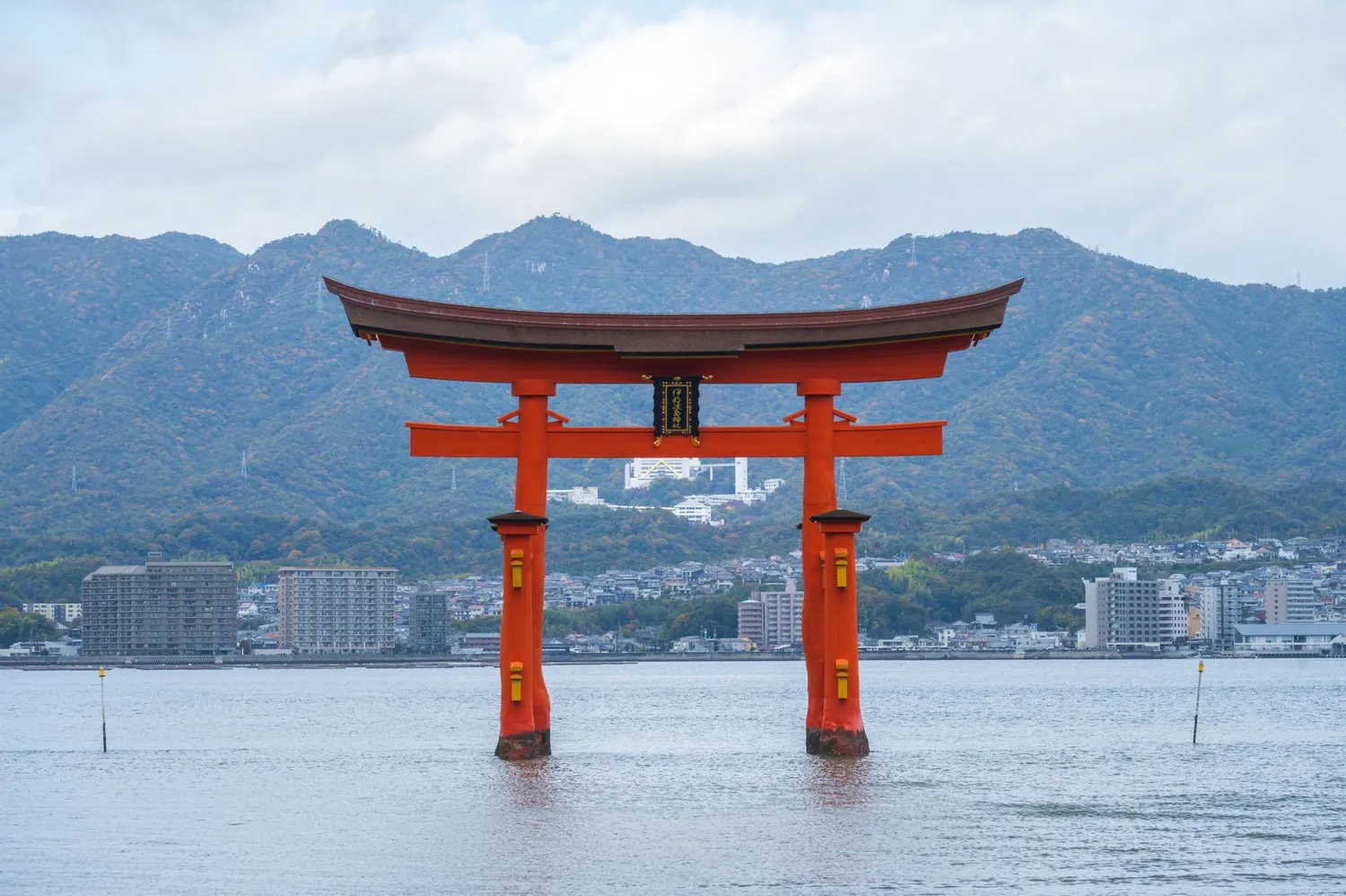
The current torii is the ninth, erected in 1875, and it stands about 16 metres tall. It is not anchored: it holds its place by sheer weight, its six pillars resting on the seabed, the crossbeam packed with fist-sized stones. The main pillars are single camphor trunks, which is why replacing one takes years of searching for a tree.
The shrine and the primeval forest behind it were inscribed by UNESCO in 1996.
This is the practical thing nobody tells cruise passengers clearly. At high tide the shrine appears to float and the gate stands in water — the postcard. At low tide the sea withdraws several hundred metres and you can walk out across the flats and stand underneath the torii, touch the pillars, and find the coins people have pressed into the cracks.
Both are worth having and they are completely different experiences. Check the tide table for your call before you decide what time to cross.
Because the island was a deity, historically no births or deaths were permitted on it — the pregnant and the dying were carried to the mainland, and until relatively recently there was no cemetery here. Dogs are still discouraged.
The deer, which are semi-tame and entirely shameless, are considered messengers of the gods. They will take your map, your ferry ticket and your ice cream, in that order. Do not feed them; do keep paper out of reach.
Above the shrine rises Mount Misen, 535 metres, with a ropeway most of the way up and a genuine climb at the end. On its summit burns a flame said to have been lit by Kōbō Daishi in 806 and never extinguished — the same flame was used to light Hiroshima's Peace Flame.
The island itself already worshipped as a deity
Said never to have gone out; used to light Hiroshima's Peace Flame
Heian-mansion architecture, vermilion galleries, the stage on stilts
About 16 m tall, held by its own weight alone
The shrine and the primeval forest behind it
Wrapped in scaffolding for three years; uncovered again in December 2022
Ferry from Miyajimaguchi, ten minutes. Check the tide table before you choose your crossing time — high water floats it, low water lets you walk beneath it.
Because the island itself was considered a deity and commoners were not permitted to set foot on it. The shrine was built on piles over the tidal flat and its gate placed in the sea, so worshippers could arrive by boat and pass through the torii without touching sacred ground.
They are different experiences and both are good. High tide gives you the floating shrine of the photographs; low tide lets you walk several hundred metres out across the flats and stand directly beneath the torii. Check the tide table for your call date before choosing your ferry time.
By its own weight. The six pillars rest on the seabed rather than being driven into it, and the crossbeam is packed with fist-sized stones to add mass. The main pillars are single camphor trunks, which is why replacing one takes years of searching for a suitable tree.
Only on a long call — realistically eight hours or more, and best guided. Each deserves half a day: the ferry and island alone run four to five hours door to door from the Ujina berth. With six hours ashore, choose one and do it properly.
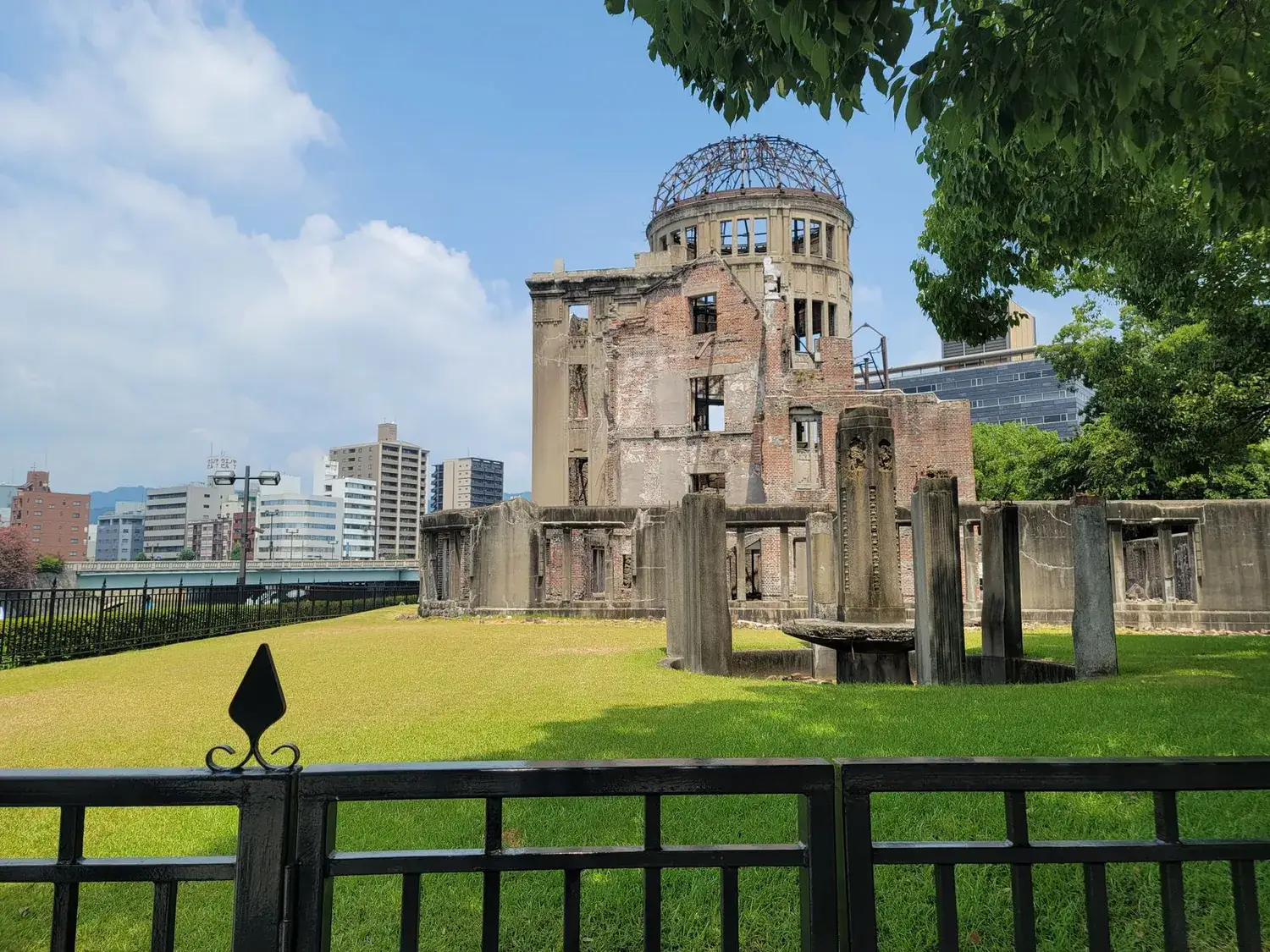
Eight-fifteen, and the building that stayed up
Read →
How a city rebuilt itself around a hotplate
Read →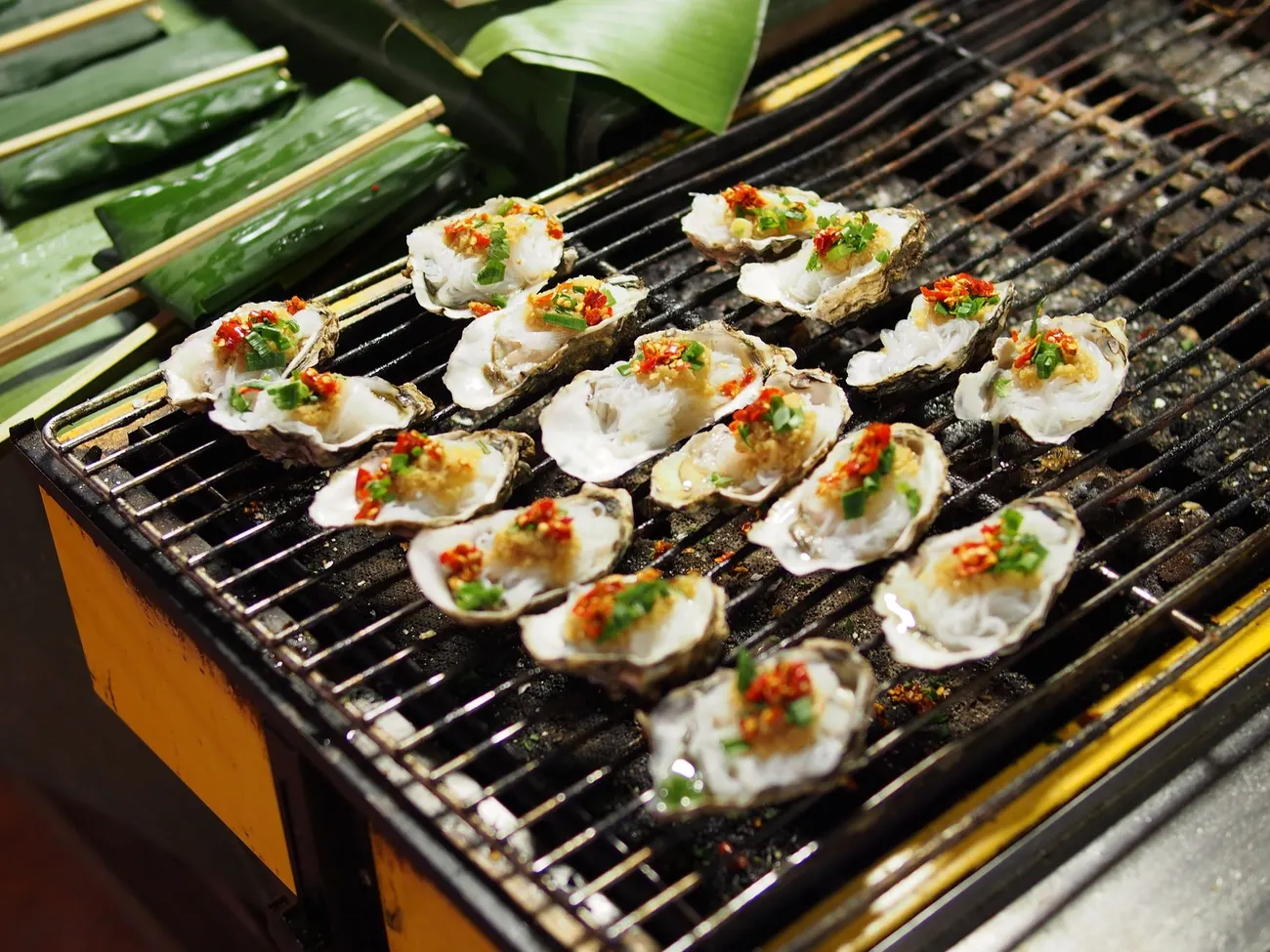
Three thousand islands, no waves, and most of Japan's oysters
Read →
A farming town that supplies the world's make-up bags
Read →No typing needed — jump straight in:
Just docked? — the gangway toolStart from your shipThe ride from every berthAsk the editorGlossary