
Five and four
A pattern that is also a sentence, and once was also a tax
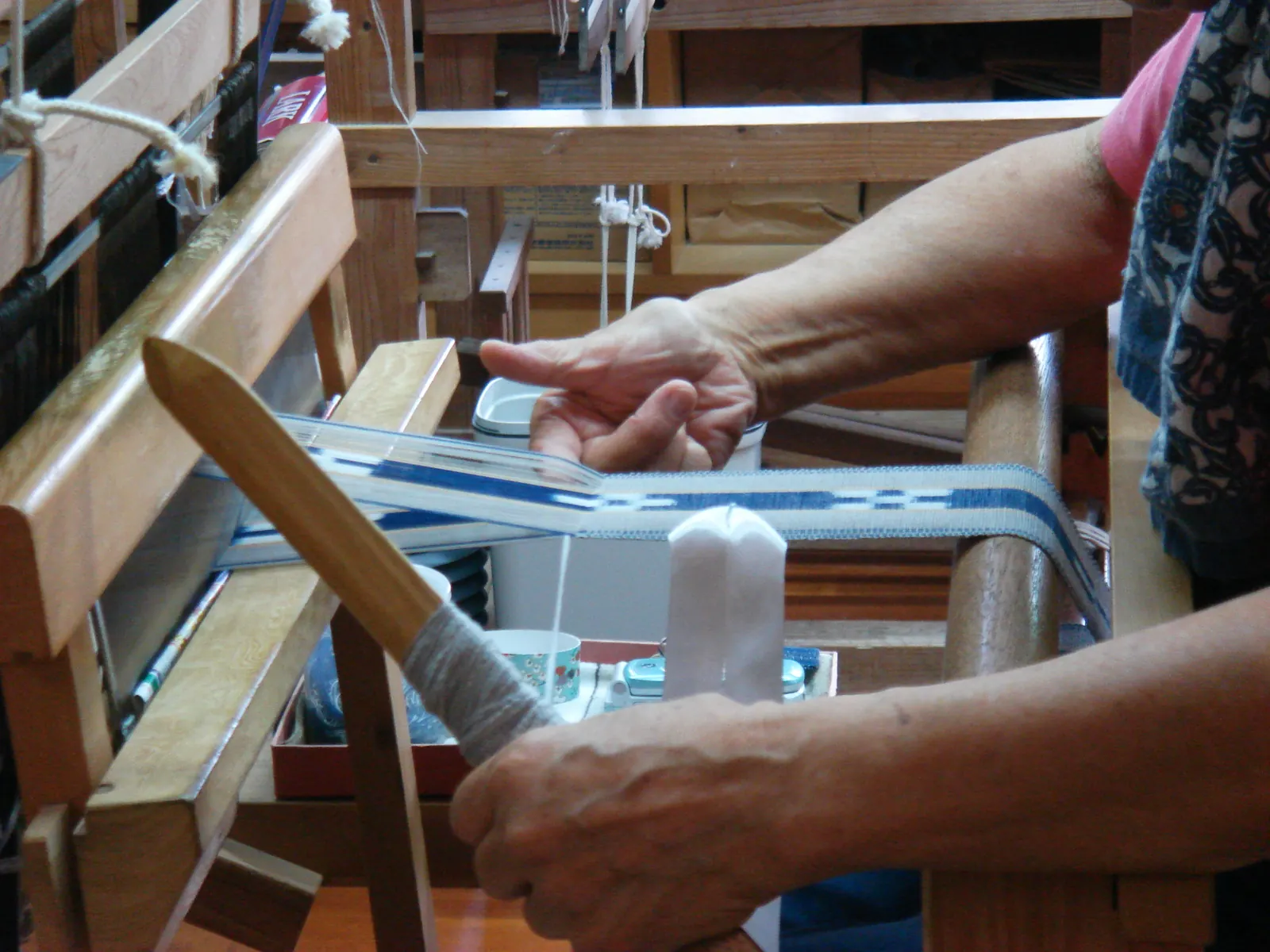
A minsah belt carries two blocks of squares — one of five, one of four — repeated down its length. The numbers are a pun in the local language: itsu no yo made mo, "for all time." A woman wove one and gave it to a man, and the belt said what she was not going to say out loud.
The minsah is a narrow indigo-dyed cotton belt woven on a backstrap or floor loom, patterned with alternating blocks of five and four white squares. The five is itsutsu, the four is yotsu — and read together, itsu no yo made mo: until whatever age, for all time.
What it was for
In the Yaeyaman marriage custom of kayoi-kon, a man visited a woman at her family’s house rather than the couple setting up a household. A woman who wanted him to keep coming wove him a belt.
The edges of the pattern are woven with a deliberate line of small hooks — mukade, centipede legs — meaning, roughly, "come to me on many feet, often." It is a very direct object.
The weaving was also how the poll tax was paid. Yaeyaman women wove cloth to satisfy a levy imposed from 1637 and not lifted until 1903 — so the same craft carries both a love token and two and a half centuries of coercion.
Jofu, the other cloth
Yaeyama jofu is the finer, harder tradition: ramie fibre, hand-stripped and joined without spinning, woven into a summer cloth so light it barely touches the skin. It was the premium tax textile, sent to Shuri and on to Satsuma.
It is still made in tiny quantities and it is expensive in a way that is entirely justified when you see how it is produced.
Buying it
Workshops in Ishigaki town and on Taketomi weave and sell directly. A full obi is a serious purchase; a coaster, a small pouch or a table runner carries the same pattern and the same technique for a few thousand yen, and packs flat.
Check that it is hand-woven rather than machine-printed. The reverse of a woven piece shows the pattern; a printed one does not.
How it happened
- centuriesMinsah is woven as a marriage token
Five squares and four: "for all time"
- 1637The poll tax begins
And is paid, in part, in woven cloth
- Ryukyu eraYaeyama jofu goes to Shuri and Satsuma
The premium tax textile
- 1903The poll tax is abolished
The weaving continues
- todayWorkshops in town and on Taketomi
Woven, not printed — check the reverse
Where this becomes real on your port day
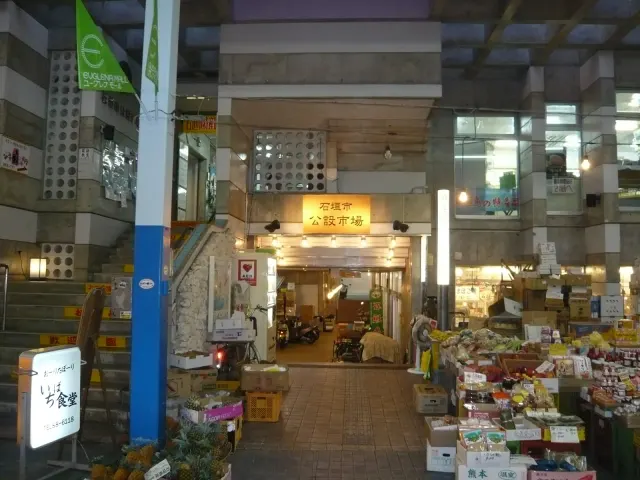
Buy something small and hand-woven, and check the reverse shows the pattern. Printed cloth does not.

The vocabulary of the weave
- Minsah ミンサー
- The belt. Five squares and four — "for all time."
- Mukade ムカデ
- Centipede. The hooked edge: "come often, on many feet."
- Yaeyama jofu 八重山上布
- Fine ramie summer cloth. The premium tax textile.
- Kayoi-kon 通い婚
- The visiting marriage the belt belongs to.
FAQ
What does the minsah pattern mean?
The alternating blocks of five and four squares are a pun in the local language — itsutsu (five) and yotsu (four) reading as itsu no yo made mo, "for all time." A woman wove one for a man in the Yaeyaman visiting-marriage custom, and the hooked edging means roughly "come to me often."
How do I tell hand-woven minsah from printed?
Look at the reverse. A hand-woven piece shows the pattern on both sides; a printed one does not. Workshops in Ishigaki town and on Taketomi weave and sell directly, and small pieces — a coaster, a pouch, a runner — carry the same technique for a few thousand yen.
More from Ishigaki

Four hundred kilometres from Okinawa, two hundred and seventy from Taiwan
Read →
A third of the Yaeyamas died in one morning in 1771, and the rocks are still where it left them
Read →
A village of 350 people that decided, in 1986, not to sell
Read →
Japan’s first Dark Sky Place, and the only part of the country that sees the Southern Cross
Read →