
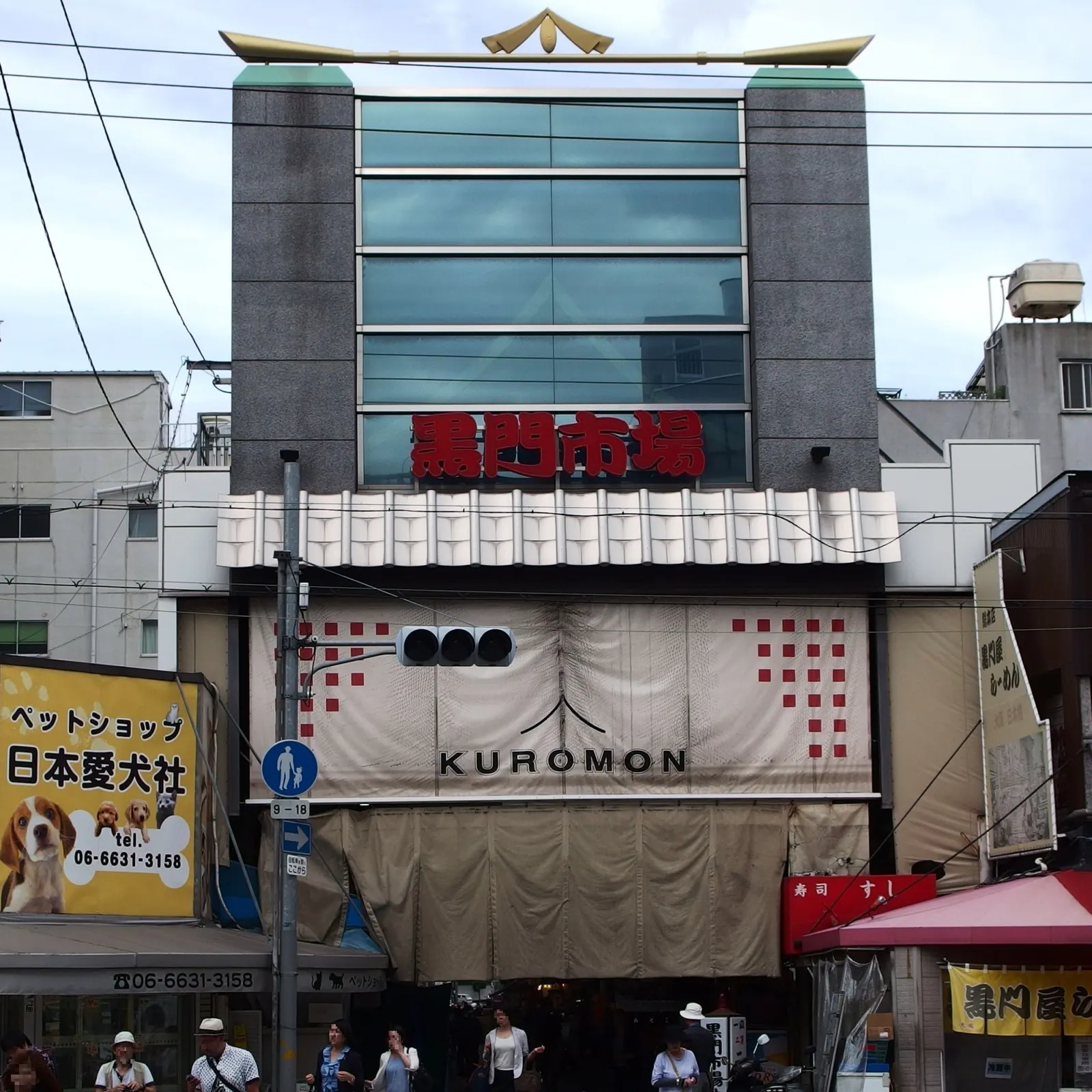
 Photo: Mc681 / CC BY-SA 4.0
A covered street about 580 metres long with roughly 150 shops, running since the nineteenth century and still supplying restaurant kitchens across the city — which is why Osaka calls it its kitchen rather than its market.
The system that matters: you buy at the stall and eat at the stall. Sea urchin opened in front of you, scallops grilled on the shell, wagyu skewers, blowfish in season, and a counter or a crate put out for exactly that purpose.
Five things the plaques won't tell you
- Buy and eat at the stall. Carrying food away is possible but the counters exist for a reason.
- Go before two. This is a working market and it winds down earlier than a tourist street would.
- Prices are higher than they were — it has become popular. It is still better value than the canal.
- Cash is easier, though more stalls take cards each year.
- Dotonbori is ten minutes west on foot. Do them in one loop.
Sea urchin opened in front of you, scallops grilled on the shell, wagyu skewers, blowfish in season, and a counter or a crate put out for exactly that purpose.

Guided days from Osaka
Booked before you sail — there is no tour desk at the pier. Booking through these links supports the site.
More in Osaka
Questions people ask here
What is Kuromon Ichiba?
A covered market street about 580 metres long with roughly 150 shops in central Osaka, running since the nineteenth century and still supplying restaurant kitchens across the city. You buy at the stall and eat at the stall — sea urchin opened in front of you, scallops grilled on the shell, wagyu skewers.
When should I visit Kuromon Ichiba?
Before two in the afternoon. It is a working market rather than a tourist street, and many stalls wind down mid-afternoon. It is ten minutes on foot from Dotonbori, so the two work as one loop.