Updated 1 October 2026 · 31 official and operator sources · Researched from official timetables, operators and the port authority · Takumi Yamada
Every ship on the current Osaka schedule ties up at Tempozan, about five minutes' walk from Osakako subway station, and from there the castle, Kuromon Market and Dotonbori are ¥290 and 15–25 minutes away — no shuttle, no taxi needed. The one decision is Osaka or Kyoto. The castle, the market and Dotonbori fit an 8-hour call with room to spare. Kyoto is not the 'thirty minutes' you will read everywhere: from the gangway it is about 55 minutes to Kyoto Station and 72–77 minutes to Fushimi Inari or Gion, so it belongs on the commonest 12-hour call or an overnight, and not on anything under about 8 hours.
Your call, your day
What fits the time your ship gives you?
Pick your ship from the official Osaka schedule — or just the hours you have — and this page picks the plan and the tours that fit, with the hour before all-aboard already set aside.
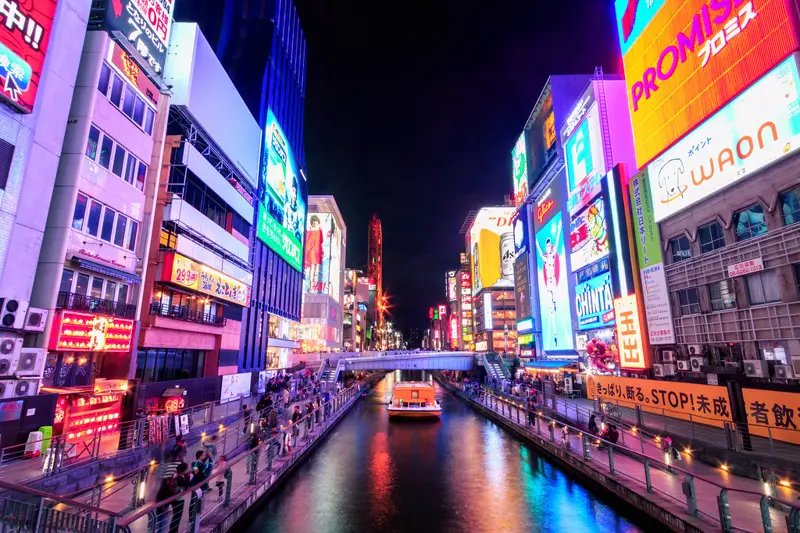
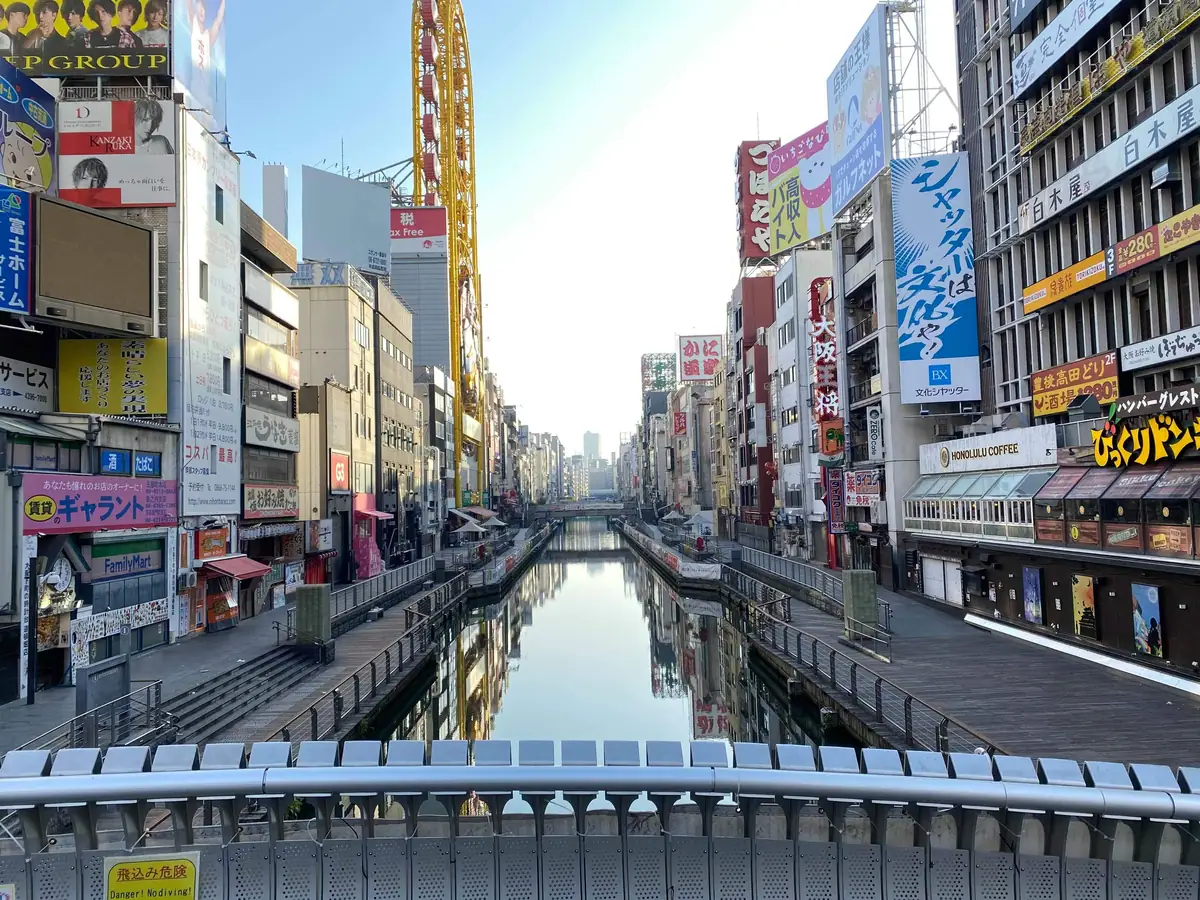
Dotonbori, Kuromon and Shinsekai: Osaka's street food
Osaka is the city that would rather feed you than impress you: takoyaki made where it was invented, okonomiyaki mixed rather than layered, kushikatsu under the Tsutenkaku tower and a 580-metre covered market of about 150 stalls. None of it needs a booking, and all of it fits a short call.
From the shipSubway from Osakako with one change: 20–23 minutes to Namba for Dotonbori, 19–21 minutes to Nippombashi for Kuromon, 22–23 minutes to Shinsekai — ¥290 each way. Taxi about 12 minutes without traffic, from about ¥3,000.
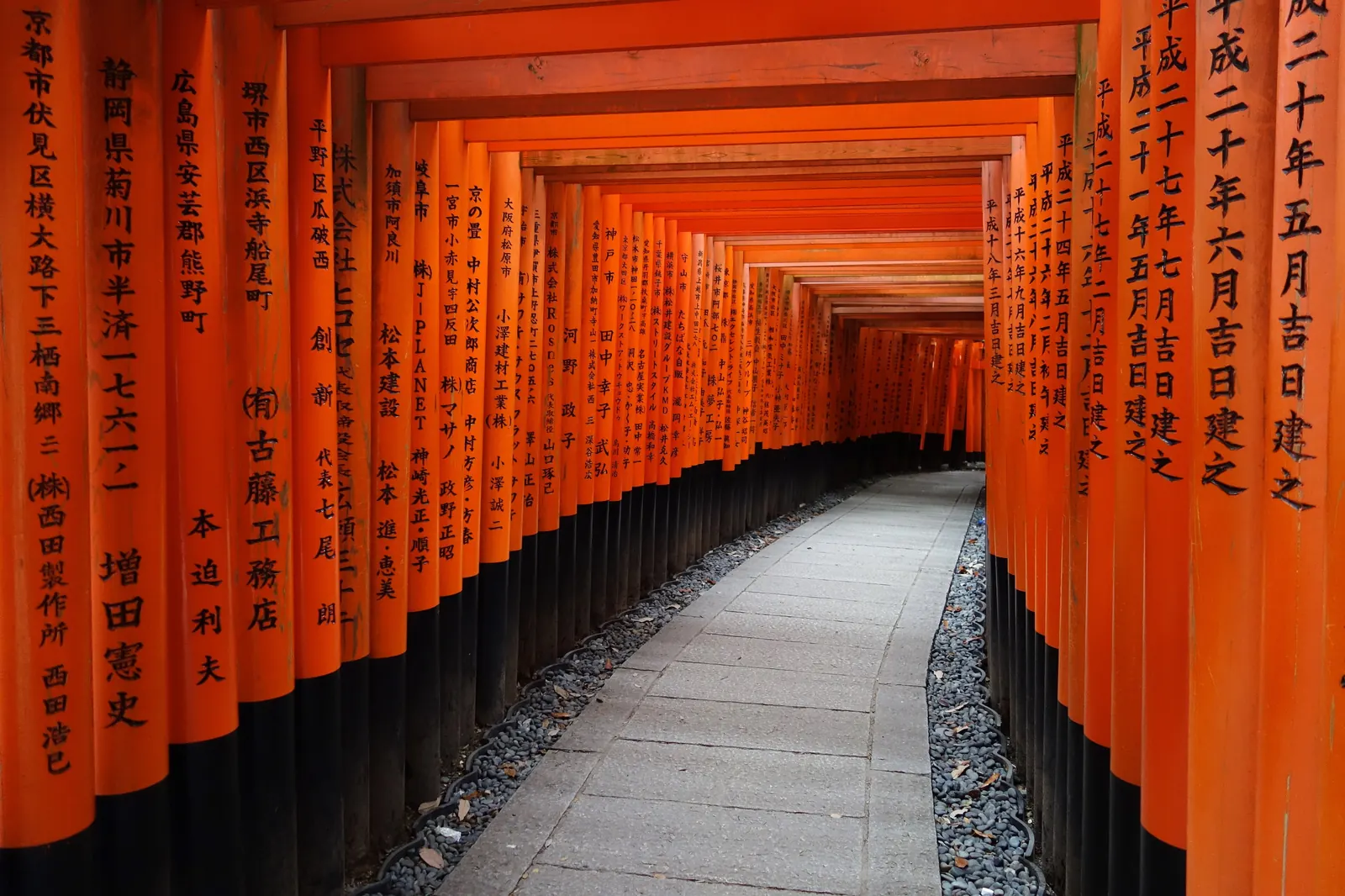
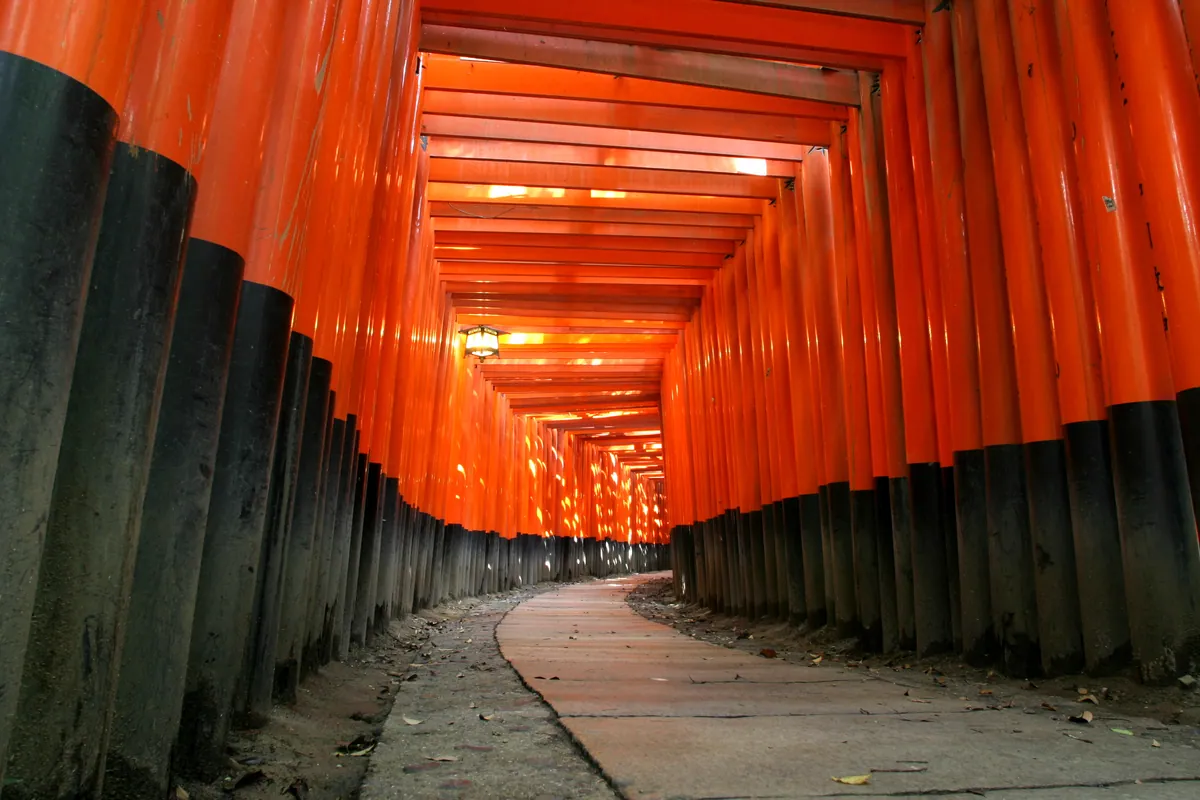
The tunnels of vermilion torii climbing Inari mountain, then the lanes of Gion and Higashiyama. From Tempozan it is a rail day, not a half-day, and a loop of both districts fits a 12-hour call with about an hour to spare.
From the shipFrom Osakako: 55 minutes to Kyoto Station (¥1,080), 72 minutes to Fushimi Inari by JR (¥1,200), 77 minutes to Gion-Shijo by Keihan (¥780). Add about 10 minutes for the walk off the ship.
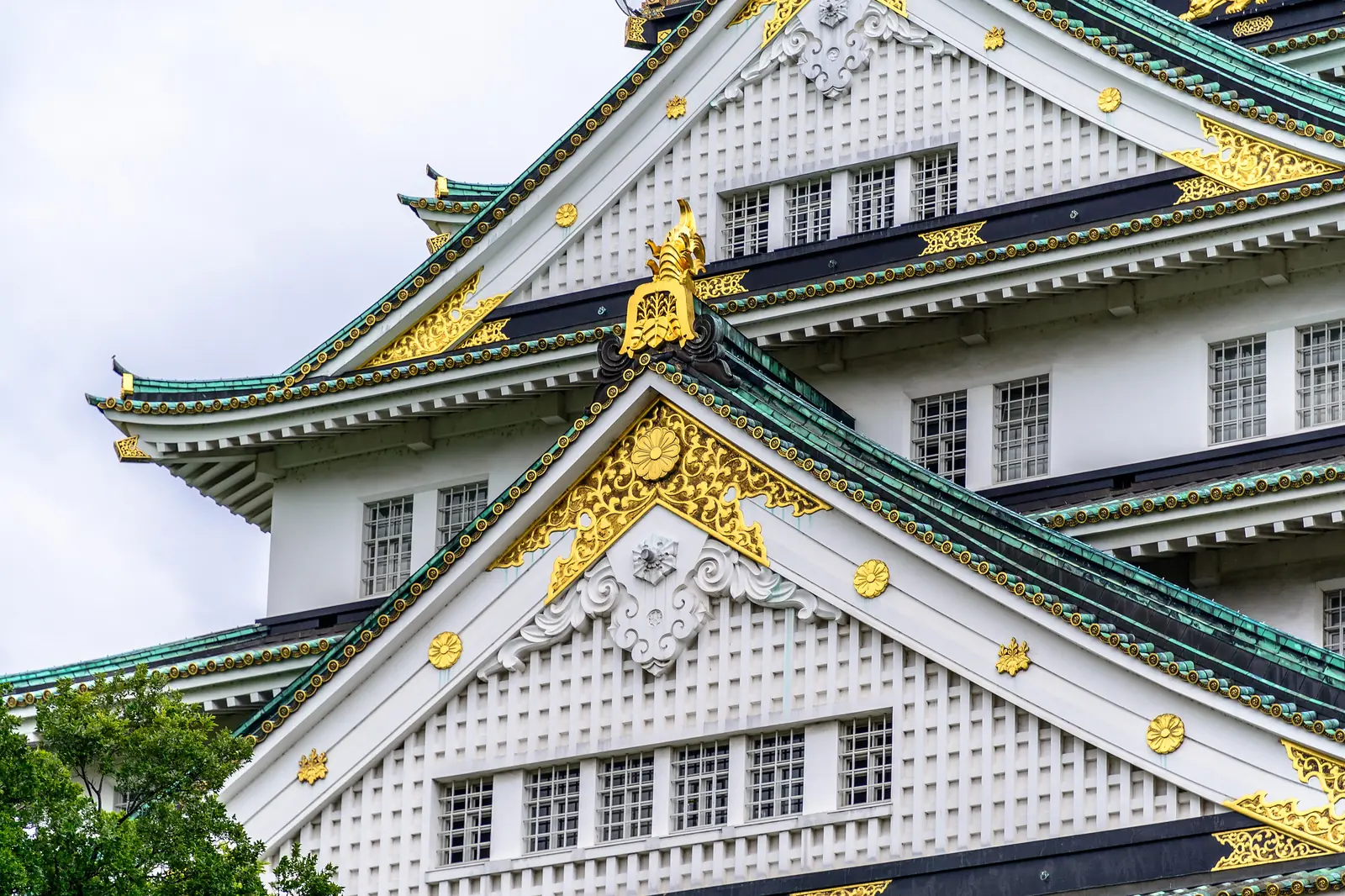
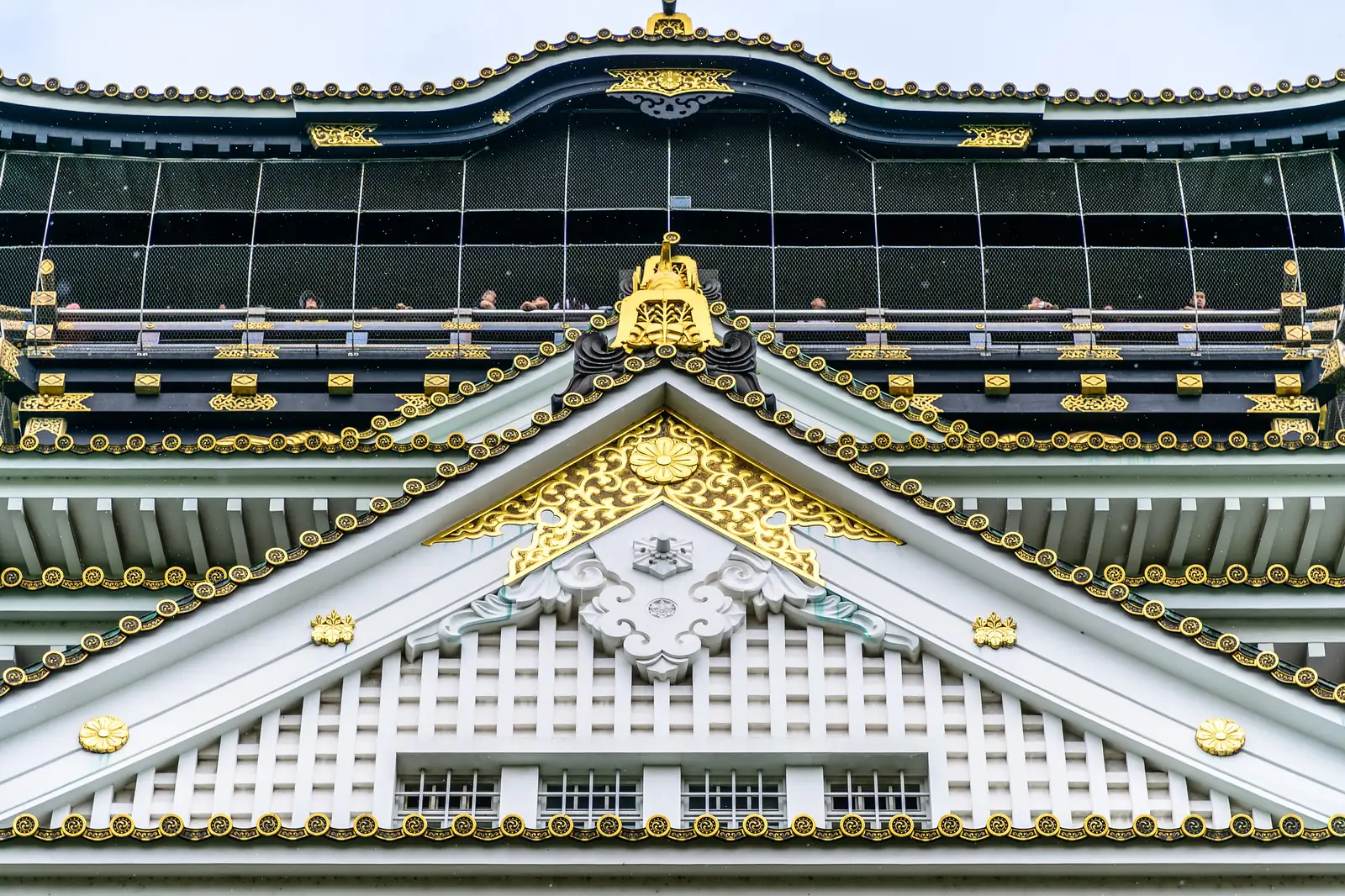
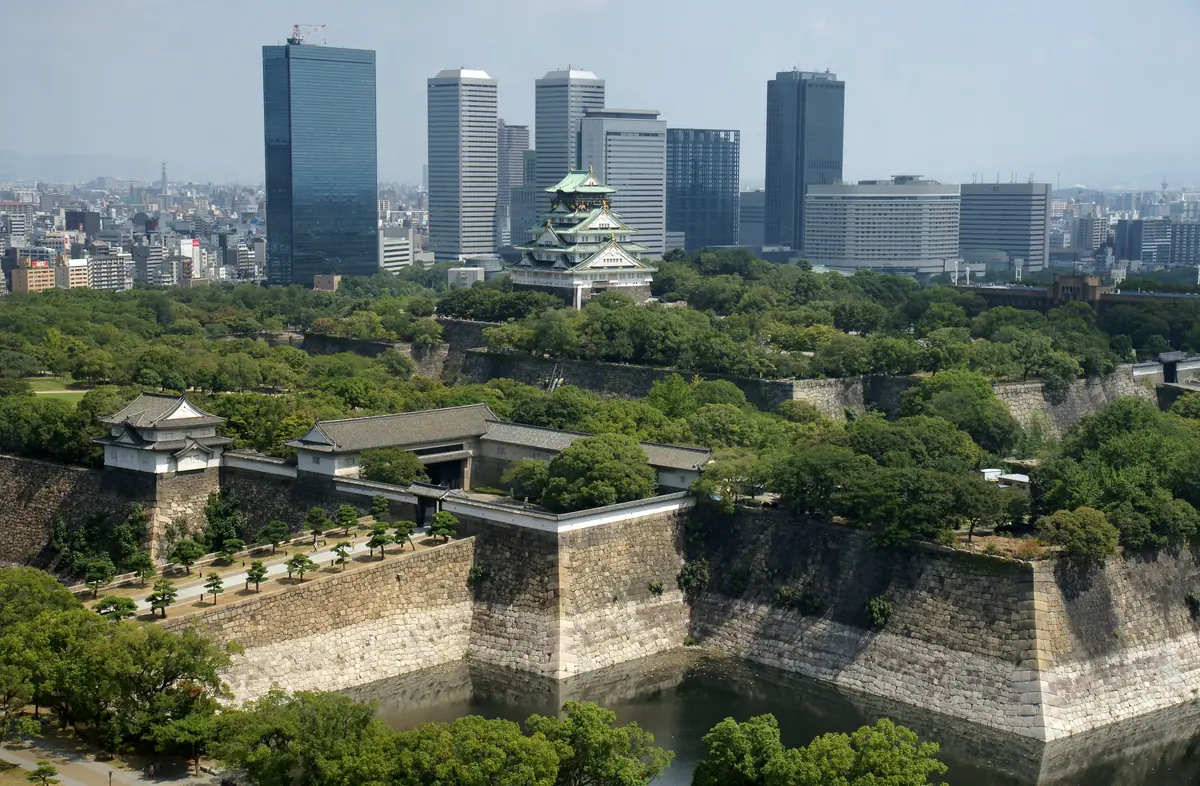
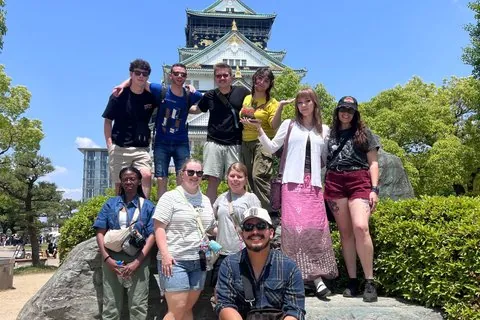
Hideyoshi's seat, destroyed in 1615 and rebuilt in concrete in 1931. The stone walls and moats are the real thing and enormous; the keep is a museum of the Toyotomi story, with a view from the top.
From the shipChuo line from Osakako direct to Tanimachi 4-chome, 15 minutes with no change, ¥290, then about 15–20 minutes on foot through the park (our estimate).
Osaka does not try to impress you. It wants you to eat something standing up and say it was good, and on a port day that is the best way in: takoyaki from a stall on Dotonbori, a wagyu skewer at Kuromon Market, a plate of kushikatsu under the Tsutenkaku tower in Shinsekai. Add Osaka Castle — a 1931 concrete keep on walls and moats that are four centuries old — and you have a full, easy day that costs ¥290 a ride and needs no booking.
And then there is Kyoto. On the commonest call here, 12 hours, a loop of Fushimi Inari's torii tunnels and the lanes of Gion fits with an hour to spare. What does not fit is the idea, repeated on many cruise pages, that Kyoto is "thirty minutes away". That figure is the train from Osaka Station. From the gangway it is closer to an hour and a quarter each way, and that single correction decides most people's day.
So the first question is how many hours do you have? Under about 8, stay in Osaka. From about 10, you can choose Kyoto. Everything below comes from the port association's call schedule, the national port specification, Osaka Metro's timetables and the published hours of the castle, aquarium, market and restaurants, checked on 30 September 2026.
What Osaka is not: a port where you step off into the old town. Tempozan is an aquarium, a Ferris wheel and a mall; the city starts at the subway five minutes away.
First: which berth are you at?
Almost certainly Tempozan. The Osaka Port Promotion Association lists three places where cruise ships call, but its 2026 schedule leaves no doubt about which one matters:
Tempozan Quay (all current calls)
Chuo Pier North Quay
Kaiyukan West Pier
Calls in 2026
79 of 83, and all 22 from 1 October
2 (Heritage Adventurer, April and May)
2 (Guntû, a small Japanese boutique ship, August)
Terminal
Passenger terminal with a boarding bridge and toilets; the Tempozan Market Place mall next door
None — no terminal, toilets or gangway
—
To Osakako station
About 5 minutes on foot from exits 1–2
About 9–10 minutes; a shuttle is listed as needed
Beside the aquarium
Taxis
Pool for 28 cars
None listed
—
The quay is 430 m long with no air-draft limit. The largest ships to call in recent years are MSC Bellissima and Spectrum of the Seas, at about 170,000 GT, and Spectrum used Tempozan on both its 2026 calls, so there is no separate big-ship berth in current use. The terminal sits in front of the Tempozan Ferris wheel, about 300 m from the Kaiyukan aquarium. If you have seen a map pin for the port further south, near the aquarium's boat pier, it is in the wrong place: the passenger terminal is about 390 m north of it.
On ship days the terminal has a temporary currency-exchange desk (US dollars, euros, pounds, Australian dollars, won and yuan), a tourist-information desk in English, Chinese, Korean, German and Japanese, and temporary Wi-Fi. Both desks usually keep 8:00–17:00, varying by ship. There is no shop or vending machine inside the terminal itself; the mall next door fills that gap.
Getting from Tempozan into Osaka
The subway is the answer for everything in the city. Osakako station on the Osaka Metro Chuo line is about five minutes' walk from the terminal — allow 5–8 minutes from the gangway — and every central sight is ¥290. Contactless Visa, Mastercard, JCB, Amex, Diners, Discover and UnionPay cards work at dedicated readers on the gates of every line, with no registration. At midday Chuo line trains leave Osakako every 7–8 minutes, and every 3–5 minutes in the morning peak.
The one thing to know: the Chuo line runs straight to the castle but not to Namba. Every route to Dotonbori needs one change.
To
How
Time from Osakako
Cost
Osaka Castle (Tanimachi 4-chome)
Chuo line direct, no change
15 min, then about 15–20 min on foot to the keep (our estimate)
¥290
Dotonbori (Namba)
Chuo line, change at Hommachi (Yotsubashi or Midosuji line) or Awaza (Sennichimae line)
20–23 min
¥290
Kuromon Market (Nippombashi)
Chuo line to Sakaisuji-Hommachi, Sakaisuji line
19–21 min, then about 5 min from exit 10
¥290
Shinsekai (Ebisucho or Dobutsuen-mae)
Chuo line to Sakaisuji-Hommachi, Sakaisuji line
22–23 min
¥290
Shinsekai, faster
Chuo line to Bentencho, JR to Shin-Imamiya
18 min
¥420
Osaka Station / Umeda
Chuo line to Bentencho, JR Osaka Loop
19 min
¥420
Kendo dojo (Tenjimbashisuji 6-chome)
Chuo line to Sakaisuji-Hommachi, Sakaisuji line north
29–30 min
¥290
Kaiyukan aquarium
On foot
About 5 min (our estimate)
—
The Osaka Metro and City Bus day pass costs ¥820 on weekdays and ¥620 on Saturdays, Sundays and holidays. At ¥290 a ride it pays off only if you take three or more. The castle-market-Dotonbori day below costs ¥770 in single fares, so the pass saves nothing on a weekday and ¥150 at a weekend. The Osaka Amazing Pass (¥3,500 for one day) adds free entry at about 40 attractions to the same unlimited rides — the castle keep, the Tempozan Ferris wheel and the Captain Line boat among them, Kaiyukan not — so it pays only if you will use three of those as well.
Taxis
The terminal has a pool for 28 taxis. Osaka's standard fare is ¥600 for the first 1.3 km, then ¥100 per 260 m, plus ¥100 for every 1 minute 35 seconds in slow traffic. The fares below are our estimates for the distance alone from map routing — treat them as the floor, and expect real journey times in central Osaka to be 1.3–1.5 times longer.
To
Distance, time without traffic
Fare from about
Dotonbori
7.5 km, 12 min
¥3,000
Kuromon Market
8.2 km, 13 min
¥3,300
Osaka Station
9.1 km, 14 min
¥3,600
Shinsekai
9.3 km, 13 min
¥3,700
Osaka Castle (Otemon gate)
9.9 km, 14 min
¥4,000
Kyoto Station
58.2 km, 65 min
¥22,500 + tolls
For two people the subway costs about a fifth of the taxi fare. A taxi saves perhaps 15 minutes when the roads are clear, less in traffic.
From Kansai Airport to the ship
If Osaka is where you join or leave the ship, the Kansai Airport Limousine Bus runs from the airport to the Tempozan (Kaiyukan) stop by the aquarium in about an hour, for ¥1,800 (children ¥900), with no reservation — seats are first come, first served. We estimate the stop at about 5 minutes' walk from the terminal. The route runs in the daytime only, leaving the airport from about 08:20 to about 17:00, and back the other way after you disembark; check the operator's timetable against your flight.
Kyoto is the reason many people choose an itinerary with Osaka on it, and it is realistic — on the right call. The arithmetic from the ship:
To
Route from Osakako
Time
Fare
Kyoto Station
Chuo line to Bentencho, JR Loop to Osaka, JR special rapid
55 min
¥1,080
Fushimi Inari
As above, then JR Nara line two stops to Inari
72 min
¥1,200
Gion-Shijo
Chuo line, Sakaisuji line to Kitahama, Keihan limited express
77 min
¥780
Nara (Kintetsu Nara)
Chuo line to Kujo, Hanshin Namba line rapid express through
61 min
¥1,140
Add about ten minutes for the walk off the ship. So budget about 2½ hours of travel in the day, plus three to four hours in Kyoto to make it worthwhile. With the usual margins (see How to think about your hours below), that means a call of at least 8 hours for a single district, which leaves about 3 hours 20 minutes there, and about 10 for two.
The JR route is quickest to Kyoto Station and Fushimi Inari. JR Inari station is right beside the shrine gate. Special rapids leave Osaka for Kyoto every 15 minutes and take 29 minutes (¥580) — the source of the famous "thirty minutes".
The Keihan route is cheaper and ends in the heart of Gion. It is what makes a loop possible: JR out to Fushimi Inari, then Keihan from Fushimi-Inari station to Gion-Shijo (9 minutes, ¥240), and Keihan and the subway home from Gion without retracing a step. The whole loop costs ¥2,220 each.
The Hankyu route back from Kyoto-Kawaramachi, a short walk from Gion, takes 84 minutes from Gion-Shijo to Osakako, walk included, for ¥700. It is the latest safe way home on a 20:00 departure.
A taxi is not a plan: about 65 minutes at best and ¥22,500 plus tolls by our estimate.
Fushimi Inari Taisha is the thousands of vermilion torii in tunnels up the mountain. The shrine publishes no time for the full circuit of Inariyama; how far up you go is your choice, and turning back at a fixed time is how you keep the day. Since 2022 the shrine asks visitors not to eat or drink on the paths except in marked rest areas, not to block narrow paths for photos, and not to fly drones.
Kiyomizu-dera closes at 18:00 (18:30 in July and August). It is not on a rail line: from Gion-Shijo it is an uphill walk through Higashiyama that we estimate at 20–25 minutes.
Nara is a real alternative — Todai-ji's Great Buddha Hall and the deer park — at 61 minutes out and 65 back (¥960 on the Kintetsu Keihanna line, which runs through to Osakako). The Daibutsuden kept 7:30–17:30 on the day of writing. Choose Nara or Kyoto, not both.
What fits, by call length:
Under 8 hours: Kyoto does not fit. The one short call on the schedule is 5½ hours.
8–9 hours: one Kyoto district, with about 3 hours 20 minutes there. Fushimi Inari or Gion.
10–12 hours: the loop, Fushimi Inari and Gion — the first model day below.
Overnight: Kyoto one day, Osaka the other. The last train from Kyoto that reaches Osakako (00:30) is the 23:29 special rapid, but your all-aboard time, not the timetable, is the limit.
The Main Tower opens 9:00–18:00, last entry 17:30 — an hour later than many guides still say, since 1 April 2025. Staff may close the ticket queue before 17:30 if it is long. It is closed only from 28 December to 1 January, so no call date is affected. Adults pay ¥1,200; high-school and university students ¥600 with ID (overseas students need an ISIC card); junior-high age and under go free with a passport as proof of age. There is no senior rate for visitors: free entry for over-65s is for Osaka City residents only. You can pay with cash, cards, IC cards or QR apps, and buy web tickets in advance; there is no other entry reservation.
The lift is not what most guides say. Everyone may ride it up to the 5th floor; floors 5 to 8, and the whole way down, are stairs. Wheelchair users and people with walking difficulties may use the lift to and from every floor, and there is a separate outside lift for them. Five loan wheelchairs are available inside, first come. The free English audio guide runs 9:00–17:00, and bags can be left for ¥100 each.
Your ticket also opens the Toyotomi Stone Wall Museum, an underground view of Hideyoshi's buried 16th-century walls, with the same hours.
From Tanimachi 4-chome, exit 9 — 15 minutes from the ship with no change — we estimate 15–20 minutes on foot to the keep across the park. Allow two hours for the walk in, the keep and the walls. If time is short, the walls, the moats and the Sakuramon gate are free and are most of what makes the place: the keep is a 1931 reconstruction, the stones are not.
These three are the heart of an Osaka port day, all 20–25 minutes and ¥290 from the ship.
Dotonbori is a canal walled with signs, around Namba station — a public street with no hours and no fee. Go early for the canal empty, or after dark for the lights. Mizuno, at Dotonbori 1-4-15 and making okonomiyaki for more than 70 years, opens 11:00–22:00 (last order 21:00) and is now open every day — its Thursday closure ended in February 2026. It is about 5 minutes from Namba exit 15. Takoyaki Wanaka's main shop in Sennichimae opens 10:30–21:00 on weekdays and 9:30–21:00 at weekends and holidays, with branches in Kuromon, Dotonbori and Namba. For the takoyaki that started it all, Aizuya's original shop is in Tamade, but its branches at NAMBA Nannan (11:00–22:00) and KITTE Osaka in Umeda (11:00–23:00) are easier to reach.
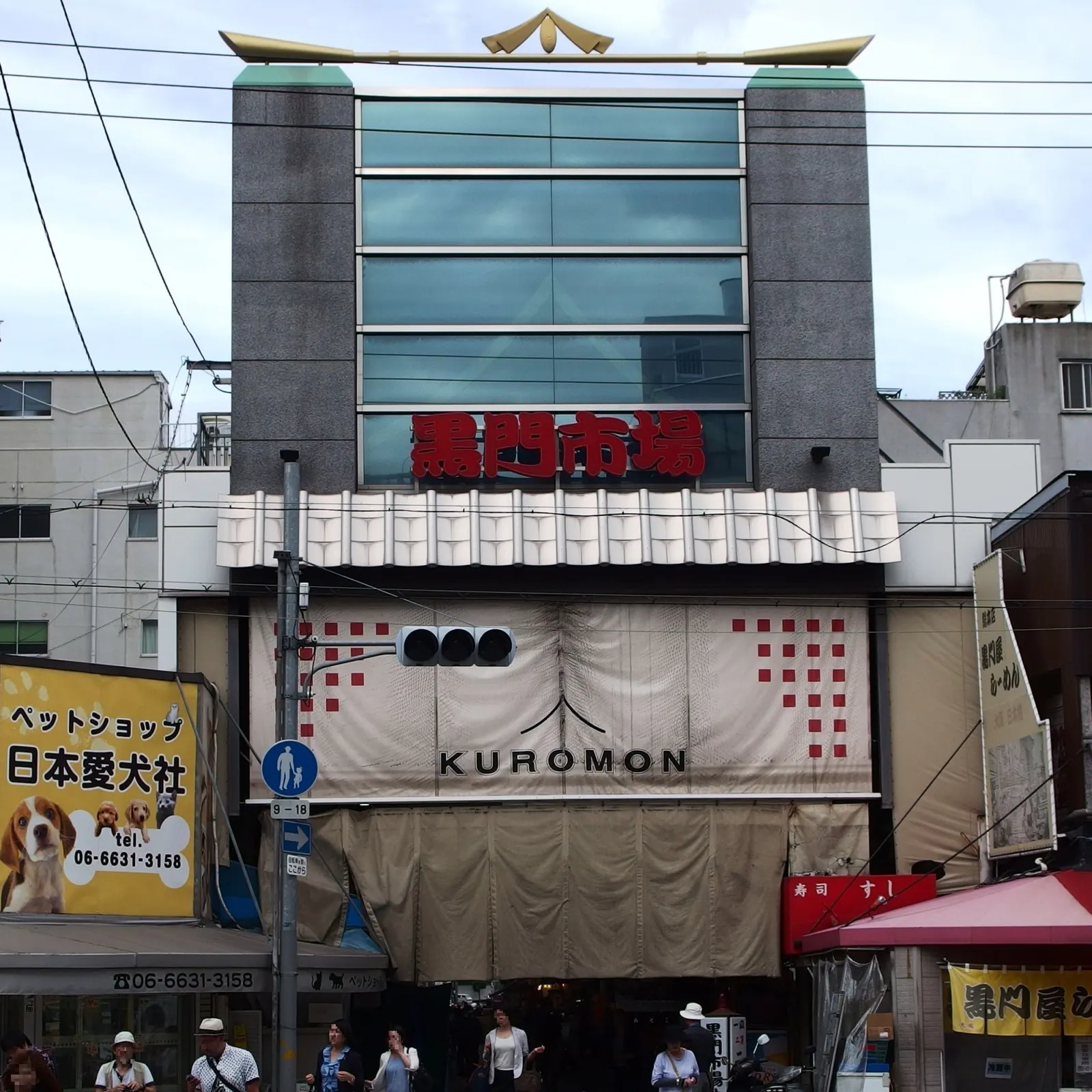
Kuromon Market is about 580 m of covered arcade with about 150 shops, 5 minutes from Nippombashi exit 10. Hours are set by each shop: many open between 8:00 and 10:00 and close between 16:00 and 18:00, some at 14:00 or when sold out; Kuromon Sanpei stays open 8:00–20:00 every day. Several shops close on Sundays and holidays, some on Wednesdays. That makes Kuromon a morning-to-lunchtime stop, and on the Sunday calls (11 October, 1, 15 and 22 November) and the holiday calls (12 October, 3 November) expect some shutters. Because the arcade is covered along its length, it is also a rain plan.
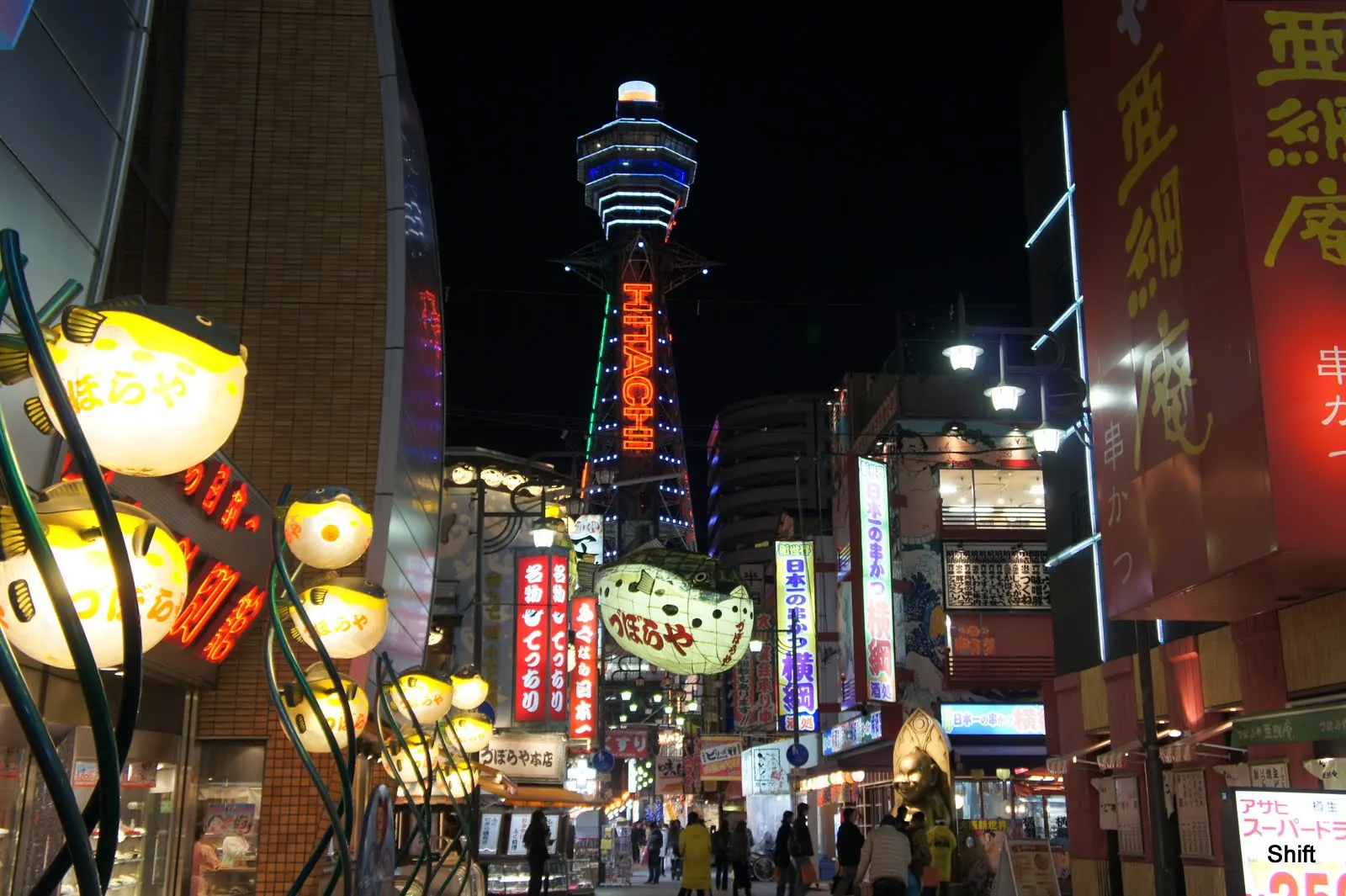
Shinsekai is the old amusement quarter under the Tsutenkaku tower, and the home of kushikatsu — skewers dipped once, and only once, in a shared pot of sauce. Kushikatsu Daruma's original shop there opens 11:00–22:30 on weekdays and 10:30–22:30 at weekends and holidays, every day. It is cash only, has 12 counter seats, takes no reservations and asks every guest to order a drink. Tsutenkaku changed its hours in March 2026 and its prices in April, and every ticket now needs a timed-entry reservation, booked online (holders of passes and vouchers can book at the window on the day) — check the tower's own site for the current times before you plan around it.
Depachika — the department-store food halls — are the rain answer in Umeda: Daimaru Umeda, directly above JR Osaka Station, opens 10:00–20:00 every day.
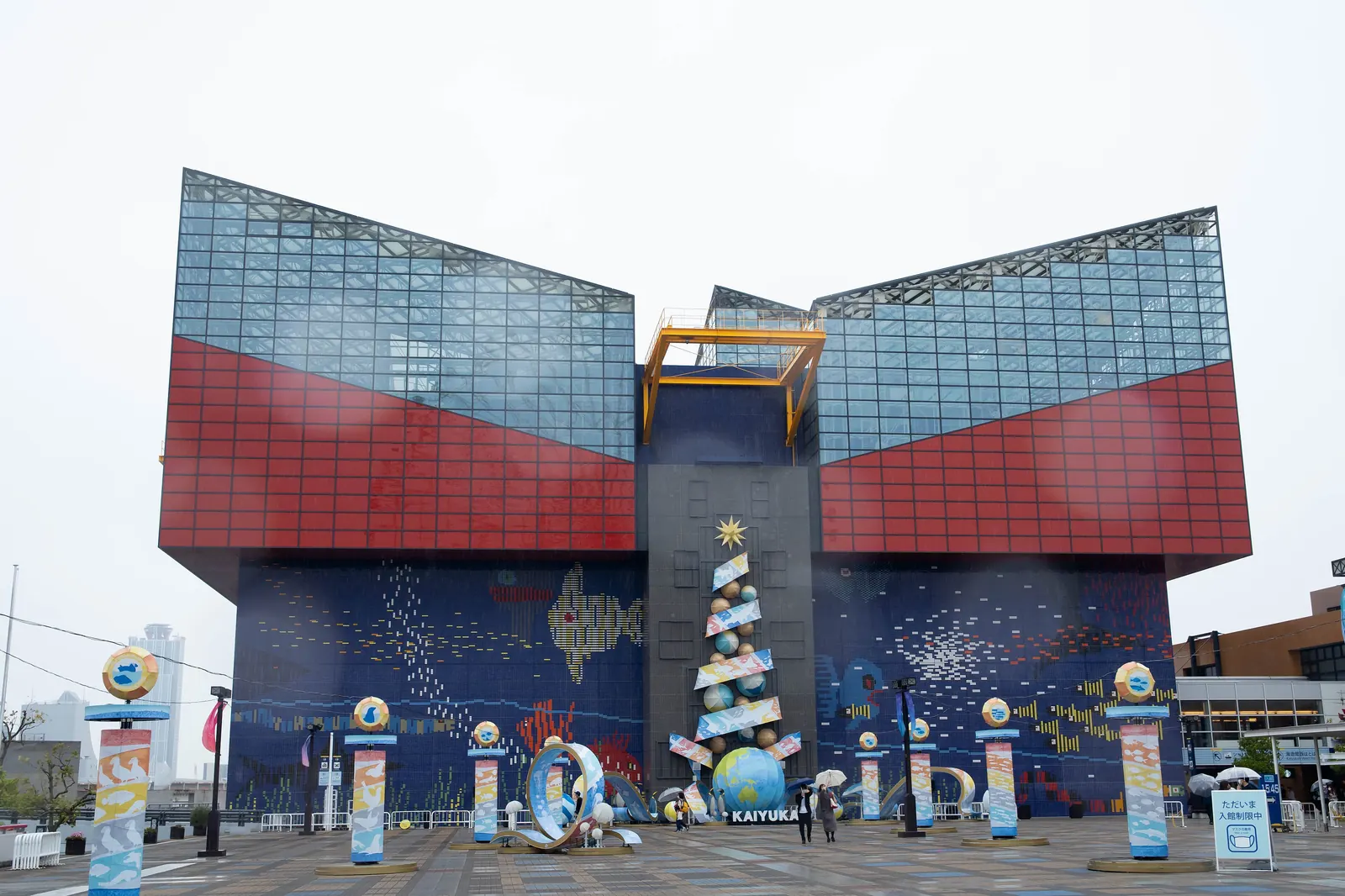
Osaka Aquarium Kaiyukan is about 5 minutes' walk from the terminal (our estimate), which makes it the obvious short-call plan. The catch is the opening time. On the call dates, from the aquarium's own calendar:
Call dates
Opens
Closes (last entry)
Weekdays in October and November
10:30
20:00 (19:00)
Sat 3 Oct, Mon 2 Nov, Sun 15 Nov
9:30
20:00 (19:00)
Sat 31 Oct, Sun 1 Nov, Tue 3 Nov (holiday)
9:00
20:00 (19:00)
Sun 11 Oct, Mon 12 Oct (holiday)
8:30
20:30 (19:30)
Sun 22 Nov
8:30
20:00 (19:00)
Most ships arrive between 06:30 and 08:00, so on a weekday it opens two and a half to four hours after you do. Do it at the end of your day, not the start: you are walking back past it anyway, and it is open well after most all-aboard times.
Adult tickets (16 and over) are priced by date: ¥2,800 on most call dates, ¥3,200 on 31 October and ¥3,500 on 11–12 October; children 7–15 pay ¥1,400 and 3–6 ¥700 on ¥2,800 days. November prices had not been published on 30 September. There is no senior rate. The aquarium recommends timed e-tickets; walk-up buyers may wait. It takes cards and PayPay.
The best things to do in Osaka on a port day
Our full list, with the time each takes from the berth, is on the Osaka top 10, and ready-made days are on Osaka plans. In brief:
Kyoto by rail: Fushimi Inari and Gion on a 12-hour call
Fits 08:00–20:00 at Tempozan (Westerdam 10 November, Diamond Princess 3 October) and, one hour earlier, the 07:00–19:00 calls (Carnival Luminosa, Seabourn Encore). The overnights do it with no pressure at all.
The day many people come to Osaka for, done as a loop so you never retrace your steps: JR out to Fushimi Inari, Keihan from the shrine to Gion, Keihan and the subway home. Times are from the weekday timetable for Wednesday 7 October; weekend times differ slightly. They assume an 08:00 arrival and a 20:00 departure, so all-aboard around 19:30 and our target back at the gangway 18:30.
08:30Off the ship and walk about 5–8 minutes to Osakako station. Tap a contactless card or IC card at the gate.
08:49Chuo line to Bentencho (08:54), then the JR Osaka Loop at 09:01 to Osaka (09:09).
09:16JR Kyoto line special rapid to Kyoto (09:45), then the JR Nara line at 09:56 to Inari (10:01), right beside the shrine gate. ¥1,200 from Osakako.
10:05Fushimi Inari Taisha: the torii tunnels up the mountain. How far you climb is your choice — turn back by 11:40. No eating or drinking on the paths except in marked rest areas.
12:01Keihan from Fushimi-Inari station (5 minutes' walk) to Gion-Shijo, arriving 12:10. ¥240.
12:15Gion and Higashiyama: lunch, the lanes, and Kiyomizu-dera if you want it (closes 18:00; our estimate is a 20–25 minute uphill walk from Gion-Shijo).
16:03Keihan limited express from Gion-Shijo to Temmabashi (16:50), Tanimachi line to Tanimachi 4-chome, Chuo line to Osakako at 17:19. ¥780.
17:27Back at the gangway, about an hour ahead of target. Transport for the day: ¥2,220 each.
Castle, market and Dotonbori: an 8-hour call
Fits 09:00–17:00 at Tempozan (Asuka II, 7 October) and 07:30–16:30 (Viking Venus, 1 October, shifted earlier). On a 12-hour call it is the Osaka-only alternative to Kyoto, with an evening to spare.
Osaka's three best things in the order the subway prefers: the castle first, because the Chuo line runs there with no change; Kuromon while the stalls are still open; Dotonbori for the last meal. Times assume a 09:00 arrival and a 17:00 departure, so all-aboard around 16:30 and our target back at the gangway 15:30.
09:30Off the ship and walk about 5 minutes to Osakako.
09:34Chuo line direct to Tanimachi 4-chome, arriving 09:49. ¥290. Leave by exit 9.
10:05Osaka Castle: our estimate is 15–20 minutes on foot to the keep through the park. The Main Tower opens at 9:00; ¥1,200. The lift runs to the 5th floor, the rest is stairs. See the Sakuramon gate and the great walls on the way.
12:01Tanimachi line to Tanimachi 9-chome, then the Sennichimae line to Nippombashi, arriving 12:14. ¥190.
12:20Kuromon Market, about 5 minutes from exit 10: graze on seafood, wagyu skewers and fruit. Many stalls close between 16:00 and 18:00, some at 14:00, so this is the right hour.
13:30Walk to Dotonbori (our estimate 10–15 minutes). Okonomiyaki at Mizuno (11:00–22:00, open every day) or takoyaki from a stall, and the canal.
14:34From Namba, Yotsubashi line to Hommachi, then the Chuo line to Osakako, arriving 14:56. ¥290.
15:05Back at the gangway, 25 minutes ahead of target. Transport for the day: ¥770 each.
Dotonbori at dawn and Kuromon: the 5½-hour call
Fits the 06:30–12:00 National Geographic Resolution call on Friday 2 October, the only upcoming call under 8 hours.
A short call rewards an early start: the subway is running, Dotonbori's canal is empty, and Kuromon's stalls open as you reach them. All-aboard is around 11:30, so our target back at the gangway is 10:30.
07:00Off the ship and walk about 5 minutes to Osakako.
07:14Chuo line to Sakaisuji-Hommachi, then the Sakaisuji line to Nippombashi, arriving 07:33. ¥290.
07:40Walk to Dotonbori (our estimate 10–15 minutes) and see the canal and the signs before the crowds — the one hour of the day when you have it nearly to yourself.
08:30Back to Kuromon Market. Many stalls open between 8:00 and 9:00; Kuromon Sanpei opens at 8:00. Breakfast is seafood, wagyu skewers and fruit, eaten standing.
09:30Walk to Nippombashi exit 10, about 5 minutes.
09:36Sakaisuji line and Chuo line back to Osakako, arriving 09:56. ¥290.
10:05Back at the gangway, 25 minutes ahead of target.
How to think about your hours
Work backwards from the ship. Your all-aboard time is usually 30 minutes before departure (check the daily programme), you want to be back at the gangway an hour before that, and the first half hour after arrival goes on clearance and getting off. So the time you can actually use is the call length minus about two hours. From the gangway to the Osakako platform takes about ten minutes.
Call
Usable
From Tempozan
4 hours
about 2
Kaiyukan if it is open (10:30 on weekdays, earlier at weekends), the Ferris wheel and the mall. Or Dotonbori, with about an hour there.
6 hours
about 4
One district: Dotonbori and Kuromon, or the castle. The kendo lesson only just fits. Not Kyoto.
8 hours
about 6
The castle, Kuromon and Dotonbori. Or one Kyoto district — Fushimi Inari or Gion — with about 3 hours 20 minutes there. Nara is similar.
10 hours
about 8
Kyoto properly: Fushimi Inari and Gion by the rail loop. Or Nara and Dotonbori, or Osaka at leisure with a class.
12 hours+
about 10
Kyoto with slack, or Osaka by day and Dotonbori after dark on the late departures.
Overnight
two days
Kyoto one day, Osaka the other.
The commonest upcoming call is 12 hours — 7 of the 22 calls on the schedule — and the median is 12. There are two of 8–9 hours, four of 10–11, three of 14–16½, Star Seeker's 23 hours from midnight on 16 October, and one short call: National Geographic Resolution, 06:30–12:00 on 2 October. Four are overnights: Celebrity Millennium on 12–13 October, 19–20 October and 1–2 November, and Seven Seas Explorer on 2–3 November. Despite what you may read, most itineraries do not overnight here. The full list is on cruises to Osaka; the port association had published calls only up to 27 November when we checked on 30 September, with nothing yet for December or 2027.
Tours worth booking, by how many hours you have
Every pick opens our own page first — what the operator actually includes, who should skip it, and which upcoming Osaka calls it fits. Prices are the operator's "from" price as of 26 Sep 2026.
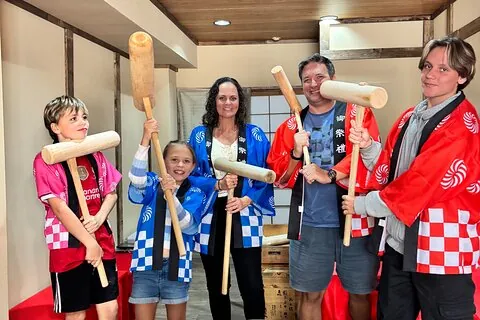
5h+One hands-on session: kendo, sake and takoyaki, or mochi
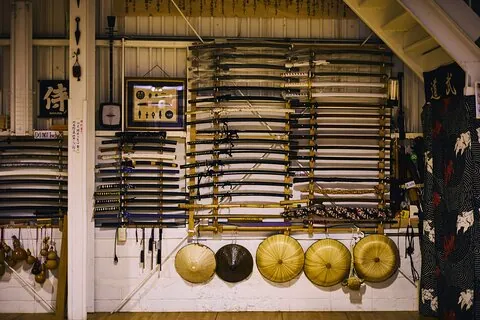
The classes are where Osaka's tours earn their fee: the sights are easy alone, a dojo or a sake sommelier is not. None meets at Tempozan; add 20–30 minutes on the subway each way.
Tours are booked through Viator (a Tripadvisor company). If you book, we may earn a small commission at no extra cost to you. It never decides what we recommend — which is why each tour page has a "think twice" note.
About the return to the ship. None of the Osaka tours we list picks up at Tempozan, mentions cruise passengers, or puts an on-time-return promise in writing — we searched every listing for it. They are classes and walks in the city that you reach by subway yourself, which is easy here: the castle-side walk starts 15 minutes from the ship on one train, and the Namba classes are 20–23 minutes away. Session start times are not in the listings we hold, so check them against your call before you book, tell the host your all-aboard time when you arrive, and plan to be back at the gangway an hour before it. Every tour here can be cancelled up to 24 hours ahead. For guided options beyond these, see Osaka guided.
Money, cards and the practical stuff
Osaka is one of the easiest cities in Japan to pay your way by card. Where you will need what:
Place
Pay with
Osaka Metro
Contactless credit or debit card at the gate, IC card, or cash
JR, Keihan, Hankyu, Kintetsu (to Kyoto and Nara)
IC card or cash; the fares in this guide are IC fares
Osaka Castle Main Tower
Cash, cards, IC cards, QR apps
Kaiyukan aquarium
Cards and PayPay; iD, PiTaPa and Rakuten Pay at the counter
Kushikatsu Daruma, Shinsekai
Cash only
Kuromon Market stalls
Varies by stall; carry cash
Taxis
The association advertises cashless payment; ask before you ride
Terminal exchange desk
Changes USD, EUR, GBP, AUD, KRW and CNY (usually 8:00–17:00)
Cash near the ship. Straight-line distances from the terminal: a 24-hour 7-Eleven at about 260 m and another at 410 m, a 24-hour Lawson at 390 m, a 24-hour FamilyMart at 450 m, and the Osaka Chikko Post Office at about 210 m (counter Monday–Friday 9:00–17:00). Seven Bank machines in 7-Eleven and Japan Post machines generally accept foreign cards. Carry ¥5,000–10,000 in notes for the market, kushikatsu and small stalls. For the traps that catch card users on a Japan cruise, see the three payment traps; for buying tax-free, the November 2026 change.
Opening days worth checking against your date. None of the restaurants named in this guide has a weekly closing day that falls on a call date: Mizuno and Kushikatsu Daruma open every day, and Aizuya's Namba branch closes only on the third Thursday of odd months (19 November, when no ship is in). The date that matters is the day of the week at Kuromon: some stalls close on Sundays and holidays, which catches 11 and 12 October and 1, 3, 15 and 22 November. The weekend and holiday calls also bring bigger crowds — Kaiyukan charges its highest price, ¥3,500, on 11–12 October, a clear sign of how busy it expects to be.
When to go: seasons and crowds
Autumn (October–November) is when the ships come: 14 of the 22 upcoming calls are in October and 8 in November. Average highs are 23.7 °C in October and 17.8 °C in November, with lows of 16.0 °C and 10.2 °C. October is still fairly wet (136 mm on average) and November much drier (72.5 mm).
Typhoons reach the Kinki region about three times a year, most often in September (1.07 on average) and still in October (0.7). With most of this season's calls in October, keep an eye on the forecast; a typhoon can change a port day or cancel it.
Autumn leaves usually come after the last published call: the final ship on the current schedule is Norwegian Jade on 27 November, and we could not confirm the official maple date for Osaka, so do not plan the day around the colours.
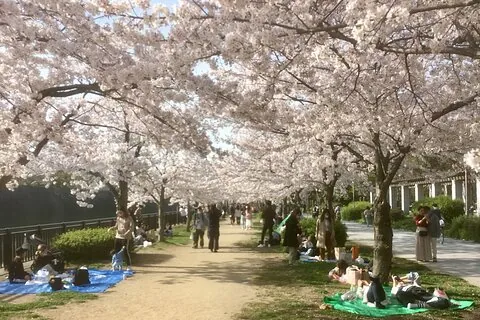
Spring (late March–April). Cherry blossom opens around 27 March in a normal year and reaches full bloom around 4 April (26 March and 3 April in 2026); Kyoto runs to the same calendar. In 2026 Silver Moon, Silver Nova, Celebrity Millennium, Le Soléal and Le Jacques Cartier called between the first bloom and the week after full bloom; Luminara and Spectrum of the Seas, on 22 and 23 March, came a few days early.
Summer. August averages a high of 33.7 °C and June is the rainiest month (185 mm).
Winter. The national port specification notes morning fog in winter. No calls after November 2026 had been published when we checked.
Holidays on call dates: Monday 12 October (Sports Day) and Tuesday 3 November (Culture Day). Expect crowds at the castle, the aquarium and in Kyoto.
Rain plan: Kaiyukan beside the ship, the castle keep (a museum), Kuromon's covered arcade, Namba's covered shopping streets and the Daimaru Umeda food hall. The kendo and cooking classes are all indoors.
What other guides get wrong about Osaka
Things you will read about Osaka elsewhere — in older port guides, forum posts and some cruise-line pages — set against what the official source says today.
You may read
What the official source says
Source
Osaka cruise ships use a terminal on Sakurajima, or sometimes Sakaiminato or Kobe instead.
Every one of the 83 calls on the 2026 Osaka Port schedule is in Osaka itself: 79 at Tempozan, two at Chuo Pier North and two at Kaiyukan West Pier — none at Sakurajima. Sakaiminato is a different port on the Sea of Japan coast, and Kobe has its own schedule; if your itinerary says Osaka, you are at Tempozan, five minutes from Osakako station.
Osaka Castle's keep costs ¥600 and closes at 5 pm.
Adult entry has been ¥1,200 since 1 April 2025, and the keep is open 9:00–18:00 with last entry at 17:30. The lift goes only to the 5th floor; floors 5–8 and the whole way down are stairs.
The Kaiyukan aquarium next to the pier costs ¥2,700.
Prices now change by date. In October 2026 an adult ticket is ¥2,800 on most days and ¥3,200–3,500 on the busiest days, and on weekdays the doors open at 10:30, not 9:30.
Believing Kyoto is 30 minutes away.That is the train from Osaka Station. From the gangway it is about 55 minutes to Kyoto Station and 72–77 minutes to Fushimi Inari or Gion — about 2½ hours of travel in the day. On a call under about 8 hours, stay in Osaka.
Planning the aquarium for first thing.On weekdays in October and November Kaiyukan opens at 10:30, two and a half to four hours after most ships arrive. Do it at the end of the day, when you are back at the pier anyway.
Staying on the Chuo line for Namba.The Chuo line runs direct to the castle (Tanimachi 4-chome) but not to Namba. For Dotonbori change at Hommachi or Awaza; the ride is still 20–23 minutes and ¥290.
Buying paper tickets at every change.Contactless credit and debit cards work at the gates on every Osaka Metro line, with no registration. The day pass (¥820 weekdays, ¥620 weekends) pays off only with three or more rides.
Arriving at Kushikatsu Daruma with only a card.The Shinsekai main shop takes cash only, has 12 counter seats, and asks every guest to order a drink.
Leaving Kuromon for the afternoon.Many stalls close from 16:00, some at 14:00 or when sold out, and several close on Sundays and holidays — which affects the calls on 11 and 12 October and 1, 3, 15 and 22 November.
Expecting a senior discount or a lift to the top at the castle.The free entry for over-65s is for Osaka City residents only; visitors pay ¥1,200. The lift runs to the 5th floor, and floors 5 to 8 and the way down are stairs unless you have walking difficulties.
Following old advice.Many pages still say the castle keep closes at 17:00 (it has been 18:00 since April 2025), that the station is 10 minutes' walk (it is about 5), or that most ships overnight here (4 of the 22 upcoming calls do).
Researched from official timetables, operators and the port authority. Every time and fare in this guide was checked against the sources listed above on 1 October 2026; where we had to estimate (a walk, a taxi in traffic), the text says so. Timetables change — if you find one that has, tell us and we will fix it.
Quick answers
Osaka cruise port questions
Where do cruise ships dock in Osaka?
At Tempozan, in front of the Tempozan Ferris wheel and beside the Kaiyukan aquarium. All 22 calls on the port association's schedule from 1 October to 27 November 2026 use it, and 79 of the 83 calls in 2026. The only exceptions this year were two small expedition calls at Chuo Pier and two by a small Japanese boutique ship at Kaiyukan West Pier.
How far is the Osaka cruise terminal from the city centre, and is there a shuttle bus?
About 20–25 minutes by subway, and you walk to it: Osakako station on the Osaka Metro Chuo line is about 5 minutes on foot from the terminal, by exits 1 and 2, according to both the port association and the national port specification, which lists a downtown shuttle as not needed. Allow 5–8 minutes from the gangway on the 430 m quay. From Osakako, Osaka Castle is 15 minutes and Namba for Dotonbori 20–23, both ¥290. Some cruise lines may run their own bus, so check the daily programme. The terminal also has a taxi pool for 28 cars.
What is at the Osaka cruise terminal: is there Wi-Fi, currency exchange or an ATM?
On ship days the Tempozan terminal has a boarding bridge, toilets, temporary Wi-Fi, a currency-exchange desk (US dollars, euros, pounds, Australian dollars, won and yuan) and a tourist-information desk in English, Chinese, Korean, German and Japanese. Both desks usually keep 8:00–17:00, varying by ship. There is no shop or vending machine inside, but the Tempozan Market Place mall is next door, and 24-hour 7-Eleven, Lawson and FamilyMart stores are 260–450 m away; Seven Bank machines in 7-Eleven generally accept foreign cards.
What are the best things to do in Osaka on a cruise stop?
On an 8-hour call, the classic three: Osaka Castle (15 minutes direct on the Chuo line, ¥290, keep ¥1,200), Kuromon Market for a grazing lunch before the stalls close from 16:00, and Dotonbori for takoyaki and okonomiyaki. On about 10 hours or more, Kyoto's Fushimi Inari and Gion become possible by rail. For a hands-on hour, the kendo lesson with a licensed instructor is the most-reviewed experience at any port on this site. Finish at Kaiyukan, beside the ship.
What is there to do near the Osaka cruise port, within walking distance or on a short call?
Three things within about 5 minutes on foot of Tempozan (our estimate): the Osaka Aquarium Kaiyukan (adults from ¥2,800; it opens at 10:30 on weekdays in October and November), the Tempozan Giant Ferris Wheel (¥1,000) and the Tempozan Market Place mall. Subtract about two hours from your call for getting off and getting back early. On 4 hours that leaves about 2: those three, or about an hour in Dotonbori, 20 minutes away. On 6 hours, one district: Dotonbori and Kuromon, or the castle. Kyoto needs about 8 hours for one district.
What food should I try in Osaka on a cruise day, and where?
Three dishes, each 19–23 minutes and ¥290 by subway from Osakako. Takoyaki on Dotonbori: Wanaka's Sennichimae main shop opens at 10:30 on weekdays and 9:30 at weekends. Okonomiyaki, mixed rather than layered: Mizuno at Dotonbori 1-4-15, 11:00–22:00 every day. Kushikatsu in Shinsekai: Kushikatsu Daruma's original shop, cash only, one drink each, and no double-dipping in the shared sauce. For grazing, Kuromon Market's roughly 150 stalls open from about 8:00–10:00; many close from 16:00, some at 14:00, and several on Sundays and holidays.
How do I get from the Osaka cruise port to Dotonbori, Kuromon Market or Umeda?
By subway from Osakako, with one change and trains every 7–8 minutes at midday. Dotonbori (Namba): Chuo line, change at Hommachi or Awaza, 20–23 minutes, ¥290. Kuromon Market (Nippombashi): change at Sakaisuji-Hommachi, 19–21 minutes, ¥290. Osaka Station and Umeda: Chuo line to Bentencho, then the JR Osaka Loop, 19 minutes, ¥420. A taxi to Dotonbori takes about 12 minutes without traffic and costs from about ¥3,000 (our estimate from the official tariff).
How do I get from the Osaka cruise port to Osaka Castle, and what are its hours and ticket price?
15 minutes and ¥290: the Chuo line runs from Osakako to Tanimachi 4-chome with no change, and from exit 9 we estimate 15–20 minutes on foot through the park to the keep. The Main Tower opens 9:00–18:00 (last entry 17:30) and costs ¥1,200 for adults; over-65s go free only if they live in Osaka City. Everyone may take the lift to the 5th floor; above that it is stairs, except for people with walking difficulties. Allow about two hours. A taxi to the Otemon gate is about 14 minutes without traffic, from about ¥4,000.
Can I visit Kyoto from the Osaka cruise port, and how long does it take?
Yes, on a call of about 10 hours or more. From Osakako it is 55 minutes to Kyoto Station (¥1,080), 72 minutes to Fushimi Inari by JR (¥1,200) and 77 minutes to Gion-Shijo by the subway and Keihan (¥780) — not the 30 minutes often quoted, which is the train from Osaka Station. A loop out to Fushimi Inari and back from Gion fits an 08:00–20:00 call with about an hour to spare. On 8 hours you have time for one district only.
Can I visit Nara from the Osaka cruise port?
Yes, on a long call. The Chuo line to Kujo and the Hanshin Namba line rapid express through to Kintetsu Nara takes 61 minutes (¥1,140); coming back, the Kintetsu Keihanna line runs through to Osakako in 65 minutes (¥960). Todai-ji's Great Buddha Hall, in the deer park, kept 7:30–17:30 when we checked. Nara competes with Kyoto for the same long day: choose one.
How do I get from the Osaka cruise port to Universal Studios Japan?
Two ways, both under 30 minutes. The Captain Line boat runs from Kaiyukan West Pier, beside the aquarium, to Universal City Port in about 10 minutes: ¥900 one way, or ¥1,100 on its special-fare dates. In its September 2026 timetable boats ran every 30–60 minutes from about 9:30–10:30 to 17:00–19:00, and they can be cancelled in bad weather. By rail it is 27 minutes and ¥420, changing at Bentencho and Nishikujo. A theme park is a full day: check its own hours and tickets for your date.
Is the Osaka cruise port the same as Kobe?
No. Kobe is a separate city with its own cruise terminals, and every Osaka call this autumn is at Tempozan. From Osakako, Sannomiya in central Kobe is 47 minutes and ¥900 (Chuo line to Bentencho, JR to Osaka, JR Kobe line special rapid), or 59 minutes for ¥650 by a cheaper route. If your ship docks at Kobe instead, Osaka Station is 21–27 minutes from Sannomiya by JR (¥420). Check which port your itinerary names.
How do I get from Kansai Airport to the Osaka cruise terminal?
About 1 hour and ¥1,800 (children ¥900) on the Kansai Airport Limousine Bus, Nanko/Tempozan/Universal Studios Japan route, to the Tempozan (Kaiyukan) stop by the aquarium, about 5 minutes' walk from the terminal (our estimate). No reservation is taken: seats are first come, first served, and the same route runs back to the airport after you disembark. Buses run in the daytime only, leaving the airport from about 08:20 to about 17:00, so check the operator's timetable against your flight. We have not priced a taxi for this run.
Which cruise ships call at Osaka in 2026?
83 calls are on the port association's 2026 schedule, 22 of them from 1 October to 27 November, all at Tempozan. Norwegian Jade calls four times, Celebrity Millennium three, and Diamond Princess, Seabourn Encore and Star Seeker twice each; Viking Venus, National Geographic Resolution, Royal Princess, Asuka II, Carnival Luminosa, Star Navigator, Luminara, Seven Seas Explorer and Westerdam once. The commonest call is 12 hours. Nothing for December or 2027 had been published on 30 September.
How much is the subway in Osaka, can I pay by card, and is a day pass or the Osaka Amazing Pass worth it?
¥290 from Osakako to every central sight. Contactless Visa, Mastercard, JCB, Amex, Diners, Discover and UnionPay cards work at the gates on every Osaka Metro line, with no registration. The Metro and City Bus day pass (¥820 weekdays, ¥620 weekends) pays off only with three or more rides. The Osaka Amazing Pass (¥3,500 for one day) adds unlimited Metro and city-bus rides to free entry at about 40 attractions, including the castle keep (¥1,200), the Tempozan Ferris wheel (¥1,000) and the Captain Line boat (¥900), but not Kaiyukan. It pays only if you will use three of those.
What time does the Osaka Aquarium Kaiyukan open?
On the October and November call dates it opens at 10:30 on weekdays, 9:30 or 9:00 on most weekends and holidays, and 8:30 on 11 and 12 October and 22 November. It closes at 20:00 (last entry 19:00), or 20:30 on 11–12 October. Adult tickets are date-priced: ¥2,800 on most call dates, ¥3,200 on 31 October and ¥3,500 on 11–12 October.
How much is a taxi from the Osaka cruise port?
Osaka's standard fare is ¥600 for the first 1.3 km, then ¥100 per 260 m. By our estimate that is from about ¥3,000 to Dotonbori, ¥3,600 to Osaka Station and ¥4,000 to the castle — floors that leave out time in traffic. Kyoto is about ¥22,500 plus tolls, which is why the train wins.
Do I need cash in Osaka, and should I tip?
Some cash, but less than elsewhere in Japan: carry ¥5,000–10,000. The subway, the castle and the aquarium take cards; Kushikatsu Daruma in Shinsekai is cash only, and Kuromon's stalls vary. The terminal has an exchange desk (usually 8:00–17:00), and 24-hour 7-Eleven, Lawson and FamilyMart stores are 260–450 m away. Do not tip: Japan's national tourism organisation says tips are not customary in restaurants, taxis or hotels; only a private guide may accept one, given discreetly in an envelope.
Do I need a shore excursion in Osaka, and which tour is best?
Not for Osaka itself: every central sight is one subway ride, ¥290 and 15–25 minutes from a station 5 minutes' walk from the ship. Tours earn their fee for experiences. For a couple on a 12-hour call, do Kyoto on your own and take the 3½-hour castle-to-Dotonbori walk (5622657P3) another time; for six, the sake and takoyaki class (427198P1); for limited mobility, the ramen class in Namba (6755P15). None picks up at the port or promises in writing to return you to the ship.
Is the Osaka cruise port accessible for wheelchair users?
Largely. The Tempozan terminal has a boarding bridge, and Osaka Metro lists a lift at Osakako from exit 1 to the west ticket gate and on to the platform. At Osaka Castle, wheelchair users and people with walking difficulties may use the lift to every floor, and five loan wheelchairs are available inside; everyone else rides only to the 5th floor. The ramen class in Namba (6755P15) says all its areas are wheelchair accessible. A taxi to the castle costs from about ¥4,000.
What is the weather like in Osaka for an October or November cruise call?
Average highs are 23.7 °C in October and 17.8 °C in November, with lows of 16.0 °C and 10.2 °C, on Japan Meteorological Agency normals. October averages 136 mm of rain and November 72.5 mm. Typhoons reach the Kinki region about 0.7 times in an average October, so watch the forecast: one can change or cancel a port day. Rain plans: Kaiyukan beside the ship, the castle museum, Kuromon's covered arcade and the Daimaru Umeda food hall.
Can I see Dotonbori at night, and which ships stay late or overnight in Osaka?
Yes, on the late departures: Star Seeker (16 October, 23:00), Luminara (31 October, 23:30) and Diamond Princess (22 November, 21:00), plus the four overnights. The last weekday train leaves Namba at 00:06 and reaches Osakako at 00:30 — but your all-aboard time decides, not the train.