~2h incl. subway — the round trip from the gangway, with the 60-minute margin kept aside.
Tap a photo to see it large. 10 photographs, each credited.
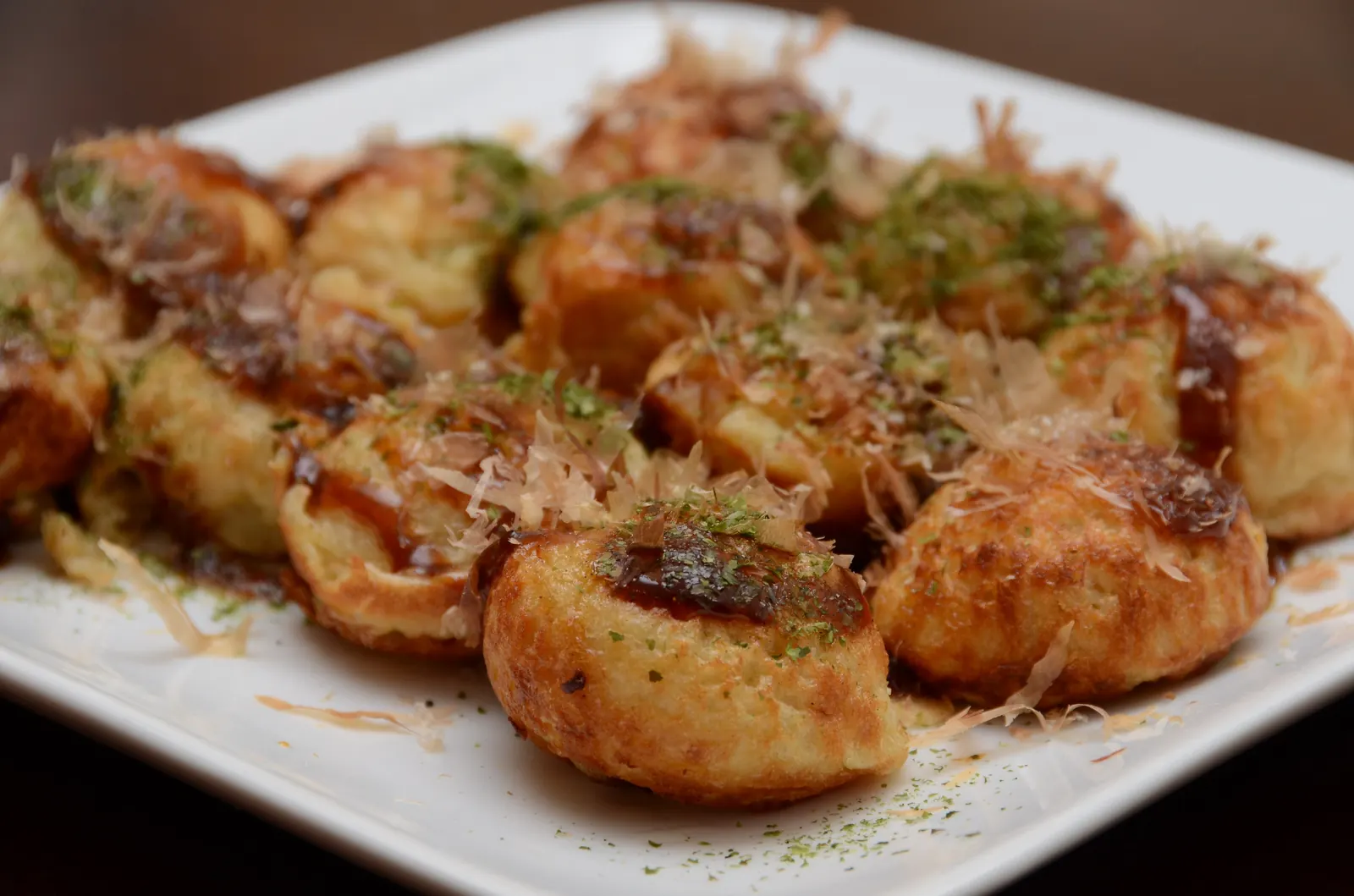
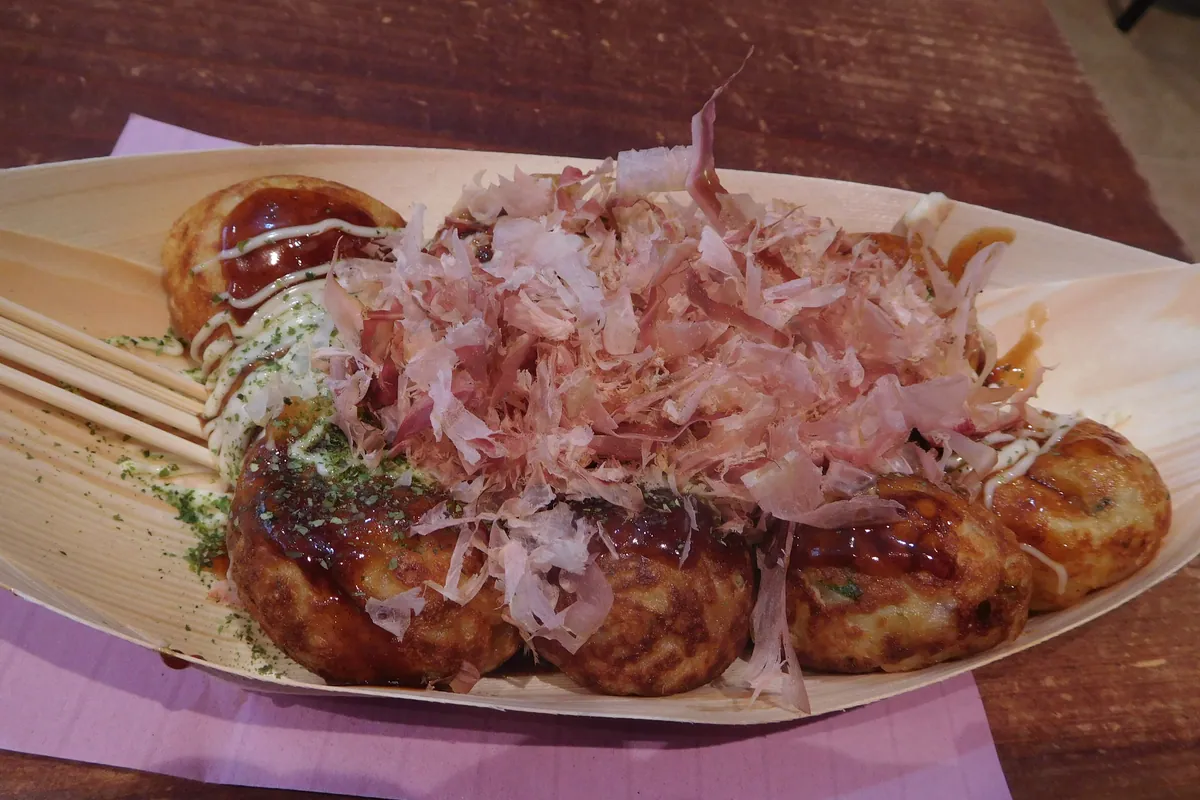
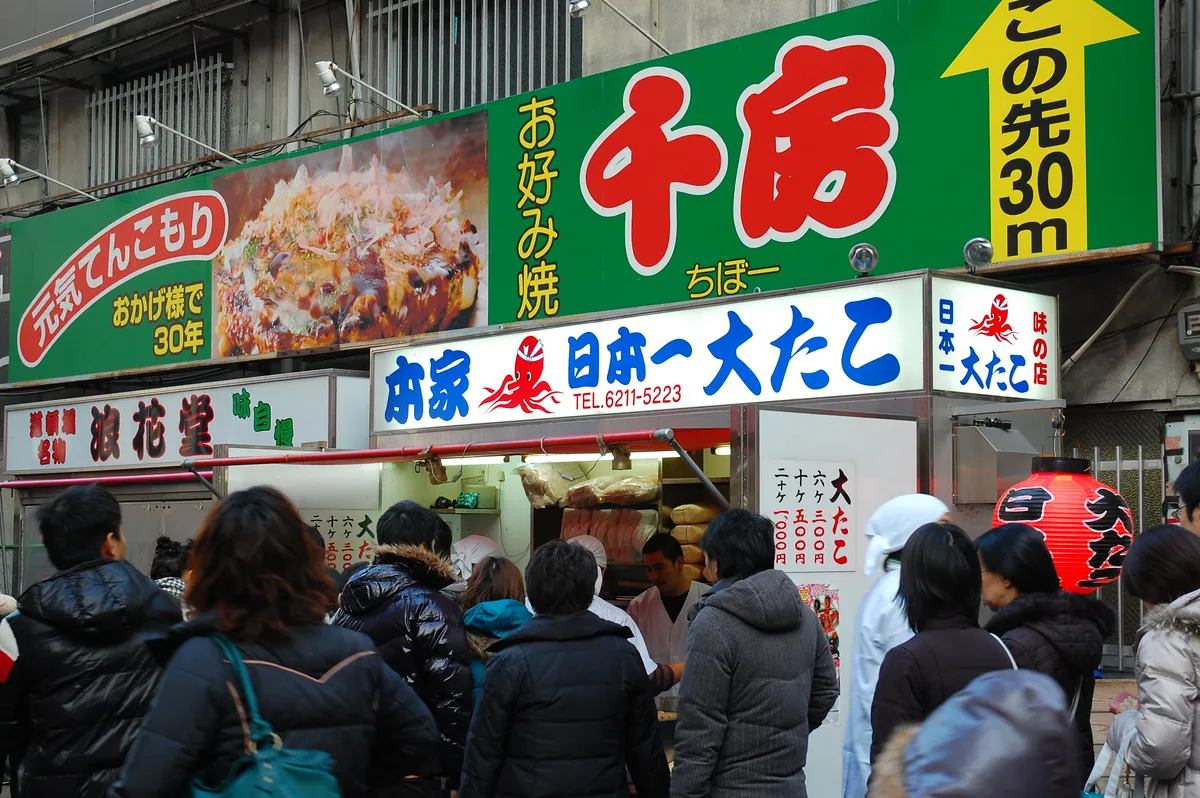
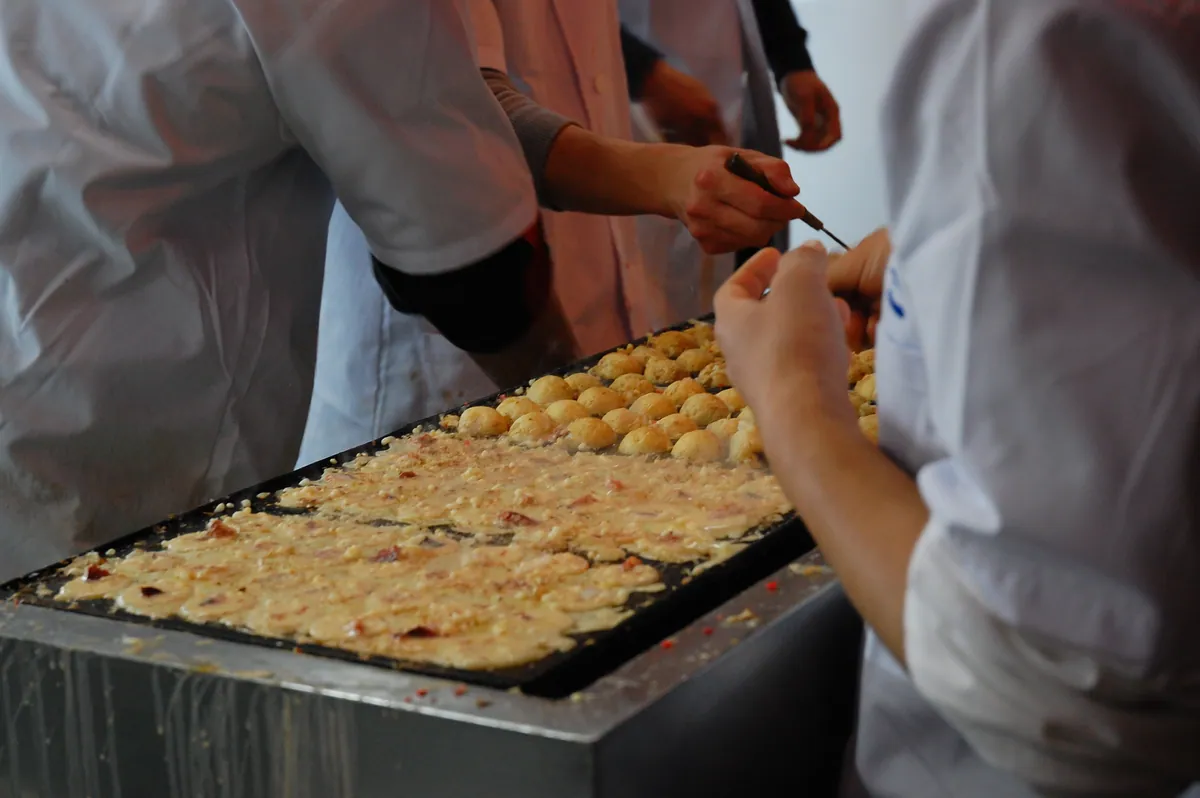
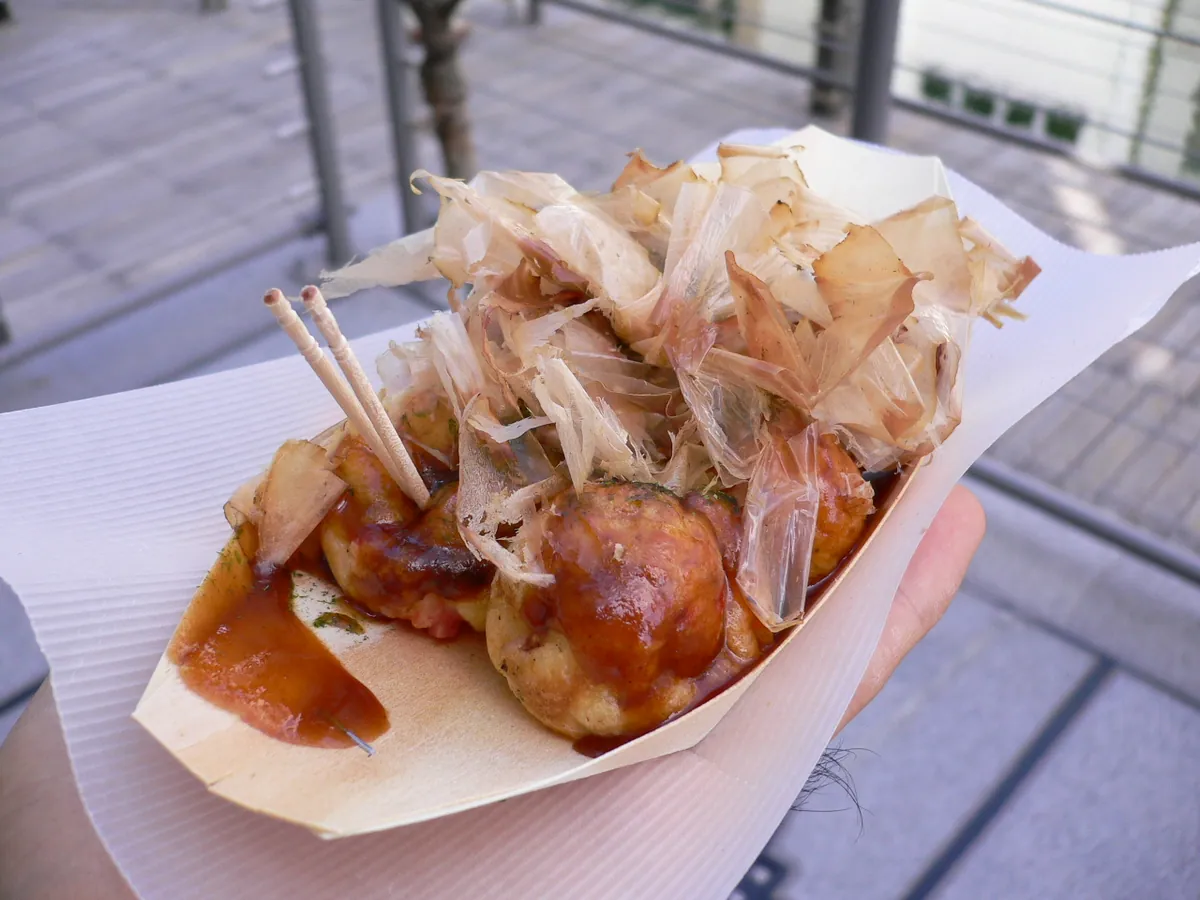
Invented in this city in 1935 — batter, a cube of octopus, turned in a cast-iron dimple plate with a pick. Molten inside; the burn is a rite of passage and everybody gets it once.
Four dishes invented here, all eaten standing, none needing a reservation
Takoyaki was invented in Osaka in 1935, batter and octopus turned in a cast-iron plate with a pick. Eating it standing at the stall is not informality but physics: the centre is molten and does not travel. Osaka calls itself the nation's kitchen and this is the entry fee.
Osaka’s word for itself is kuidaore — to ruin yourself by eating. What that produced is a canon of dishes designed to be cheap, fast, hot and eaten upright, and a city that would genuinely rather you enjoyed the ¥400 one than the ¥4,000 one.
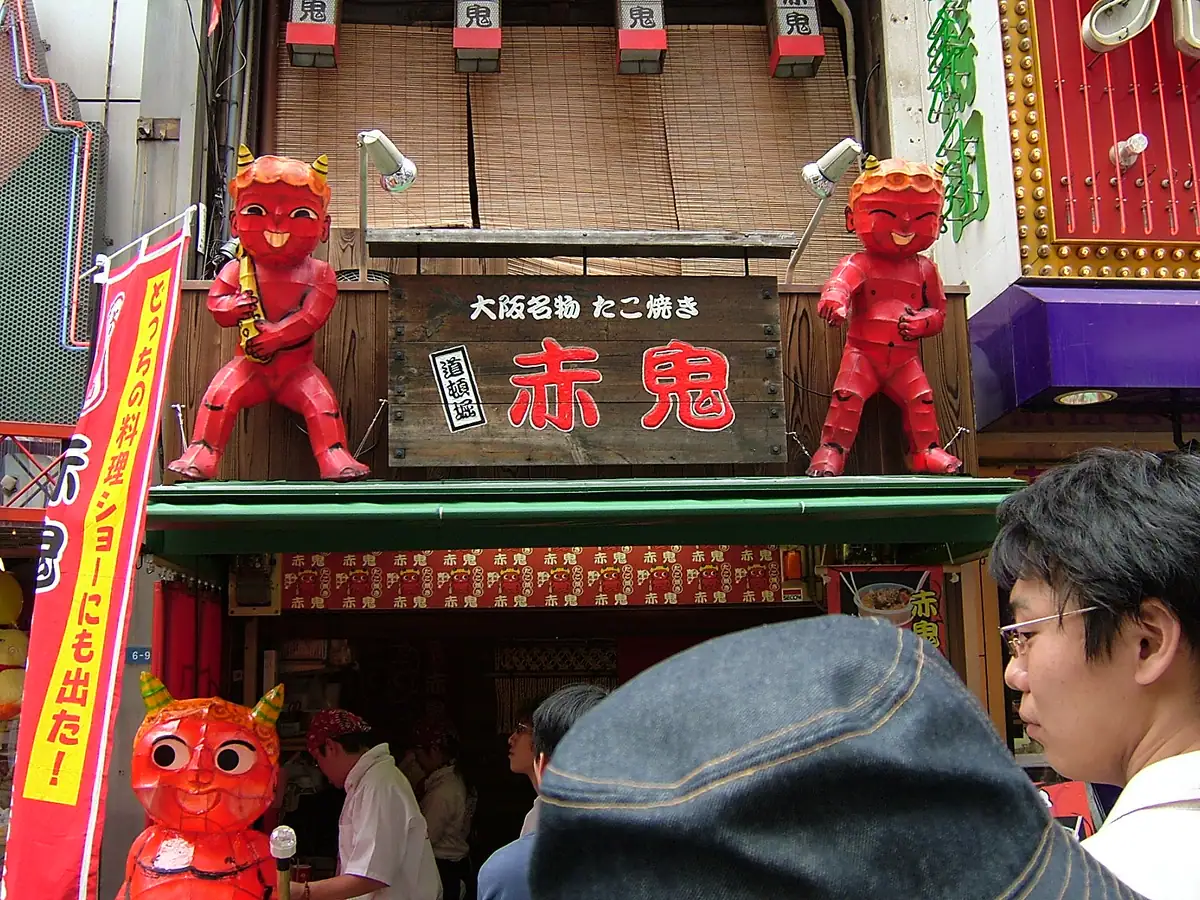
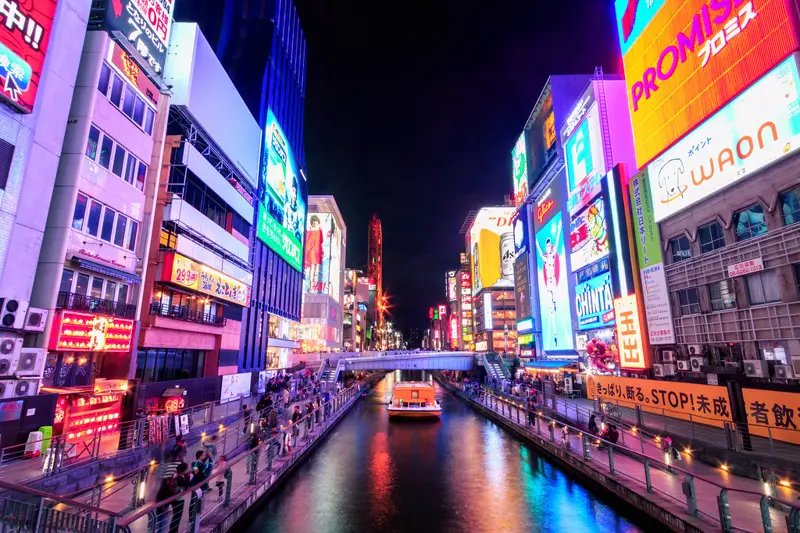
A canal cut in 1615 by a merchant who died before it opened, lined for four centuries by theatres and then by the most aggressive shopfront signage in Japan. The running man has advertised here since 1935 and is now on his sixth version; the mechanical crab still moves its legs.
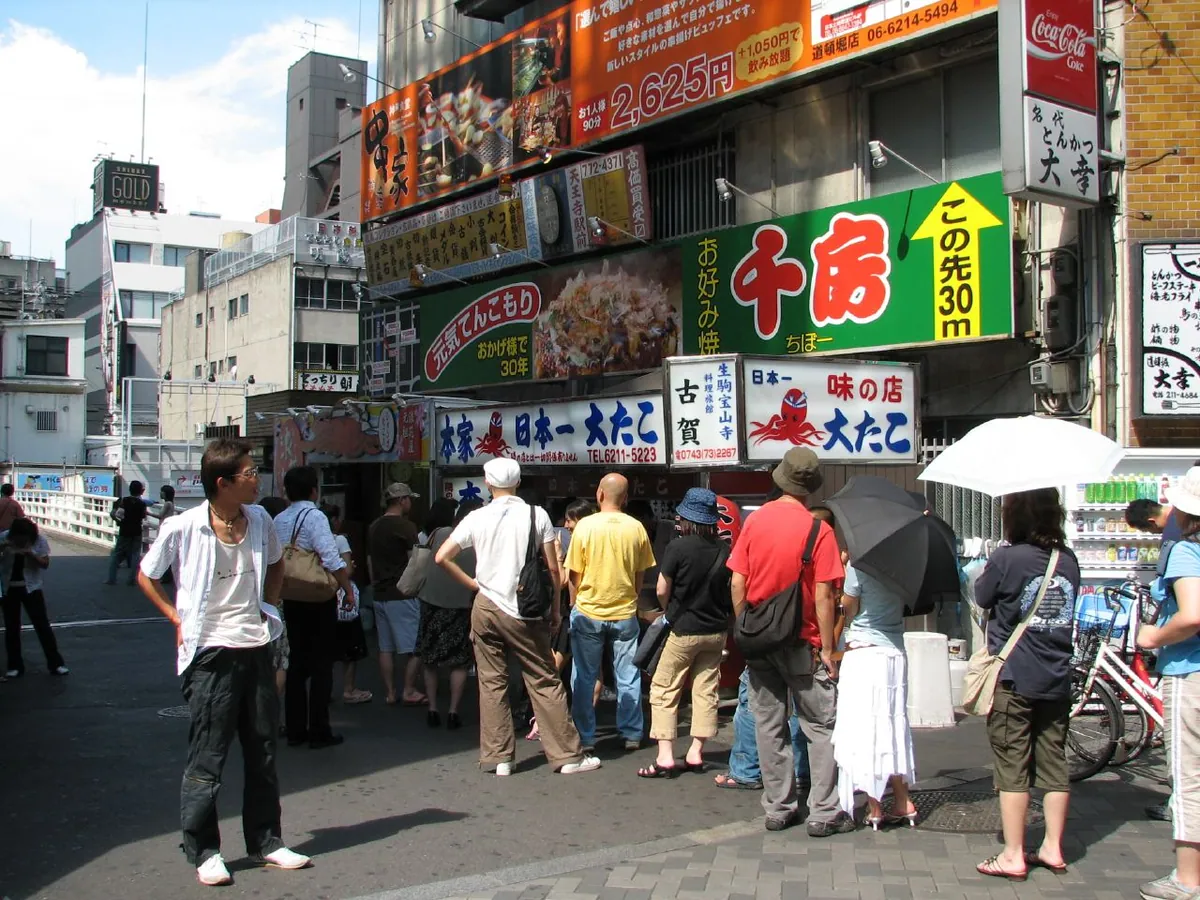
This is where Osaka does the thing Osaka does: eat standing up, loudly, without pretending it is refined. Takoyaki was invented in this city in 1935, kushikatsu belongs to the district south of here, and okonomiyaki is mixed into the batter rather than layered — a distinction Hiroshima will argue about.
Endo Tomekichi puts octopus in the batter
Mixed batter — the Osaka method
One sauce pot, one rule
Kuidaore means the whole range
Takoyaki standing, okonomiyaki sitting, kushikatsu with one dip. Total spend under ¥3,000 and it is the city.
The one the queue agrees on, the one people who live here use instead, and the one nearest your ship. Opening days change; check before you build a day around one.
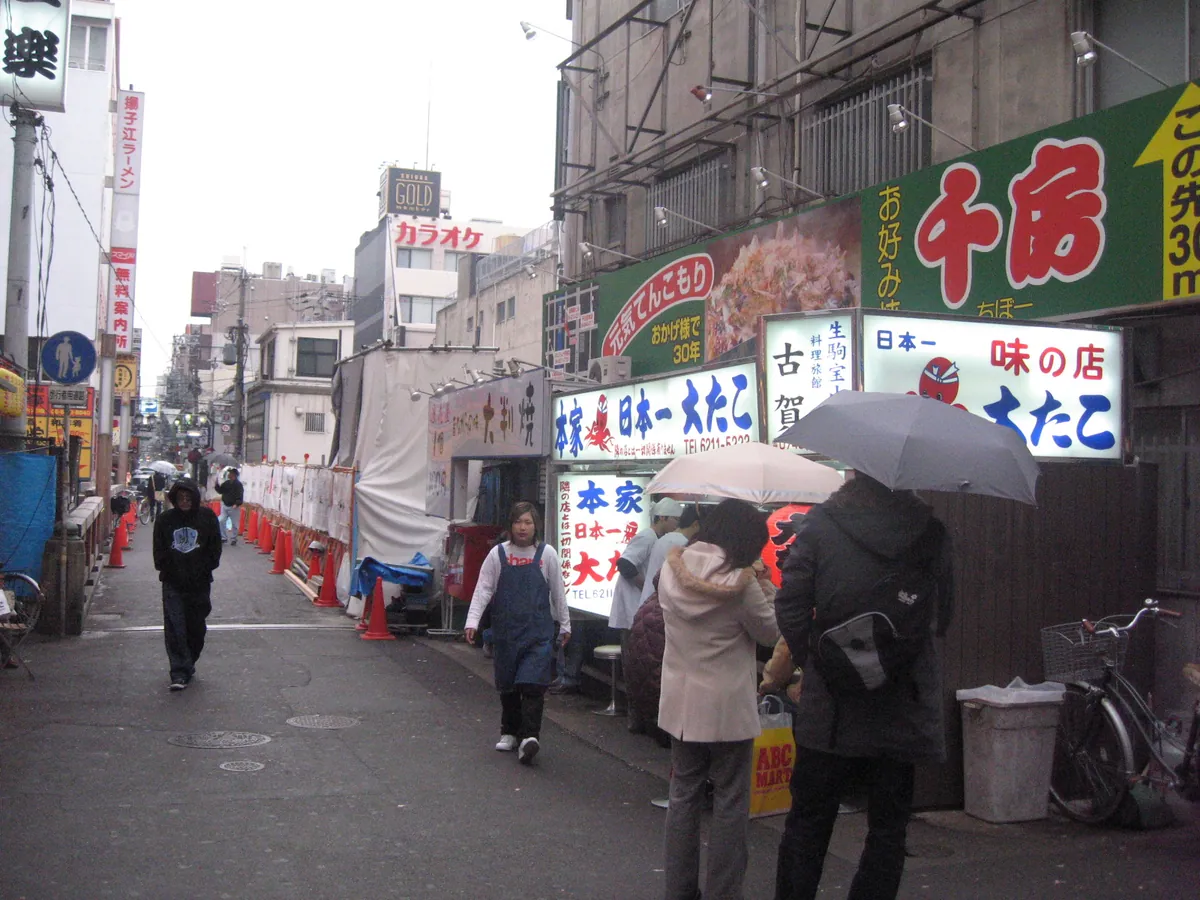
The Dotonbori name most visitors reach first, and consistent enough to deserve it.
Open in Google MapsWhere locals goAizuya Honten会津屋 本店Where takoyaki was invented in 1935. Served plain, without sauce, which surprises people.
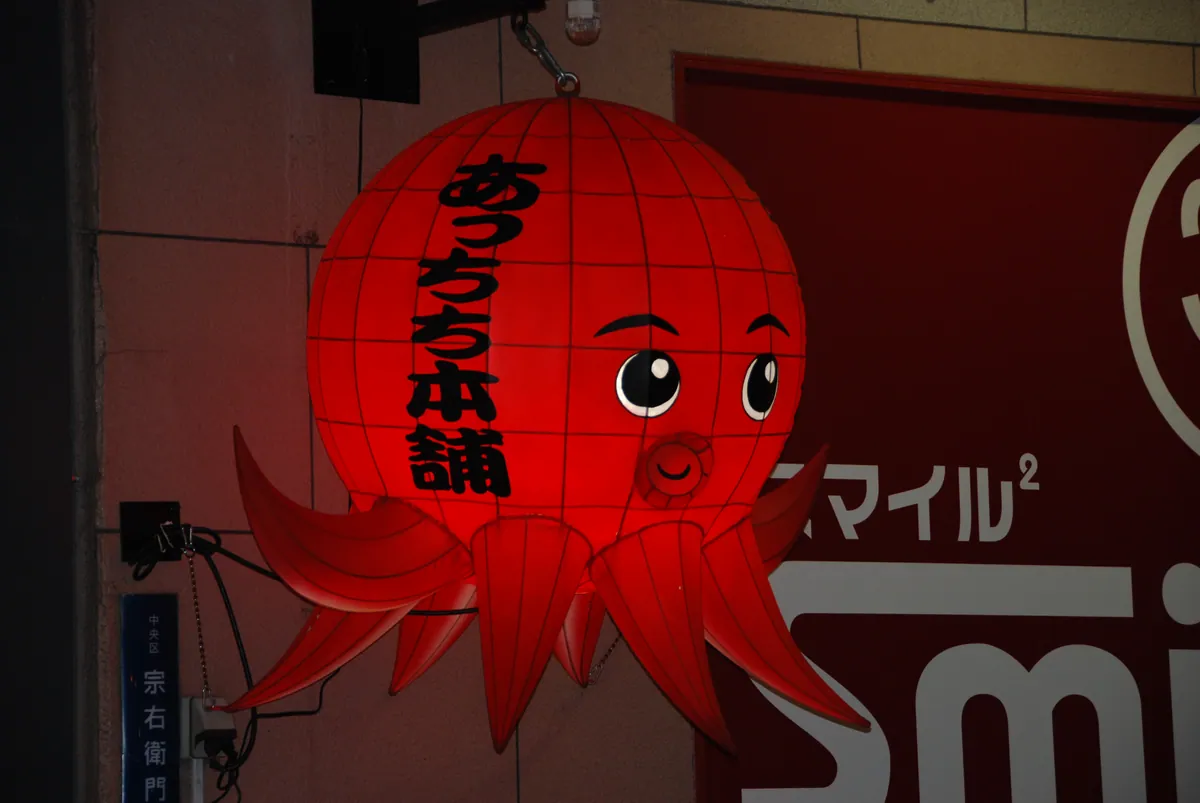
Open in Google MapsClosest to the berthKukuru Dotonboriたこ家道頓堀くくるOn the canal, with the oversized octopus sign. Fine, fast, and impossible to miss.
Open in Google MapsBoth pins on one map, so the distance is a fact rather than a feeling.
Counted from the moment you step off the gangway. The hour before all-aboard is not in this bar; it is already set aside.
25 minutes each way is the honest figure for subway ~25 min, not the optimistic one. If your ship is late, cut the 1 hr 10 min in the middle. Never cut the hour at the end.
Each of these still lands you back aboard with the hour to spare on a 6-hour stop ashore.
Subway from Osakako station on the Chuo line with one change, about twenty-five minutes to Namba. A taxi from Tempozan takes roughly the same and removes the change if the subway map is intimidating.
Takoyaki first — invented in this city in 1935, and molten inside, so wait. Then okonomiyaki, which Osaka mixes into the batter rather than layering like Hiroshima. Eat both standing; sitting down at the first place with an English menu is how you get an average meal here.
Each one is a finished day we have walked and timed, with this stop in it. Read the route rather than assembling it yourself.
Each of these still lands you back aboard with the hour to spare.
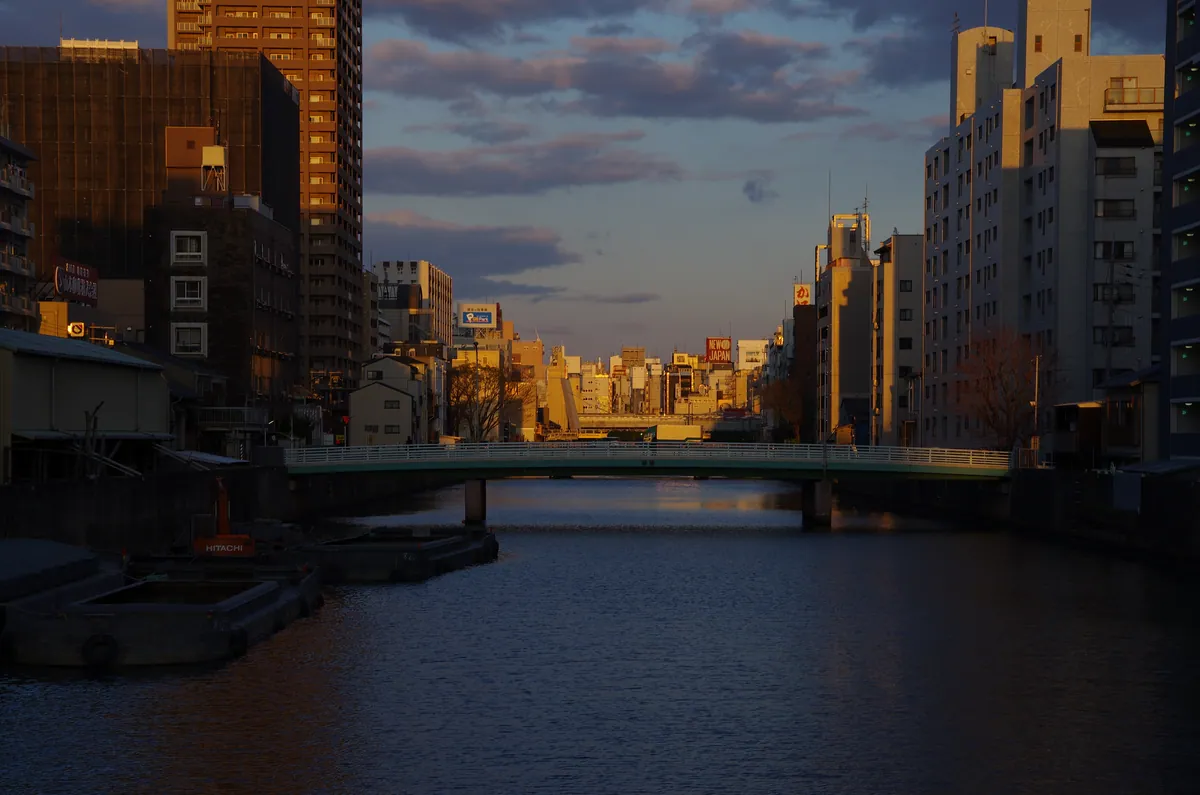 4 hr for both
A canal walled with the loudest signage in Japan.
See the detail →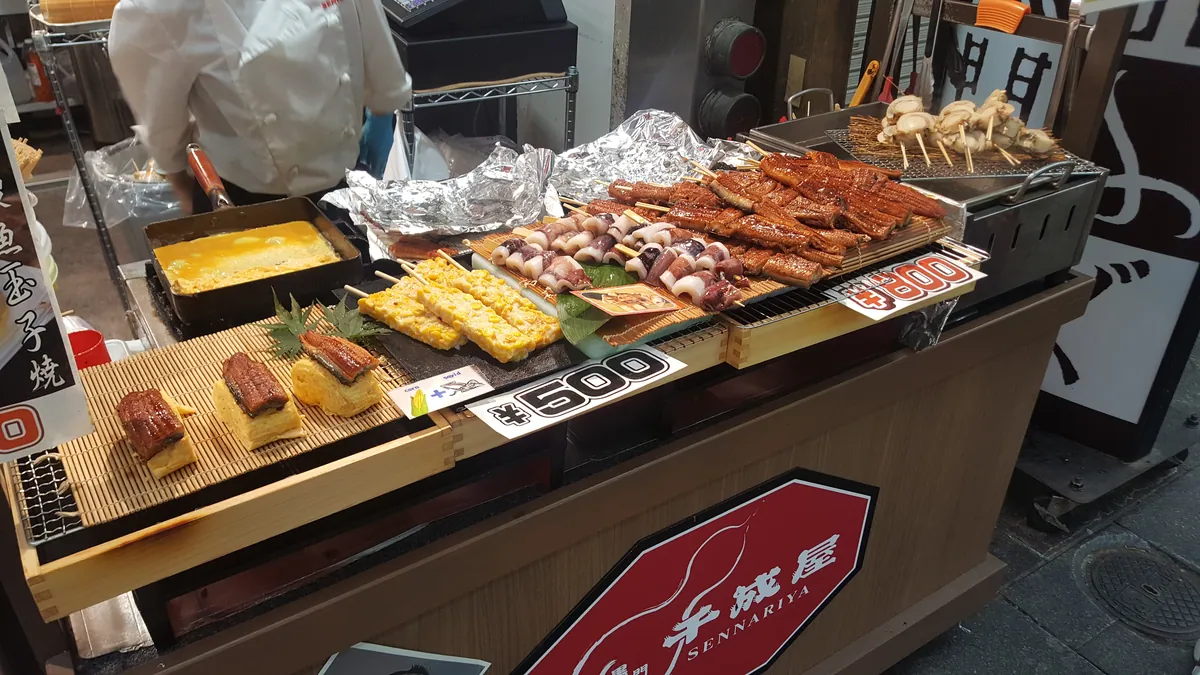 4 hr for both
580 metres of what Osaka calls its kitchen.
See the detail →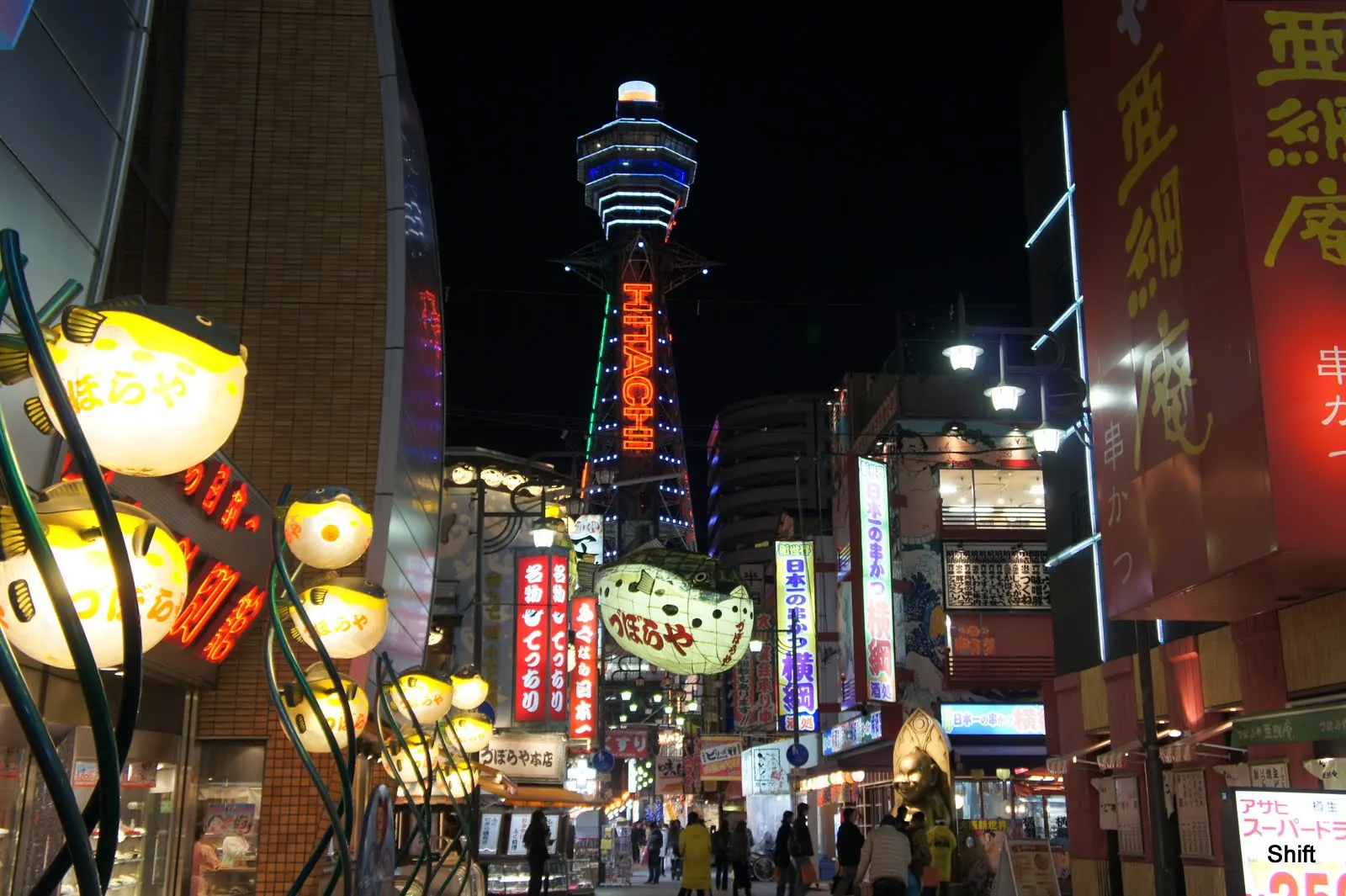 4 hr 30 min for both
Deep-fried skewers and one communal sauce pot per table.
See the detail →No typing needed — jump straight in:
Just docked? — the gangway toolStart from your shipThe ride from every berthAsk the editorGlossary