~2h — the round trip from the gangway, with the 60-minute margin kept aside.
Tap a photo to see it large. 3 photographs, each credited.
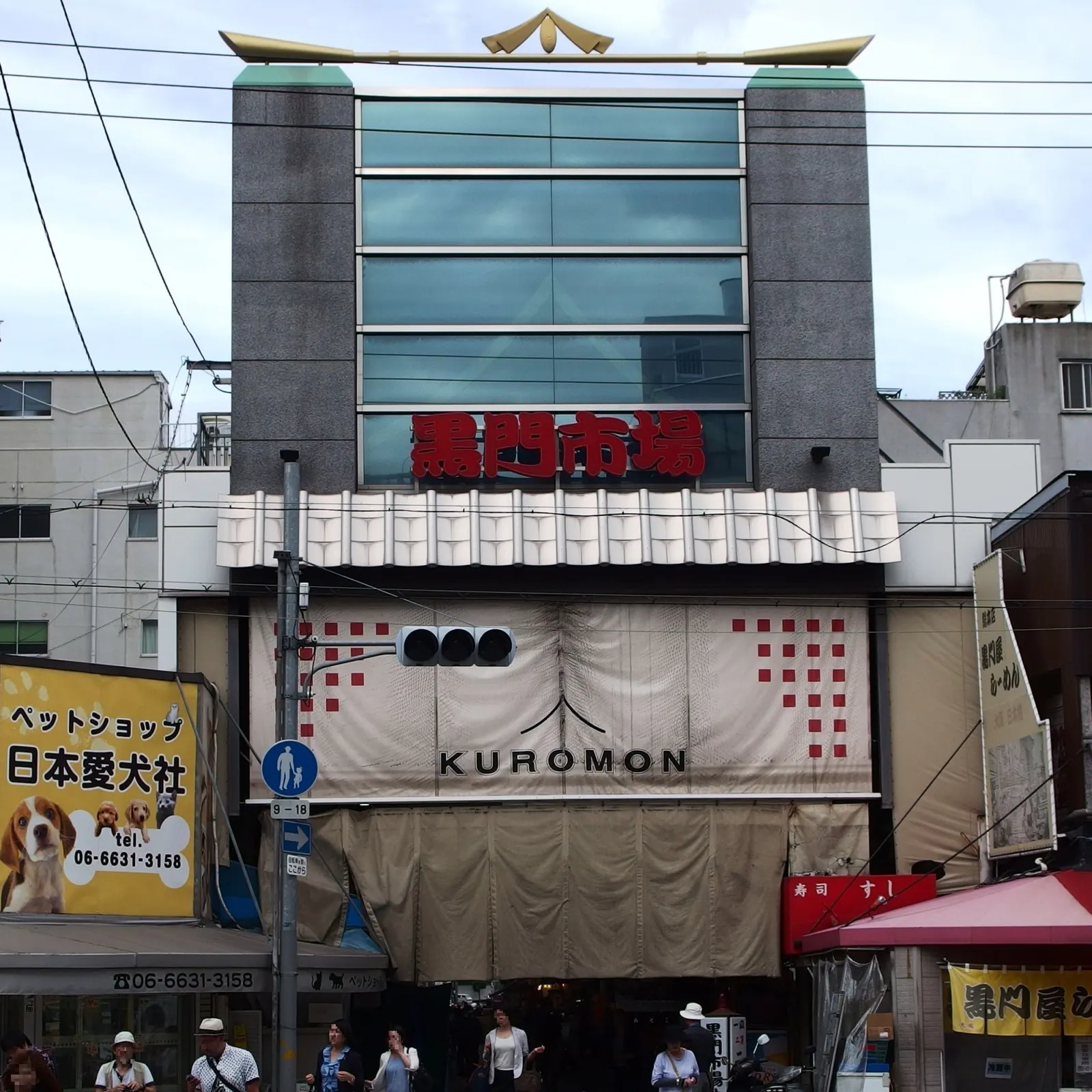
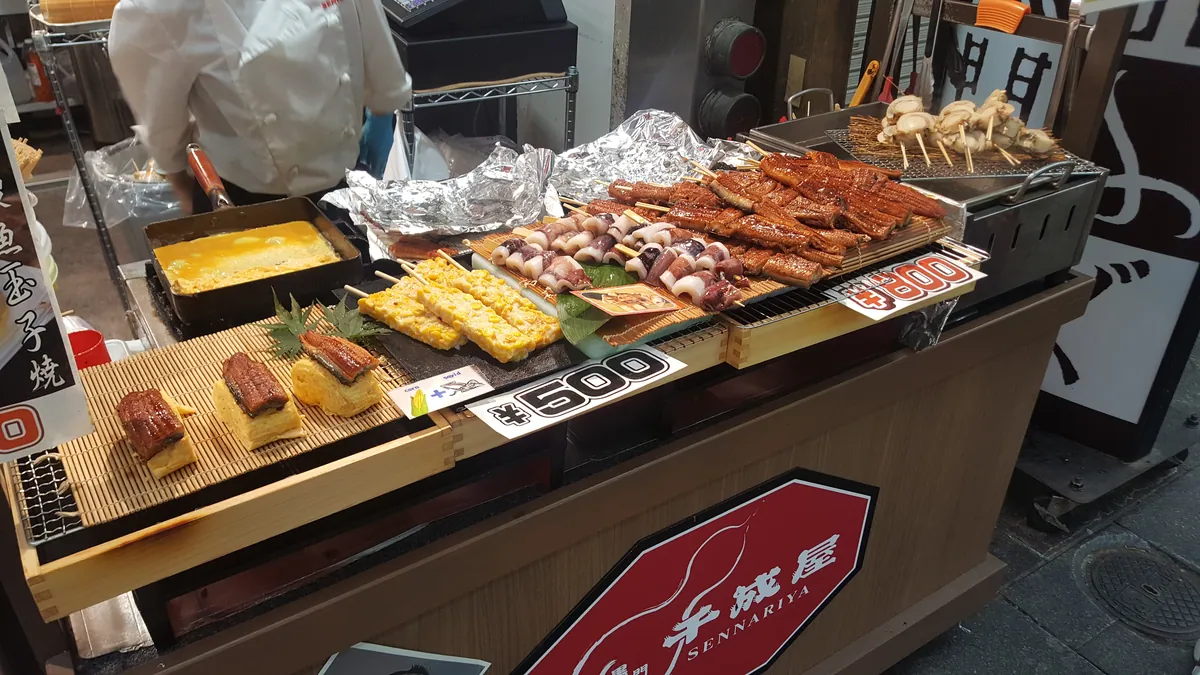
580 metres of what Osaka calls its kitchen. Buy sea urchin, scallop or wagyu at the stall, have it grilled in front of you, and eat it standing at the counter they put out for exactly that.
A city run by merchants, in a country run by warriors
Kuromon has fed Osaka's restaurant trade for about two centuries and its name comes from a temple gate that burned down in 1912. Six hundred metres of covered aisle, and the modern habit is grazing: stalls grill and cut to order for people who intend to eat standing in front of them.
For most of the Edo period, the rice that paid every samurai in Japan was shipped to Osaka, warehoused by merchants, and sold. The city was called the nation’s kitchen, and it produced something Japan had nowhere else: a place where money outranked birth.
A covered street about 580 metres long with roughly 150 shops, running since the nineteenth century and still supplying restaurant kitchens across the city — which is why Osaka calls it its kitchen rather than its market.
The system that matters: you buy at the stall and eat at the stall. Sea urchin opened in front of you, scallops grilled on the shell, wagyu skewers, blowfish in season, and a counter or a crate put out for exactly that purpose.
And a merchant town around it
The nation’s kitchen, literally
Widely cited as the world’s first futures market
A city with money and no resident lord
Eat something standing up and tell the person who sold it to you that it was good. That transaction is the city.
The one the queue agrees on, the one people who live here use instead, and the one nearest your ship. Opening days change; check before you build a day around one.
Six hundred metres of covered aisle that has fed Osaka’s restaurant trade for about two centuries. Stalls grill and cut to order.
Open in Google MapsWhere locals goKuromon Sanpei黒門三平The fishmonger locals use, with a counter upstairs for what you just pointed at.
Open in Google MapsClosest to the berthNipponbashi end黒門市場 日本橋側The quieter end of the same arcade, where prices stop being tourist prices.
Open in Google MapsBoth pins on one map, so the distance is a fact rather than a feeling.
Each of these still lands you back aboard with the hour to spare on a 6-hour stop ashore.
A covered market street about 580 metres long with roughly 150 shops in central Osaka, running since the nineteenth century and still supplying restaurant kitchens across the city. You buy at the stall and eat at the stall — sea urchin opened in front of you, scallops grilled on the shell, wagyu skewers.
Before two in the afternoon. It is a working market rather than a tourist street, and many stalls wind down mid-afternoon. It is ten minutes on foot from Dotonbori, so the two work as one loop.
Each one is a finished day we have walked and timed, with this stop in it. Read the route rather than assembling it yourself.
Each of these still lands you back aboard with the hour to spare.
 4 hr for both
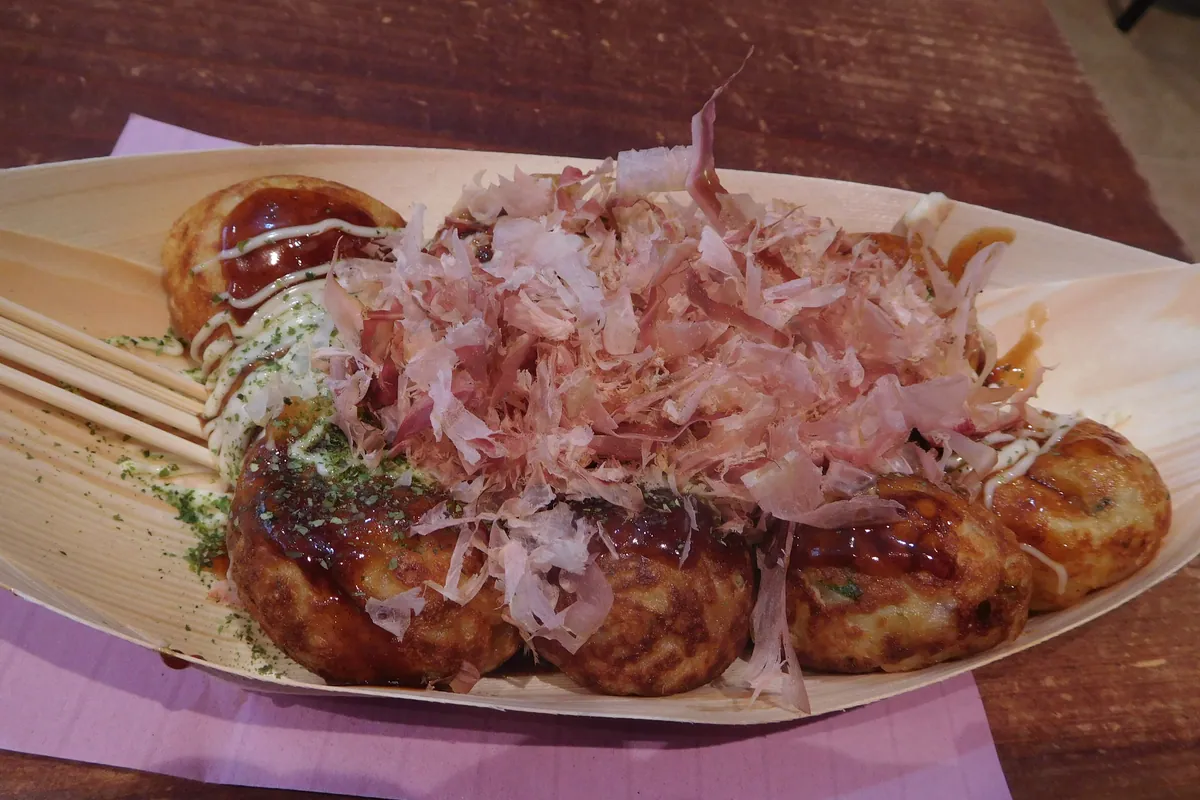
Invented in this city in 1935 — batter, a cube of octopus, turned in a cast-iron dimple plate with a pick.
See the detail →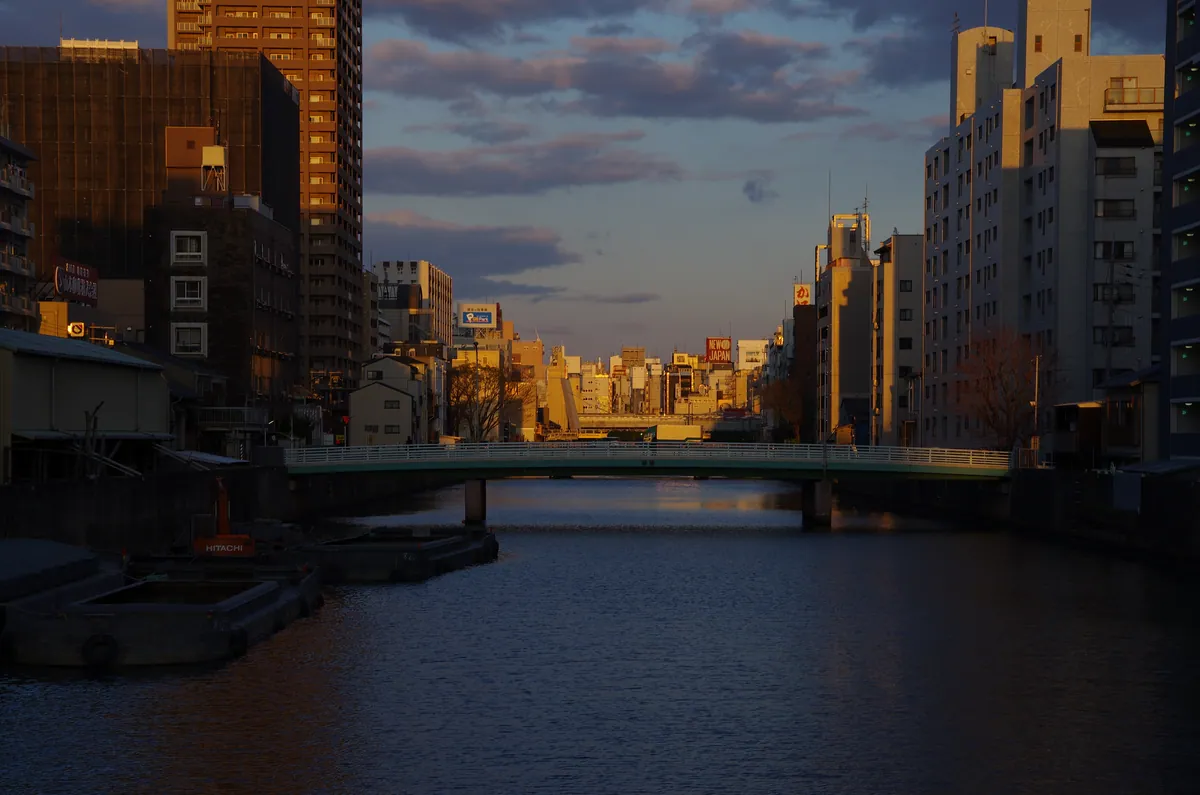 4 hr for both
A canal walled with the loudest signage in Japan.
See the detail →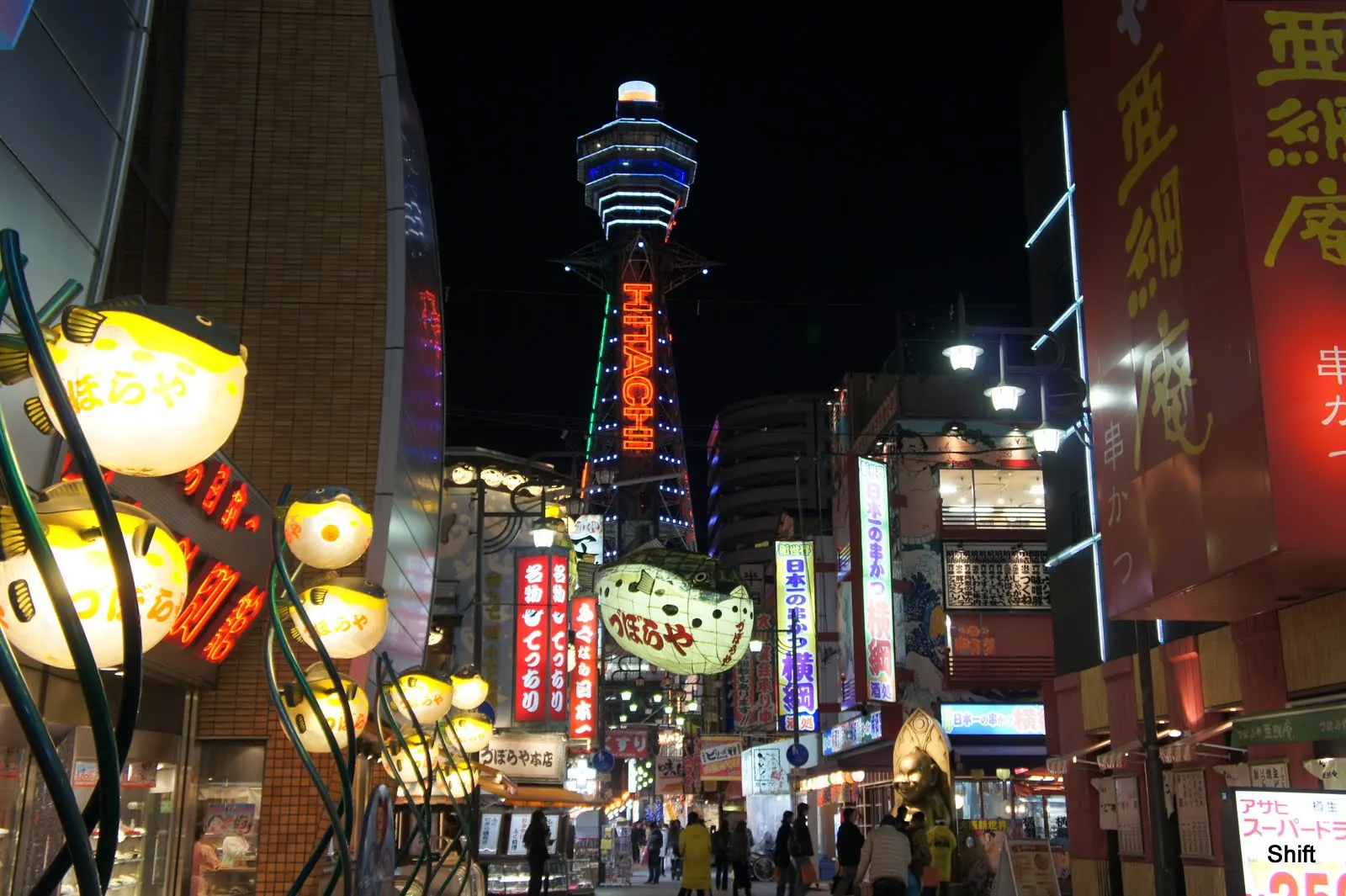 4 hr 30 min for both
Deep-fried skewers and one communal sauce pot per table.
See the detail →No typing needed — jump straight in:
Just docked? — the gangway toolStart from your shipThe ride from every berthAsk the editorGlossary