
Kuidaore
Four dishes invented here, all eaten standing, none needing a reservation
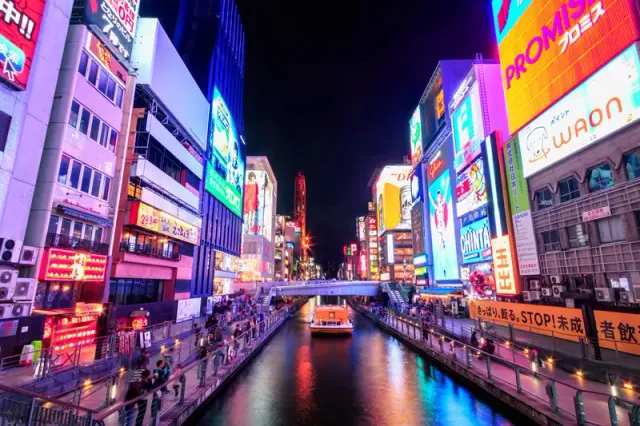
Osaka’s word for itself is kuidaore — to ruin yourself by eating. What that produced is a canon of dishes designed to be cheap, fast, hot and eaten upright, and a city that would genuinely rather you enjoyed the ¥400 one than the ¥4,000 one.
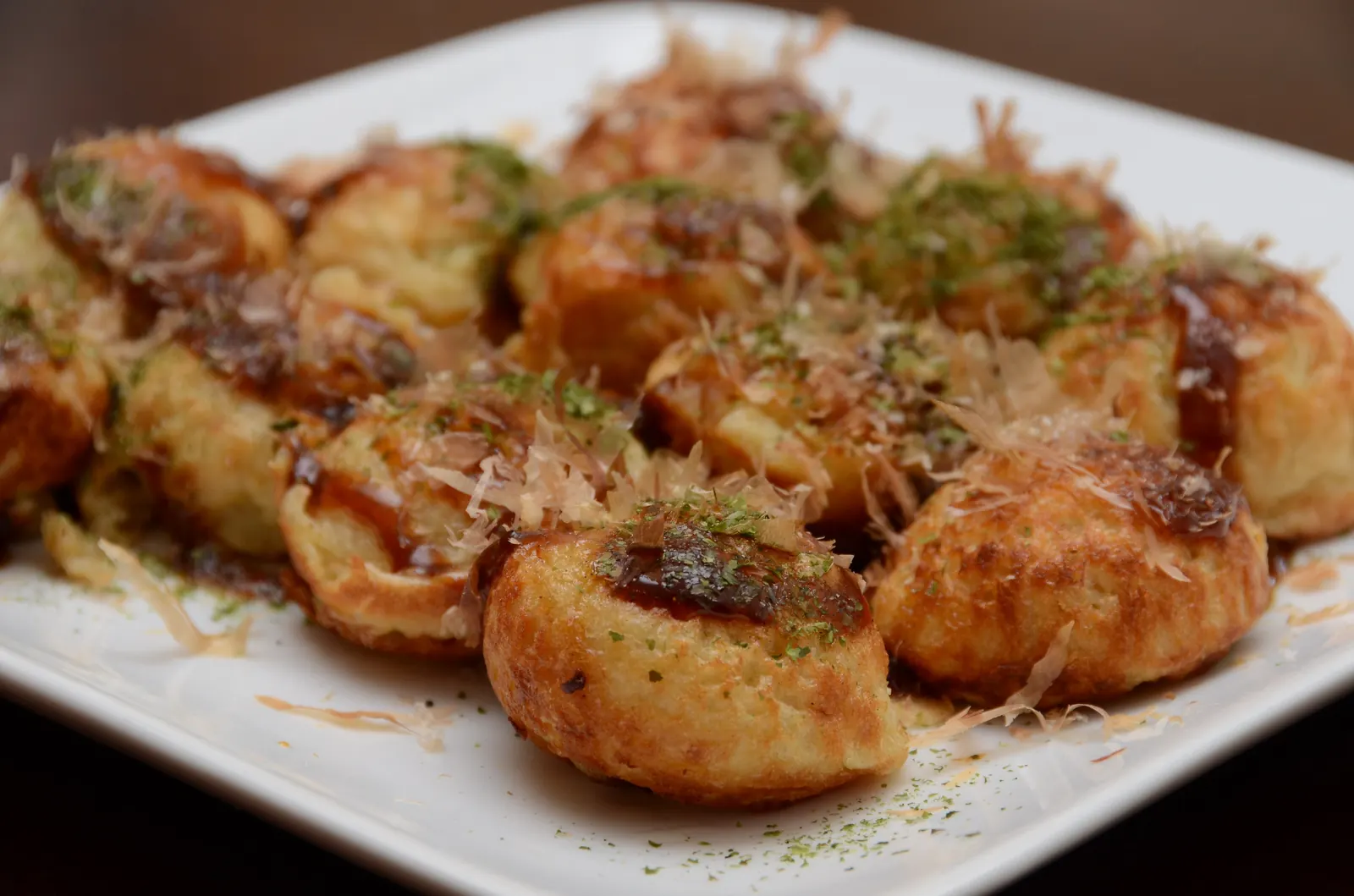
Takoyaki — 1935, and still molten
A street vendor named Endo Tomekichi is credited with putting octopus into a batter ball cooked in a dimpled iron plate, in Osaka in 1935. Before that the same plate produced a beef version borrowed from another city; the octopus was the local edit and it stuck.
The inside stays semi-liquid. This is deliberate, and it is why everyone burns their mouth exactly once. Wait longer than feels reasonable.
Okonomiyaki — mixed, not layered
Cabbage, batter, egg and whatever else, mixed together and cooked on a hotplate. Hiroshima layers the same ingredients over noodles instead, and the two cities have a genuine, unending argument about it.
Order it in Osaka, cook it or let them, and do not mention Hiroshima. The reverse also applies.
Kushikatsu comes with one communal sauce pot per table and one rule: <strong>no double dipping.</strong> Every shop has a sign. Use the free cabbage as a scoop if you want more.
Kushikatsu — and the sauce rule
Skewered meat, vegetables and cheese, crumbed and deep fried, eaten in the Shinsekai district under the Tsutenkaku tower. It was working-men’s food and the pricing still reflects that.
The communal sauce is the whole social contract. Dip once, on the way to your mouth. The cabbage on the table is free, and it exists so you can scoop more sauce without offending anyone.
And the thing nobody mentions
Osaka also has kappo — counter dining where a chef cooks in front of eight people — and it is arguably better here than in Kyoto, because it is less ceremonious. Kitashinchi is the district. It needs booking and it is not cheap.
That is the range: ¥400 standing at a window, or ¥20,000 at a counter, and the city takes both entirely seriously.
How it happened
- 1935Takoyaki is invented in Osaka
Endo Tomekichi puts octopus in the batter
- post-warOkonomiyaki becomes a staple
Mixed batter — the Osaka method
- post-warKushikatsu spreads through Shinsekai
One sauce pot, one rule
- today¥400 to ¥20,000, both taken seriously
Kuidaore means the whole range
Where this becomes real on your port day
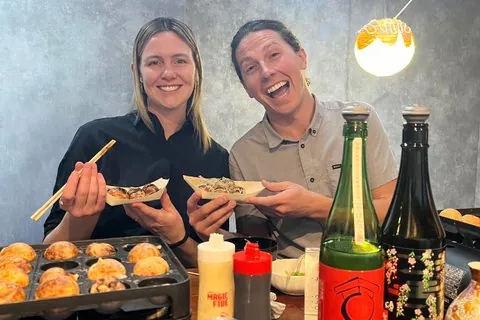
Takoyaki standing, okonomiyaki sitting, kushikatsu with one dip. Total spend under ¥3,000 and it is the city.
The vocabulary of the table
- Kuidaore 食い倒れ
- To ruin yourself by eating. The civic self-description.
- Nidozuke kinshi 二度漬け禁止
- "No double dipping." The sign in every kushikatsu shop.
- Konamon 粉もん
- "Flour things" — takoyaki, okonomiyaki. Osaka’s own food category.
- Umai うまい
- Tasty. Said immediately and loudly. The correct compliment.
FAQ
What food is Osaka famous for?
Takoyaki — octopus in batter, invented here in 1935 and deliberately molten inside; okonomiyaki with the cabbage mixed into the batter rather than layered as in Hiroshima; and kushikatsu, deep-fried skewers eaten in Shinsekai with one communal sauce pot and a strict no-double-dipping rule.
What is the no double dipping rule?
Kushikatsu shops put one shared pot of sauce on each table. You dip a skewer once, on the way to your mouth, and never again. The free cabbage on the table exists as a scoop for anyone who wants more sauce. Every shop has a sign about it, and it is the one rule nobody bends.
More from Osaka
A city run by merchants, in a country run by warriors
Read →
Three men, one puppet, and no attempt to hide any of it
Read →
The last battle of the old Japan was fought where you are standing
Read →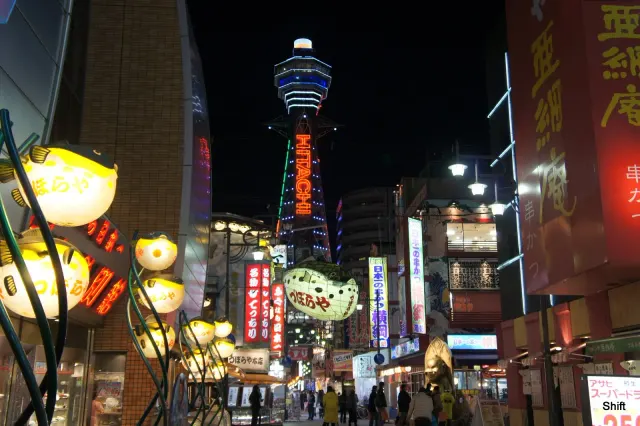
A city where being funny is a career path and a civic duty
Read →