
The siege
The last battle of the old Japan was fought where you are standing
Tokugawa Ieyasu won at Sekigahara in 1600 and became shogun in 1603. He was not finished. Hideyoshi’s heir still held Osaka Castle, and in the winter of 1614 and the summer of 1615 Ieyasu destroyed him here — the last major battle in Japan for two and a half centuries.
Toyotomi Hideyoshi built the original castle from 1583 as the seat of the man who had unified Japan. It was the largest fortress in the country, with concentric moats and outer defences on a scale nothing else matched.
The winter siege, and the trick
In the winter of 1614 Ieyasu besieged it and could not take it. So he negotiated: peace, on the condition that the outer moat be filled in as a gesture of good faith.
His men filled the outer moat. Then they kept going and filled the inner one too. When the Toyotomi protested, Ieyasu expressed regret at the misunderstanding, and in the summer of 1615 attacked a castle that no longer had its defences.
The castle fell, Hideyoshi’s heir and his mother died inside it, and the Toyotomi line ended. Japan then had no major battle until the 1860s.
What you are looking at
Ieyasu rebuilt the castle in the 1620s — bigger, and deliberately on top of the Toyotomi ruins, so that nothing of Hideyoshi remained visible. The stones were brought by sea from across western Japan; the largest, at the Sakuramon gate, is estimated at well over a hundred tonnes.
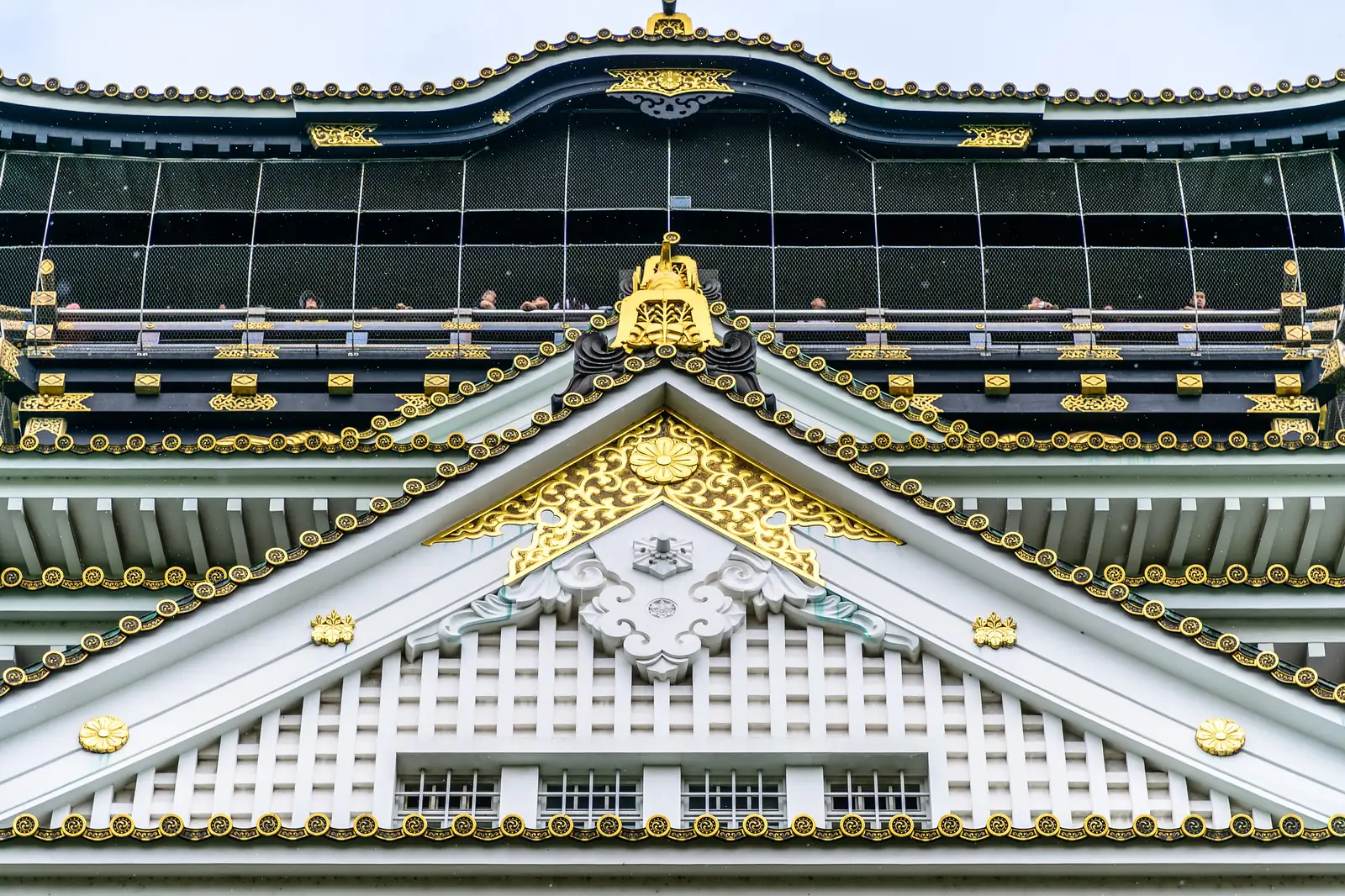
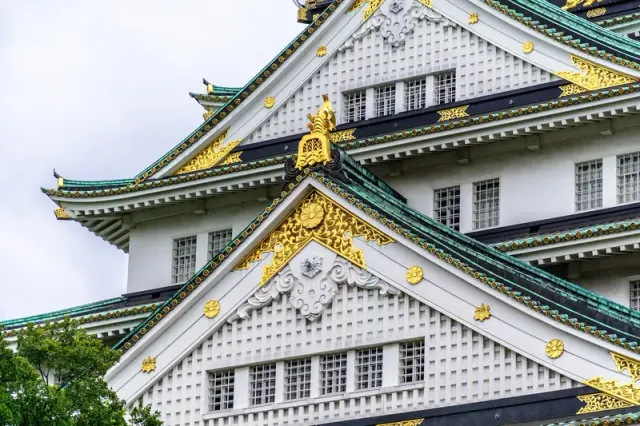
Lightning burned that keep in 1665 and it was not rebuilt for 266 years. The tower you climb is from 1931, funded by public subscription from Osaka citizens, built in reinforced concrete, and restored in 1997. It has a lift.
So: the keep is a twentieth-century museum, the walls are seventeenth-century Tokugawa, and Hideyoshi’s original is underneath, excavated in places and visible in one preserved section.
How it happened
- 1583Hideyoshi begins the castle
The largest fortress in Japan
- 1614The winter siege ends in a treaty
The outer moat is to be filled
- 1614–15The inner moat is filled too
"A misunderstanding"
- 1615The summer siege; the Toyotomi end
Japan’s last major battle for 250 years
- 1620sThe Tokugawa rebuild, on top of the ruins
Stones brought by sea; the largest over 100 tonnes
- 1665 / 1931Lightning burns the keep; citizens fund a new one
Concrete, with a lift, restored 1997
Where this becomes real on your port day
Walk the walls rather than queuing for the keep. The stones are the original object; the tower is a museum in a costume.
The vocabulary of the siege
- Osaka no Jin 大坂の陣
- The sieges of 1614–15. The end of the Toyotomi.
- Sanada-maru 真田丸
- The outwork that held the winter siege. Its commander is a folk hero.
- Tako-ishi 蛸石
- The Octopus Stone at the Sakuramon gate. Over 100 tonnes.
- Tenshu 天守
- The keep. Burned 1665, rebuilt 1931 by public subscription.
FAQ
What happened at the siege of Osaka?
Tokugawa Ieyasu besieged the castle in winter 1614, could not take it, and negotiated a peace requiring the outer moat to be filled. His men filled the inner moat as well, called it a misunderstanding, and attacked again in summer 1615 against undefended walls. The Toyotomi line ended there, and Japan had no major battle for two and a half centuries.
Is anything at Osaka Castle original?
The stone walls and moats are the Tokugawa rebuild of the 1620s and are genuinely enormous — the largest single stone is estimated at well over a hundred tonnes. Hideyoshi’s original castle lies underneath and is visible in one excavated section. The keep is a 1931 reconstruction funded by public subscription, restored in 1997.
More from Osaka
A city run by merchants, in a country run by warriors
Read →
Three men, one puppet, and no attempt to hide any of it
Read →
Four dishes invented here, all eaten standing, none needing a reservation
Read →
A city where being funny is a career path and a civic duty
Read →