
Bunraku
Three men, one puppet, and no attempt to hide any of it
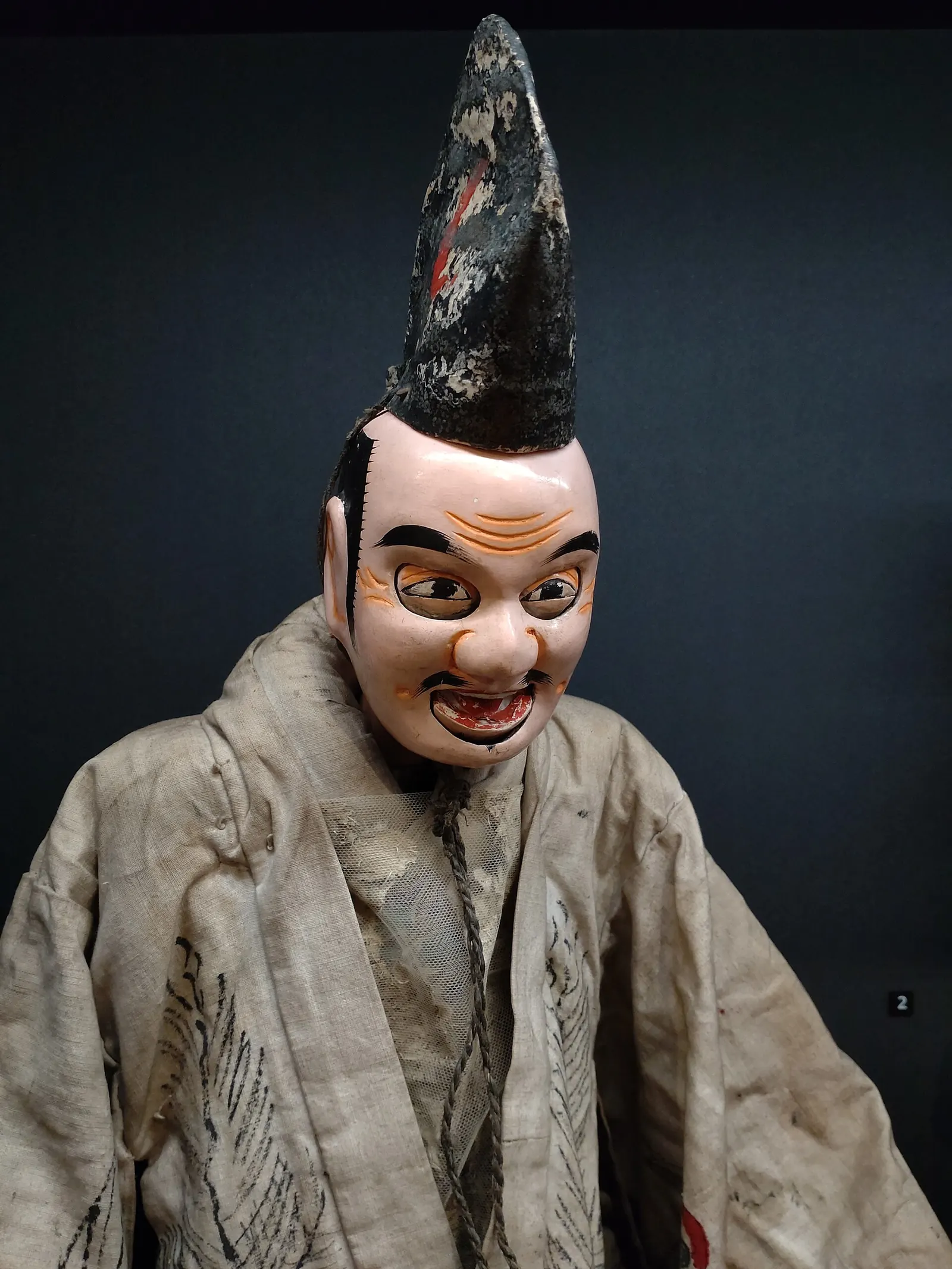
A bunraku puppet is a metre tall and needs three operators, all of them visible on stage. The chief handler works barefaced. Within ten minutes you stop seeing them — which is the entire art, and it was perfected in this city.
Bunraku combines three things that were originally separate: joruri narrative chanting, the shamisen, and puppetry. They fused in Osaka around 1600, and the form took its mature shape here in the seventeenth and eighteenth centuries.
How it works
The omozukai controls the head and right arm, standing on raised clogs; the hidarizukai works the left arm; the ashizukai works the feet, crouched, for years before being allowed anything else. Apprenticeship is often described as ten years on the feet, ten on the left arm, and then the head.
Only the chief handler shows his face. The other two wear black hoods. Nothing is concealed, no screen hides them, and the audience simply agrees not to see them.
One chanter performs every character, male and female, plus the narration — and the shamisen player is not accompaniment but a second voice arguing with the first.
Chikamatsu, and why it matters
Chikamatsu Monzaemon, working in Osaka around 1700, wrote for these puppets what no one was writing for actors: contemporary tragedies about ordinary townspeople. Merchants, shop clerks, courtesans. His Love Suicides at Sonezaki (1703) was based on a real double suicide that had happened in this city weeks earlier.
It was so successful that the authorities eventually restricted the genre, because young couples were imitating it. He is routinely called the Japanese Shakespeare, and the comparison is about subject matter as much as quality: he took the lives of non-aristocrats seriously.
Seeing it
The National Bunraku Theatre in Nipponbashi runs several seasons a year. Full programmes are long, but single-act tickets are sold, English earphone guides are available, and the surtitles make the plot followable.
Between seasons the theatre’s exhibition room shows the puppets, the heads and the mechanisms, and that alone is worth thirty minutes if you are nearby.
How it happened
- ~1600Chanting, shamisen and puppets fuse in Osaka
Three separate arts become one
- 1684Takemoto Gidayu opens his theatre here
His chanting style still names the discipline
- 1703Chikamatsu’s Love Suicides at Sonezaki
Based on a real death weeks earlier
- 1730sThree-man operation becomes standard
The form reaches its mature shape
- 2008UNESCO Intangible Cultural Heritage
Still performed at the National Bunraku Theatre
Where this becomes real on your port day
Buy a single-act ticket at the National Bunraku Theatre and rent the English guide. One act is enough to be converted.
The vocabulary of bunraku
- Omozukai 主遣い
- The chief handler. Head and right arm, face uncovered.
- Tayu 太夫
- The chanter. Every character, plus the narration, alone.
- Joruri 浄瑠璃
- The narrative chanting the whole form is built on.
- Michiyuki 道行
- The lovers’ final journey. Chikamatsu’s signature scene.
FAQ
What is bunraku?
Japanese puppet theatre in which each metre-tall puppet is worked by three visible operators, accompanied by a single chanter who voices every character and a shamisen player. It matured in Osaka in the seventeenth and eighteenth centuries and was inscribed by UNESCO in 2008.
Can I see bunraku on a cruise call in Osaka?
During a performance season, yes — the National Bunraku Theatre in Nipponbashi sells single-act tickets with English earphone guides and surtitles. Outside seasons, the theatre’s exhibition room shows the puppets and mechanisms and is worth half an hour if you are nearby.
More from Osaka

A city run by merchants, in a country run by warriors
Read →
The last battle of the old Japan was fought where you are standing
Read →
Four dishes invented here, all eaten standing, none needing a reservation
Read →
A city where being funny is a career path and a civic duty
Read →