
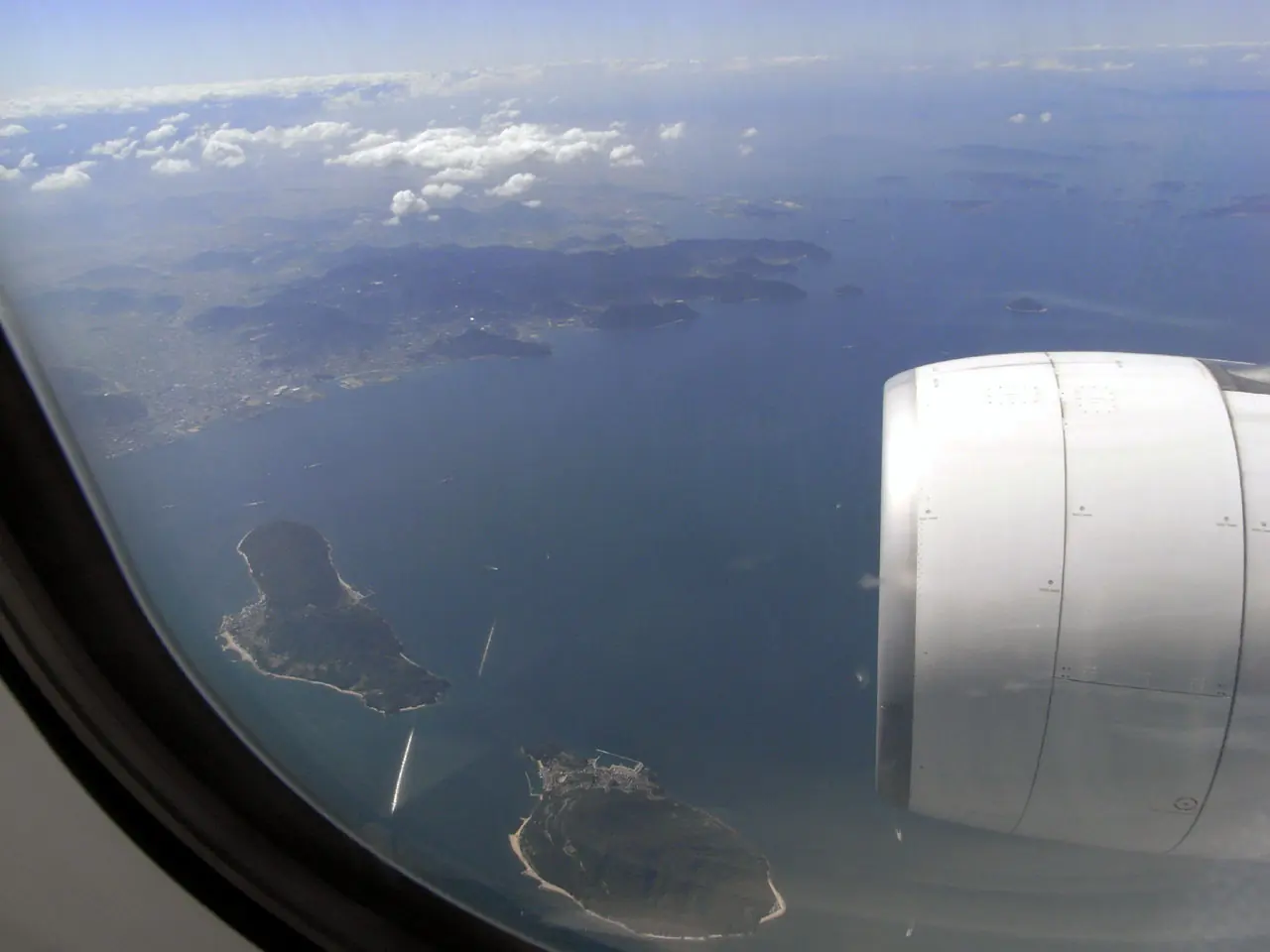
The Seto Inland Sea
Three thousand islands, tidal races, and the families who taxed everyone who passed
The water your ship is sitting in has about three thousand islands in it, tides that run through narrow straits like rivers, and a history of families who controlled those straits so effectively that the Portuguese called them pirates and the Japanese called them a navy.
The Seto Inland Sea is enclosed between Honshu, Shikoku and Kyushu — roughly 450 kilometres long, shallow, and studded with around three thousand islands. It has been Japan’s main east–west highway for most of recorded history, because moving anything by sea was easier than moving it over mountains.
The tides
Water enters and leaves through a small number of narrow straits, which produces currents that behave like rivers. At Naruto, east of here, the tidal race generates whirlpools several metres across twice a day. At Kurushima the current reverses direction and ships have to time their passage.
That geography is why local knowledge was worth money, and why certain families became extremely powerful.
The Murakami controlled the straits from the fourteenth century, issuing passes, providing pilots, and taking a cut. European visitors called them pirates. They functioned much closer to a coastguard that charged.
The Murakami
Three related branches of the Murakami family held the central straits, based on small fortified islands. They escorted merchant ships, guaranteed safe passage, and destroyed anyone who did not pay. At their height they were a decisive naval force in mainland Japanese warfare.
They were broken up in the 1580s when Toyotomi Hideyoshi banned independent naval power. The Murakami Kaizoku Museum on Oshima, reachable from the Shimanami cycling route, is the place that tells this properly.
And what it looks like now
The calm water, the layered islands and the haze are the reason the Inland Sea is repeatedly described as one of the most beautiful stretches of coast in Asia — it became Japan’s first national park, in 1934.
From a cruise ship you will pass through a large part of it in daylight between Kobe, Takamatsu and Hiroshima. That transit is not filler between ports. It is one of the sights.
How it happened
- antiquityJapan’s main east–west highway
Sea was easier than mountains
- 14th–16th c.The Murakami control the straits
Passes, pilots, and a cut of the cargo
- 1588Hideyoshi bans independent naval power
And the Murakami are broken up
- 1934Japan’s first national park
The Inland Sea, in its entirety
- today~3,000 islands, and your transit
The passage is one of the sights
Where this becomes real on your port day
Be on deck for the Inland Sea passage. It is not filler between ports — it is one of the reasons to take this coast.
The vocabulary of the sea
- Setonaikai 瀬戸内海
- The Inland Sea. Japan’s first national park, 1934.
- Murakami suigun 村上水軍
- The families who controlled the straits. Navy, not pirates.
- Uzushio 渦潮
- Tidal whirlpools. At Naruto they run several metres across.
- Seto 瀬戸
- A strait. The narrow places where the current runs like a river.
FAQ
Were the Murakami of the Inland Sea pirates?
European visitors called them that, but they functioned closer to a licensed coastguard. Three branches of the family controlled the central straits from fortified islands, issued passes, supplied pilots and escorted merchant shipping for a fee — and destroyed those who did not pay. Hideyoshi broke up their independent naval power in 1588.
Is the Seto Inland Sea worth watching from the ship?
Yes — it became Japan’s first national park in 1934 and holds around three thousand islands in calm, shallow water. The daylight passage between Kobe, Takamatsu and Hiroshima is one of the sights of this coast rather than filler between ports, and the late-afternoon light is what makes people repeat the itinerary.
More from Takamatsu
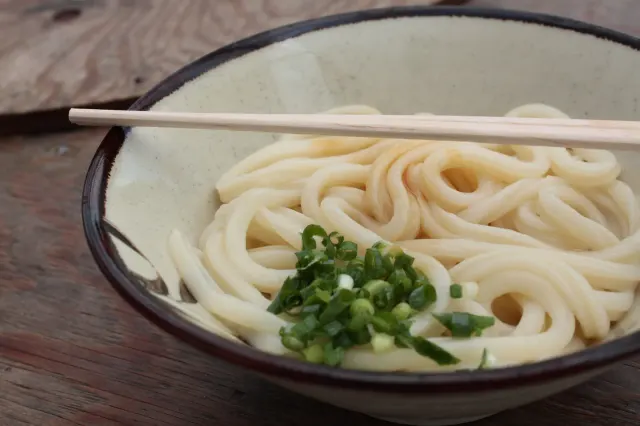
A prefecture that eats more noodles than anywhere in Japan, because it could not grow rice
Read →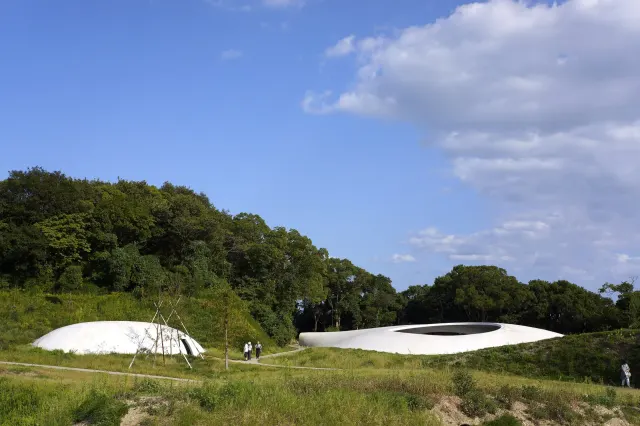
Depopulated, industrially damaged, and then rebuilt around museums
Read →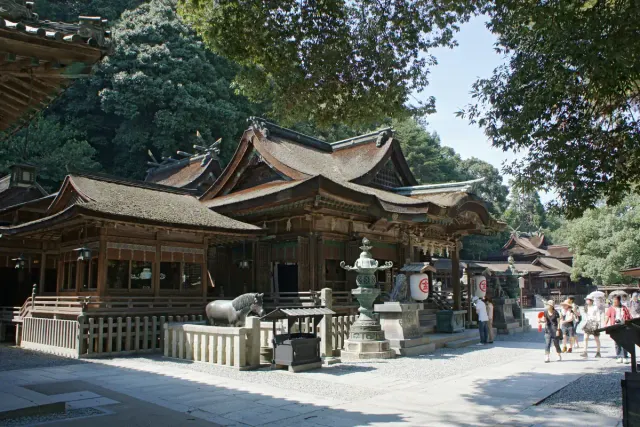
Seven hundred and eighty-five steps, and dogs sent up them on their owners’ behalf
Read →
Borrowed scenery, 1,400 hand-pruned pines, and a grievance about rankings
Read →